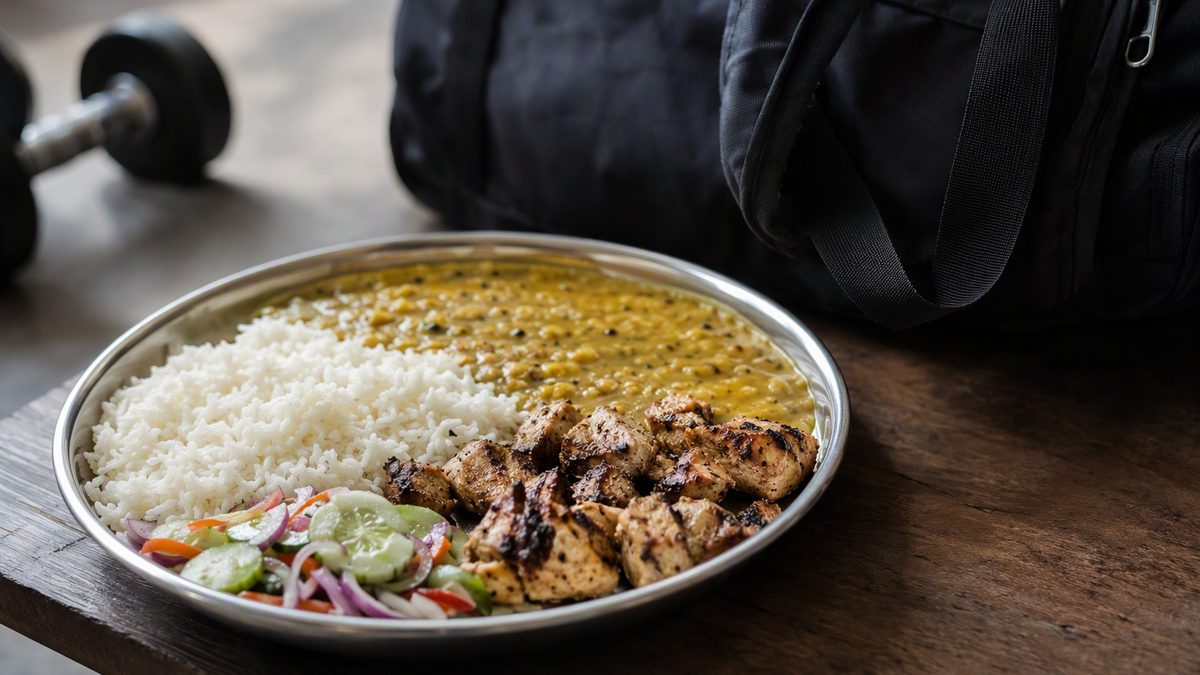
💡 Key Takeaways
- The post-workout window is hours wide, not 30 minutes, so a 6am hotel session followed by a normal breakfast covers recovery fine.
- Default rule: a meal or shake with 20-40 g protein (about 0.3-0.4 g/kg) and some carbs within a couple of hours, anywhere.
- Total daily protein, roughly 1.6-2.2 g/kg, drives results far more than the timing of any single meal.
- Alcohol at client dinners and chronic short sleep undercut recovery more than a slightly delayed meal ever will.
It's 6:10am in a hotel gym three time zones from home. You've got a 7:30 call, a flight at noon, and a client dinner tonight you can't skip. The recovery-nutrition advice you half-remember says eat within 30 minutes, but you're heading straight to a shower and a deck review. Does the workout count if breakfast is 90 minutes away?
Yes. And the reason matters, because executives don't need more rules, they need fewer, better defaults that survive airports and chaos. The post-workout meal does real work, repairing muscle, refueling, rehydrating, but it runs on a window measured in hours, not minutes.
This guide slots recovery nutrition into a real executive day: where it actually fits around early sessions and travel, the one default rule to carry anywhere, the plate sized to your bodyweight, and the two things, alcohol and sleep, that wreck recovery far more than a delayed meal.
1. Where Recovery Fits in an Executive Day
Map it to the day you actually live. The 6am hotel session is followed, an hour or two later, by whatever breakfast you can grab, eggs and fruit, Greek yogurt, even a decent shake from the lobby, and that is your recovery meal. No sprint to the locker room required. The lunchtime workout between meetings is bracketed by lunch on one side; eat normally afterward and you're done. The rare evening session after a long day is best closed with dinner, and if dinner is late, a slow protein before bed, like cottage cheese or a casein shake, quietly supports overnight repair.
The principle that makes this survive travel: the window is wide. Because the useful post-exercise period runs several hours, you almost always have a normal meal landing inside it without changing your schedule at all. The only time to be deliberate is a fasted dawn session, train before any food and an early protein feeding genuinely helps, because your body has been running net-negative overnight.
Decision fatigue is the enemy here, not biology. The reason recovery nutrition fails for high-output professionals is rarely that they ate twenty minutes too late; it is that an unplanned day produced no plan at all, so they skipped the meal entirely and over-ate at 9pm. Pre-deciding the default removes that failure point.
Build the default once and it travels with you, the opposite of a decision you re-make in every city. Anchoring recovery to a habit rather than a clock is what keeps it intact when the calendar explodes.
2. Your One Default Rule, Same Dose, Anywhere
Executives win by reducing decisions, so reduce this one to a single rule: after training, get 20 to 40 grams of protein and some quality carbs within a couple of hours, wherever you are. Roughly 0.3 to 0.4 grams of protein per kilogram of bodyweight clears the threshold that drives muscle repair, and the carbs top up what you burned. That's the whole protocol, portable from a hotel buffet to a client lunch.
| Your bodyweight | Post-workout protein (0.3-0.4 g/kg) | Hotel / travel option | Office / home option |
|---|---|---|---|
| 70 kg (154 lb) | 21-28 g | Lobby Greek yogurt with fruit and granola | Chicken sandwich with fruit |
| 80 kg (176 lb) | 24-32 g | Two-egg omelet with toast; or a whey shake and banana | Burrito bowl with beans, rice, and chicken |
| 90 kg (198 lb) | 27-36 g | Buffet eggs, fruit, and yogurt | Salmon with rice and vegetables |
| 100 kg (220 lb) | 30-40 g | Two-scoop shake with oats and a banana | Steak or chicken bowl with potatoes |
Two refinements keep it simple. Carry a couple of single-serve whey sachets in your bag, they make the rule bulletproof when room service is slow or the buffet is carbs-only. And remember the real driver sits above any one meal: total daily protein, around 1.6 to 2.2 grams per kilogram. Nail the day and a late post-workout meal costs you nothing.
3. Alcohol, Client Dinners, and Recovery
The thing that actually dents your recovery isn't a delayed shake, it's the business dinner. Alcohol blunts muscle repair and disrupts the deep sleep that does most of the rebuilding, so a heavy night undoes more than a slightly late meal ever could. You don't have to be a monk about it, but a few defaults protect the work.
- Eat the protein first. Order a real protein-and-carb main at the dinner rather than drinking on an empty stomach; the meal still counts as recovery food if you trained that day.
- Cap and space the drinks. Fewer drinks, alternated with water, limits both the recovery hit and the sleep disruption that follows.
- Hydrate around it. Alcohol is dehydrating on top of a sweaty session and a dry flight; water with the meal and before bed helps.
- Protect the sleep window. Finish drinking earlier rather than later, since alcohol close to bedtime fragments the deep sleep your muscles rebuild in.
None of this requires skipping the dinner. It just means treating sleep and alcohol as the real recovery levers they are, well above the timing of any meal.
One more reframe that saves executives a lot of wasted worry: a single imperfect evening does not undo a week. Recovery, like the rest of your training, is built on totals across days, not on any one dinner or one late meal. Aim for protein and sleep on most days, accept the occasional client dinner as a rounding error, and you keep the results without the guilt that drives all-or-nothing collapses.
4. The Metric to Watch Across Time Zones
You like a single number, so here it is: track total daily protein, and let your wearable's sleep and recovery score be the cross-check. If protein is consistently landing near 1.6 to 2.2 grams per kilogram and you're sleeping, the timing of individual meals is noise. When your Oura or Whoop flags poor recovery, look at sleep and alcohol first, not at whether you ate fast enough after the gym.
Two travel-specific notes. Chronic sleep restriction, the real executive occupational hazard, blunts recovery and tempts you to stack stimulants over the deficit; caffeine masks fatigue but doesn't replace the repair sleep does. And resist all-or-nothing thinking: a missed-perfect day, one late meal, one client dinner, barely registers against a solid week, because recovery is built on totals, not single events. Your annual executive physical is a natural checkpoint to confirm the basics, blood pressure, lipids, glucose, are where you want them while you train.
Recovery Questions From Traveling Executives
What's the minimum effective recovery rule when I travel?
One rule: get 20 to 40 grams of protein and some carbs within a couple of hours of training, anywhere. That's roughly 0.3 to 0.4 grams of protein per kilogram of bodyweight. A lobby yogurt, a buffet omelet, or a whey sachet from your bag all qualify. The post-workout window is hours wide, so a normal breakfast after a 6am session covers it. Total daily protein matters far more than the exact timing.
Does alcohol at client dinners ruin my recovery?
It hurts recovery more than a delayed meal does, mainly by disrupting deep sleep and blunting muscle repair. You don't have to skip the dinner. Eat a real protein-and-carb main, cap and space the drinks with water, and finish drinking earlier so sleep isn't fragmented. Treat alcohol and sleep as the genuine recovery levers; they outrank meal timing by a wide margin, which is the opposite of how most people rank them.
Can I keep recovery nutrition consistent across time zones?
Easily, because it isn't tied to clock time. Whenever you finish training, get your protein-and-carb meal within a couple of hours; the body doesn't care what the local time is. The wide window means a normal meal almost always lands inside it. Pack whey sachets for slow room service. The only timezone-sensitive variable worth managing is sleep, which jet lag disrupts and which drives more recovery than any meal.
What single metric should I watch for recovery?
Total daily protein, with your wearable's sleep and recovery score as the cross-check. If protein consistently lands near 1.6 to 2.2 grams per kilogram and you're sleeping, individual meal timing is noise. When recovery scores dip, look at sleep and alcohol before meal timing. Use your annual executive physical to confirm blood pressure, lipids, and glucose are on track while you keep training hard.
Disclaimer: This article is for educational purposes only and is not medical advice. Consult a qualified healthcare professional before starting any supplement, nutrition, or training protocol — especially if you are pregnant or breastfeeding, under 18, taking medication, or managing a health condition.
Scientific References & Clinical Sources
- Aragon AA, Schoenfeld BJ. Nutrient timing revisited: is there a post-exercise anabolic window?. J Int Soc Sports Nutr, 2013. PMID: 23360586
- Schoenfeld BJ, et al. The effect of protein timing on muscle strength and hypertrophy: a meta-analysis. J Int Soc Sports Nutr, 2013. PMID: 24299050
- Morton RW, et al. A systematic review, meta-analysis and meta-regression of the effect of protein supplementation on resistance training-induced gains in muscle mass and strength in healthy adults. Br J Sports Med, 2018. PMID: 28698222
- Phillips SM, Van Loon LJ. Dietary protein for athletes: from requirements to optimum adaptation. J Sports Sci, 2011. PMID: 22150425
- Thomas DT, et al. American College of Sports Medicine Joint Position Statement: Nutrition and Athletic Performance. Med Sci Sports Exerc, 2016. PMID: 26891166

