💡 Key Takeaways
- You don't need a post-workout carb spike to recover; protein drives the muscle repair that matters most, and glycogen refills slowly from your own metabolism.
- Aim for 20-40 g of protein (about 0.3-0.4 g/kg) after training; a keto plate of eggs, meat, fish, or whey hits it without carbs.
- Electrolytes, sodium, potassium, magnesium, are your real recovery focus, since keto raises losses and causes the cramps people blame on training.
- Glycolytic top-end work may feel blunted on keto; that's the diet, not your recovery meal, and isn't fixed by chasing the carb window.
Every recovery article you read assumes you'll slam carbs after training, oats, a banana, white rice, to spike insulin and refill glycogen. So as a keto dieter you're left wondering whether you're sabotaging your recovery by skipping all that, or whether you need to break ketosis to rebuild. Neither is true, and the belief that you must carb-load to recover is one of the most persistent myths in low-carb training.
Here's the honest version. Recovery has three real jobs: repair muscle with protein, refill glycogen, and replace fluid and electrolytes. Only the first depends on a specific post-workout meal, and protein, not carbohydrate, drives it. Glycogen refills on a slower timeline your body can largely handle from its own metabolism.
This guide dismantles the carb-loading myth, shows what a keto recovery plate looks like without breaking ketosis, explains where electrolytes, your real focus, fit in, and is honest about what keto does and doesn't change about performance.
1. The Myth: "You Have to Carb-Load to Recover"
The carb-loading-after-training idea rests on the old anabolic-window story: eat carbs and protein within 30 minutes or your recovery suffers. Two problems sink it. First, the strict window itself is largely a myth, when total daily intake is matched, the supposed benefit of eating immediately disappears, and the useful window runs hours wide. Second, the carbohydrate part is the most overstated piece for someone in your situation.
Muscle repair, the recovery job that actually builds adaptation, is driven by protein, specifically enough leucine to switch on synthesis. Carbohydrate's role is to refill glycogen, and co-eating carbs doesn't meaningfully boost protein's repair effect beyond an adequate protein dose. So you can fully drive muscle repair on keto with a protein-rich meal and no carb spike at all.
Glycogen does run lower on keto, and that's a real trade-off for top-end glycolytic work. But it refills gradually from your own metabolism, your body makes glucose from protein and other sources, and you're not trying to maximize a fuel you've deliberately chosen to run low on. Building a consistent low-carb recovery habit serves you far better than chasing a carb window you don't want anyway.
2. What a Keto Recovery Plate Actually Looks Like
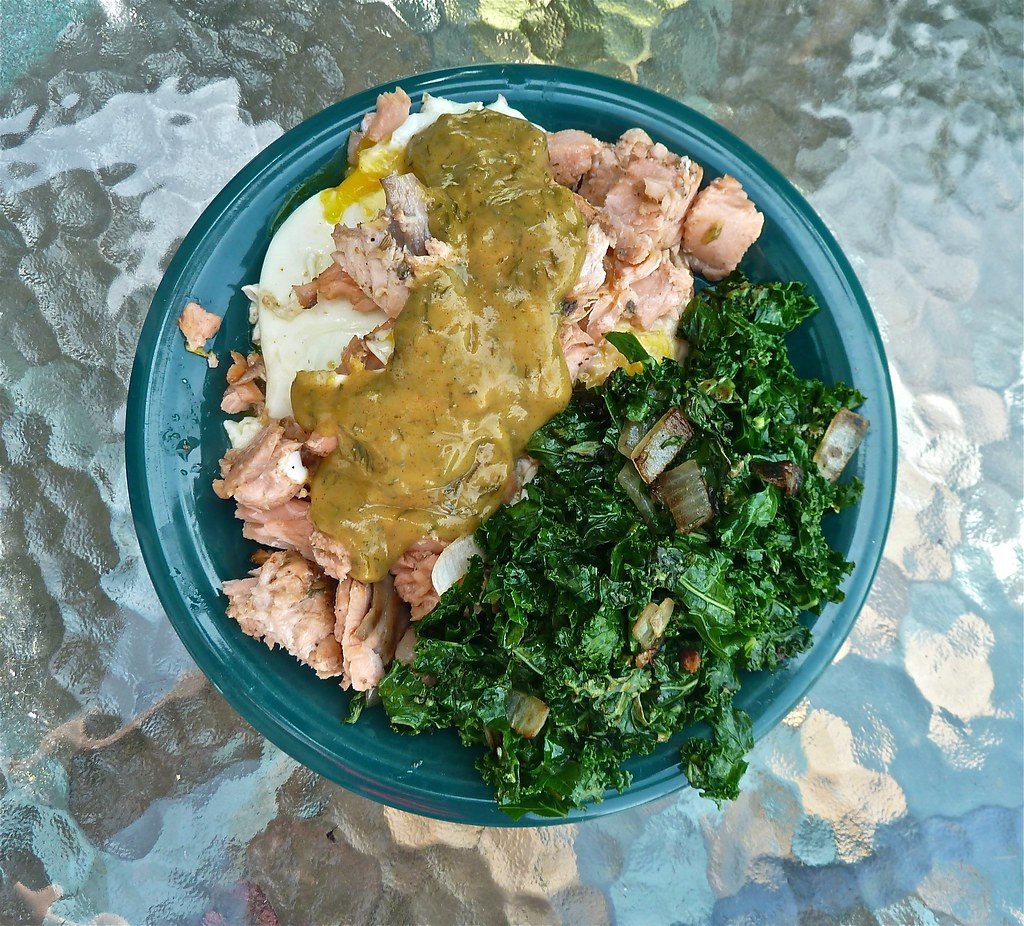
Your recovery meal centers on protein, hitting the dose that drives repair, with fat and fibrous vegetables rounding it out and minimal carbohydrate. Size the protein to your bodyweight. The point is to clear the leucine threshold that switches on muscle synthesis, which whey, eggs, meat, and fish do easily.
| Your bodyweight | Post-workout protein (0.3-0.4 g/kg) | Keto recovery meal | Watch for hidden carbs |
|---|---|---|---|
| 60 kg (132 lb) | 18-24 g | 3-egg omelet with cheese and spinach | Check flavored whey and bars for sugar |
| 70 kg (154 lb) | 21-28 g | Salmon with avocado and greens | Skip sweetened recovery drinks |
| 80 kg (176 lb) | 24-32 g | Chicken thighs with a leafy salad and olive oil | Read electrolyte products for added sugar |
| 90 kg (198 lb) | 27-36 g | Steak or two scoops of unflavored whey in water | Some protein powders carry sneaky carbs |
Two practical points. The exact timing is loose, a protein-rich meal within a couple of hours of training is plenty, unless you trained fasted, in which case eating protein soon after genuinely helps flip your muscle out of a net-breakdown state. And watch the hidden carbs: flavored whey, bars, and sweetened electrolyte mixes are the most common ways keto dieters accidentally spike carbs while thinking they're recovering cleanly. Unflavored or sucralose-sweetened whey, eggs, and whole-food protein keep you in range.
3. Electrolytes Are Your Real Recovery Focus
This is where keto recovery genuinely differs, and where most low-carb training problems actually live. Keto lowers the insulin that helps your kidneys retain sodium, so you excrete more sodium, potassium, and magnesium than a higher-carb athlete, on top of what you lose in sweat. The result is the cramps, fatigue, and headaches that keto dieters often blame on their training or their recovery meal, when the real culprit is electrolyte depletion.
- Sodium first. This is the big one on keto. Salt your recovery meal generously and add sodium to your water after sweaty sessions; under-salting is the most common keto-flu and cramping cause.
- Potassium and magnesium next. Leafy greens, avocado, nuts, and seeds in your recovery meal cover potassium and magnesium; many keto dieters also supplement magnesium.
- Fluid with electrolytes, not plain water. After heavy sweating, replace fluid with sodium and food rather than plain water alone, which you'll just urinate out and which, in excess, risks its own problems.
- Choose unsweetened products. Many electrolyte mixes hide sugar; read labels so your hydration doesn't quietly break your carb target.
Get electrolytes right and most of the recovery complaints attributed to low-carb training simply fade.
4. Being Honest About What Keto Changes
An honest recovery guide tells you what your diet does and doesn't change, so you don't blame the wrong thing. Keto won't impair muscle repair, that runs on protein, which you can hit easily, and total daily protein around 1.6 to 2.2 grams per kilogram drives your gains the same as anyone's. So strength and muscle recovery are well-supported on keto.
What keto does change is top-end glycolytic performance, the hardest, most lactate-driven efforts that lean on glycogen you're deliberately keeping low. That blunting is the diet's known trade-off, not a recovery-meal failure, and adding a post-workout carb spike won't fix it without compromising the ketosis you chose. If you mainly do strength and aerobic work, you'll barely notice; if you chase glycolytic peaks, that's the honest cost of low-carb.
A few safety notes. The keto-adaptation weeks bring a real performance dip, manage it with electrolytes and patience, not by assuming your recovery is broken. And if you follow keto medically, for epilepsy or diabetes, any change to training, diet, or supplements belongs with your clinician, since the stakes there go beyond performance. Track your performance, bodyweight trend, and how you feel; persistent flatness usually points to under-eating or under-salting, not a need to abandon low-carb recovery.
Keto Recovery Questions
Will a recovery meal kick me out of ketosis?
Not if you build it around protein and keep carbs minimal. A keto recovery plate, eggs, meat, fish, or unflavored whey with vegetables and fat, fully drives muscle repair without a carb spike, because protein, not carbohydrate, is what switches on synthesis. The usual ketosis-breakers are hidden carbs in flavored whey, bars, and sweetened electrolyte mixes, so read those labels. Whole-food protein and unsweetened powders keep you comfortably in ketosis while you recover.
Does recovery nutrition even work without carbs to drive uptake?
Yes. The muscle repair that builds adaptation is driven by protein and its leucine content, not by carbohydrate. Co-eating carbs doesn't meaningfully boost protein's repair effect beyond an adequate dose, so a protein-rich keto meal recovers muscle fully. Carbohydrate's only unique job is refilling glycogen, which on keto you deliberately keep lower and which refills gradually from your own metabolism. Hit 20 to 40 grams of protein and you've covered the part that matters most.
How does recovery eating interact with my fasting windows?
If you train fasted, which many keto dieters do, eating protein soon after genuinely helps, because your muscle has been in a net-breakdown state and an early feeding flips it positive. That's the one case where prompt post-workout eating is well justified. If your eating window opens a while after training and you trained fed, there's less urgency. Either way, prioritize hitting your daily protein and salting your food to manage electrolytes.
Why am I cramping, and is it related to my recovery meal?
Almost certainly electrolytes, not your recovery meal's protein. Keto increases sodium, potassium, and magnesium losses on top of sweat, and under-replacing them, especially sodium, is the leading cause of cramps, fatigue, and headaches that low-carb trainees blame on training. Salt your recovery meal, add sodium to water after sweaty sessions, and get potassium and magnesium from greens, avocado, and nuts. Most keto cramping resolves once sodium intake goes up.
Disclaimer: This article is for educational purposes only and is not medical advice. Consult a qualified healthcare professional before starting any supplement, nutrition, or training protocol — especially if you are pregnant or breastfeeding, under 18, taking medication, or managing a health condition.
Scientific References & Clinical Sources
- Schoenfeld BJ, et al. The effect of protein timing on muscle strength and hypertrophy: a meta-analysis. J Int Soc Sports Nutr, 2013. PMID: 24299050
- Aragon AA, Schoenfeld BJ. Nutrient timing revisited: is there a post-exercise anabolic window?. J Int Soc Sports Nutr, 2013. PMID: 23360586
- Phillips SM, Van Loon LJ. Dietary protein for athletes: from requirements to optimum adaptation. J Sports Sci, 2011. PMID: 22150425
- Morton RW, et al. A systematic review, meta-analysis and meta-regression of the effect of protein supplementation on resistance training-induced gains in muscle mass and strength in healthy adults. Br J Sports Med, 2018. PMID: 28698222
- Thomas DT, et al. American College of Sports Medicine Joint Position Statement: Nutrition and Athletic Performance. Med Sci Sports Exerc, 2016. PMID: 26891166
Set your targets with the free calorie and macro calculator, then build a day of meals with the meal plan generator.

