💡 Key Takeaways
- For one evening session a day, you don't need to rush; eat a balanced 20-40 g protein meal whenever you get home and you're covered.
- Daily protein (~1.6-2.2 g/kg) and consistency dominate results far more than the timing of any single post-gym meal.
- Carbs refill glycogen from your normal daily intake with 24+ h between sessions; no first-hour scramble for a recreational lifter.
- Late evening trainer? 30-40 g of pre-sleep casein is a better recovery lever than chasing a 30-minute post-workout window.
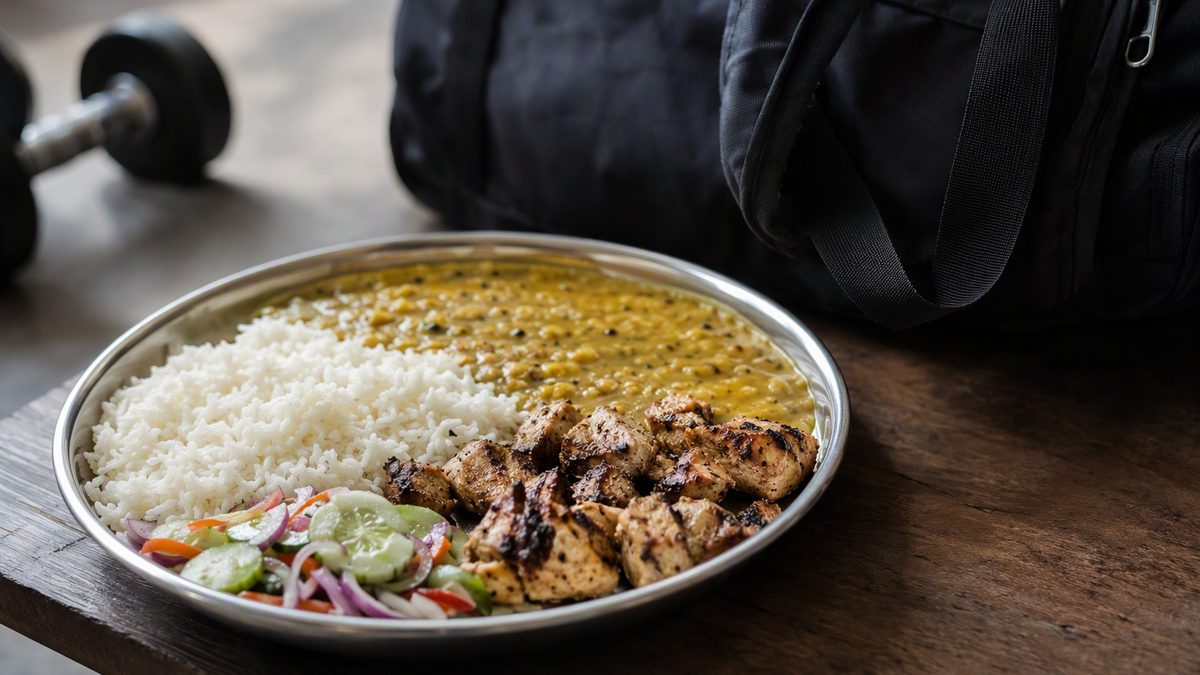
Picture a normal training week: you lift after work three to five evenings, get home somewhere between seven and eight, and want to know what to eat so the session counts. Good news, the recovery part is simpler than the gym crowd makes it sound. For one session a day with a normal meal afterward, you do not need a special product, a precise window, or a separate emergency feeding. Your post-gym dinner is the recovery meal.
That meal does three ordinary jobs: protein to repair and build, carbohydrate to top up glycogen, and fluid to rehydrate. Hit a balanced plate with 20 to 40 g of protein and you have covered all three without overthinking it.
This guide walks through your actual week, where the recovery meal slots into an evening routine, what to do on the night you get home late, and why consistency beats every timing trick you have read about.
1. A Normal Lifting Week, Hour by Hour
Start where you live: the evening session. You train roughly 6 to 7:30 pm, drive home, and eat. That post-gym dinner is your recovery meal, and its timing is already fine because it lands within a couple of hours of training. No stopwatch required. The table maps a typical push/pull/legs or upper/lower week onto realistic recovery meals for a 75 kg lifter.
| Evening | Session | Recovery meal at home | Protein + carbs |
|---|---|---|---|
| Monday | Upper / push | Chicken with rice and vegetables | ~30 g protein, quality carbs |
| Tuesday | Lower / legs | Burrito bowl with beans, rice, chicken | ~30 g protein, carbs for the leg session |
| Thursday | Upper / pull | Salmon with potatoes and salad | ~30 g protein, quality carbs |
| Saturday | Full body | Eggs or omelet with toast and fruit | ~25-30 g protein, carbs |
| Late night | Any (got home late) | Cottage cheese or casein before bed | 30-40 g slow protein |
Four of these are just dinner; the last row is for the night you get home too late to eat a full meal. Across the day you are aiming to land 1.6 to 2.2 g/kg of total protein, and these evening meals are one anchor of that. Making this repeatable week after week is the actual skill, which is why our guide to building fitness habits is worth a read.
2. Where the Recovery Meal Slots In
The honest answer to 'when should I eat after lifting' is: whenever you naturally get home, within a couple of hours, assuming you ate earlier in the day. If you had lunch and an afternoon snack before an evening session, those amino acids are still working for you, so there is zero urgency to inhale a shake the second you leave the gym. Your post-gym dinner arrives right on time.
That window is wide because the science says so. A meta-analysis found the apparent benefit of immediate post-workout protein disappeared once total daily protein was matched, and the usable window after training spans hours, not the mythical thirty minutes. Resistance exercise sensitizes your muscle so that protein eaten across the next roughly 24 hours is used efficiently. So the recreational lifter who trains once a day, eats normal meals, and gets a solid dinner afterward is already doing the timing right without trying.
One time to tighten it up is if you train fasted, say a 6 am session before breakfast. Then eating protein and carbs soon after genuinely helps, because your overnight fast left muscle in a net-breakdown state. For the typical evening lifter, that scenario does not apply, so relax and eat your dinner.
3. Keeping It Simple: One Plate, Three Jobs
You do not need five supplements or a complicated stack; you need one balanced plate that hits all three recovery jobs at once. A solid protein source supplies 20 to 40 g for repair, quality carbohydrate tops up glycogen, and a drink plus the water in whole foods handles rehydration. That is the entire recipe, and whole foods do it better than powders for an everyday meal because they bring fiber, micronutrients, and satiety along for free.
On glycogen specifically, do not overthink it. One moderate lifting session does not deeply deplete your muscle glycogen, and with a full day until your next workout, normal daily carbohydrate refills it comfortably. The aggressive fast-refuel carb numbers you may have seen, around 1.0 to 1.2 g per kg per hour, exist for endurance two-a-days and depleting sessions with a short turnaround, not for a recreational lifter with 24-plus hours of recovery. Co-ingesting extra carbs does not meaningfully boost the protein's effect either, so a normal portion is plenty. Eat the plate, drink to thirst, and move on with your evening.
4. The Late-Night Session and Why Consistency Wins
The one wrinkle in an evening routine is the late session, where you finish at nine and a full meal feels like too much before bed. This is where a pre-sleep dose shines. Roughly 30 to 40 g of slow-digesting casein, from cottage cheese, dairy, or a casein shake, raises overnight synthesis and feeds recovery through the longest fast of your day, and over a training block it has been linked to greater gains in muscle and strength. It is a far better lever for a late trainer than worrying about a narrow immediate window.
Step back, though, and the biggest truth for a recreational lifter is unglamorous: consistency beats every timing trick. The lifters who progress are the ones who hit their daily protein, sleep enough, and keep showing up, not the ones who nailed a thirty-minute window. Program-hopping, buying five supplements, or skipping legs will cost you far more than an imperfectly timed meal ever could. Judge your recovery by the basics, steady progress on the bar, hydration via pale-yellow urine, and how you feel between sessions, and fix sleep or daily protein before adjusting anything fancier.
If you want one honest takeaway to carry out of the gym, it is this: for a recreational lifter eating normal meals around one session a day, there is no recovery emergency to manage. Whole-food meals and shakes are both fine, chosen by convenience rather than magic, and a normal balanced plate within a couple of hours covers everything the science says matters. Spend the energy you might have wasted on timing and products on showing up four times a week instead, because that is what actually builds the body you are after.
Post-Gym Meal Questions Everyday Lifters Ask
When should I eat after my evening lifting session?
Whenever you get home, within a couple of hours, assuming you ate earlier in the day. The 30-minute window is a myth; once daily protein is matched the timing benefit disappears and the window is hours wide. Your post-gym dinner is your recovery meal and it lands on time naturally. Aim for 20-40 g of protein with quality carbs. The only exception is fasted morning training, where eating soon after genuinely helps.
Do I need a special recovery shake, or is a normal meal fine?
A normal balanced meal is completely fine and usually better. Whole foods bring protein for repair, carbs for glycogen, fluid, plus fiber and micronutrients that powders lack. Shakes are a convenience tool for when you trained fasted, can't stomach food right after a hard session, or won't reach a real meal for hours. For an everyday evening lifter eating dinner afterward, you do not need a separate product, your meal does the whole job.
Do I need to rush carbs to refill glycogen after lifting?
No. One moderate lifting session does not deeply deplete glycogen, and with 24-plus hours until your next workout, your normal daily carbohydrate refills it comfortably. The fast-refuel numbers you have seen are for endurance two-a-days and depleting sessions with short turnarounds, not recreational lifting. Just eat carbs with your post-gym protein for a balanced plate. There is no first-hour scramble for a once-a-day lifter.
Should I take protein or do anything special on rest days?
Yes, keep your daily protein steady on rest days, because muscle repair and adaptation happen between sessions, not just after them. Aim for the same 1.6-2.2 g/kg spread across your meals. You do not need a workout to 'earn' protein. There is nothing special to time on a rest day, no recovery meal to rush, just hit your normal totals, sleep well, and let the previous session's work consolidate.
Disclaimer: This article is for educational purposes only and is not medical advice. Consult a qualified healthcare professional before starting any supplement, nutrition, or training protocol — especially if you are pregnant or breastfeeding, under 18, taking medication, or managing a health condition.
Scientific References & Clinical Sources
- Schoenfeld BJ, et al. The effect of protein timing on muscle strength and hypertrophy: a meta-analysis. J Int Soc Sports Nutr, 2013. PMID: 24299050
- Aragon AA, Schoenfeld BJ. Nutrient timing revisited: is there a post-exercise anabolic window?. J Int Soc Sports Nutr, 2013. PMID: 23360586
- Morton RW, et al. A systematic review, meta-analysis and meta-regression of the effect of protein supplementation on resistance training-induced gains in muscle mass and strength in healthy adults. Br J Sports Med, 2018. PMID: 28698222
- Phillips SM, Van Loon LJ. Dietary protein for athletes: from requirements to optimum adaptation. J Sports Sci, 2011. PMID: 22150425
- Res PT, et al. Protein ingestion before sleep improves postexercise overnight recovery. Med Sci Sports Exerc, 2012. PMID: 22330017

