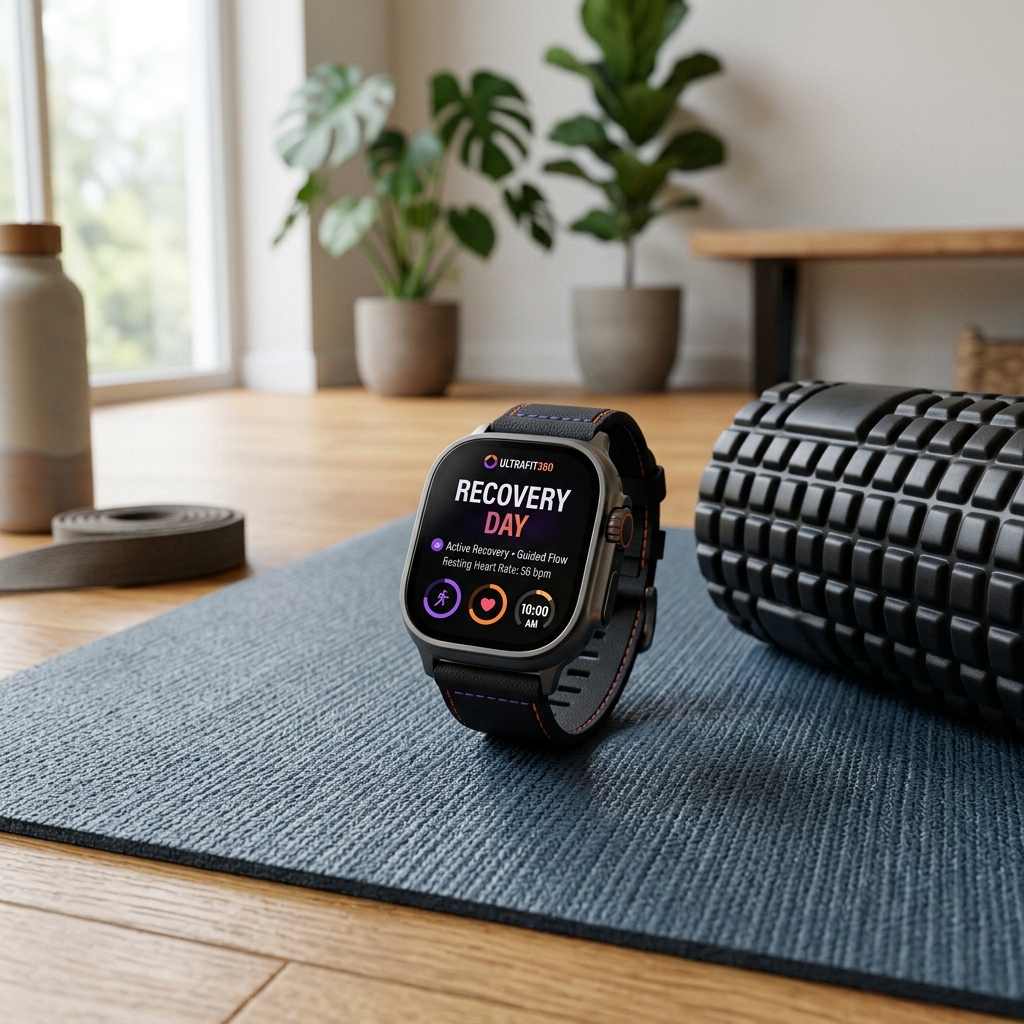
Most athletes treat recovery as what happens when training stops — the empty space between workouts that you tolerate until you can train again. In 2026, that mindset is being replaced by something more honest: recovery is where adaptation actually occurs. You do not get stronger in the gym. You get stronger in the hours and days after, while your body rebuilds what training broke down. Schedule it accordingly.
Why the "Train Hard, Rest When You're Dead" Mentality Backfires
The obsession with volume and intensity has produced an epidemic of overreached, chronically fatigued athletes who wonder why they have stopped progressing. They add more sets, more sessions, more cardio — and the results keep shrinking. The culprit is almost never a lack of effort. It is a lack of recovery capacity.
When you train, you create stress. Muscle fibers develop micro-tears, the nervous system is taxed, glycogen stores are depleted, and inflammatory markers rise. None of that is a problem — it is the stimulus. The problem is treating stimulus accumulation as the goal instead of what it actually is: a trigger for adaptation. Adaptation requires resources, time, and a body that is not perpetually in crisis mode.
Chronically under-recovered athletes see:
- Stalled or regressing strength and performance numbers
- Persistent low-grade soreness that never fully resolves
- Declining motivation and mood around training
- Elevated resting heart rate and disrupted sleep
- Higher injury frequency, especially overuse injuries
These are not signs that you need to push through. They are signals that your recovery budget is overdrawn.
The Shift: Recovery as a Calendar Appointment
The practical fix is disarmingly simple: put recovery on the calendar before you schedule training. Not after. Not in the gaps. First.
This reorder changes how you think about the week. Instead of asking "how much can I train this week?" you start with "what recovery do I need to actually adapt from last week, and what does that leave room for?" It is a supply-and-demand model. Recovery is the supply. Training is the demand. When demand consistently exceeds supply, the system degrades.
Blocking recovery time works for the same reason blocking workout time works: it makes it non-negotiable. A rest day that is not scheduled gets eaten by a bonus session, an extra run, or the creeping guilt that you are not doing enough. A recovery day on the calendar is a commitment — to your physiology, not your anxiety.
Building a Recovery Schedule: The Three Layers
A complete recovery structure operates on three time horizons simultaneously. Most people handle none of them intentionally. Elite programs address all three.
Daily recovery is anchored by sleep. Seven to nine hours is not a wellness platitude — it is when growth hormone pulses, protein synthesis peaks, and the nervous system consolidates the motor patterns you drilled in training. Cutting sleep to add a morning session is one of the worst trades in fitness. One hour less sleep per night compounds into measurable strength loss and reaction time degradation within a week.
Beyond sleep, daily recovery includes nutrition timing (sufficient protein distributed across meals, carbohydrate replenishment after sessions), hydration, and managing overall stress load. Training stress and life stress share the same recovery budget. A brutal work week and a brutal training week at the same time will produce the same outcome: breakdown.
Weekly active recovery means dedicating at least one day — ideally one to two — to movement that promotes blood flow and parasympathetic tone without adding significant training load. This is not a day off from movement. It is a day off from intensity.
Examples of effective weekly active recovery:
- A 30–45 minute walk at a comfortable pace
- Light swimming or cycling at conversational effort
- Yoga or mobility work focused on range of motion, not performance
- Foam rolling and soft tissue work targeting the week's trained areas
The physiological benefit of low-intensity movement on recovery days is real. It increases circulation to sore tissues, accelerates waste product clearance, and keeps the body from stiffening up without creating new damage. Many athletes find they feel significantly better on the day after an active recovery session than on a day of complete inactivity.
Monthly deload weeks are the layer most consistently skipped and most consistently undervalued. A deload is a planned reduction in training volume and sometimes intensity — typically to 40–60% of normal weekly load — that allows deeper physiological and neurological recovery than a single rest day provides.
The nervous system fatigue that accumulates across several weeks of hard training cannot be fully resolved by sleeping well and taking weekends. It needs a longer runway. Deloads provide that runway. Most well-designed programs schedule them every third or fourth week, though the optimal frequency depends on training age, intensity, and individual recovery capacity.
Active vs. Passive Recovery: Choosing the Right Tool
Not all recovery methods work the same way, and conflating them leads to poor choices. Active and passive recovery serve different purposes and are suited to different contexts.
Active recovery involves low-intensity movement. It is best used in the 24–48 hours following a moderate-to-hard training session, on designated weekly recovery days, and at any point when residual soreness is present but not severe. The goal is circulation and parasympathetic activation without adding to the damage total.
Passive recovery involves rest, sleep, and therapeutic modalities. It is most appropriate immediately after very high-intensity sessions, during illness or injury, and during deload weeks when the body needs genuine unloading. Passive modalities include:
- Sleep extension (going to bed earlier or napping)
- Cold water immersion or contrast therapy for acute soreness
- Massage or compression garments for blood flow support
- Breathing exercises and meditation for nervous system downregulation
The mistake is treating passive recovery as default laziness and active recovery as the only legitimate option. Both are valid. The right choice depends on where you are in the training cycle and what your body is actually communicating. A hard athlete who cannot sleep well, whose resting heart rate is elevated, and who feels dread about training needs passive recovery — more movement is not the answer.
Reading Your Recovery Status Honestly
Scheduling recovery is step one. The harder skill is reading whether the recovery you planned is actually working — and adjusting when it is not.
The most reliable indicators of recovery status are low-tech and available to anyone. Resting heart rate measured first thing in the morning is a stable personal baseline; a significant elevation on a given day (typically five or more beats above your norm) suggests incomplete recovery. Sleep quality — not just duration, but how rested you feel — is another strong signal. Subjective readiness, meaning how motivated and capable you feel before a session, correlates meaningfully with actual performance capacity.
Heart rate variability (HRV) has become a more accessible metric through wearables and apps. Higher HRV generally indicates better recovery and readiness; a sustained downward trend signals accumulated fatigue. HRV is most useful as a trend over time rather than a single-day reading, and it needs to be interpreted alongside subjective feel rather than in isolation.
The key discipline is acting on these signals rather than overriding them with willpower. Showing up to a hard training session when all indicators say you are not recovered does not demonstrate mental toughness. It demonstrates a failure to understand what training is for.
Practical Steps to Implement a Recovery-First Schedule
If you have never structured recovery intentionally, the shift is straightforward to implement:
- Set a sleep anchor. Choose a consistent wake time and count backward to determine your target bedtime. Protect this time with the same firmness you protect your training sessions.
- Block recovery days before filling in training days. Decide on your active recovery days and your full rest day for the week before scheduling any hard sessions.
- Schedule your next deload week now. Put it in the calendar. If you are not currently deloading on a cycle, start with a deload every four weeks and adjust from there.
- Track how you feel before, during, and after sessions. A simple 1–10 readiness rating takes seconds and reveals patterns over weeks that are not visible day to day.
- Make the deload non-negotiable. Do not skip it because you feel good. Feeling good during a deload week is the point — it means recovery is working.
Recovery Is Not Optional — It Is the Program
There is a persistent belief in fitness culture that more training always yields more results, and that rest is for people who lack discipline. This belief is empirically wrong and practically harmful. The athletes who sustain progress over years — who remain healthy, motivated, and continuously improving — are not the ones who train the most. They are the ones who recover the best.
Adaptation is not a training phenomenon. It is a recovery phenomenon. The workout is the stimulus. The recovery is where the body responds to that stimulus by rebuilding stronger, more capable tissue. Remove the recovery and you remove the adaptation. You are left with stimulus accumulation and no response — which is precisely the state that produces plateaus, burnout, and injury.
Treating recovery as a scheduled commitment rather than an afterthought is one of the highest-leverage changes a serious athlete can make. It costs nothing except the willingness to plan ahead and the discipline to honor what you planned.
UltraFit360 makes recovery scheduling concrete: use the calendar block feature to lock in your sleep targets, active recovery sessions, and upcoming deload weeks, then let readiness scores guide your daily training decisions automatically. When your body is recovered, train hard. When it is not, your schedule already has the right plan in place.
Transform Your Fitness Journey
Log your workouts, track your diet, and get AI coaching insights — all with UltraFit360.