💡 Key Takeaways
- The damper is not the resistance dial; it changes how the stroke feels, not how hard the workout is, so beginners should set it at 3-4, not 10.
- Rowing is a leg-drive movement (about 60% legs, 10% arms), not an arm exercise, which is why pulling with the arms gasses you out and teaches the wrong pattern.
- The erg is low-impact, so it lets a stiff, returning 40-something body train cardio hard without the heel-strike that aggravates old knees and hips.
- Build duration at an easy conversational pace for the first few weeks before any intervals; that aerobic base is what makes harder work safe and productive.
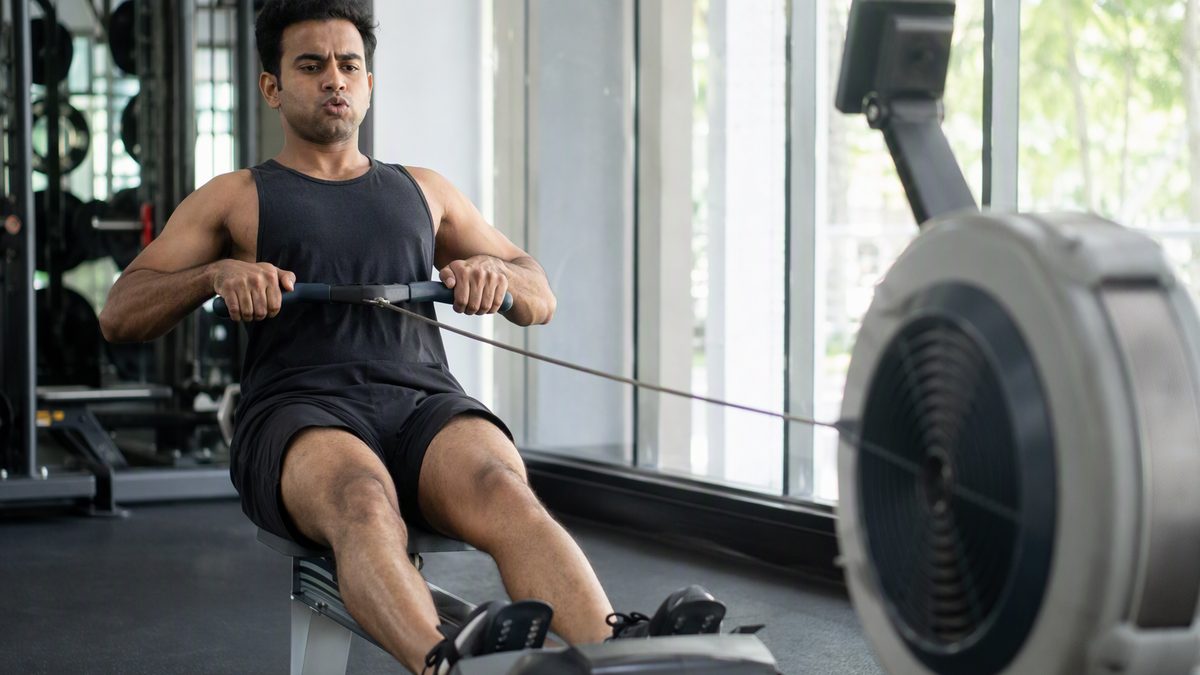
Walk up to a rowing machine for the first time at 44 and the instinct is almost universal: slide that damper lever to 10 because 10 must be the hardest setting and you want a real workout. Five minutes later your lower back is barking, your arms are fried, and you are convinced rowing is not for you. The belief that the damper is the resistance, and higher means harder and better, is the single most common myth that ruins rowing for beginners, and it is simply false.
On an air rower the damper only controls how much air enters the flywheel, which changes how the stroke feels, like gears on a bike, not how hard the session is. How hard you work comes entirely from how hard you pull. Crank the damper and you do not get a better workout; you get a heavy, grindy stroke that fatigues your back and rewards bad form.
Below: the evidence against the damper myth, why rowing is a leg movement and not an arm one, a realistic three-to-four-day week with real numbers, and the joint-and-back cautions that matter most for a body returning to training in its forties.
1. The Damper Myth, and What Actually Makes It Hard
Here is what the lever really does. On an air rower the damper controls how much air enters the flywheel housing, which changes the drag factor, essentially the gearing of the stroke. A high damper, like 10, feels heavy and grindy, more like a weightlifting movement per stroke, and it fatigues your lower back faster when your form is still rough. A low damper feels light and spinny. Neither one sets the difficulty.
Difficulty comes from power, how hard and how fast you drive each stroke. You can get an equally hard, or harder, cardio workout at a low damper by pulling more powerfully and more often. This is why most coaches and competitive rowers train at a moderate setting, commonly around 3 to 5, because it best mimics real rowing and rewards good leg drive rather than muscling a heavy flywheel. For a beginner over 40 the practical takeaway is direct: start at 3 or 4, leave it there, and make the workout hard by pulling harder, not by climbing the lever. Fixing your stroke sequence and posture matters far more for both power and safety than any damper number.
2. Why Rowing Is a Leg Exercise, Not an Arm One
The second myth that gasses beginners is treating the rower like an arm machine. It is not. Roughly 60% of the power in a stroke comes from your legs, about 30% from your hips and back swinging open, and only the last 10% from your arms. The arms are the weakest link in the chain and they tire fast, so if you power the stroke by yanking with them, you fatigue in two minutes and never learn the movement.
The fix is a strict sequence. On the drive, push hard with the legs first, then swing your torso open from the hips, and only then draw the arms to your chest, legs-body-arms. On the way back, reverse it: arms reach away, hips hinge forward, then the knees bend to slide you up to the next stroke, arms-body-legs. Let the recovery take longer than the drive, roughly a one-to-two rhythm, because rushing the slide is a hallmark of poor rowing. For a returning body, two faults to avoid above all are bending the elbows early, which breaks the chain so your leg power never reaches the handle, and rounding your lower back, which is the main cause of rowing back pain.
3. A Realistic Rowing Week for a Busy 40-Something
You do not have unlimited time, and going too hard in week one is a classic over-40 mistake that ends in soreness mistaken for progress. Three to four sessions a week is realistic and effective. Spend the first few weeks almost entirely on easy, conversational rowing to groove the technique and build an aerobic base, then layer in short intervals once steady state feels comfortable. The table below is a sensible starting structure, not a finished athlete's program.
| Week stage | Session and format | Intensity and setup |
|---|---|---|
| Weeks 1-3 (build the base) | 3 x easy steady row, 10-20 min, extend as comfort allows | 60-70% max HR, 18-22 spm, damper 3-4, can hold a conversation |
| Weeks 4-6 (add a little intensity) | 2 easy steady (20-30 min) + 1 interval day | Intervals: 4-6 x 1 min strong / 2 min easy, RPE 6-7 |
| Weeks 7+ (progress gradually) | 2-3 easy (25-40 min) + 1-2 interval sessions | Harder intervals: 4 x 4 min / 2-3 min easy, RPE 7-8 |
| Optional later benchmark | 2000m time trial once technique is solid | All-out; only after steady state is comfortable |
Keep hard sessions on non-consecutive days, because rowing's hard systems need roughly 48 hours to recover. Connective tissue, tendons and ligaments, adapts more slowly than muscle in your forties, so progress duration and intensity in small steps rather than jumping. Resist program-hopping; consistency over a couple of months beats a perfect plan you abandon. If habit-building is your real struggle, our guide to building fitness habits covers how to make three sessions a week stick.
4. Protecting Your Back, Joints and Heart at 40+
The erg's biggest advantage for a returning body is that it is low-impact: the seat glides and your feet stay strapped, so there is no heel-strike to aggravate the knees and hips that may already complain when you run. That is exactly why so many people over 40 can train cardio hard on the rower when other modes hurt. But low-impact is not no-risk, and the lower back is the part to protect.
Lower-back pain is the most common rowing complaint, and it is almost always a technique problem: rounding or flexing the lumbar spine at the catch or finish, opening the torso too early, or grinding a high damper with poor form. Keep a neutral spine, hinge from the hips, sequence legs-first, and keep the damper moderate, and you remove most of the risk. On the heart side, if you have been sedentary for years or you manage blood pressure, heart or metabolic conditions, get a medical check before doing all-out intervals or a 2K test, since maximal effort transiently raises cardiac demand. Easy steady-state rowing is low-risk for almost everyone and is where you should start anyway.
5. Common Beginner Mistakes to Skip Entirely
A short list saves you the frustration that makes most people quit. Do not crank the damper to 10; it does not make you fitter, it just grinds your back. Do not pull with your arms; drive with your legs and let the arms finish. Do not rush the recovery; the slide back should take longer than the drive. Do not round your lower back at the front of the stroke; hinge from the hips with a tall spine. And do not equate a frantic high stroke rate with a good workout; speed comes from power per stroke, not from spinning the handle fast.
One more that hits the over-40 crowd specifically: do not treat soreness as the goal. A returning body will be sore early, but chasing soreness leads to going too hard too soon and stalling. Aim for consistency and gradually rising performance instead. Track your 500m split against your heart rate over weeks; when your pace gets faster at the same effort, your fitness is genuinely improving, and that is the signal that matters, not how wrecked you feel afterward.
What Beginners Over 40 Ask About Rowing
Should I set the damper to 10 for a harder workout?
No. The damper is not the resistance dial; it only changes how the stroke feels, like gears on a bike, not how hard the session is. A 10 feels heavy and grindy and fatigues your lower back fast when your form is still developing. How hard you work comes from how hard you pull. Set it at 3 or 4, leave it there, and make the workout harder by driving each stroke more powerfully. Most experienced rowers train around 3 to 5.
Is it too late at 44 to get real results from rowing?
Not at all. The erg is a great place to start late because it is low-impact and trains your whole body at once, so the cardiovascular gains come quickly. People returning from a low base often improve fastest in the first few weeks. Start with short, easy, conversational rows three to four times a week, groove the legs-body-arms technique, and add intervals once steady state feels comfortable. Consistency over a couple of months matters far more than your starting age.
Why do my joints and back hurt more than my muscles when I row?
Back pain on the erg is almost always a technique fault, not the machine. Rounding your lower back at the catch, opening your torso too early, or grinding a high damper all load the lumbar spine. Fix it with a neutral spine, hinging from the hips, a legs-first sequence, and a moderate damper of 3 to 4. The rower itself is low-impact and kind to knees and hips. If back pain persists after you clean up form, get it assessed.
Do I need different numbers than a 25-year-old beginner?
The technique and damper guidance are the same, but your ramp should be gentler. Connective tissue adapts more slowly than muscle in your forties, so increase duration and intensity in smaller steps and keep hard sessions on non-consecutive days. You may also recover more slowly and carry more life stress and poorer sleep, all of which argue for more easy steady-state volume and a smaller dose of hard intervals. Same movement, more patience with the progression.
Disclaimer: This article is for educational purposes only and is not medical advice. Consult a qualified healthcare professional before starting any supplement, nutrition, or training protocol — especially if you are pregnant or breastfeeding, under 18, taking medication, or managing a health condition.
Scientific References & Clinical Sources
- Joyner MJ, Coyle EF. Endurance exercise performance: the physiology of champions. J Physiol, 2008. PMID: 17901124
- Tabata I, et al. Effects of moderate-intensity endurance and high-intensity intermittent training on anaerobic capacity and VO2max. Med Sci Sports Exerc, 1996. PMID: 8897392
- Mandsager K, et al. Association of Cardiorespiratory Fitness With Long-term Mortality Among Adults Undergoing Exercise Treadmill Testing. JAMA Netw Open, 2018. PMID: 30646252
- Keating SE, et al. A systematic review and meta-analysis of HIIT versus continuous training for fat loss. Obes Rev, 2017. PMID: 28401638
- Buchheit M, Laursen PB. High-intensity interval training, solutions to the programming puzzle: Part I: cardiopulmonary emphasis. Sports Med, 2013. PMID: 23539308
Want a plan built around your training history? UltraFit360's free AI workout planner creates and adjusts programs for you.

