💡 Key Takeaways
- The erg builds the heart-and-leg stamina that carries you through a full show with no impact on already-overloaded ankles, feet and hips.
- Rowing is a leg-drive movement (about 60% legs, 30% trunk, 10% arms), so it trains power and posterior-chain endurance without the bulk many dancers fear.
- Keep most sessions easy and conversational and add hard intervals sparingly; that easy aerobic volume is what makes long rehearsal days feel lighter.
- Honest fuelling is non-negotiable: rowing burns a lot because it works most of your body, so under-eating to stay lean will sabotage recovery, not improve your line.
By the end of a long rehearsal day, the legs are spent and the cardiovascular tank is empty, yet the choreography still demands explosive jumps in the final number. That gap, between the endurance a season demands and what daily class actually builds, is the problem most dancers feel but few have a clean tool to fix. Running to build a base only adds more impact to ankles, feet and hips that are already among the most injured in any athletic population.
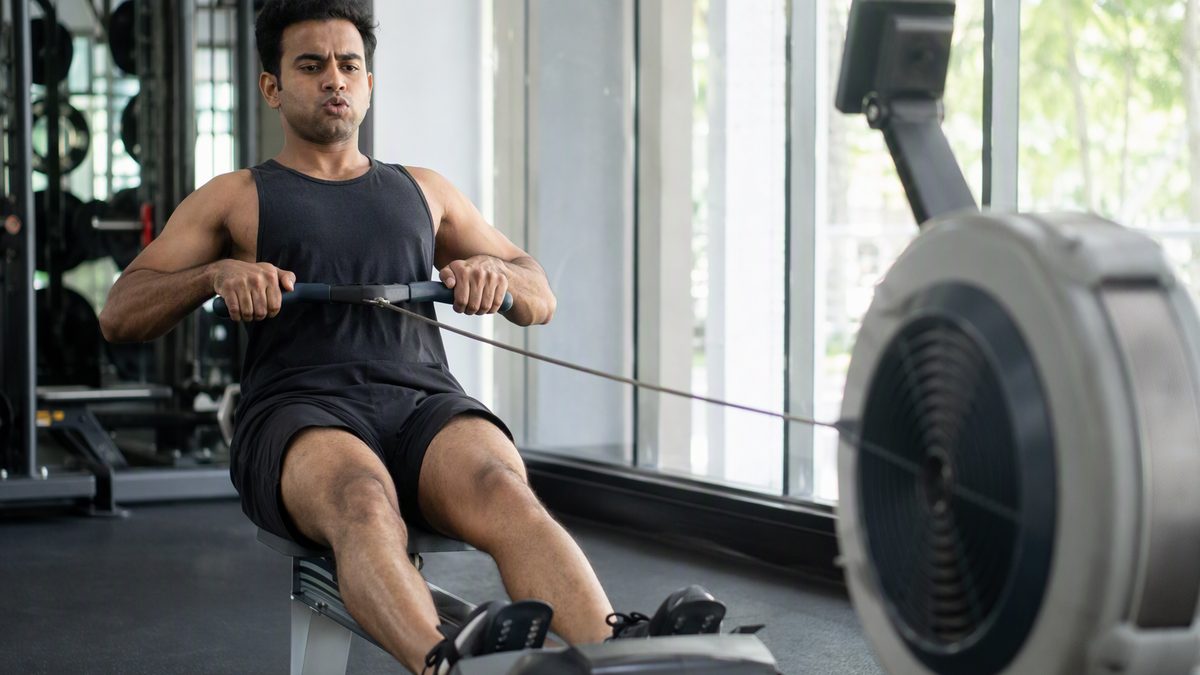
The indoor rower, or erg, fills that gap without adding load where you cannot afford it. The seat glides and your feet stay strapped to the footplate, so there is no heel-strike, no landing, no impact at all, while each stroke drives nearly your whole body and trains the heart hard.
Below: why impact-free stamina is the thing the erg gives you, how its leg-drive mechanics build power without bulk, a season-aware weekly plan with real numbers, the fuelling conversation that protects your recovery, and how to read the early warning signs your body sends.
1. The Stamina Gap the Erg Fills
Class and rehearsal sharpen skill, control and artistry, but they rarely build a deep aerobic engine in a structured way, and they pile on impact and repetitive ankle, foot and hip load every single day. When performance season arrives with daily shows, the dancers who fade in act three are usually the ones with no dedicated conditioning base. You need stamina that does not cost you more pounding.
The erg is unusually well suited to that. It is non-impact: feet strapped, seat sliding, no ground-reaction force anywhere. And it recruits an unusually large fraction of your total muscle, roughly nine major groups across legs, posterior chain, trunk and arms in one stroke, so it taxes the cardiovascular system hard for the time spent. That combination, high cardiovascular demand with zero impact, is exactly what a body that is both your instrument and your livelihood needs from cross-training. One caveat worth naming up front: low-impact is not no-risk, so the posture cues in the next section matter, especially for hypermobile dancers who need to find stability rather than more range.
2. Leg-Drive Power Without the Bulk You Fear
The fear that strength and conditioning will 'bulk' you and change your line on stage keeps a lot of dancers off useful tools. Rowing should not, because of how the stroke is powered. It is a leg-drive movement: roughly 60% of the power comes from your legs, about 30% from your hips and back opening, and only 10% from your arms. You are training posterior-chain and leg endurance and power, not loading volume onto your arms or chest.
The sequence matters and it suits a dancer's body awareness. On the drive, push with the legs first, then swing the torso open from the hips, then finish with a light pull of the arms to the chest, legs-body-arms. On the recovery, reverse it, arms-body-legs, and let it take longer than the drive. For hypermobile dancers, the cue is stability over stretch: keep a neutral, supported spine and hinge from the hips rather than rounding or hyperextending. Set the damper at a moderate 3 to 5, not cranked high; the damper is not the difficulty dial, and a heavy flywheel only tempts you to grind with poor posture. Power comes from how hard you pull, not from the number on the lever.
3. Rowing Through Rehearsal Blocks and Performance Season
The most common mistake is treating conditioning as one more hard thing to grind through. It should not be. Most of your rowing should be easy and conversational, the kind of steady effort that builds an aerobic base while costing almost nothing to recover from, which is what lets long rehearsal days feel lighter. A small dose of harder intervals, once or twice a week in build phases, sharpens the top end. The table adapts standard erg formats to a dancer's loaded schedule.
| Session | Format | Intensity and setup |
|---|---|---|
| Easy aerobic base (most of your volume) | 20-40 min continuous, mornings on lighter days | 60-70% max HR, 18-22 spm, damper 3-5, conversational |
| Short power intervals (build phase only) | 6-8 x 250m hard / equal easy row | Strong leg drive, RPE 7-8, controlled posture |
| Aerobic intervals | 4 x 4 min / 2-3 min easy | Comfortably hard, full sentences only at the rest |
| Performance season (maintenance) | 15-20 min easy on a show day, no hard intervals | Easy only; let the shows be the intensity |
In a heavy rehearsal block, two to three easy rows and one interval session is plenty. During performance season, drop the intervals entirely and use short easy rows to keep the engine ticking and aid recovery; the shows themselves are the hard work. Keep your hardest rowing off the same day as priority technique or strength work so neither blunts the other, since hard erg work, like any hard endurance work, can interfere a little with concurrent strength gains.
4. Fuelling a Body That Is Your Instrument
This is where honesty matters most, because the dance world carries a real history of under-fuelling and the low-energy-availability problems that follow. Rowing burns a lot of calories precisely because it drives most of your body at once, and that is a reason to fuel it, not to use it as a tool for restriction. Adding hard conditioning on top of an aesthetic-driven calorie deficit is how recovery collapses, stress reactions appear, and the very line you are protecting gets worse, not better. Think of fuelling as performance infrastructure: it is what lets you absorb the training and keep your body durable through a season.
A practical caution on the machine itself: the erg's calorie counter is only an estimate from your power output, and it tends to over-state calories for lighter people because it does not know your body weight or efficiency. Do not let an inflated number on the monitor talk you into eating less. If recovery is poor, if you are unusually cold, fatigued or missing periods, or if a bony ache lingers, those are signals to involve a clinician, not to train harder. Fuel the work, and the work will give you the stamina the choreography is asking for.
5. Warning Signs and Reading Recovery
Dancers are trained to push through, which is exactly why the early signals are easy to ignore. A resting heart rate sitting several beats high for several mornings, fragmented sleep, legs and back that stay heavy, or a creeping loss of bounce all argue for an easy row or a full rest instead of a planned hard piece. If your watch tracks heart-rate-variability trends, let them inform the call too. The discipline is letting an off day veto intensity; a missed interval session costs almost nothing, while a stress reaction costs a season.
Watch the bony aches especially. Pain that localises to a bone, foot, shin, hip or rib, and lingers is a stop-and-assess signal, not something to row through. Rib stress injuries are a recognised overuse problem at very high rowing volume, so build gradually and keep most of your work easy. On the positive side, track your 500m split against your heart rate: when your pace gets faster at the same effort over a few weeks, your aerobic base is growing, and that growing base is what carries you through the final number with something left.
What Dancers Ask About Rowing Machine Conditioning
Will rowing change how my body looks on stage?
It is unlikely to bulk you. Rowing is a leg-drive endurance movement, about 60% legs and only 10% arms, so it trains posterior-chain and aerobic endurance rather than piling size onto your arms or chest. What it changes is your stamina and your ability to absorb a long season. If you are well fuelled, conditioning supports the lean, durable body you want; it is chronic under-eating, not strength work, that actually degrades your line and your recovery.
Can I do this during performance season?
Yes, but change the dose. During a run of shows, drop the hard intervals entirely and use short 15-20 minute easy rows to keep your aerobic engine ticking and help recovery between performances. The shows themselves supply the intensity, and piling hard conditioning on top risks overload. Save structured intervals for build phases and off-season blocks. The goal in season is maintenance and recovery, not building, so keep every in-season row easy and conversational.
Does rowing help with stress fractures and ankle injuries?
It can help indirectly by giving you an impact-free way to keep your cardiovascular fitness while an injured foot or ankle heals, since the seat glides and your feet stay strapped with no landing load. It does not treat the injury, and any bony pain needs a clinician, not more training. Rowing also will not fix the under-fuelling that drives many stress reactions in dancers. Use it to maintain conditioning during rehab, and address fuelling and load as the real causes.
I have heard rowing causes water weight. Is that true?
No, rowing itself does not add water weight; it is cardiovascular conditioning, not a supplement or a loading protocol. That worry is worth naming because it can feed restriction, which is the real danger. The honest message is the opposite: fuel the work. Rowing burns plenty because it drives most of your body, and its calorie counter even over-states for lighter people, so do not let an inflated number talk you into eating less. Stamina comes from fuelling and consistent training, not from staying depleted.
Disclaimer: This article is for educational purposes only and is not medical advice. Consult a qualified healthcare professional before starting any supplement, nutrition, or training protocol — especially if you are pregnant or breastfeeding, under 18, taking medication, or managing a health condition.
Scientific References & Clinical Sources
- Joyner MJ, Coyle EF. Endurance exercise performance: the physiology of champions. J Physiol, 2008. PMID: 17901124
- Tabata I, et al. Effects of moderate-intensity endurance and high-intensity intermittent training on anaerobic capacity and VO2max. Med Sci Sports Exerc, 1996. PMID: 8897392
- Keating SE, et al. A systematic review and meta-analysis of HIIT versus continuous training for fat loss. Obes Rev, 2017. PMID: 28401638
- Murlasits Z, et al. The physiological effects of concurrent strength and endurance training sequence: a systematic review and meta-analysis. J Sports Sci, 2018. PMID: 28783467
- Plews DJ, et al. Training adaptation and heart rate variability in elite endurance athletes: opening the door to effective monitoring. Sports Med, 2013. PMID: 23852425
Want a plan built around your training history? UltraFit360's free AI workout planner creates and adjusts programs for you.

