💡 Key Takeaways
- Once your clinician clears you, the erg is one of the gentlest cardio re-entries — no impact, your feet stay strapped, and you can stop the instant the baby needs you.
- Start easy and short: damper 3-4, stroke rate 18-22 spm, 10-15 minutes, with the legs doing the work and a strictly neutral spine to respect relaxin-loosened joints and your core rebuild.
- Build the stroke before the duration, and the duration before any intensity; this is about reclaiming an aerobic base and feeling like yourself, not chasing the scale.
- If breastfeeding, the added training sits on top of eating enough — lactation adds roughly 400-500 calories a day — never on a calorie cut.
The problem isn't motivation. It's that almost every cardio option feels wrong right now. Running pounds joints that relaxin has left loose for months. A bouncy class jars a pelvic floor and core that are still re-learning how to brace. And the baby rewrites your day on a whim, so any plan that needs an uninterrupted hour is fiction. You want to move, to feel like your body is yours again — and the usual choices either hurt or don't fit.
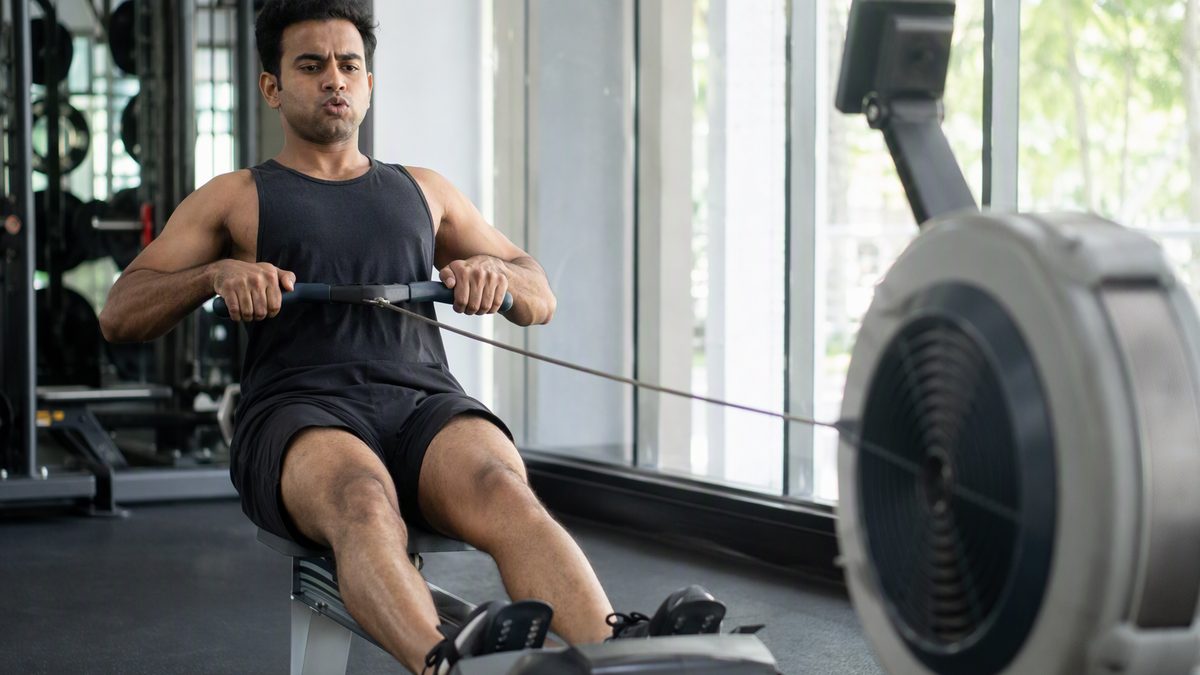
The rowing machine answers most of that. It's a full-body cardio that produces zero impact: the seat glides, your feet stay strapped to the footplate, and there's no heel-strike or jarring landing anywhere in the motion. You drive from the legs, so it's a leg-and-back exercise far more than an "arm" one, and you can stop on a dime when the baby stirs. That makes it one of the kinder ways to rebuild an aerobic engine after birth.
One firm rule before anything else: get your clinician's clearance before resuming structured exercise, and more so after a C-section or a complicated delivery. With that green light, here's how to come back gently.
1. Why Low-Impact Matters Most in the Postpartum Window
The early-return trap is loading a body mid-rebuild as if it were already rebuilt. Relaxin can keep your joints lax for months after birth, so impact and instability carry more risk than they used to. Your deep core and pelvic floor are re-learning to brace, which means anything that bounces or jars before they're ready can flare problems rather than build fitness. And chronic sleep debt blunts your recovery from anything demanding.
This is exactly where the erg fits, because it removes the part that's risky and keeps the part that's useful. There's no ground-reaction loading at all — nothing pounding through lax joints — yet you still drive a large muscle mass and get a real cardiovascular stimulus. It's similar in joint-friendliness to a stationary bike, but it works far more of your body, so a short, gentle session does meaningful aerobic work. Crucially, the seat and handle let you scale the effort to almost nothing on a hard day and a little more on a good one, with a single setting on the lever. The goal in this season is rebuilding capacity and feeling steadier — not burning calories or chasing a number on the scale. The aerobic base you lay down now is the foundation everything else sits on later, and gentle, consistent volume is what grows it. For the mindset that makes a non-linear return stick, our piece on building fitness habits is a kind companion — though let your clearance and your energy set the pace, always.
2. Learning the Stroke Safely With a Rebuilding Core
The stroke matters more for you than for almost anyone, because a sloppy one loads the very low back and core you're rehabbing. So learn it slowly and lightly before you think about minutes or pace. The drive runs legs, then body, then arms: push the floor away with your legs first, then swing the torso open from the hips, then draw the handle lightly to the chest. The recovery reverses it — arms away, hinge forward from the hips, then bend the knees to slide up to the catch — and it should take about twice as long as the drive. Mantra: legs-body-arms out, arms-body-legs back, unhurried.
Two non-negotiables for a postpartum body. First, the hinge: open and fold from the hips, never by rounding or flexing the lower back. Rounding the lumbar spine at the catch or finish is the main cause of rowing back pain in anyone, and your core isn't yet ready to absorb it. Keep a tall, neutral spine through every stroke. Second, the brace and the floor: exhale gently and engage your deep core as you drive, and pay attention to your pelvic floor — if you feel heaviness, leaking, or any doming down the midline of your belly, stop and check in with your physio or clinician, because the erg doesn't replace pelvic-floor rehab. Set the damper low, at 3-4, so leg drive rather than a heavy flywheel does the work, and keep the stroke rate easy at 18-22 spm. Light, clean strokes first; everything else later.
3. A Nap-Window Progression That Survives Sleep Regressions
Forget a tidy training week — postpartum progress is non-linear, and the only plan that survives a four-month sleep regression is one built from short blocks you take whenever a window opens. Everything below assumes clinician clearance, a 3-4 damper, an easy 18-22 spm, and a strict neutral spine. Scale by how the night went, not by what the calendar says.
| Week (post-clearance) | Session | Effort anchor | Days/week |
|---|---|---|---|
| 1-2 | 10 min easy steady row, learn the stroke | Can chat in full sentences; 3/10 | 3 |
| 3-4 | 15 min easy steady, smooth recovery slide | Conversational; never breathy | 3-4 |
| 5-6 | 20 min easy, add a few slightly firmer strokes | Still easy talk; ease off if breathy | 4 |
| 7-8 | 20-25 min steady; optional 4 x 1 min light pickups | Pickups comfortably hard, not maximal | 4 |
| Rough-night version | 8-10 min very easy, or skip | Effort 2-3/10; stop early if needed | As able |
| Regression weeks | Hold previous volume; don't progress | Easy throughout; recovery first | 2-3 |
The pickups in weeks 7-8 are optional, not required, and only if the easy rowing feels genuinely comfortable and clean. On the weeks the baby stops sleeping, the right move is to hold steady or pull back — never to push. The base keeps building on easy, consistent volume, and pausing the progression for a fortnight costs you nothing. Build duration gradually before intensity, both to protect your low back and to keep the demand sustainable on broken sleep.
4. Breastfeeding, Fuel and Training on Four Hours of Sleep
Fragmented sleep is the defining constraint, and it changes how you read every signal. Sleep debt raises your resting and exercising heart rate, so a number that looks high may just be a bad night — trust how you feel and the talk test over a watch. Easy rowing tends to leave your nervous system calmer afterward, which can gently support that night's sleep and your sense of readiness; a hard session on no sleep does the opposite and digs the hole deeper. That's the case for keeping these sessions easy, not just a nicety.
If you're breastfeeding, respect the extra layer honestly. Lactation adds roughly 400-500 calories of daily demand and shifts your fluid needs, so this rowing has to sit on top of eating and drinking enough — not in place of it. Do not pair the erg with calorie restriction to lose weight faster: under-fueling while nursing and sleep-deprived is how moms end up more exhausted, and for some it can affect supply. The reassuring part is that moderate, easy exercise itself is compatible with breastfeeding when you're eating adequately; the honest caveat is to treat low energy, dizziness, or any change in supply as a cue to eat more and do less, and to check with your clinician. Iron and vitamin D are commonly low postpartum, which can sap your energy regardless of training, so that's worth raising at a check-up too. Frame this whole season as gently rebuilding capacity. The weight conversation, if you want one at all, belongs to a later, better-rested chapter.
What New Moms Ask About the Rowing Machine
When can I start rowing after delivery?
Only after your clinician clears you, and the timeline varies a lot — a straightforward vaginal birth and a C-section follow different schedules, and complications change them further. Once cleared, the erg is a gentle re-entry because it's zero-impact and easy to stop. Begin with about ten easy minutes a few days a week, focus on learning a clean, neutral-spine stroke before adding time, and let your energy rather than a calendar decide how fast you progress.
Is rowing safe while breastfeeding, and will it affect my milk supply?
Moderate, easy rowing is generally compatible with breastfeeding when you're eating and drinking enough, since lactation adds roughly 400-500 calories of daily demand. The key is fueling that demand, not cutting calories to lose weight, which is what can undermine energy and, for some, supply. Stay hydrated, eat adequately, and treat any drop in supply or unusual fatigue as a signal to do less and check in with your clinician.
How do I row on four broken hours of sleep?
Scale it rather than skip it, and judge effort by feel, since sleep debt inflates your heart rate. On a rough night, drop to eight or ten very easy minutes and stop early if you need to. Easy rowing usually leaves you calmer and can support that night's sleep, while pushing hard on no rest deepens the deficit. Some days the right session is rest — that's the plan working, not failing.
Will the erg help me lose the baby weight?
That's the wrong frame for this season. The goal here is rebuilding your aerobic base, protecting your recovering core and joints, and feeling steadier — not chasing the scale. Pairing rowing with calorie restriction while sleep-deprived and possibly nursing tends to leave you more depleted, not better off. Fuel adequately, build the base consistently with a clean stroke, and let any body changes follow naturally once you're more recovered and rested.
Disclaimer: This article is for educational purposes only and is not medical advice. Consult a qualified healthcare professional before starting any supplement, nutrition, or training protocol — especially if you are pregnant or breastfeeding, under 18, taking medication, or managing a health condition.
Scientific References & Clinical Sources
- Joyner MJ, Coyle EF. Endurance exercise performance: the physiology of champions. J Physiol, 2008. PMID: 17901124
- Mandsager K, et al. Association of Cardiorespiratory Fitness With Long-term Mortality Among Adults Undergoing Exercise Treadmill Testing. JAMA Netw Open, 2018. PMID: 30646252
- Kiviniemi AM, et al. Daily exercise prescription on the basis of HR variability among men and women. Int J Sports Med, 2007. PMID: 17345075
- Plews DJ, et al. Training adaptation and heart rate variability in elite endurance athletes: opening the door to effective monitoring. Sports Med, 2013. PMID: 23852425
- Murlasits Z, et al. The physiological effects of concurrent strength and endurance training sequence: a systematic review and meta-analysis. J Sports Sci, 2018. PMID: 28783467
Want a plan built around your training history? UltraFit360's free AI workout planner creates and adjusts programs for you.

