💡 Key Takeaways
- Expect the payoff you can feel within 2-4 weeks: faster heart-rate recovery between heavy sets and warm-ups that stop gassing you — measurable, not vague.
- Keep it easy (UT2, ~18-22 spm, conversational) on rest or upper days; hard erg intervals are high-intensity endurance and can trigger the interference effect that easy rowing largely avoids.
- Set the damper to 3-5, not 10 — a 10 grinds your low back, the last thing a deadlift-loaded spine needs, and adds nothing to the cardio.
- If you're in a heavier class, easy rowing supports cardiovascular health, but keep blood-pressure and valsalva questions with your physician, not a blog.
Here is what you can actually measure, and roughly when. Add two or three easy rowing sessions a week and within the first fortnight your heart rate at a given effort drops as blood volume expands — the same easy pace feels easier. By weeks two to four, the win shows up where it counts for a lifter: your heart rate recovers faster between heavy sets, so the four-minute rest you needed before a top triple starts feeling like enough at three. By four to six weeks the deeper aerobic machinery is measurably improving, and the warm-up sets that used to leave you puffing no longer do.
None of that costs you strength, if you dose it right. The interference fear is real and not baseless — concurrent endurance and strength training can blunt each other under the wrong conditions. But the evidence fingers high-intensity endurance as the offender, and easy rowing sits at the opposite, low-interference end. The erg adds a specific bonus the bike and treadmill can't: it's zero-impact full-body work, so it builds your engine without pounding joints you already load near their limit every week. Used deliberately, it's the conditioning powerlifters are told to avoid, doing exactly the job they're told it can't.
1. The Numbers That Move a Total: Between-Set Recovery and Work Capacity
Powerlifting looks anaerobic, and the working sets are — but what happens between them is aerobic. Clearing the byproducts of a heavy set, restoring the phosphagen system, and bringing your heart rate down before the next attempt are all jobs your aerobic engine does. A bigger engine does them faster, which is why lifters who add easy rowing routinely report needing less rest between top sets and finishing high-volume squat sessions less wrecked.
The compounding effect on training quality is the real prize. If better aerobic recovery shaves even thirty to sixty seconds off the rest you genuinely need, you either train denser or you keep bar speed higher across more sets — both feed strength and hypertrophy. Across a meet prep of long, grinding sessions, the lifter who isn't gassed by set six accumulates more quality volume than the one who is. Rowing recruits roughly 85% of your muscle mass per stroke with no impact, so it taxes the cardiorespiratory system hard while sparing your joints — you build the engine without adding mechanical wear to a deadlift-loaded spine and beaten-up knees. The point is not that the erg makes you stronger directly; it doesn't. It lifts the ceiling on how much hard work you can recover from and repeat, and over a block that's where it pays.
2. The Interference Effect, Honestly, and Why Easy Rowing Sidesteps It
The concern has a name and a mechanism. Train endurance and strength together and the two can compete at the signaling level; meta-analytic and acute molecular work shows concurrent training can blunt strength and hypertrophy under the wrong conditions. That's the headline lifters latch onto. The detail they miss is that it's dose- and intensity-dependent.
Three variables decide how much you pay. Intensity: high-intensity endurance — hard intervals, a balls-out 2K — drives most of the interference, while easy UT2 rowing interferes far less because it doesn't tap the same fatigue and signaling pathways as forcefully. Proximity: training the two close together worsens it, so separating cardio from lifting by hours or onto different days largely defuses it. Sequence: on a day you must combine them, lift first to protect the heavy work. Put those together and the verdict for a powerlifter is clear — keep the rowing easy, keep it off or away from your heavy lower-body days, and the interference cost drops to near a rounding error. The practical rule that follows: a steady UT2 row is your conditioning tool; a hard erg 2K or sprint intervals belong to a separate goal, not your strength block. You're not adding a competing stressor — you're adding a low-cost, joint-sparing recovery tool.
3. Dosing the Erg Around the Big Three
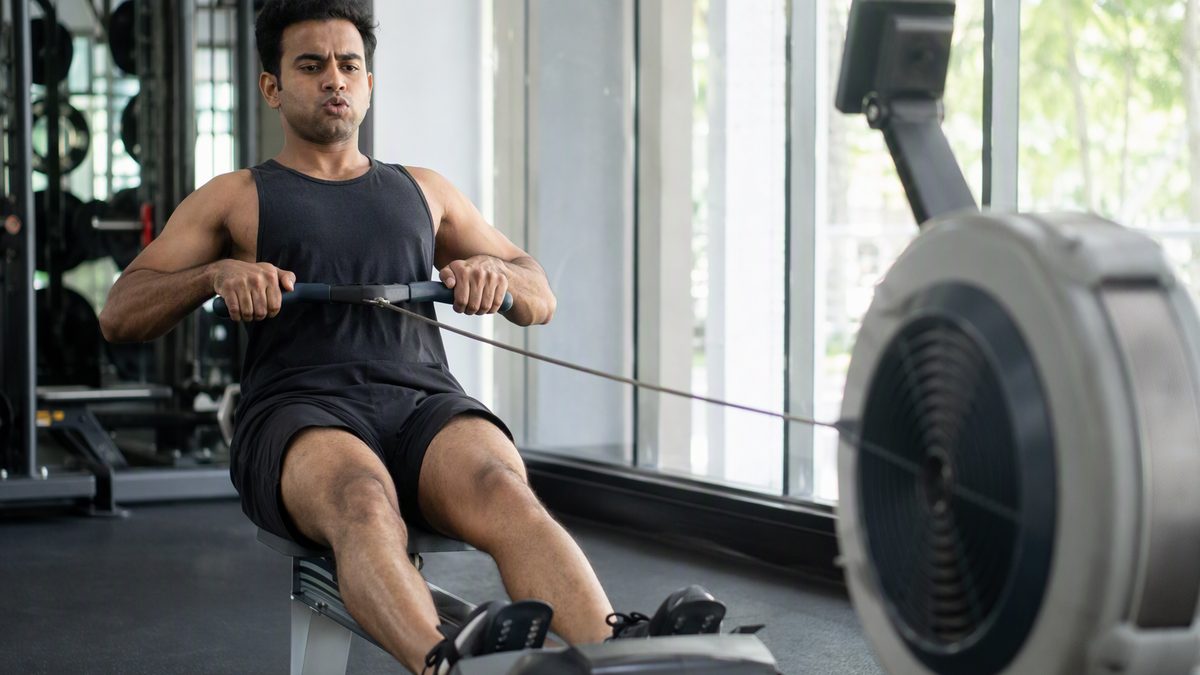
The whole strategy is placement. Aim for two or three short easy rows a week, parked on rest days or far from your heaviest lower-body work, and keep them genuinely easy — UT2 pace, conversational, low stroke rate, so you add aerobic stress without mechanical fatigue. Set the damper at 3-5; a 10 feels grindy, fatigues the low back faster, and teaches nothing useful, while a moderate setting rewards leg drive and a neutral spine. Anchor effort by the talk test: full sentences, never breathless. The table assumes a four-day squat-bench-deadlift split.
| Day | Lifting focus | Erg placement | Session |
|---|---|---|---|
| Mon | Heavy squat | None (protect leg recovery) | — |
| Tue | Bench / upper | Same day OK, hours apart or post-lift | 25-30 min UT2, damper 3-5 |
| Wed | Rest | Ideal slot | 30 min easy steady, 18-22 spm |
| Thu | Heavy deadlift | None (protect posterior chain) | — |
| Fri | Bench / accessories | Post-lift or evening | 25-30 min UT2, damper 3-5 |
| Sat/Sun | Rest | Optional longer easy row | 35-40 min conversational |
| Meet-prep peak | Heavy singles / openers | Cut to 1-2 short easy rows | 20 min, recovery only |
Note the deliberate gaps around squat and deadlift days — that's the interference firewall. Off-season and hypertrophy blocks can run the full three sessions; into a peak, drop volume so the row serves recovery and never competes with your heaviest CNS-taxing work. Build erg volume gradually so a tired low back never meets a sloppy stroke.
4. What to Track, and Heavier-Class Cautions
You already log your lifts; add two cheap markers to confirm the engine is growing. First, between-set heart-rate recovery: glance at how far your heart rate falls in the 60-90 seconds after a hard set — a faster drop over the weeks is direct evidence your aerobic recovery improved. Second, your erg split at a fixed easy heart rate: row a faster split at the same heart rate after a month and your base deepened. Resting heart rate trending down across the block is a bonus signal, and a multi-day spike is a useful cue to back off. Expect the early heart-rate changes within two weeks and the clearer gains by four to six. Watching recovery markers — resting HR or HRV trends, sleep, leg and back heaviness — also tells you when to veto a hard day.
Two cautions specific to your sport. If you compete in a heavier class, carrying more mass raises blood-pressure considerations, and the heavy valsalva straining powerlifting demands stacks on top. Easy rowing is actually helpful for cardiovascular health here — and higher cardiorespiratory fitness tracks strongly with lower long-term mortality — but keep it easy, and treat any blood-pressure, chest-pressure, or valsalva-tolerance questions as medical ones for your physician, including clearance before any maximal-effort erg test. Second, mind weigh-in logistics: if you're cutting water before a meet, that's not the week to add aerobic volume, and dehydration will inflate your heart rate and ruin your readings anyway. Build the base in the off-season and volume blocks, and let it quietly serve you when the platform numbers count.
Questions Powerlifters Ask About the Erg
How much does rowing actually add to my total?
Indirectly, through recovery and work capacity rather than raw force. A bigger aerobic engine clears fatigue faster between heavy sets, so you keep bar speed up across more quality volume and reach warm-ups un-gassed. Over a block, that extra recoverable volume feeds strength and hypertrophy. Easy rowing won't add kilos to a single rep on its own — it raises the ceiling on how much hard work you can recover from and repeat, which is where the long-term payoff sits.
Will hard erg work kill my strength gains through interference?
Hard rowing can, easy rowing largely won't. The interference effect is driven mainly by high-intensity endurance and by training cardio too close to lifting — neither of which describes easy UT2 rowing on separate days. So keep your erg conditioning easy and off your heavy squat and deadlift days, and the strength cost is negligible while recovery improves. Save any hard erg pieces for a separate goal entirely; they don't belong inside a strength block.
Do I time the erg around my heavy days?
Yes — placement is the whole game. Park easy rows on rest days or far from heavy lower-body work, since proximity to lifting worsens interference. Upper-body days tolerate same-day rowing better, ideally hours apart or after you lift. If you must combine them, lift first to protect your heavy sets. Into a meet peak, cut erg volume so it serves recovery and never competes with top singles, and stop adding cardio during a water cut.
What about weigh-ins and water cuts?
Keep aerobic volume out of a water cut. Dehydration inflates your heart rate, ruins your erg readings, and piles stress onto an already depleted system. Build your aerobic base in the off-season and volume blocks, then let it serve you on meet day. Rehydration after weigh-ins should follow a deliberate plan, and any blood-pressure or valsalva concerns in a heavier class belong with your physician, not a training article.
Disclaimer: This article is for educational purposes only and is not medical advice. Consult a qualified healthcare professional before starting any supplement, nutrition, or training protocol — especially if you are pregnant or breastfeeding, under 18, taking medication, or managing a health condition.
Scientific References & Clinical Sources
- Murlasits Z, et al. The physiological effects of concurrent strength and endurance training sequence: a systematic review and meta-analysis. J Sports Sci, 2018. PMID: 28783467
- Coffey VG, et al. Consecutive bouts of diverse contractile activity alter acute responses in human skeletal muscle. J Appl Physiol (1985), 2009. PMID: 19164772
- Joyner MJ, Coyle EF. Endurance exercise performance: the physiology of champions. J Physiol, 2008. PMID: 17901124
- Mandsager K, et al. Association of Cardiorespiratory Fitness With Long-term Mortality Among Adults Undergoing Exercise Treadmill Testing. JAMA Netw Open, 2018. PMID: 30646252
- Plews DJ, et al. Training adaptation and heart rate variability in elite endurance athletes: opening the door to effective monitoring. Sports Med, 2013. PMID: 23852425

