💡 Key Takeaways
- Bone health needs two inputs: nutrition and mechanical loading; rucking supplies the loading side, adding weight-bearing stress through the hips, spine and legs.
- Loaded walking is a low-impact bone and posture stimulus that complements a plant-based diet, but it does not replace adequate calcium, vitamin D, protein, or resistance training.
- Start at ~10% bodyweight on flat ground for 20-40 minutes, 1-3x per week, progressing one variable at a time toward roughly a quarter of bodyweight over months.
- Keep doing the nutrition work, calcium and vitamin D for bone, B12 and iron/ferritin labs as relevant, since mechanical load only builds bone when the raw materials are there.
Plant-based athletes manage a long nutrition checklist for bone and recovery, calcium, vitamin D, protein, sometimes iron and B12, but nutrition is only one side of bone health. Bone responds to two inputs: the nutrients you feed it and the mechanical loading you put through it. Get the diet dialed and you have done half the job; the other half is giving your skeleton a reason to stay dense, which is mechanical stress it does not get from an easy swim, a long ride or a steady run on its own.
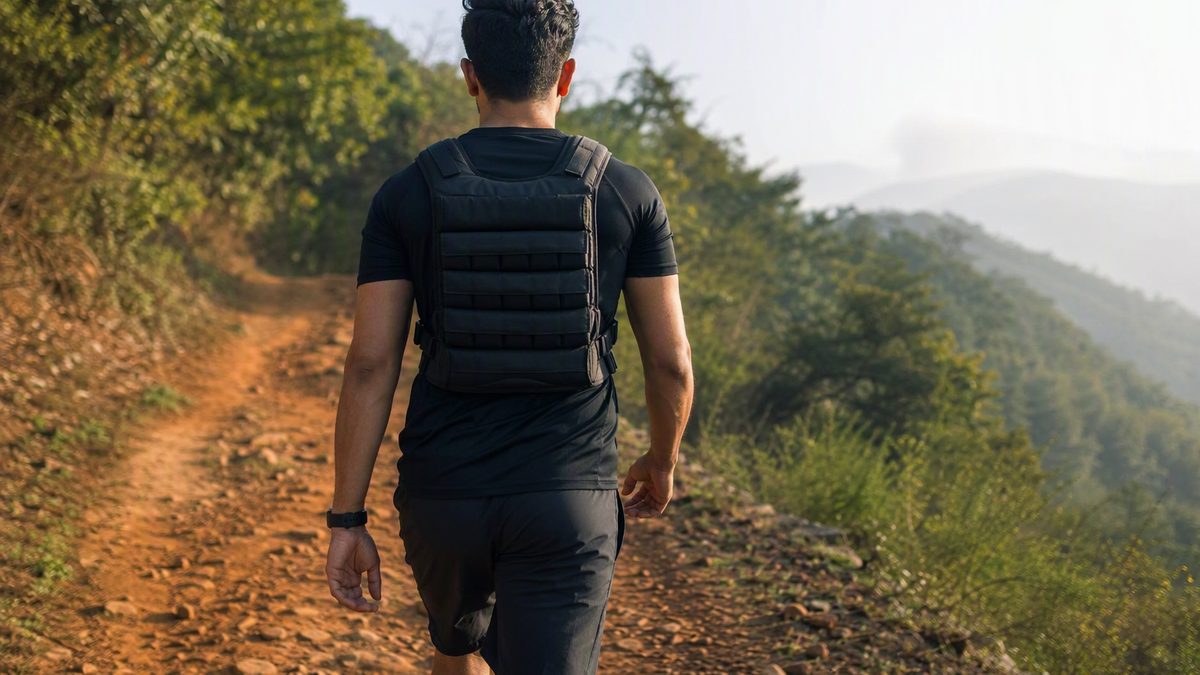
That is the gap rucking fills. A weighted walk is a load-bearing, weight-bearing activity that drives extra mechanical stress through the hips, spine and legs, the textbook stimulus for maintaining bone, while staying low-impact and easy to recover from. For a vegetarian athlete already doing the nutritional work, it is the loading partner to that effort: it does not fix nutrition, and it is not a substitute for resistance training, but it adds a bone and posture stimulus that pairs naturally with a well-built plant-based plate. Here is how to use it, and where it fits alongside the labs and lifting that matter.
1. The Problem: A Plant-Based Athlete Can Nail Nutrition and Still Under-Load Bone
Here is the trap a diligent vegetarian athlete can fall into. You research bone nutrition carefully, calcium sources, vitamin D, enough protein, maybe a ferritin check, and assume the box is ticked. But bone is a mechanically responsive tissue. It maintains and builds density chiefly in answer to loading, the weight-bearing and load-bearing stress of moving your mass against gravity, and especially of adding external load. Without that stimulus, even a perfect diet has nothing to respond to. Nutrition supplies the raw materials; mechanical loading is the signal that tells the skeleton to use them.
Whether your sport delivers that signal depends on what you do. Swimmers and cyclists train hard in largely non-weight-bearing positions, so their bone-loading stimulus is genuinely low. Adding external weight to a walk increases the mechanical stress through the hips, spine and legs beyond what unloaded movement provides, which plausibly makes it a stronger bone stimulus than ordinary walking. This benefit rests on the broad exercise-and-bone literature rather than rucking-specific trials, so treat it as a sound mechanism and a reasonable expectation, not a proven rucking-specific outcome. The logic is clear: if you have done the nutrition work, rucking gives your skeleton something to work against.
2. Why Loaded Walking Pairs Well With a Plant-Based Plate
Rucking fits a vegetarian athlete's life on more than just the bone angle. It is low-cost, outdoors, social, and easy to attach to a commute or errand, the kind of practical, sustainable habit that a thoughtful, food-first athlete tends to keep. It is also low-impact and recovers easily, so it layers onto your existing training without demanding the recovery budget that hard cardio does, and as low-intensity work it interferes far less with strength gains than high-intensity cardio. That matters, because the resistance training you should keep doing is the other half of your bone and muscle picture, and rucking sits comfortably beside it rather than competing.
The nutrition pairing is the real synergy. Loaded walking provides the mechanical loading; your plant-based plate provides the building blocks, calcium and vitamin D for bone mineral, and enough total protein, hit by paying attention to leucine and meal spacing rather than raw volume, for the muscle and connective tissue that carry the load. The two only work together. Loading without adequate calcium, vitamin D and protein is a signal with no supply; good nutrition without loading is supply with no signal. A vegetarian athlete already meticulous about the plate is unusually well-positioned here, because the limiting factor for most people, the nutrition, is the part you already manage.
3. The Bone-Loading Rucking Build for Plant-Based Athletes
Start light and build the loading slowly, because bone and soft tissue adapt more slowly than your cardio feels ready for. Entry load is about 10% of bodyweight, roughly 15-20 lb for a 150-200 lb athlete, on flat, even ground, pack riding high between the shoulder blades and cinched tight, posture tall with no forward lean, effort conversational at RPE 3-5. Progress one variable at a time:
| Phase | Load | Session | Frequency |
|---|---|---|---|
| Weeks 1-2 | ~10% bodyweight | 20-30 min, flat ground, easy pace | 1-2x per week |
| Weeks 3-4 | ~10% bodyweight | Extend to 35-45 min, flat | 2x per week |
| Weeks 5-8 | +5 lb (toward 12-15%) | 40 min, add gentle pace once distance is easy | 2-3x per week |
| Months 2-6 | Slowly toward ~20-25% bodyweight | Add mild inclines and varied terrain late | 1-3x per week |
Add weight in roughly 5 lb steps no more than every couple of weeks, and only after the current load feels easy and pain-free for the full distance. Build minutes first, then pace, then weight, then terrain, never several at once. Protect the low back with upright posture and a high, tight pack, the most common rucking complaint comes from forward lean or a sagging load, and stop and reassess on any sharp or radiating back or leg pain, or arm numbness from the straps.
4. Keep the Labs and the Plate Doing Their Job
Loading only builds bone if the raw materials are present, so the nutrition work stays central, not optional. Calcium and vitamin D remain the bone-specific nutrients to get right from a plant-based diet, and adequate total energy and protein support the muscle and connective tissue that handle the load. On the broader vegetarian checklist, B12 requires supplementation, and iron is non-heme with lower absorption, so periodic iron and ferritin labs are worth tracking, low iron undercuts the endurance that makes your rucks and the rest of your training productive. None of this is rucking-specific advice; it is the standard plant-based-athlete monitoring that rucking sits on top of.
Be clear on what the walk does and does not do. Rucking is loaded low-impact cardio with a weight-bearing bone and posture benefit and real leg and trunk endurance. It is not resistance training, and it will not drive the maximal strength or hypertrophy that progressive lifting does, so keep lifting for that. Nor does it change any of your nutrition needs, it adds an energy demand of roughly two to three times a plain walk, which you simply eat to match. Used as the loading complement to a well-built plant-based plate and a resistance program, it rounds out a bone-and-durability picture any one of those pieces alone would leave incomplete. The aerobic side is a bonus: easy loaded walking also delivers the metabolic and cardiovascular benefits of low-intensity activity, at low joint cost.
5. Common Mistakes a Vegetarian Athlete Should Sidestep
The first mistake is treating rucking as a nutrition fix or a lifting replacement. It is neither. It does not improve your iron, B12 or protein adequacy, and it will not make your bones dense if the dietary building blocks are missing or you skip resistance work. Frame it correctly, as the mechanical-loading partner to nutrition and lifting, and it earns its place; frame it as a shortcut and it disappoints. The second mistake is the universal one, chasing weight too fast. The injury risk in rucking comes from the load, not the cardio, so the conservative, almost-too-slow progression is your single biggest safety lever.
A few practical sidesteps round it out. Footwear matters because added load increases foot stress, so use supportive, broken-in shoes with a roomy toe box and good moisture-wicking socks, since blisters are the most common nuisance. Keep the weight high and flat in the pack, plates, sandbags or filled bottles that sit snug, not loose gear sloshing low. Place heavier or hilly rucks off the day before or after hard lower-body lifting, and run the whole thing one to three times a week. The skill is patience, and the same consistency principles in building fitness habits apply: a light, regular ruck on solid nutrition beats an occasional heavy one every time.
Plant-Based Athlete Questions About Rucking
Does rucking really help bone density on a plant-based diet?
It supplies the loading half of bone health. Bone responds to mechanical stress, and adding weight to a walk drives more load through the hips, spine and legs than ordinary walking, a sound stimulus for maintaining density. But loading only works if the nutrition is there: calcium, vitamin D and enough protein from your plant-based plate provide the raw materials. This benefit comes from the general exercise-and-bone literature, not rucking-specific trials, so expect a reasonable mechanism, not a guaranteed outcome.
Will rucking change my vegetarian nutrition needs?
Not the bone and recovery basics, no. You still need adequate calcium and vitamin D for bone, enough total protein hit by leucine and meal spacing, B12 supplementation, and periodic iron and ferritin checks since plant iron absorbs less well. Rucking adds an energy demand of roughly two to three times a plain walk, which you cover by eating a bit more. It is a training stimulus layered on top of your nutrition, not a reason to change the plant-based fundamentals you already manage.
Can rucking replace my strength training?
No. Rucking's load is sub-maximal and steady, so it builds muscular endurance, work capacity and a weight-bearing bone stimulus, but it does not drive the maximal strength or hypertrophy that progressive resistance training does. Keep lifting for those, and use rucking as the low-impact loaded cardio and bone-loading complement around it. The bonus is that, as easy aerobic work, it interferes far less with your strength gains than hard cardio would, so the two pair well rather than competing.
Which labs should I keep checking if I add rucking?
The same ones a serious plant-based athlete should already track, since rucking does not change them. B12 status, given that plant diets need supplementation, and iron with ferritin, since non-heme iron absorbs less efficiently and low iron drags down endurance. Vitamin D is worth knowing too, for bone. Rucking adds the mechanical loading; these labs confirm the nutritional supply that loading needs to build bone and support recovery is in place.
Disclaimer: This article is for educational purposes only and is not medical advice. Consult a qualified healthcare professional before starting any supplement, nutrition, or training protocol — especially if you are pregnant or breastfeeding, under 18, taking medication, or managing a health condition.
Scientific References & Clinical Sources
- Ludlow LW, Weyand PG. Walking economy is predictably determined by speed, grade, and gravitational load. J Appl Physiol (1985), 2017. PMID: 28729390
- Toledo FG, et al. Effects of physical activity and weight loss on skeletal muscle mitochondria and relationship with glucose control in type 2 diabetes. Diabetes, 2007. PMID: 17536069
- Williams PT, Thompson PD. Relationship of walking and running LISS to cardiovascular risk factors. Arterioscler Thromb Vasc Biol, 2013. PMID: 23559628
- Haggerty M, et al. The influence of incline walking on joint mechanics. Gait Posture, 2014. PMID: 24472218

