💡 Key Takeaways
- Expect impact, not finger strain: running stresses shins, knees and Achilles — tissues your climbing barely loads — so let joint feedback, not your engine, set the ramp.
- The one form fix worth making is overstriding: a modest ~5-10% cadence bump lands your foot under your hips and lowers braking forces and knee load.
- Pick shoes by comfort and fit, not a pronation chart; rotate 2-3 pairs and retire them around 500-800km to spread the load.
- Running burns extra energy on top of climbing — fuel it; chasing lightness into under-fueling is a known way to weaken tendons and bone, the opposite of what you want.
Here's what to expect, and when, if you add running to a climbing schedule. In the first two to three weeks the loud signal won't be your lungs — it'll be impact in your shins, knees and Achilles, because climbing builds extraordinary finger and pulling strength while doing almost nothing for ground-impact tolerance. Your cardiovascular base may be modest too, so the engine will feel underbuilt. That gap between what your fingers can do and what your legs can absorb is the data that should govern how you start: slowly.
The mechanics part is light. After fitness, running economy is the next lever, but there's no single correct footstrike and no best shoe — so you don't need to overhaul your gait. For a climber, running is general conditioning and recovery support, not a performance discipline. The honest aims are a better aerobic base, healthier work capacity, and zero new injuries to the tissues that matter for climbing. Below: the timeline you'll feel, the protocol, the mechanics, and the weight-and-fueling conversation that climbers most need handled straight.
1. What a Climber Will Actually Feel Adding Running
Track the first month and let the signals guide you. Sessions one to three: expect your heart rate to climb fast and your breathing to feel out of proportion to the effort — normal if your training has been intermittent isometric climbing rather than sustained aerobic work. The more important signal is mechanical. Your shins, calves and knees will feel impact-sore before your cardio becomes the limiter, because running loads them repetitively in a way hangboarding and bouldering never do. That soreness is tissue tolerance reporting in, and it should set your pace.
By weeks two to three the aerobic side adapts noticeably and easy running starts to feel manageable, but the impact tolerance lags — exactly the gap to respect. The reassuring part: running stresses lower-limb bone and tendon, not your fingers and pulleys, so done easily it doesn't compete with finger recovery the way more pulling would. By weeks four to six you'll likely notice better endurance on long routes and faster recovery between climbing sessions. Keep runs easy and they stay recovery-compatible; run them hard and they start eating into the recovery your climbing needs.
2. Load Management That Spares Your Fingers and Builds Your Legs
The dominant cause of running injuries is doing too much too soon, and climbers carry a specific extra risk: it's tempting to treat your high training tolerance for fingers as if it applies to your legs. It doesn't. Your lower-limb tissue is a near-beginner at impact, so ramp like one. The table maps a conservative on-ramp that keeps the new stress on your legs without stealing recovery from your climbing.
| Week | Run session | Frequency | Climbing-day placement |
|---|---|---|---|
| 1-2 | Walk-run: 1 min run / 2 min walk x 6 | 2/week | Rest days or easy climbing days |
| 3-4 | Walk-run: 2 min run / 1 min walk x 6 | 2-3/week | Not before hard projecting |
| 5-6 | Easy run 15-20 min continuous | 2-3/week | Separate from limit bouldering |
| Ongoing | Easy 20-30 min, add 5-10% cadence | 2-3/week | Volume up ~10%/week max |
The key is that 10%-a-week ceiling on volume, paired with easy effort. Running's lower-limb tendon and bone load adapts on a slower clock than your fitness, so the joints, not the lungs, are the limiter. Place runs on rest or easy-climbing days so they don't pre-fatigue you before a hard session — and never the day before a big project attempt.
3. The One Form Fix: Cadence to Cut Impact and Braking
You don't need to study running technique. One fix is worth it, especially because it reduces the impact your lower-limb tendons absorb: overstriding — the foot landing well ahead of your hips with the knee extended, braking against your momentum and spiking joint loading each step. The single most defensible mechanical fault to correct, and the fix isn't a forefoot landing. It's landing closer to under your center of mass, which you achieve by raising cadence a modest amount and cueing a quicker, lighter, more compact step.
Check your habitual cadence on an easy run, then aim about 5-10% higher with a metronome — a small move from your own baseline, since optimal cadence varies with height and speed, so the popular 180 is a ballpark, not a rule. Be deliberate about not switching to forefoot striking: there's no single correct footstrike, and a forced forefoot landing loads the calf and Achilles far more, with abrupt changes linked to calf strains and Achilles tendinopathy. For a climber, Achilles and calf health matter for footwork and heel hooks, so don't trade knee load for fresh tendon load. Heel striking with good cadence is completely fine. One cue, applied gradually, is the whole curriculum.
4. The Honest Weight and Fueling Conversation
Climbers think about weight constantly, so let's be straight. Yes, energy cost while running rises lawfully with the load you carry, so a lighter body costs less oxygen at a given pace — that physics is real for both running and climbing. But it does not justify under-fueling. Running burns extra energy on top of your climbing, and chronically eating too little to chase lightness is a documented path to weakened tendons, reduced bone density and stress injuries — the exact outcomes that end climbing seasons. Your finger flexor tendons and pulleys already adapt far slower than muscle; under-fueling slows that further. Fuel the added work so your tissue can recover and strengthen.
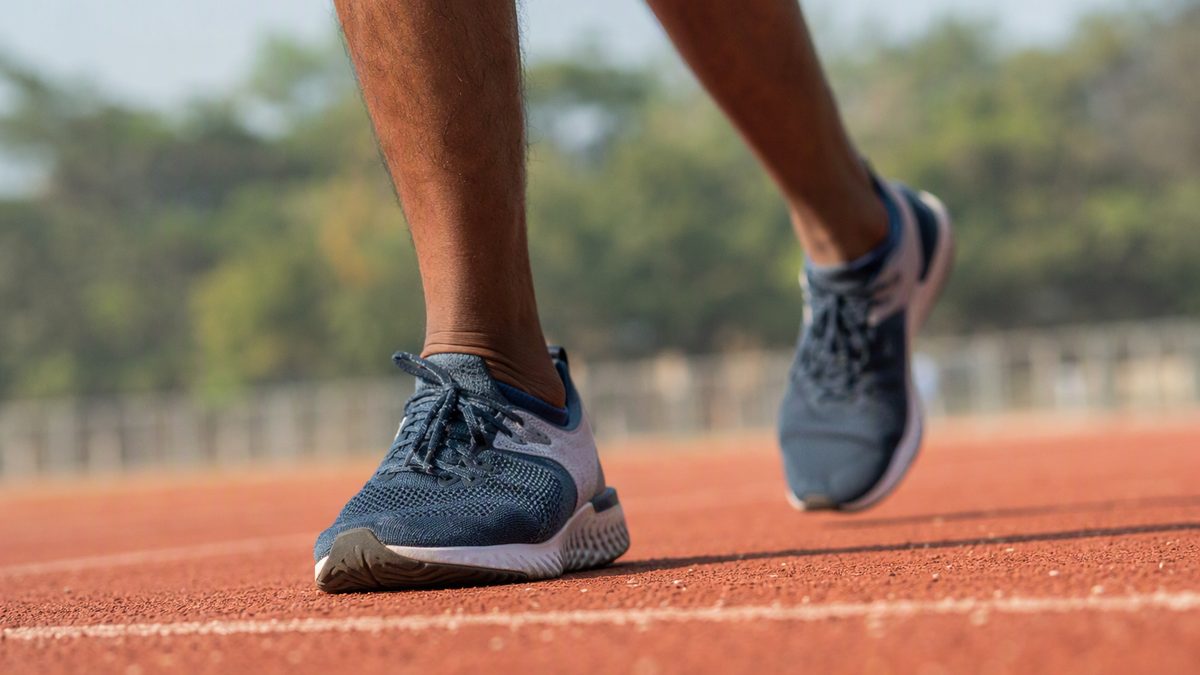
Shoe selection is the easy part: comfort filter. Within options you can try on, the most comfortable running shoe is associated with lower injury risk and better economy — let that lead, not a pronation classification, which hasn't reliably reduced injuries. Look for a thumb's width of toe room and no heel slip, and use cushioned running shoes, not approach shoes, for the road. Rotate two comfortable pairs once you're consistent and retire them around 500-800km. One last data note for anyone tracking output: consumer watches estimate distance and energy with meaningful error, so read them as trends, not precise calorie counts you might use to justify eating less. The goal of all of this is to climb stronger and longer — not lighter at any cost.
What Climbers Ask About Adding Running
Will running's impact hurt my fingers or pulleys?
No — running loads your shins, knees and Achilles, not your fingers and pulleys. That's actually why easy running pairs reasonably well with climbing: it builds aerobic fitness and lower-limb tissue without adding to finger recovery debt. The real injury risk is to your legs from doing too much too soon, since your lower limbs are near-beginners at impact even if your fingers are strong. Ramp slowly, keep runs easy, and place them so they don't pre-fatigue you before hard climbing.
Lighter is better for climbing — should I use running to cut weight?
Be very careful here. While a lower body mass does lower the energy cost of both running and climbing, using running to drive aggressive weight loss risks under-fueling, which weakens tendons and bone and causes stress injuries — the opposite of climbing stronger. Running adds an energy cost on top of climbing, so fuel it rather than restricting. Chasing lightness into chronic under-eating is a well-documented way to wreck a season. Train for capacity and tissue health, not for a lower number.
Should I switch to forefoot striking like minimalist runners suggest?
No, and there's a climbing-specific reason. Evidence doesn't show one footstrike prevents injury — switching just shifts load. A forced forefoot landing loads the calf and Achilles far more, and abrupt changes cluster calf strains and Achilles tendinopathy. Those tissues matter for your footwork and heel hooks, so you don't want them freshly overloaded. Most runners do fine heel striking. Skip the footstrike project and just raise cadence 5-10% to reduce overstriding, which helps regardless of how your foot lands.
Should I run during projecting season?
Keep it minimal and easy if at all. When you're projecting hard, your recovery should prioritize climbing, so cut running volume and keep any runs genuinely easy and well away from limit sessions — never the day before a big attempt. Easy running can preserve your aerobic base and aid recovery without much cost, but adding running load or intensity during a peak climbing block competes for the recovery your fingers and skin need. Treat running as off-season and base-building work, dialed back when climbing peaks.
Disclaimer: This article is for educational purposes only and is not medical advice. Consult a qualified healthcare professional before starting any supplement, nutrition, or training protocol — especially if you are pregnant or breastfeeding, under 18, taking medication, or managing a health condition.
Scientific References & Clinical Sources
- Ludlow LW, Weyand PG. Walking economy is predictably determined by speed, grade, and gravitational load. J Appl Physiol (1985), 2017. PMID: 28729390
- Joyner MJ, Coyle EF. Endurance exercise performance: the physiology of champions. J Physiol, 2008. PMID: 17901124
- Lee DC, et al. Leisure-time running reduces all-cause and cardiovascular mortality risk. J Am Coll Cardiol, 2014. PMID: 25082581
- Williams PT, Thompson PD. Relationship of walking and running LISS to cardiovascular risk factors. Arterioscler Thromb Vasc Biol, 2013. PMID: 23559628
- Düking P, et al. Criterion-Validity of Commercially Available Physical Activity Tracker to Estimate Step Count, Covered Distance and Energy Expenditure during Sports Conditions. Front Physiol, 2017. PMID: 29018355

