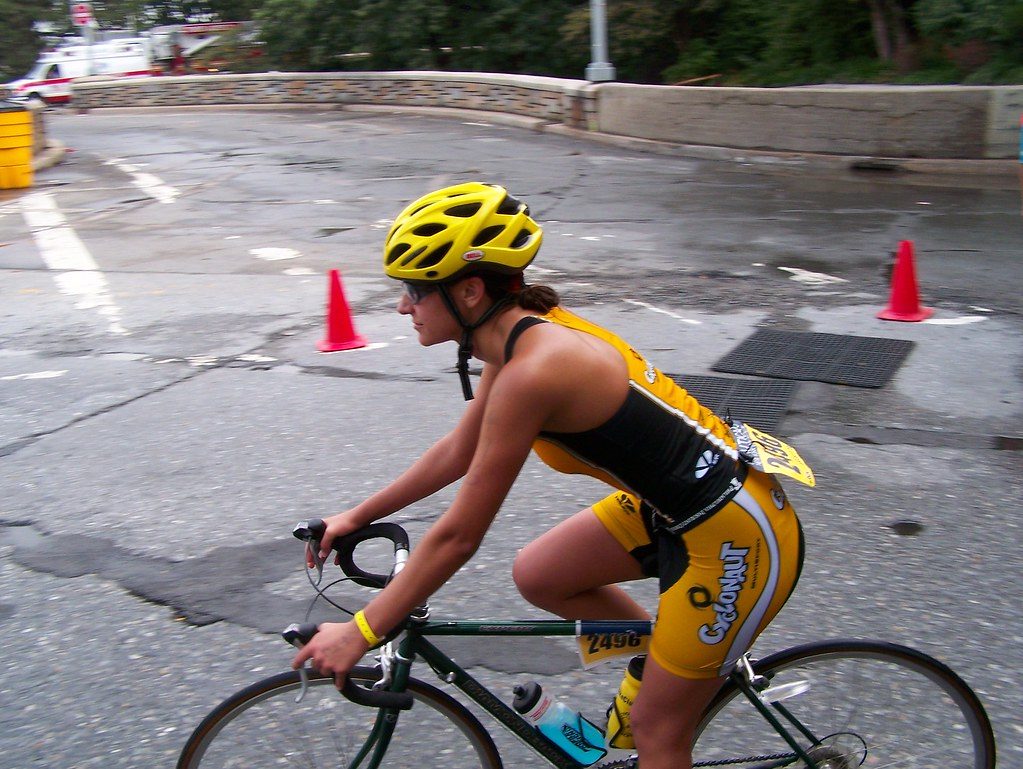
💡 Key Takeaways
- Off the bike your cadence drops and your stride reaches forward - watch for a 3-8 spm cadence fall in the first 1km of a brick and correct it deliberately, because fatigue overstriding is where your run split leaks.
- Hold cadence within ~5% of your fresh value when fatigued (most triathletes sit ~170-185 spm); a metronome on brick runs trains the legs to keep turning over instead of reaching.
- Economy, not your engine, is the lever footwork moves - expect modest but real gains, while body mass, pace and hills dominate the energy bill far more than form tweaks.
- Manage run load on top of swim and bike volume: cap weekly run increases near 10% and let comfort, not a pronation chart, pick your shoes.
Here is what you can actually measure about your run form, and when it matters most. On a fresh run your cadence, stride and footstrike sit wherever your body self-organizes them - usually fine. Run the same pace off a hard bike leg and the numbers move: cadence sags, stride reaches further forward, ground contact lengthens, and your foot starts landing ahead of your hips instead of under them. That drift is overstriding, and on a watch it shows up as a 3-to-8 step-per-minute cadence drop and a slower split for the same effort in the first kilometer of every brick. The wobbly-legs feeling you know is your mechanics degrading, not just your muscles.
That is the triathlete's specific running problem, and it is measurable, so it is trainable. Running economy - the oxygen cost of holding a given pace - is the next-biggest performance lever after your aerobic engine and threshold, and form and footwear earn their keep by making each stride cheaper. For you the highest-value version of that is keeping your cheap, compact stride intact when fatigued, because that's where the time is won or lost on a triathlon run. This guide is built around the numbers: what to track, what good looks like off the bike, the protocol that holds your form together, and the science behind why it drifts in the first place.
1. The Brick-Fatigue Numbers to Watch
Track four metrics across a fresh run and a brick run so you can see your own drift: cadence (steps per minute), pace at a fixed heart rate, ground contact time, and your subjective stride feel in the first 1-2km off the bike. The pattern is consistent across triathletes. Fresh, you might run economically at 178 spm. Off the bike, that same effort can sag toward 170-172 while your stride lengthens to compensate - and that lengthening is the problem, because it pushes your foot out ahead of your center of mass, adds a braking force every step, and quietly costs you watts of free speed.
The target isn't a magic number - the famous '180 spm' is a rough reference from elite observation, not a law, and your economical cadence depends on your height and pace. The target is stability: hold your fatigued cadence within about 5% of your fresh value rather than letting it collapse. One honest caveat on the tools - consumer watches and foot pods are useful for spotting gross drift and tracking trends, but their cadence, contact-time and vertical-oscillation readings carry real device error and aren't lab-grade. Use them to catch the obvious fatigue overstride and watch the trend across sessions, not to chase a decimal.
2. The Brick Protocol That Holds Your Form Together
You train the fatigued stride by practicing it, deliberately, with a cue. The aim of every brick is the same: come off the bike and immediately reassert a quick, compact cadence before the reach-forward creeps in. A metronome or cadence-matched playlist does most of the work - it gives your tired legs an external rhythm to lock onto so they keep turning over instead of overstriding. Build the work gradually on top of your existing swim and bike load; the run is the highest-impact discipline and the easiest to over-add.
| Session | Structure | Cadence target | Weekly dose |
|---|---|---|---|
| Short brick | 30-60 min bike, then 10-15 min run | Metronome at fresh cadence from step 1 | 1, off a moderate ride |
| Race-effort brick | Race-pace bike block, then 20-30 min run | Hold within 5% of fresh value | 1, on a key day, not back-to-back hard |
| Cadence strides | 4-6 x 20 s relaxed accelerations | +5-10% above habitual, easy run | 1-2, added to easy runs |
| Strength / plyo | Calf raises, single-leg work, hops | Not applicable - tendon stiffness focus | 2 short sessions, away from key runs |
Two rules keep this from becoming another injury. First, progress total weekly run volume by no more than roughly 10% week to week - across three sports your run is the impact load that overuse injuries cluster around, so the cap matters more for you than for a single-sport runner. Second, the strength and plyometric work isn't optional garnish: building calf and tendon stiffness is one of the few things that genuinely improves economy and protects the lower leg from the extra load brick running piles on. Keep those sessions on separate days from your key runs so fatigue doesn't blunt them.
3. The Science Behind Why Your Run Falls Apart Off the Bike
Two things drive the brick drift. The first is local fatigue: cycling pre-fatigues your quads and hip flexors, so off the bike your legs are slower to swing through and recover position, and the easiest way to keep moving is to let the stride reach forward and the cadence fall - straight into overstriding. The second is that overstriding is genuinely costly. When your foot lands well ahead of your hips with an extended knee, you generate a braking impulse that fights your own momentum, raise the impact transient, and load the knee and hip more - you are spending energy decelerating yourself every single step, exactly when you have the least to spare.
Raising or simply holding cadence fixes this because it shortens the stride and pulls the foot back under your center of mass, cutting the braking force and redistributing load. It's worth being honest about scale: this is a redistribution and an economy gain, not a free engine upgrade, and the energy cost of running is lawfully dominated by your pace, the grade, and the mass you carry - which is why hills and any excess body or kit mass move your splits far more than subtle form tinkering. Footstrike sits in the same 'don't oversell it' bucket: there's no single correct pattern, most distance runners heel-strike successfully, and deliberately switching to forefoot mainly trades knee load for calf and Achilles load - a bad trade to attempt mid-season when your lower legs are already absorbing brick volume.
4. Race-Day Scenarios: Shoes, Hills and the First Kilometer
Three situations decide how much your form work pays off on race day. First, shoes. Let comfort and fit lead your choice - the comfort filter is the best-supported principle, while the old pronation-matching model is weak and largely marketing. Leave a thumb's width at the toe, ensure no heel slip, and rotate two pairs in training to vary loading and lower injury risk. Modern carbon-plate racing shoes do measurably improve economy and are a legitimate edge for the run leg; nothing about your form work conflicts with using them on race day, provided you've run in them first.
Second, the first kilometer off the bike - the make-or-break window. This is where overstriding sets in hardest because your legs feel like blocks. Have a default: glance at cadence, get it quick and compact immediately, run tall with a slight lean from the ankles, and let pace come to you over the first few minutes rather than forcing a long stride. Third, hills and heat. On climbs your mechanics and energy cost shift with the grade, so shorten the stride and lift cadence rather than reaching up the hill; in long-course heat and on big training volumes, guard your fueling and fluids carefully, because hyponatremia and energy deficiency are the real safety risks of high-volume triathlon, not your footstrike. You can make these brick cues automatic by rehearsing the same first-kilometer routine every single time.
Brick and Multisport Form Questions
Why does my running form fall apart as soon as I come off the bike?
Cycling pre-fatigues your quads and hip flexors, so off the bike your legs swing through more slowly and your easiest option is to let the stride reach forward and cadence drop - which is overstriding. That adds a braking force each step and slows your split for the same effort. The fix is to assert a quick, compact cadence in the first kilometer using a metronome cue, holding it within about 5% of your fresh value rather than letting it collapse.
Should I do brick runs at a higher cadence than my fresh runs?
Not higher - just stable. Your goal off the bike is to hold close to your fresh cadence rather than let fatigue drag it down 3-8 spm into an overstride. Use a metronome from the first step of the run so your tired legs lock onto an external rhythm. There's no universal target number; the famous 180 spm is a rough reference, not a law, and your economical cadence depends on your height and pace. Stability beats chasing a figure.
Will running a higher cadence or changing footstrike improve my run split a lot?
Improving and holding cadence gives a real but modest economy gain - mostly by stopping the fatigue overstride that costs you free speed off the bike. It won't transform your engine. Changing footstrike isn't worth it: there's no single correct pattern, and switching mainly trades knee load for calf and Achilles load, risky mid-season. Pace, hills and the mass you carry dominate your energy cost far more than form, so don't expect form alone to overhaul your split.
Should I trust my watch's cadence and ground-contact numbers off the bike?
Use them for trends and gross faults, not precision. Consumer watches and foot pods are handy for spotting an obvious cadence collapse or stride drift across a brick, but their cadence, ground-contact and vertical-oscillation readings carry real device error and aren't lab-grade. Watch the pattern across sessions - does your fatigued cadence hold better as you train it? - rather than treating any single decimal as truth. The biofeedback value is real but limited, so judge the trend.
Disclaimer: This article is for educational purposes only and is not medical advice. Consult a qualified healthcare professional before starting any supplement, nutrition, or training protocol — especially if you are pregnant or breastfeeding, under 18, taking medication, or managing a health condition.
Scientific References & Clinical Sources
- Joyner MJ, Coyle EF. Endurance exercise performance: the physiology of champions. J Physiol, 2008. PMID: 17901124
- Ludlow LW, Weyand PG. Walking economy is predictably determined by speed, grade, and gravitational load. J Appl Physiol (1985), 2017. PMID: 28729390
- Haggerty M, et al. The influence of incline walking on joint mechanics. Gait Posture, 2014. PMID: 24472218
- Peake JM, et al. A Critical Review of Consumer Wearables, Mobile Applications, and Equipment for Providing Biofeedback, Monitoring Stress, and Sleep in Physically Active Populations. Front Physiol, 2018. PMID: 30002629
- Lee DC, et al. Leisure-time running reduces all-cause and cardiovascular mortality risk. J Am Coll Cardiol, 2014. PMID: 25082581

