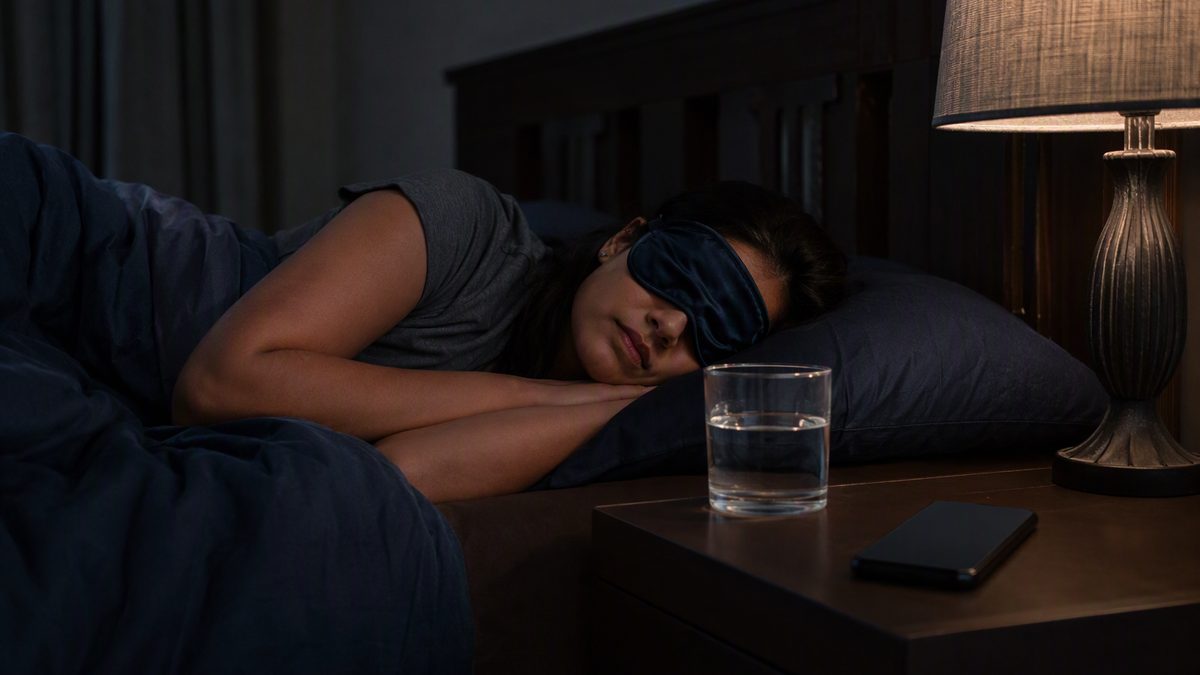
💡 Key Takeaways
- With a newborn, prioritize total sleep over an unbroken night; nap when the baby sleeps and share night duties.
- Anchor a consistent wake time when you can and get morning daylight; these steady the rhythm even on broken nights.
- Keep caffeine to the morning and limit screens in bed so the sleep you do get is as restorative as possible.
- If low mood, anxiety, or insomnia persists beyond the broken nights, that is a clinical flag, not a willpower problem.
The hardest part of postpartum recovery is rarely the workout; it is that you are trying to recover on sleep that a newborn fragments every few hours. Standard sleep advice assumes you control your nights. You do not, and pretending otherwise just adds guilt. So this checklist is built around the reality of night feedings and unpredictable wake-ups, with one goal: protect as much total, decent-quality sleep as your circumstances allow, because sleep is where most of your physical recovery and hormonal reset actually happens.
A note on framing before anything else. This page is about rest and recovery, not weight loss, and nothing here asks you to restrict food, least of all while breastfeeding. Resuming training should follow clinician clearance, and the sleep steps below are gentle, evidence-based, and meant to fit a life with a baby in it.
Below: why fragmented sleep is the real problem, a realistic checklist, the science of why total sleep matters, and the clear signs it is time to involve your clinician.
1. The Real Problem: Recovering on Broken Sleep
Consolidated sleep, the long unbroken stretch that does most restorative work, is the thing a newborn takes from you. Night feedings chop your night into pieces, and fragmented sleep is less restorative hour-for-hour than the same hours slept continuously. On top of that, baby sleep regressions mean progress is non-linear; a stretch of better nights can vanish overnight, and that is the baby's biology, not a failure on your part. Naming this matters because the usual advice, 'just keep a strict bedtime,' is built for people whose sleep is theirs to schedule.
So the strategy shifts. Rather than chasing one perfect unbroken night, you prioritize total sleep across the 24 hours and take it where you can get it. That means napping when the baby sleeps, even briefly, and sharing night duties so the wake-ups are not all yours, whether that is a partner taking a feed with expressed milk or covering an early morning so you get one longer block. None of this is indulgent; it is the legitimate, recommended approach to a season where your nights are not under your control. The aim is more total sleep, not a tidy schedule.
2. A Realistic Postpartum Sleep Checklist
Here is the protocol scaled to a newborn household. Treat it as a menu of small, achievable steps, not a standard you must hit perfectly; on a hard night, doing two of these is a win.
| Habit | Realistic target with a newborn | Why it helps |
|---|---|---|
| Total sleep | Maximize across 24 h; aim toward 7+ h total however it's split | Total sleep, not an unbroken night, drives recovery in this season |
| Naps | Nap when the baby naps, even 20-30 min; longer if you're repaying a real deficit | Short naps boost alertness; longer naps recoup a known deficit |
| Shared nights | Trade feeds or mornings so wake-ups aren't all yours | Protects at least one longer sleep block for each parent |
| Consistent wake time | Aim for a similar wake time when you can; don't force it on rough nights | Steadies the circadian rhythm without adding pressure |
| Morning light | Daylight soon after your real wake-up, even at a window with the baby | Strengthens the rhythm and lifts daytime alertness |
| Caffeine | Keep it to the morning, before about midday | ~5-6 h half-life can fragment the limited sleep you do get |
| Screens in bed | Keep night-feed phone time dim and low-stimulation | Bright, engaging screens make it harder to drop back to sleep |
| Bedroom | Dark, quiet, cool ~18C; use a dim nightlight for feeds | A cool dark room supports falling back asleep faster after a feed |
The night-feed details are where small choices pay off. Keeping the lights dim and the room cool during a 3am feed, and keeping your phone on its lowest brightness rather than scrolling, makes it noticeably easier to fall back asleep afterward. Those are tiny levers, but in a fragmented night they are the ones you actually control.
3. Why Total Sleep Beats Chasing a Perfect Night
The reason to optimize total sleep rather than fixate on consolidation is that most of your body's repair and hormonal reset happens during sleep, and you need the volume of it more than a flawless structure right now. Sleep loss disrupts mood and appetite hormones, raises perceived effort, and slows recovery, all of which a postpartum body is already navigating, so every extra hour of total sleep you can capture genuinely helps. Sleep is the highest-yield recovery lever there is, ahead of any supplement or gadget, and in this season the practical version of that is simply: get more total sleep, in whatever shape the baby allows.
This is also why the surrounding behaviors matter even though your nights are broken: morning light and a roughly consistent wake time make the sleep you do get more efficient, and keeping caffeine early protects your ability to drop back off after a feed. None of it requires restricting food or chasing a number on a scale, and if you are breastfeeding your fueling needs are higher, not lower. Building tiny, forgiving routines is more useful here than any rigid plan; our guide to building fitness habits covers making small steps stick without the all-or-nothing pressure.
4. When Broken Sleep Becomes a Clinical Flag
There is a line between normal newborn exhaustion and something that needs care, and it is important to know where it is. Fragmented sleep from night feedings is expected and temporary. What is not just part of the deal: persistent low mood, anxiety that will not settle, intrusive thoughts, or insomnia where you cannot sleep even when the baby finally does. If low mood or sleeplessness persists, that is a clinical flag for postpartum depression or anxiety, not a sign you are coping badly, and it deserves prompt help from your clinician. Reaching out early is a strength, and these conditions are treatable.
A few practical safety notes specific to this season. Returning to structured training should wait for your clinician's clearance, especially around core and pelvic-floor work, and this page makes no weight-loss claims and should not be used as a reason to restrict eating, particularly while breastfeeding. If sleep deprivation has you driving or caring for the baby while dangerously drowsy, treat that as the real risk it is and get help covering a stretch so you can sleep. And if good habits are in place but persistent insomnia or apnea signs, loud snoring with gasping awakenings, remain, raise it with your clinician rather than pushing through, because those are medical issues a checklist cannot fix.
Sleep Questions New Moms Ask
How do I function on four hours of broken sleep with a newborn?
Stop chasing a perfect night and protect total sleep instead. Nap when the baby naps, even 20-30 minutes, and share night duties so the wake-ups aren't all yours and you get at least one longer block. Keep caffeine to the morning, get daylight after you wake, and keep night feeds dim so you fall back asleep faster. Fragmented sleep is the season, not a personal failing.
Is it safe to nap, and how long should it be?
Napping is encouraged in the postpartum season; it's one of the few reliable ways to recoup sleep when nights are broken. A 20-30 minute nap boosts alertness without much grogginess. A longer nap is fine when you're genuinely repaying a real deficit, just expect to feel groggier waking from it. Sleep when the baby sleeps where you safely can; total sleep across the day is what matters most now.
Will improving my sleep help me lose the baby weight?
This checklist is about recovery and rest, not weight loss, and we'd steer you away from restricting food in this season, especially while breastfeeding, when your needs are higher. Better, more total sleep supports your mood, energy, and recovery, which is the real goal. Resume structured training only after your clinician clears you, and let body changes follow good sleep, fuel, and gradual movement rather than any restriction.
How do I know if my sleep problem needs a doctor?
Fragmented sleep from feedings is expected and temporary. But if low mood, anxiety, intrusive thoughts, or insomnia where you can't sleep even when the baby does persists, that's a clinical flag for postpartum depression or anxiety and deserves prompt help, not more willpower. Loud snoring with gasping awakenings is also worth raising. Reaching out early is a strength; these conditions are common and treatable.
Disclaimer: This article is for educational purposes only and is not medical advice. Consult a qualified healthcare professional before starting any supplement, nutrition, or training protocol — especially if you are pregnant or breastfeeding, under 18, taking medication, or managing a health condition.
Scientific References & Clinical Sources
- Dattilo M, et al. Sleep and muscle recovery: endocrinological and molecular basis for a new and promising hypothesis. Med Hypotheses, 2011. PMID: 21550729
- Thun E, et al. Sleep, circadian rhythms, and athletic performance. Sleep Med Rev, 2015. PMID: 25553531
- Fullagar HH, et al. Sleep and athletic performance: the effects of sleep loss on exercise performance. Sports Med, 2015. PMID: 25315456
- Halson SL. Sleep in elite athletes and nutritional interventions to enhance sleep. Sports Med, 2014. PMID: 24791913

