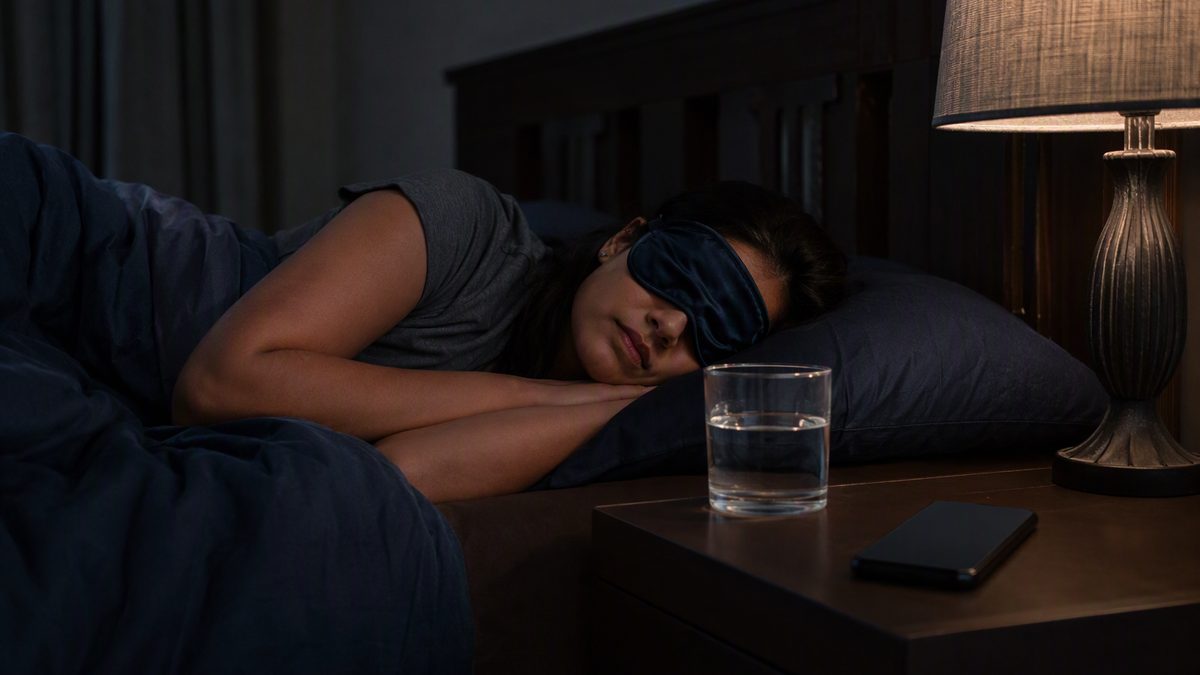
💡 Key Takeaways
- A calming wind-down genuinely helps, but it can't override an erratic schedule, late screens, or evening caffeine, biology answers to light and timing.
- Lean into the synergy: fixed wake time plus bright light after your morning fasted practice is one of the strongest sleep levers you have.
- Hydrate through the day after hot yoga, and watch hidden caffeine in chai, matcha, and tea blends against a ~6-8 h cutoff.
- Most sleep supplements and trackers are oversold; obsessing over a sleep score (orthosomnia) backfires, fix schedule, light, and screens first.
A comforting belief floats around yoga circles: a calming evening practice and the right breathwork are enough to guarantee good sleep, so the behavioral checklist, schedules, light, caffeine, screens, is unnecessary or even a bit un-yogic. It's a lovely idea, and it's incomplete.
A wind-down practice genuinely helps; calming, low-stimulation activity before bed is exactly what downshifts you from 'go' to 'rest.' But it sits inside a larger system. If you keep an erratic schedule, scroll your phone in bed, or drink chai at 6pm, no amount of pranayama fully overrides those signals, your body clock and melatonin respond to light and timing, not intention.
Sleep is the highest-yield recovery lever you have, ahead of any supplement, gadget, or single practice, and the good news is that the evidence-based checklist is deeply compatible with a mindful approach. This page replaces the myth with a practical, calm-but-complete sleep system for practitioners.
1. The Myth: 'My Practice Handles My Sleep'
Here's where the belief is right. A consistent 30-60 minute pre-sleep wind-down, dim lights, gentle stretching, slow breathing, meditation, is genuinely effective; it shifts your nervous system from sympathetic 'go' toward parasympathetic 'rest,' and doing the same calm sequence nightly trains a strong sleep cue. Much of yoga's evening toolkit maps neatly onto good sleep hygiene.
Here's where it falls short. Your circadian rhythm is set by light and timing, not by how relaxed you feel in the moment. If your wake time swings by hours across the week, or bright screens hit your eyes at 11pm, your melatonin and body clock respond to those cues regardless of how skilled your breathwork is. Practice can calm arousal; it can't out-argue biology.
And the stakes are real, because sleep is where recovery actually happens. Most hormonal and tissue repair occurs overnight, and sleep loss degrades reaction time, endurance, mood, and perceived effort, the very steadiness and focus a strong practice depends on. So the move isn't to abandon your practice; it's to surround it with the behavioral basics that protect the sleep your practice is meant to deepen.
2. Where a Yoga Lifestyle Bumps Into Sleep Science
A few habits common to dedicated practitioners intersect with sleep, sometimes helpfully, sometimes not.
- Morning fasted practice: training early and often by tradition pairs perfectly with one of the strongest sleep levers, getting bright light soon after waking. Step outside or near a window before or after practice to set your rhythm and lift daytime alertness.
- Hot yoga and hydration: a hot class can cost 1-2 liters of sweat, and dehydration doesn't help anyone sleep, so rehydrate through the day, not just at bedtime, where late large fluid loads can mean night-time waking.
- Herbal and evening rituals: a warm, non-caffeinated tea fits beautifully into a wind-down; just watch hidden caffeine in some blends, and remember that a warm shower or bath 60-90 minutes before bed speeds onset via the post-bath cooldown.
- Evening intensity: a vigorous power or hot class in the last 1-2 hours before bed can delay sleep onset for sleep-sensitive people; most sleep fine after evening movement, but if you don't, shift the hard class earlier and keep the late practice restorative.
None of this conflicts with a mindful approach. Evidence-based sleep habits and a contemplative lifestyle reinforce each other; the checklist just adds the pieces intention can't cover, and most of them, dimming lights, stepping into morning sun, keeping the bed for rest, feel entirely native to a practice already built on attention and routine.
3. Your Evidence-Based Wind-Down Checklist
Wrap your practice in these levers, ordered by impact, with real targets. The schedule and light pieces do the heavy lifting; the wind-down is the part you likely already love.
| Lever | Target | How it fits a practitioner's day |
|---|---|---|
| Total sleep | 7-9 h; more on heavy practice or teacher-training weeks | Intensive retreats and TTs raise your need, not lower it |
| Wake time | Fixed 7 days, incl. weekends | Anchors the rhythm; pairs with morning practice and light |
| Morning light | Bright/daylight soon after waking | Step outside before or after fasted morning practice |
| Caffeine cutoff | ~6-8 h before bed | Watch chai, matcha, and tea blends, not just coffee |
| Screens | Off/dimmed last 30-60 min | Keep the wind-down screen-free; it's the easy yogic win |
| Room | Dark, quiet, ~18 C / 65 F | A cool dark room supports the natural core-temp drop |
| Wind-down | 30-60 min: dim light, gentle stretch, slow breath, meditate | Your existing practice, made consistent and nightly |
Two refinements. Dim household and device light in the 1-2 hours before bed so melatonin can rise; bright evening light pushes your clock later. And reserve the bed mainly for sleep, so your mind associates it with rest, not scrolling, which complements the mindful boundary-setting you already practice.
4. The Honest Verdict on Sleep Supplements and Trackers
A herbal-leaning shelf is common among practitioners, so here's a clear-eyed take. Most sleep supplements are oversold relative to the basics. Melatonin has a genuine, narrow use for circadian-timing problems, jet lag, a delayed sleep phase, at a low, timed dose, not as a nightly sedative. Valerian, magnesium, CBD, and similar have limited and mixed support. None of them substitute for a consistent schedule, morning light, and a screen-free wind-down, so spend your effort there first.
Trackers deserve the same honesty, and there's a mindfulness angle. Consumer wearables and rings estimate sleep stages and nightly scores imprecisely, they're fine for spotting your own trends over weeks, but not accurate stage-by-stage truth. Obsessing over a nightly sleep grade can actually worsen sleep, a phenomenon called orthosomnia, which runs directly counter to the non-attachment your practice cultivates. Use a device lightly or not at all, and tune into how you actually feel.
One firm boundary that intention can't cross: sleep hygiene won't fix a clinical disorder. If good habits don't resolve persistent insomnia, trouble falling or staying asleep most nights for months with daytime impairment (first-line treatment is CBT-I), or if you have signs of sleep apnea like loud snoring, gasping awakenings, and heavy daytime sleepiness, that's medical territory. Honor your body by seeing a clinician rather than meditating through it.
Mindful Sleep Questions Practitioners Ask
Isn't a calming evening practice enough to fix my sleep?
It's a real help but not the whole story. A consistent wind-down, dim light, gentle stretching, slow breathing, downshifts your nervous system toward rest and is excellent sleep hygiene. But your body clock responds to light and timing, not how relaxed you feel, so an erratic schedule, late screens, or evening caffeine will still undermine you. Keep your practice and surround it with a fixed wake time, morning light, and a screen-free hour before bed.
Does my fasted morning practice help or hurt my sleep?
It can genuinely help, because training early pairs naturally with one of the strongest sleep levers: getting bright light soon after waking, which sets your circadian rhythm and lifts daytime alertness. Step outside or near a window before or after practice. The fasting itself is neutral for sleep as long as you're fueling adequately across the day. Just keep evening intensity in check if a late vigorous class delays your sleep onset.
Will it help my hot-yoga fatigue to sleep better?
Better sleep supports recovery from any demanding practice, since most hormonal and tissue repair happens overnight. But hot-yoga fatigue is also a hydration story: a hot class can cost 1-2 liters of sweat, and dehydration won't help you sleep or recover. Rehydrate steadily through the day rather than chugging fluids at bedtime, which can wake you to use the bathroom. Then protect a cool, dark room and consistent schedule to let the recovery happen.
Are herbal sleep supplements and trackers worth it for a yogi?
Mostly they're oversold against the basics. Melatonin has a narrow real use for circadian-timing issues like jet lag at a low timed dose; valerian, magnesium, and CBD have limited, mixed support. Trackers are fine for spotting personal trends but estimate sleep imprecisely, and fixating on a nightly score can worsen sleep, the opposite of non-attachment. Put your effort into schedule, morning light, caffeine timing, and a screen-free wind-down first.
Disclaimer: This article is for educational purposes only and is not medical advice. Consult a qualified healthcare professional before starting any supplement, nutrition, or training protocol — especially if you are pregnant or breastfeeding, under 18, taking medication, or managing a health condition.
Scientific References & Clinical Sources
- Dattilo M, et al. Sleep and muscle recovery: endocrinological and molecular basis for a new and promising hypothesis. Med Hypotheses, 2011. PMID: 21550729
- Thun E, et al. Sleep, circadian rhythms, and athletic performance. Sleep Med Rev, 2015. PMID: 25553531
- Fullagar HH, et al. Sleep and athletic performance: the effects of sleep loss on exercise performance. Sports Med, 2015. PMID: 25315456
- Halson SL. Sleep in elite athletes and nutritional interventions to enhance sleep. Sports Med, 2014. PMID: 24791913
- Peake JM, et al. A Critical Review of Consumer Wearables, Mobile Applications, and Equipment for Providing Biofeedback, Monitoring Stress, and Sleep in Physically Active Populations. Front Physiol, 2018. PMID: 30002629

