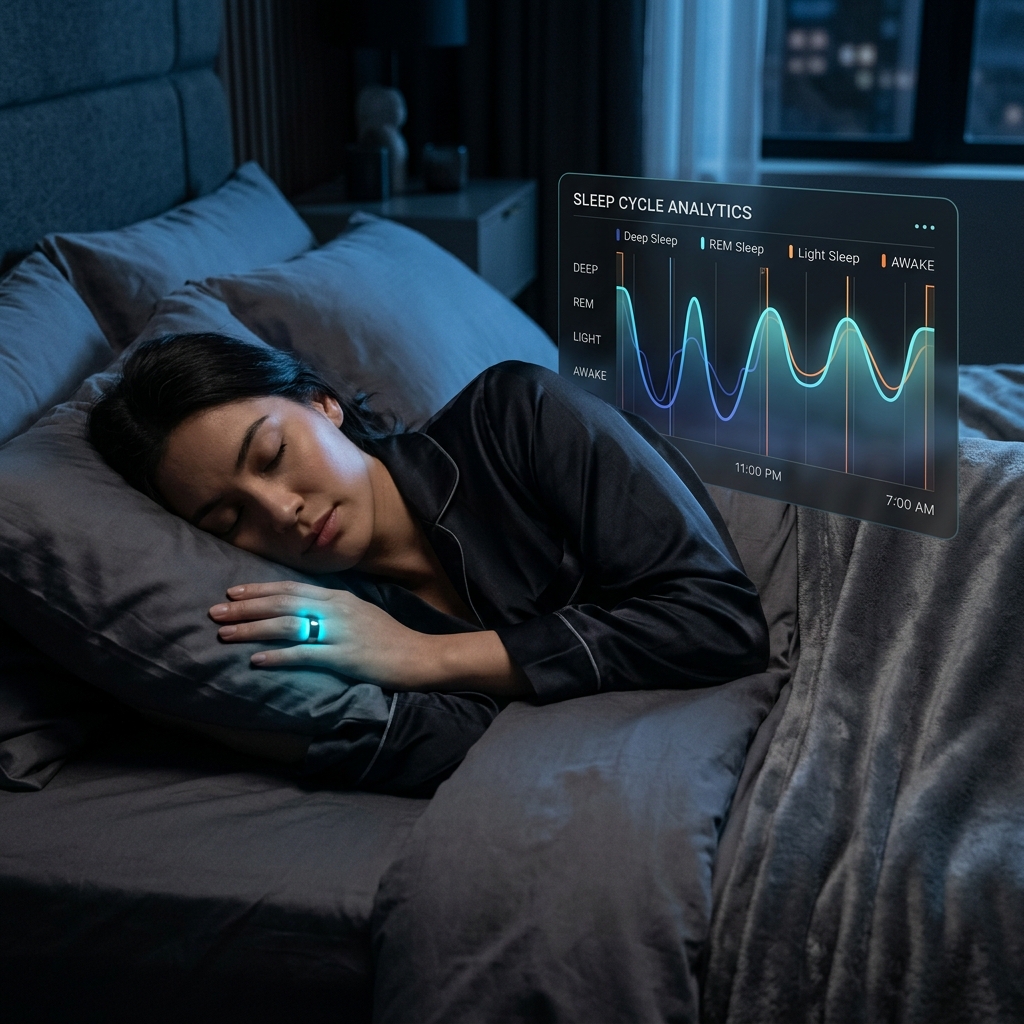
You track your macros, log every set, and spend money on supplements — but if you are consistently sleeping six hours or less, you are leaving the majority of your gains on the table. Sleep is not passive recovery time. It is the biological environment where your muscles are actually rebuilt, hormones are secreted in their largest daily pulses, and the work you put in at the gym is converted into physical adaptation. No pre-workout formula and no training protocol can compensate for chronic sleep deprivation. Understanding sleep as an anabolic tool — arguably the most powerful one available — changes the way you approach every night.
What Happens to Your Muscles While You Sleep
Muscle growth does not occur during your workout. Training creates the stimulus — mechanical tension, metabolic stress, muscle damage — but the actual repair and growth happen afterward, primarily during sleep. During the deepest stages of non-REM sleep, your body enters a highly anabolic state characterized by reduced cortisol, elevated growth hormone, and increased blood flow to skeletal muscle tissue.
Protein synthesis, the cellular process that rebuilds damaged muscle fibers larger and stronger, runs at its highest rate during sleep. Your muscles are drawing on the amino acids circulating in your bloodstream, repairing micro-tears from training, and laying down new contractile proteins. This process requires both the hormonal environment that deep sleep provides and an adequate supply of building blocks — which is one reason pre-sleep nutrition matters so much.
Equally important is what sleep prevents. Cortisol, the body's primary stress hormone, is catabolic — it breaks down muscle tissue for energy. During healthy, sufficient sleep, cortisol levels fall to their lowest point of the day. Cut sleep short and cortisol stays elevated, directly antagonizing the repair process you worked so hard to set in motion.
Growth Hormone and the Deep Sleep Window
Human growth hormone (HGH) is one of the most potent anabolic hormones the body produces naturally. It drives muscle protein synthesis, stimulates fat oxidation, and supports connective tissue repair. Critically, the largest and most significant pulse of growth hormone secretion occurs during the first bout of slow-wave sleep — the deepest stage of non-REM sleep — typically within the first ninety minutes to two hours after falling asleep.
This pulse is not trivial. Research consistently shows that the majority of daily growth hormone output in adults is tied to this nocturnal release. If you are cutting sleep short, going to bed at inconsistent times, or disrupting sleep architecture with alcohol or late-night screens, you are blunting this pulse and reducing the anabolic signal your muscles receive overnight.
The relationship between sleep stages and hormonal output underscores why sleep quality matters as much as sleep quantity. Eight hours of fragmented, light sleep is not equivalent to seven hours of consolidated, deep sleep. Architecture — the proportion of time spent in slow-wave and REM sleep — determines how much anabolic work actually gets done.
How Sleep Deprivation Sabotages Your Training
The effects of short sleep on body composition and performance are well-documented and significant. Even a few days of restricted sleep measurably impairs muscle protein synthesis, increases cortisol output, suppresses testosterone, and reduces insulin sensitivity — a combination that shifts the body toward fat storage and muscle loss simultaneously.
Beyond the hormonal picture, sleep deprivation undermines performance in ways that compound over time:
- Reduced strength output: Sleep-deprived athletes consistently demonstrate lower peak force production and faster fatigue onset during resistance training.
- Impaired reaction time and motor coordination: Technique breaks down, injury risk increases, and the quality of every training session declines.
- Blunted motivation: Sleep deprivation affects the prefrontal cortex, making hard workouts feel harder and making it easier to rationalize skipping the gym.
- Increased perceived exertion: The same workload feels subjectively more difficult when you are under-slept, leading to lower training volumes over time.
- Slower recovery between sessions: Without adequate sleep, accumulated fatigue builds faster than your body can clear it, eventually leading to overtraining symptoms.
If you have ever had a week of poor sleep and noticed your lifts feeling inexplicably heavy, your body is not lying to you. That is real physiological impairment, not mental weakness.
Building a Sleep Environment That Supports Recovery
The physical environment in which you sleep has a direct impact on sleep quality and architecture. Small, deliberate changes to your bedroom setup can meaningfully improve the proportion of deep sleep you get each night.
- Temperature: Core body temperature naturally drops as you fall asleep. A cool room — roughly 65 to 68 degrees Fahrenheit for most people — supports this process. A room that is too warm disrupts slow-wave sleep specifically.
- Darkness: Even small amounts of light reaching the eyes can suppress melatonin production and reduce sleep depth. Blackout curtains or a sleep mask are among the highest-return investments for sleep quality.
- Sound: Sudden noise disrupts sleep architecture more than consistent background sound. If you live in a noisy environment, a white noise machine or fan can mask disruptive sounds without creating its own interruptions.
- Bedding and comfort: Discomfort is a real sleep disruptor. A supportive mattress and pillow setup reduces the micro-arousals caused by repositioning to relieve pressure or pain.
Think of your bedroom as training equipment. Serious athletes invest in good shoes and quality protein — the sleep environment deserves the same intentionality.
Behavioral Habits That Protect Sleep Quality
Environment alone is not enough. The behaviors and habits in the hours before bed have an outsized effect on whether you fall asleep efficiently and cycle through deep sleep stages effectively.
Consistent sleep and wake timing is the single most impactful behavioral habit. Your circadian rhythm is an internal clock that regulates hormone release, body temperature, and sleep drive on a roughly 24-hour cycle. Irregular schedules — sleeping in on weekends, staying up late irregularly — disrupt this clock and reduce sleep quality even when total hours are adequate. Setting a consistent wake time, even on rest days, anchors your circadian rhythm and improves sleep onset and depth over time.
Screen exposure before bed is a well-established disruptor. The blue-wavelength light emitted by phones and monitors suppresses melatonin secretion and signals wakefulness to the brain. Eliminating screen use in the 60 to 90 minutes before your target sleep time meaningfully accelerates sleep onset and preserves melatonin output. If evening screen use is unavoidable, blue-light-blocking glasses are a practical partial mitigation.
Caffeine timing requires more attention than most athletes give it. Caffeine has a half-life of five to seven hours in most adults — meaning a 3 PM coffee still has half its stimulant load in your bloodstream at 8 or 9 PM. Cutting caffeine intake after early afternoon protects sleep architecture, particularly the proportion of deep slow-wave sleep.
Alcohol is commonly misunderstood as a sleep aid. It does reduce the time to fall asleep, but it fragments sleep in the second half of the night and dramatically suppresses REM sleep. Alcohol consumed within three to four hours of bedtime measurably reduces sleep quality in ways that affect next-day performance and recovery.
Magnesium and Sleep-Supportive Nutrition
Magnesium is one of the most widely deficient minerals in athletes, and it plays a direct role in sleep regulation. It activates the parasympathetic nervous system, supports GABA activity — the primary inhibitory neurotransmitter involved in sleep onset — and has been shown in clinical studies to improve sleep efficiency, sleep time, and sleep onset in deficient individuals.
Food sources rich in magnesium include dark leafy greens, pumpkin seeds, almonds, dark chocolate, and legumes. For athletes who train hard and sweat regularly, dietary intake is often insufficient to maintain optimal levels, making supplementation a reasonable consideration. Magnesium glycinate and magnesium threonate are forms with good bioavailability and low rates of gastrointestinal side effects. Magnesium oxide, commonly found in cheaper supplements, is poorly absorbed.
Avoid stimulating foods and large meals close to bedtime. Digestion raises core body temperature and activates metabolic processes that compete with the physiological preparation for sleep.
Protein Before Bed: The Casein Advantage
The hours between your last meal and when you wake up represent a significant fasting window during which your muscles are still undergoing repair but may be limited by amino acid availability. Pre-sleep protein consumption addresses this directly by sustaining elevated blood amino acid levels throughout the night, supporting muscle protein synthesis during the very window when anabolic hormone levels are highest.
Casein protein is particularly well-suited to this application because of its slow digestion rate. Unlike whey, which digests quickly and produces a rapid spike in blood amino acids, casein forms a gel in the stomach and releases amino acids gradually over four to seven hours. This slow, sustained release closely matches the duration of the overnight recovery window.
Practical options for pre-sleep protein include:
- Cottage cheese: A natural source of casein, high in protein, and easy to consume before bed without feeling overly full.
- Greek yogurt: Contains a mix of casein and whey; a solid option if cottage cheese is not appealing.
- Casein protein powder: A direct, convenient source; mix with water or milk for 25 to 40 grams of protein 30 to 60 minutes before sleep.
- Milk: A traditional option that provides a meaningful dose of casein along with tryptophan, a precursor to serotonin and melatonin.
Aim for 30 to 40 grams of protein in the pre-sleep meal or shake. Research supports this range as sufficient to maximally stimulate overnight muscle protein synthesis without the digestive discomfort that might disrupt sleep onset.
Putting It All Together
Sleep optimization is not a passive act. It requires the same intentionality you bring to programming your training or planning your nutrition. The fundamentals are straightforward: protect seven to nine hours of sleep opportunity, maintain consistent timing, create an environment that supports deep sleep, eliminate the habits that degrade sleep architecture, and use pre-sleep protein to keep the anabolic window open throughout the night.
The athletes who make the most consistent progress are rarely the ones doing the most exotic training protocols or cycling through the latest supplements. They are the ones who have mastered the basics — and sleep is the most underrated basic of all. Every session you complete is an investment; sleep is what converts that investment into results.
Start tracking your sleep stages and recovery scores in UltraFit360 to see exactly how your nightly sleep quality correlates with your performance and muscle-building progress — and get personalized recommendations to close the gaps where your recovery is falling short.
Transform Your Fitness Journey
Log your workouts, track your diet, and get AI coaching insights — all with UltraFit360.