💡 Key Takeaways
- Your ring is good at the big numbers — total sleep time and bedtime regularity, usually within 10-20 minutes of a lab on a clean night — but its deep and REM minutes are rough estimates, not measurements.
- Less deep sleep and more waking are normal parts of aging, not a device fault — do not read an age-typical sleep chart as a problem to fix.
- The trustworthy signals are trends over 7-14 days: a rising resting heart rate, a falling HRV, or a temperature bump can flag illness, a poor week, or under-recovery.
- If you take a beta-blocker or have an irregular heartbeat, the heart-based numbers can read oddly — use the ring for engagement, and bring any persistent change to your doctor, not the app.
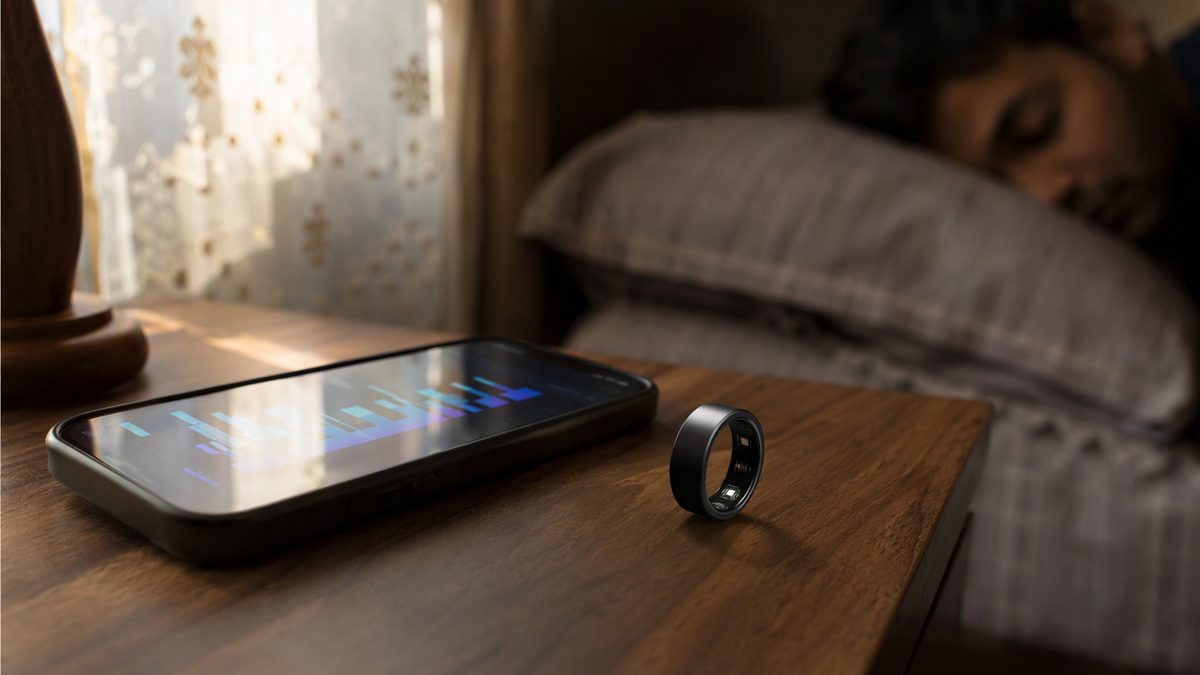
You wear the ring your daughter gave you, and most mornings it tells you something mildly discouraging: not enough deep sleep, a so-so sleep score, more time awake than you would like. After a few weeks of this you start to wonder whether your sleep is genuinely failing you — or whether the little device is simply measuring the wrong thing for a body in its seventies.
Here is the honest answer, which most ring marketing skips. A finger ring does not read your brain. It infers your sleep from your pulse, your movement, and your skin temperature, then a piece of software guesses how the night was structured. Some of those guesses are reliable. Some are not. And a few of the numbers that worry seniors most are exactly the ones the ring is weakest at.
This guide sorts the signal from the noise so the ring earns its place on your hand — supporting your training and longevity rather than nagging you at breakfast.
1. The Deep-Sleep Number That Worries Seniors For No Reason
Start with the figure that causes the most quiet anxiety: deep sleep. Many active seniors open the app and see twenty or thirty minutes of deep sleep where they expected an hour, and conclude their recovery is broken. Two things are happening, and neither means you are unwell.
First, sleep itself changes with age. From your fifties onward the proportion of deep, slow-wave sleep falls and brief awakenings become more common — this is a normal feature of an older brain, documented across decades of sleep research, not a malfunction of your body or your ring. A chart that looks lighter and more broken than a 30-year-old's is simply an age-appropriate chart.
Second, and just as important, the precise stage breakdown is the least reliable thing your ring produces. Pulling apart light, deep, and REM from a pulse signal and a movement sensor — with no brain-wave reading at all — is genuinely hard, and independent reviews of consumer wearables consistently find this is where accuracy slips most. Your nightly deep-sleep minutes can be off by tens of minutes and can disagree from one night to the next. So a low deep-sleep number is, for a senior, a double illusion: an age-normal pattern measured by the ring's shakiest tool. Do not chase it.
2. What The Ring On Your Finger Actually Records
It helps to know what is genuinely being measured versus calculated. The ring carries three real sensors. An optical light sensor reads the blood pulsing through the dense arteries in your finger, giving heart rate and the small beat-to-beat changes called heart-rate variability. An accelerometer senses movement and restlessness. A skin-temperature sensor tracks how warm your finger runs relative to your own baseline — not an absolute fever reading.
From those three raw streams the device calculates everything else: resting heart rate, overnight HRV, breathing rate, a temperature trend, and then — by algorithm, not measurement — the sleep stages and the readiness score. The finger is actually a good place for this; the blood flow is rich and the ring stays snug overnight, so the underlying heart and movement data tend to be cleaner than a loose wristband at rest. The catch is that good raw inputs still feed a guess when it comes to staging. Better signal, same fundamental limit.
3. A Senior-Friendly Way To Use The Ring
The decision-useful information is in the trends, not the morning pie chart. Standardise how you read it and the ring becomes a quiet second opinion on recovery — useful when your own sense of how rested you are has grown less reliable with age. The table sets out what to watch and how far to trust each row.
| Metric | How accurate it is | How to use it |
|---|---|---|
| Total sleep time | Good — usually within ~10-20 min of a sleep lab on a clean night | Aim for a regular 7-9 hours; judge it as a weekly average, not one night |
| Sleep timing / consistency | Good — reliable bed and wake times | Keep bedtime and wake time steady within ~30-60 min, even on free mornings |
| Resting heart rate (overnight) | Reliable trend on a clean signal | A 5-7+ bpm rise over your 14-day baseline can flag illness, alcohol, or a hard week |
| Overnight HRV | Reliable personal trend; runs lower with age | Compare only to your own 7-14 day baseline; a dip suggests easing the week's harder session |
| Skin temperature deviation | Useful for relative changes | A sustained rise can precede a cold or fever — a cue to rest and hydrate |
| Deep / REM minutes | Weak — estimate only, swings night to night | Treat as background colour; never use a single night to judge your recovery |
A practical rhythm: glance at the weekly trend, not the daily score. Place your firmer resistance, balance, or pickleball sessions on days your sleep total and HRV trend look normal, and choose an easy walk or mobility on days the trend is down after a rough night. That is the whole value — closing the loop on how your habits and training feel, not collecting a perfect chart.
4. Medications, Irregular Beats, and When To Tell Your Doctor
Seniors need the plain version here. Many of you take medication that changes heart rate directly — beta-blockers above all, plus some blood-pressure drugs. These can distort the resting-heart-rate and HRV readings the ring leans on, so a worrying recovery number may say more about your prescription than your body. An irregular rhythm such as atrial fibrillation throws the measurement off further, because the maths assumes a fairly steady beat. If that is you, treat the ring's heart-based outputs as rough wellness context, never as a verdict, and never adjust a dose because of an app.
That said, the ring is genuinely useful as a screen-and-flag tool. A sustained, unexplained rise in resting heart rate, a lasting drop in HRV, an irregular-rhythm alert, or loud snoring paired with low-oxygen flags are all reasons to call your doctor and ask whether a proper assessment — possibly a formal sleep study — is warranted. The device can raise the suspicion of sleep apnea or an arrhythmia; it cannot confirm or rule them out. One more honest note: do not let an imperfect score breed bedtime worry. If checking the app first thing is making you anxious about sleep, look only at the weekly view or take a tracking break — stressing over the data can worsen the very sleep you are trying to protect.
Common Questions From Active Seniors
Why is my deep sleep so low — is something wrong at my age?
Almost certainly not. Deep sleep naturally declines and awakenings increase as we age, so a lighter chart is age-normal. On top of that, deep-sleep minutes are the least accurate thing your ring estimates, since it guesses stages from your pulse without reading your brain. The number can be off by tens of minutes and swings nightly. Watch your total sleep and consistency instead, and ignore the single-night deep-sleep figure.
Is the ring reliable if I take blood pressure or heart medication?
The total-sleep and consistency numbers stay useful, but be cautious with the heart-based ones. Beta-blockers and some blood-pressure drugs change your heart rate directly, which can distort resting heart rate and HRV readings and the recovery score built on them. An irregular heartbeat distorts them further. Use the ring for engagement and trends, never to judge your medication, and bring any persistent change to your doctor.
Do I need my doctor involved, or is this just a gadget?
It is mostly a wellness gadget, and for everyday use you do not need clearance to wear it. But it works best as a screen-and-flag tool. If it shows a sustained unexplained rise in resting heart rate, a lasting HRV drop, an irregular-rhythm alert, or loud snoring with low-oxygen flags, that is worth a doctor's visit — possibly a formal sleep study. The ring can raise suspicion; only clinical testing confirms anything.
Does it matter that I recover more slowly than I used to?
That slower recovery is exactly why the trend view helps. Your own sense of how rested you are becomes less reliable with age, so a 7-14 day trend in sleep total, resting heart rate, and HRV gives a useful second opinion. Place your firmer strength, balance, or pickleball sessions on days the trend looks normal, and choose an easy walk when it dips after a poor night.
Disclaimer: This article is for educational purposes only and is not medical advice. Consult a qualified healthcare professional before starting any supplement, nutrition, or training protocol — especially if you are pregnant or breastfeeding, under 18, taking medication, or managing a health condition.
Scientific References & Clinical Sources
- Peake JM, et al. A Critical Review of Consumer Wearables, Mobile Applications, and Equipment for Providing Biofeedback, Monitoring Stress, and Sleep in Physically Active Populations. Front Physiol, 2018. PMID: 30002629
- Düking P, et al. Criterion-Validity of Commercially Available Physical Activity Tracker to Estimate Step Count, Covered Distance and Energy Expenditure during Sports Conditions. Front Physiol, 2017. PMID: 29018355
- Mercer K, et al. Acceptability and Utility of Wearable Activity Trackers for Health Monitoring Among Older Adults With Chronic Illness: Qualitative Study. JMIR Mhealth Uhealth, 2016. PMID: 27113645
- Plews DJ, et al. Training adaptation and heart rate variability in elite endurance athletes: opening the door to effective monitoring. Sports Med, 2013. PMID: 23852425
- Halson SL. Sleep in elite athletes and nutritional interventions to enhance sleep. Sports Med, 2014. PMID: 24791913
UltraFit360 brings your workouts, nutrition and wearable data together. See how the AI fitness tracker works with Apple Health and Health Connect.

