💡 Key Takeaways
- Your sleep score is not a report card — a single low number is noise; only a 1-2 week trend is signal worth acting on.
- The ring is good at total sleep time and bedtime regularity (within ~10-20 min of a lab on a clean night) but only estimates deep and REM minutes, which swing nightly.
- The genuinely useful outputs for a returning trainee are trends: resting heart rate, HRV, sleep consistency, and a temperature bump that can flag illness or a heavy week.
- If you were sedentary for years or take medication, the heart-based numbers can read oddly — use the ring for habit-building and clear any persistent change with your doctor.
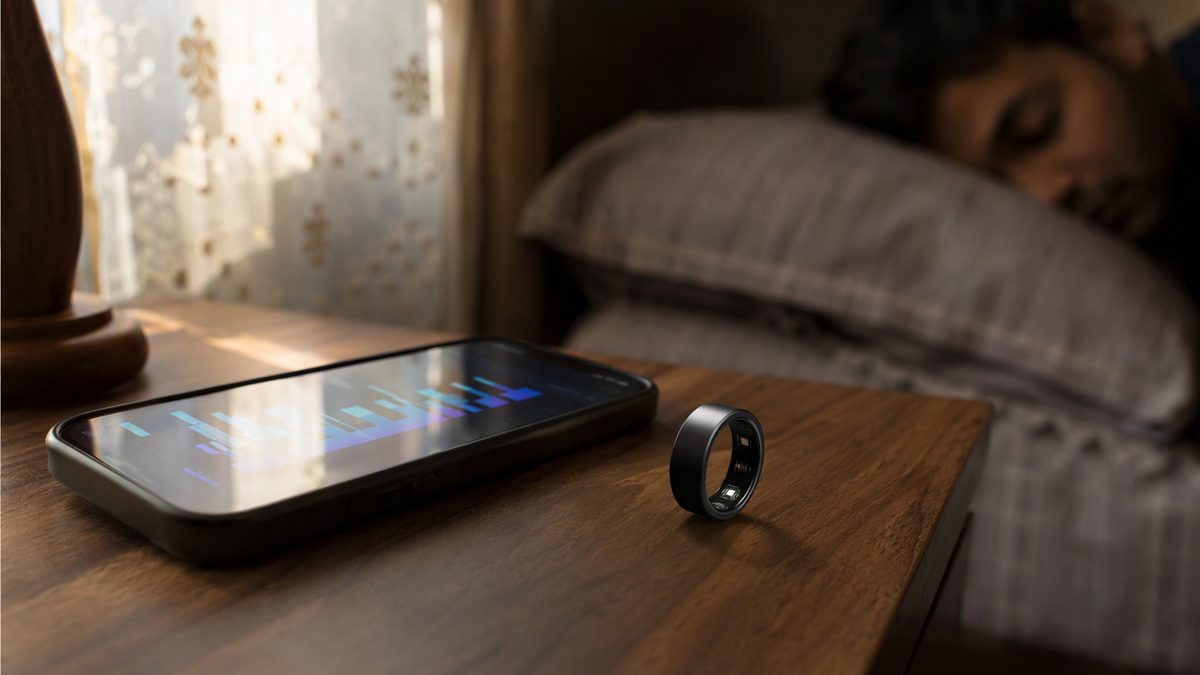
The myth lands within your first week of wearing a ring: that the sleep score is a grade, and a low one means you slept badly and should feel bad about it. So you wake, reach for the phone, read a 68, and start the day already behind — convinced your training, your energy, your whole comeback is being undermined by broken sleep.
That belief is wrong, and acting on it can actually hurt you. A finger ring does not measure your brain. It infers your sleep from your pulse, your movement, and your skin temperature, and a piece of software guesses how the night was structured. The single-night score it spits out is a blunt summary of those guesses — not a verdict on your recovery, and certainly not a grade.
For a beginner over 40, juggling work, family, poorer sleep than your twenties, and a new training habit, knowing which numbers to trust is the difference between a helpful tool and a fresh source of stress. Let's separate the two.
1. The Myth: A Low Sleep Score Means You Slept Badly
Take the objection head-on. The sleep or readiness score feels authoritative — one tidy number, color-coded, waiting for you each morning. But it is a composite the algorithm builds from estimates, and its single biggest input, the stage breakdown, is the ring's weakest output. Distinguishing light from deep from REM using only a wrist or finger pulse, with no brain-wave reading, is genuinely difficult, and independent reviews of consumer wearables find staging accuracy is exactly where these devices fall short. Per-night deep and REM minutes can be off by tens of minutes and disagree from one night to the next, and from one brand to the next.
So a 68 this morning and an 84 tomorrow does not mean your sleep doubled in quality. It often means the same real night got scored differently by an algorithm chasing a moving target. The evidence is clear on what these devices do well — telling asleep from awake, total sleep time, and timing — and equally clear on where they wobble, which is precise staging and the scores built on it. Treating that score as a daily grade is reading meaning into noise.
2. What's Actually Reliable When You're Rebuilding At 40+
Here is the better way to use it, and it suits a returning trainee perfectly. The ring is good at the gross, high-signal stuff: whether you slept, how long, and how regular your bed and wake times are. Those are the numbers that actually move the needle on recovery in your forties, when life stress and lighter sleep already work against you.
The other trustworthy outputs are trends in your own physiology. Your overnight resting heart rate, read over a week or two, rises with a hard training block, a late drink, a stressful patch, or an oncoming cold. Your overnight HRV — the small beat-to-beat variation — drifts down under the same stresses and back up as you adapt and recover. Your skin-temperature deviation can tick up a day or two before you feel a cold coming. None of these is a single-night verdict; each is a slow signal you read against your own baseline. For someone rebuilding a body that adapts more slowly than it did at 22, that trend view is genuinely the most valuable thing the ring offers — and it has nothing to do with the deep-sleep pie chart.
3. A No-Stress Protocol For The Returning-Over-40 Trainee
Standardise how you read the ring and you strip out most of the false alarms. Look at the right rows, on the right timescale, and the data starts guiding your week instead of rattling your morning. The table shows which outputs to trust and exactly how to act on each.
| Metric | How accurate it is | How to use it |
|---|---|---|
| Total sleep time | Good — within ~10-20 min of a sleep lab on a clean night | Aim for a 7-9 hour weekly average; one short night is not a trend |
| Sleep consistency | Good — reliable bed and wake times | Hold bed and wake times within ~30-60 min, even on weekends |
| Resting heart rate | Reliable trend on a clean signal | A 5-7+ bpm rise over your 14-day baseline = ease intensity, hydrate, check for illness |
| Overnight HRV | Reliable personal trend | Compare only to your own baseline; a dip suggests a lighter or rest day |
| Temperature deviation | Useful for relative changes | A sustained bump can flag an incoming cold — a cue to back off and recover |
| Deep / REM minutes & score | Weak — estimate only, swings nightly | Background colour at most; never let it set your mood or your training |
Run it like an experiment, which is the most powerful thing a beginner can do with a ring. Note how a late glass of wine, a 9pm espresso, or a hot bedroom shows up the next morning as a higher resting heart rate and a lower HRV. Change the behaviour, watch the trend move, and you have learned something real about your own body — far more useful than memorising a deep-sleep target you cannot consciously hit anyway.
4. When To Stop Watching The Score — And When To See A Doctor
Two cautions matter most for this group. The first is psychological. There is a documented pattern called orthosomnia, where chasing perfect tracker sleep creates anxiety that worsens the sleep itself. Beginners are especially prone, because you are already anxious about whether you are doing the comeback right. If the first thing you do each morning is read the score and feel judged, that habit can actively degrade your sleep. The fix is simple: stop checking the morning score, look only at the weekly trend, or take a tracking break for a while. The ring is meant to support a habit, not become a stressor.
The second is medical. If you were sedentary for years, are returning after a health scare, or take medication, build back gradually and treat the ring as a wellness tool, not a diagnostic one. Some heart and blood-pressure drugs distort the heart-rate and HRV readings, so an alarming number may reflect your prescription, not your recovery. And use the ring as a screen-and-flag tool: a sustained unexplained rise in resting heart rate, a lasting HRV drop, an irregular-rhythm alert, or loud snoring with low-oxygen flags all warrant a doctor's visit and possibly a formal sleep study. The ring can raise the question; only a clinician can answer it.
What Beginners Over 40 Ask About Sleep Tracking
Does a low sleep score mean I slept badly and should train less?
Not by itself. The score is a composite built largely on the ring's weakest output — estimated sleep stages — so a single low number is mostly noise. Judge your sleep by total time and consistency over a week, not one morning's grade. If your resting heart rate is also elevated and HRV depressed across several days, then ease intensity. One low score on its own is no reason to change your training.
Why does my deep sleep look so different every night?
Because the ring estimates stages from your pulse and movement without reading your brain, and that estimate is genuinely hard to get right. Per-night deep and REM minutes can be off by tens of minutes and swing night to night, even on identical sleep. You also cannot consciously force more deep sleep. Ignore the nightly stage breakdown and focus on the trends the ring actually measures well — total sleep, timing, resting heart rate, and HRV.
Is the ring's data different for me than for a 25-year-old?
Somewhat. After 40 your sleep is naturally a little lighter and more broken, and life stress runs higher, so your charts may look less pristine than a younger person's — that is normal, not a fault. More importantly, the numbers are not comparable between people at all. Use only your own baseline. Watch your personal trend in sleep total, resting heart rate, and HRV, and never measure yourself against someone else's ring.
I keep stressing about my numbers — is that counterproductive?
Yes, and there's a name for it: orthosomnia, where chasing perfect tracker sleep creates anxiety that worsens your sleep. Beginners are especially vulnerable. If checking the score first thing leaves you tense, stop doing it — look only at the weekly trend, or take a tracking break. The ring should support your new habit, not police it. Better sleep comes from steady routines, not from staring at last night's chart.
Disclaimer: This article is for educational purposes only and is not medical advice. Consult a qualified healthcare professional before starting any supplement, nutrition, or training protocol — especially if you are pregnant or breastfeeding, under 18, taking medication, or managing a health condition.
Scientific References & Clinical Sources
- Peake JM, et al. A Critical Review of Consumer Wearables, Mobile Applications, and Equipment for Providing Biofeedback, Monitoring Stress, and Sleep in Physically Active Populations. Front Physiol, 2018. PMID: 30002629
- Düking P, et al. Criterion-Validity of Commercially Available Physical Activity Tracker to Estimate Step Count, Covered Distance and Energy Expenditure during Sports Conditions. Front Physiol, 2017. PMID: 29018355
- Plews DJ, et al. Training adaptation and heart rate variability in elite endurance athletes: opening the door to effective monitoring. Sports Med, 2013. PMID: 23852425
- Halson SL. Sleep in elite athletes and nutritional interventions to enhance sleep. Sports Med, 2014. PMID: 24791913
- Fullagar HH, et al. Sleep and athletic performance: the effects of sleep loss on exercise performance. Sports Med, 2015. PMID: 25315456

