💡 Key Takeaways
- Within a night your ring nails total sleep time and bedtime (within ~10-20 min of a lab) but only guesses your deep and REM minutes — those swing nightly and aren't worth chasing.
- Across a 7-14 day window, your HRV and resting-heart-rate trend is the measurable signal — depressed both = a poor day to grind maximal skill attempts.
- Skill work (planche, front lever, one-arm progressions) needs a fresh nervous system; the ring's recovery trend, not its sleep-stage chart, is your readiness gauge.
- Tendon overuse and CNS fatigue won't show on a stage breakdown — let an elevated resting heart rate and low HRV tell you when to deload skill volume.
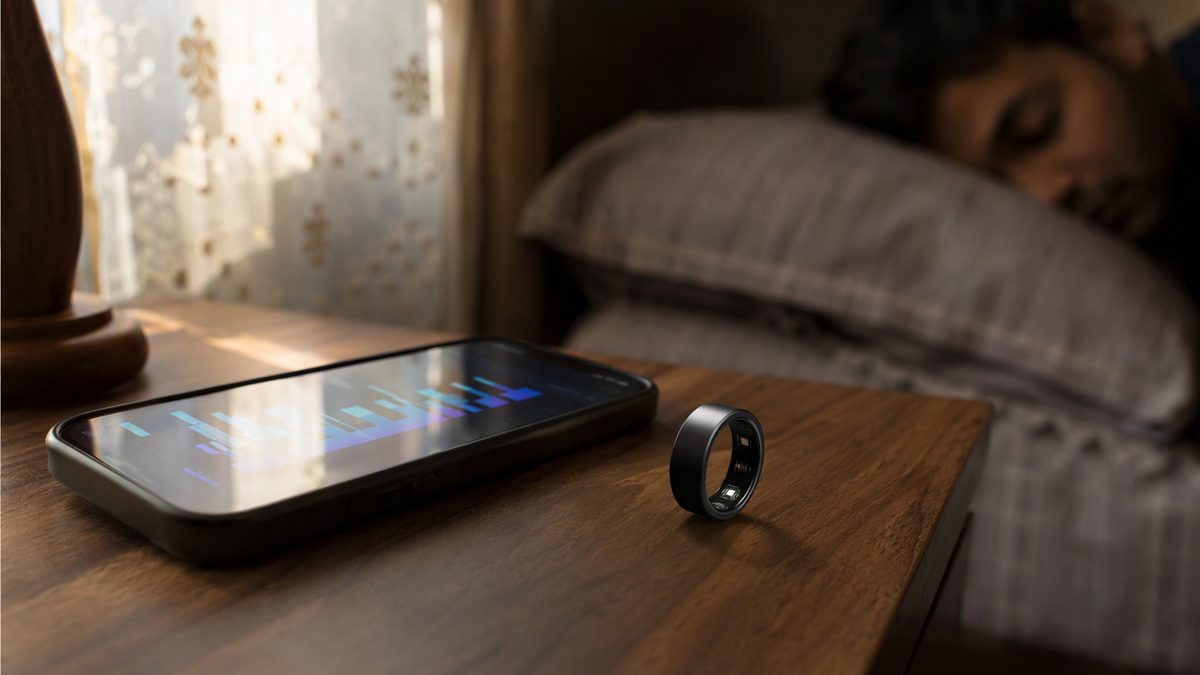
Here's what you can expect to measure with a sleep ring, and roughly when. On any single night, the ring will tell you — accurately — how long you slept and when. Over the following one to two weeks, it will build a trend in your resting heart rate and HRV that genuinely tracks how recovered your nervous system is. What it will never reliably tell you, on any timescale, is exactly how many minutes of deep sleep you got. That number is a guess.
This matters for calisthenics more than for most training. Skill work — the planche, the front lever, clean muscle-up reps, one-arm progressions — is a nervous-system game. You need to show up fresh, and grinding maximal attempts on a fried system is how plateaus and elbow tendons happen. The ring can help you time freshness. But only if you read the signals it measures well and ignore the one it doesn't.
So let's go data-first: what's real, what's noise, and how the measurable trends map onto your skill days.
1. What The Ring Measures Well Vs. Estimates Poorly
Separate the sensor reality from the algorithm guesswork. The ring carries three real sensors: an optical pulse reader (heart rate and beat-to-beat HRV), an accelerometer (movement and restlessness), and a skin-temperature sensor read against your own baseline. Those raw measurements are solid, especially on the finger, where dense blood flow gives a clean signal and the snug fit resists the motion artifacts that plague a loose wrist strap during sleep.
From there, two very different things happen. The ring directly and reliably derives your total sleep time, your sleep timing, your overnight resting heart rate, your HRV, your breathing rate, and your temperature trend. But the sleep stages — light, deep, REM — are not measured. They are inferred by an algorithm that has never seen your brain waves, pattern-matching your pulse and movement to what those signals usually look like in each stage. Independent validation reviews are consistent: consumer wearables are good at the gross outputs and distinctly weaker at staging. Your nightly deep-sleep figure can be off by tens of minutes and disagree night to night and across brands. For a data-minded athlete, the rule is simple — trust the directly derived metrics, treat the stage pie chart as a rough cartoon.
2. The Readiness Timeline For Skill Days
Now map the measurable signals onto a timeline you can act on. Same-night, the ring confirms whether you actually banked the sleep your nervous system needs — useful, because skill acquisition consolidates during sleep and a genuinely short night is a real reason to pull back maximal attempts the next day. But one night rarely decides much.
The decision-grade signal emerges over 7 to 14 days. Your HRV settles into a personal baseline, and its direction tells you how your nervous system is coping with accumulated skill volume and straight-arm tendon load. When your HRV trend holds steady or climbs and your resting heart rate sits at baseline, your system is absorbing the work — green light for a heavy planche or front-lever session, fresh attempts, new progressions. When HRV has drifted down for several days and resting heart rate has crept up, that is your measurable cue that the nervous system is taxed: a poor day to chase a one-arm max, and a good day for easy volume, mobility, or rest. This is exactly where HRV-guided autoregulation has support — using the trend to decide push-versus-recover days. It reads autonomic recovery, not muscle soreness and not tendon health, so pair it with how your elbows and wrists actually feel.
3. A Data-Driven Protocol For Park-And-Home Skill Training
Standardise the inputs and the readout becomes trustworthy. Read the ring the same way each morning — on waking, before you get moving — and act on the trends, not the daily score. The table lays out each metric, how far to trust it, and how it slots into your skill-and-strength week.
| Metric | How accurate it is | How to use it |
|---|---|---|
| Total sleep time | Good — within ~10-20 min of a lab on a clean night | Target 7-9 hours; a genuinely short night = pull back maximal skill attempts |
| Sleep consistency | Good — reliable bed and wake times | Hold bed/wake within ~30-60 min so the HRV baseline stays clean |
| Overnight HRV (7-14 day trend) | Reliable personal trend | Trend up/steady = fresh, schedule heavy skill work; trend down = easy volume or rest |
| Resting heart rate (trend) | Reliable trend on a clean signal | A 5-7+ bpm rise over baseline = nervous system taxed; deload skill, hydrate |
| Temperature deviation | Useful for relative changes | A sustained rise can flag illness before you feel it — drop intensity |
| Deep / REM minutes & score | Weak — estimate only, swings nightly | Do not chase; never plan a skill day around last night's deep-sleep figure |
Practical structure: front-load your maximal skill attempts and high straight-arm load onto the days your HRV trend is healthy, and bank your easier high-rep, mobility, and tendon-conditioning work for the down-trend days. Run experiments, too — note how a late training session, a hot room, or a screen-heavy evening shows up in tomorrow's resting heart rate. The point is closing the loop on what keeps your nervous system fresh, not admiring a stage chart you can't influence.
4. Tendons, CNS Fatigue, and What The Ring Can't See
Be clear about the ring's blind spots, because in calisthenics they're the ones that injure you. The single biggest risk in bodyweight skill training is connective-tissue overuse — elbow and wrist tendons that adapt far slower than muscle and that grinding straight-arm work punishes. No sleep stage, no HRV reading, and no recovery score measures tendon health. A perfect-looking trend will not protect an elbow you're loading maximally every day without deloads. The ring can tell you your nervous system is recovered; it cannot tell you your tendons are. Listen to local pain and program planned deloads regardless of what the numbers say.
Two more honest limits. First, do not fall into orthosomnia — fixating on a perfect deep-sleep number can breed anxiety that actually worsens sleep, and since you can't consciously force more deep sleep, chasing it is pure wasted stress. Read weekly trends, not the morning score. Second, the ring is a screen-and-flag tool, not a diagnosis. A sustained unexplained rise in resting heart rate, a lasting HRV drop you can't explain by training, an irregular-rhythm alert, or loud snoring with low-oxygen flags all warrant a clinician and possibly a sleep study. The ring raises the question; only testing answers it.
Calisthenics Athletes' Questions On Sleep Rings
Can I trust the deep-sleep number to plan my skill days?
No. Deep-sleep minutes are the ring's least reliable output — estimated from your pulse without reading your brain, off by tens of minutes, and swinging night to night. You also can't consciously increase deep sleep. Plan skill days off the metrics the ring measures well: your total sleep time same-night, and your HRV and resting-heart-rate trend over 7-14 days. Those tell you whether your nervous system is fresh for maximal planche or front-lever work.
Does the ring tell me if my tendons are recovered?
No, and this is the key blind spot for calisthenics. Sleep stages, HRV, and recovery scores read your autonomic nervous system, not connective tissue. Your elbows and wrists adapt far slower than muscle, and no ring metric reflects pulley or tendon load. A green recovery score won't protect an elbow you grind maximally every day. Program planned deloads, respect local pain, and treat the ring as a CNS gauge only.
Can I train skills every day if my recovery score looks good?
A good HRV and resting-heart-rate trend means your nervous system is absorbing the load, which supports scheduling heavy skill attempts that day. But daily maximal skill grinding is a tendon problem, not a CNS one, and the ring can't see that. Use the trend to place your hardest attempts on fresh days and easy volume on taxed days, but still build in regular deloads for connective tissue regardless of what the score says.
Do I need a ring if I only do bodyweight training, no weights?
You don't need one, but it can help time freshness, which matters more in skill training than in general lifting. The useful part isn't the sleep-stage chart — it's the HRV and resting-heart-rate trend telling you when your nervous system is fresh for maximal attempts versus taxed and better off doing easy volume. If a ring would make you anxious about numbers rather than guide your days, skip it; consistent sleep beats any gadget.
Disclaimer: This article is for educational purposes only and is not medical advice. Consult a qualified healthcare professional before starting any supplement, nutrition, or training protocol — especially if you are pregnant or breastfeeding, under 18, taking medication, or managing a health condition.
Scientific References & Clinical Sources
- Peake JM, et al. A Critical Review of Consumer Wearables, Mobile Applications, and Equipment for Providing Biofeedback, Monitoring Stress, and Sleep in Physically Active Populations. Front Physiol, 2018. PMID: 30002629
- Plews DJ, et al. Training adaptation and heart rate variability in elite endurance athletes: opening the door to effective monitoring. Sports Med, 2013. PMID: 23852425
- Kiviniemi AM, et al. Daily exercise prescription on the basis of HR variability among men and women. Int J Sports Med, 2007. PMID: 17345075
- Düking P, et al. Criterion-Validity of Commercially Available Physical Activity Tracker to Estimate Step Count, Covered Distance and Energy Expenditure during Sports Conditions. Front Physiol, 2017. PMID: 29018355
- Halson SL. Sleep in elite athletes and nutritional interventions to enhance sleep. Sports Med, 2014. PMID: 24791913

