💡 Key Takeaways
- Your ring is reliable for total sleep time and timing (usually within about 10-20 minutes of a sleep lab on a good night) but only estimates deep and REM minutes, which can be off by tens of minutes night to night.
- Across a 16-18 week block, the trend lines that matter are total sleep, sleep consistency, resting heart rate, and overnight HRV, not any single night's stage pie chart.
- A resting heart rate creeping up or an HRV trend drifting down over a peak-mileage week is a soft cue to ease off or check fueling, not a verdict to ignore.
- Do not chase deep-sleep minutes the night before a long run; one low score is noise, and stressing over it can cost you the sleep you are trying to protect.
The question most runners type into the search bar is some version of this: my ring says I only got 45 minutes of deep sleep before my 32K long run, should I be worried? Short answer: no. That single deep-sleep number is the least trustworthy thing the ring reports, it swings wildly from night to night, and you cannot consciously force more of it anyway. What you should actually watch is your total sleep and its trend across the block.
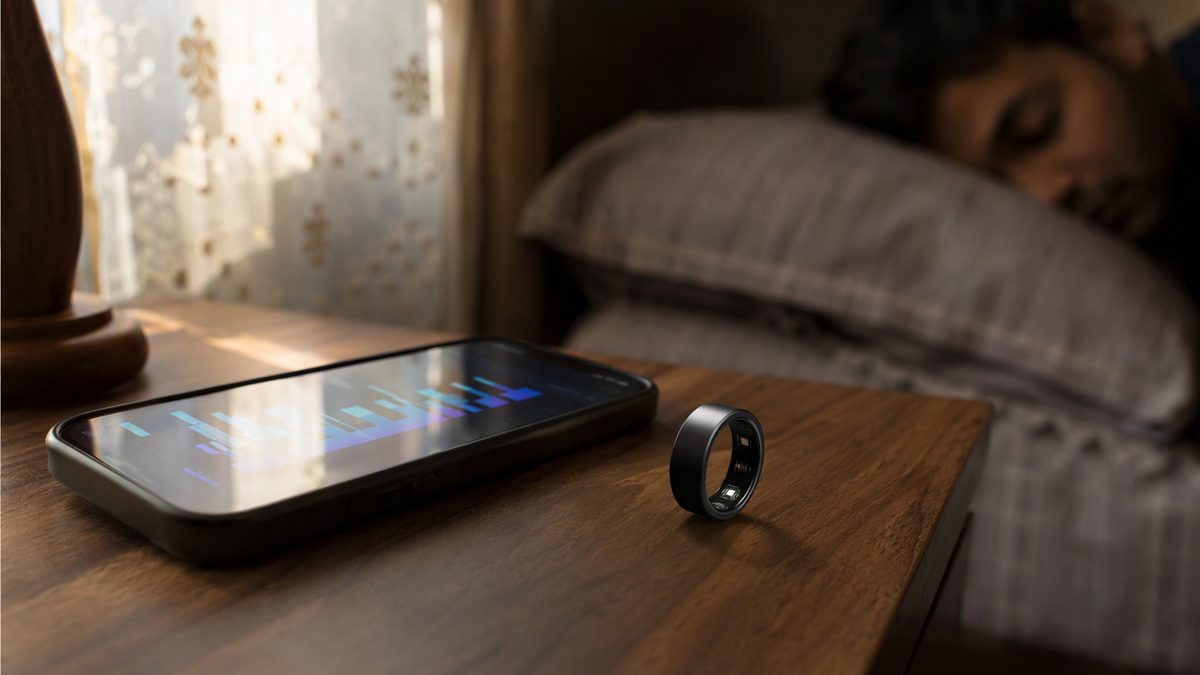
A smart ring on your finger does not see your brain. It reads heart rate, pulse-derived heart-rate variability, movement, breathing rate, and skin temperature, then an algorithm guesses how your night was structured. That guess is good at the big stuff and shaky at the fine stuff.
So here is the honest breakdown for a runner: what the ring measures, where its accuracy ceiling sits, how to read the signals that hold up over a training block, and when a number is worth acting on.
1. The Question Behind the Question: Can a Ring Grade My Pre-Long-Run Sleep?
It can grade the parts that matter and only estimate the parts you fixate on. Detecting whether you were asleep or awake, and totalling your sleep time and onset, is the high-signal job a ring does well — typically landing within roughly 10 to 20 minutes of a clinical sleep study on a clean night. That is genuinely useful for a marathoner, because adequate, regular sleep is one of the strongest levers on recovery and endurance performance there is (PMID 25553531, PMID 24791913).
Splitting that sleep into precise light, deep, and REM minutes is the hard part. The ring infers stages from peripheral signals — low movement plus high HRV and a lower heart rate often reads as deep sleep, for instance — without ever measuring brain waves, which is what a lab actually scores (PMID 30002629). So your nightly deep-sleep figure is a statistical approximation that can be off by tens of minutes and disagree with another brand entirely.
The practical takeaway: trust the ring when it tells you that you logged six hours instead of your usual eight before a key session. Do not let it convince you a deep-sleep number doomed tomorrow's long run. The total and timing are the signal; the stage breakdown is the noisy estimate.
2. What the Ring Reads on a Runner's Finger
The finger is a good place to read sleep. Dense arterial blood flow gives a clean optical pulse signal at rest, and a snug ring stays put through the night with less of the motion artifact and band slippage a watch suffers — which is why rings often have a signal edge over wrist wearables for sleep specifically (PMID 30002629). From those raw streams the device derives the numbers a marathoner can actually use.
| Signal | How the ring gets it | Reliability for runners | What it's good for |
|---|---|---|---|
| Total sleep time | Movement + heart-rate patterns | High (within ~10-20 min on a good night) | Confirming you bank 7-9h in heavy weeks |
| Sleep timing/onset | When you fell asleep and woke | High | Holding consistent bed/wake times in a block |
| Resting heart rate | Overnight optical pulse | Good (track your own baseline) | Spotting fatigue, illness, alcohol, under-recovery |
| Overnight HRV trend | Beat-to-beat pulse variability | Good as a personal trend | Gauging recovery load across peak mileage |
| Deep / REM minutes | Algorithmic stage estimate | Weak (off by tens of min, brand-specific) | Rough trend only, not a nightly verdict |
Notice the split down the table: the top rows are sturdy, the bottom row is soft. Optical accuracy also degrades with cold fingers, a loose fit, and motion (PMID 30002629), which matters if you sleep cold the night before a winter race. Read the resting heart rate and HRV as personal baselines, never as numbers to compare against a training partner's ring.
3. Reading the Trend Across a 16-Week Build
One night tells you almost nothing; a block tells you a lot. Across an 18-week marathon build, the lines worth watching are total sleep duration, how consistent your bed and wake times are, your overnight resting heart rate, and your HRV trend — reviewed as weekly or rolling averages rather than morning-by-morning. A single low readiness score the day after a hard interval session is expected and means little. A two-week drift in the wrong direction during your highest-mileage block is information.
Use the recovery signals as soft cues, not commands. A resting heart rate clearly above baseline, or an HRV trend drifting down, over several days of peak loading is a nudge to ease an easy day, check your fuelling, hydrate, or look for an oncoming bug — the autoregulation logic coaches apply when they soften training on suppressed-HRV stretches (PMID 23852425, PMID 17345075). High-mileage runners are also prone to under-fuelling, and a stubbornly elevated resting heart rate alongside flat training can be an early flag worth heeding.
Taper week is where the data turns reassuring. As volume drops, expect resting heart rate to settle and HRV to climb back toward baseline — confirmation that you are absorbing the block. Do not start a new sleep experiment in race week, though; this is when habits locked in earlier pay off, not when to chase a perfect chart.
4. Orthosomnia: When Watching the Ring Costs You the Race Sleep
There is a documented trap with a name. Orthosomnia is when chasing perfect tracker-reported sleep breeds anxiety that itself worsens your sleep — you fixate on the deep-sleep number, get distressed it is too low, and lie awake stressing about a metric, which is exactly how you sabotage the night before a goal race (PMID 27113645). The irony writes itself: the runner most worried about sleeping well for the marathon sleeps worst because of the worry.
The fix is mechanical. Stop checking the score first thing in the morning, especially in race week. Look only at weekly trends, not the nightly stage pie. And remember you cannot will yourself into more deep sleep on command, so a low number is not a problem you can solve by trying harder at it — it is just a noisy estimate.
If the ring is adding bedtime anxiety rather than removing it, the correct move is to glance less, or take a tracking break entirely through the taper. A wearable earns its place when it quietly supports better habits — consistent timing, enough total sleep — not when it becomes one more thing to perform. Building those durable routines is the real win, and our guide to building fitness habits covers how to make them stick across a long block.
5. When a Ring Number Is Worth Acting On — and When to See a Doctor
Act when the signals cluster and persist. A resting heart rate elevated for several mornings, an HRV trend drifting down, poor sleep, and stalling sessions together suggest you have outrun your recovery — ease the easy days, sleep more, check your fuelling, rather than grinding. One rough night, or one low score after a long run, does not qualify. The value is in closing the loop on a habit: notice that a late race-eve beer or a hot bedroom spikes your resting heart rate and wrecks restlessness, then change it.
Some readings point past training to medicine. The ring is a screen-and-flag tool, never a diagnosis. Loud snoring with breathing-disruption flags and oxygen dips can hint at sleep apnea; a sustained unexplained rise in resting heart rate or drop in HRV, or an irregular-rhythm flag, warrants a clinician's eyes; persistent insomnia or daytime sleepiness despite good habits deserves a real sleep evaluation. A ring can raise the suspicion but cannot confirm any of it.
Keep the device in proportion the rest of the time. Consumer rings give useful relative trends, not lab-grade absolute values, and the stage numbers especially are estimates that differ across brands (PMID 30002629, PMID 29018355). Use the ring to protect total sleep and read your recovery direction across the block, lean on how your legs and your easy-run heart rate actually feel, and let the data inform your training rather than dictate it.
Marathon Runners' Questions on Ring Sleep Tracking
My ring says I barely got any deep sleep before my long run. Is my session ruined?
Almost certainly not. Deep-sleep minutes are the least reliable number a ring reports, swinging widely night to night and differing by brand, and you cannot force more of it by trying. What actually matters is your total sleep time, which the ring tracks well. If you banked a normal total, run as planned. If your total was genuinely short across several nights, that trend is the real cue to ease intensity, not a single deep-sleep figure.
Does the ring measure my sleep accurately enough to plan training around it?
For the right metrics, yes. Total sleep time and timing land within roughly 10-20 minutes of a sleep lab on a good night, so use those to confirm you are banking enough across a block. Resting heart rate and HRV trends are useful personal recovery signals too. What it cannot do well is split your night into precise deep and REM minutes, so plan around totals, consistency, and trends rather than the stage breakdown.
Should I stop checking my ring during race week?
Often, yes. Fixating on tracker scores can breed anxiety that worsens sleep, which is the last thing you want before a marathon. Keep your consistent bed and wake times, but stop checking the score first thing in the morning and ignore the nightly stage chart. If the ring is adding race-week stress rather than easing it, take a tracking break through the taper. The habits you built earlier carry you, not a perfect chart.
Can my ring catch a recovery problem during peak mileage?
It can flag one to investigate. A resting heart rate sitting above your baseline and an HRV trend drifting down across several days of heavy loading is a soft cue that you may be under-recovered, under-fuelled, or fighting illness. Treat it as a prompt to ease the easy days, eat more, and hydrate, not as a diagnosis. If an elevated resting heart rate or low HRV persists unexplained, or comes with feeling ill, check with a clinician.
Disclaimer: This article is for educational purposes only and is not medical advice. Consult a qualified healthcare professional before starting any supplement, nutrition, or training protocol — especially if you are pregnant or breastfeeding, under 18, taking medication, or managing a health condition.
Scientific References & Clinical Sources
- Peake JM, et al. A Critical Review of Consumer Wearables, Mobile Applications, and Equipment for Providing Biofeedback, Monitoring Stress, and Sleep in Physically Active Populations. Front Physiol, 2018. PMID: 30002629
- Thun E, et al. Sleep, circadian rhythms, and athletic performance. Sleep Med Rev, 2015. PMID: 25553531
- Halson SL. Sleep in elite athletes and nutritional interventions to enhance sleep. Sports Med, 2014. PMID: 24791913
- Plews DJ, et al. Training adaptation and heart rate variability in elite endurance athletes: opening the door to effective monitoring. Sports Med, 2013. PMID: 23852425
- Mercer K, et al. Acceptability and Utility of Wearable Activity Trackers for Health Monitoring Among Older Adults With Chronic Illness: Qualitative Study. JMIR Mhealth Uhealth, 2016. PMID: 27113645

