💡 Key Takeaways
- On fragmented newborn sleep the ring will hand you ugly scores and low deep-sleep numbers; that reflects your nights, not a failure of yours, and it is not a reason for guilt.
- The ring is good at total sleep time, even across fragments and naps, but only estimates deep and REM minutes, which are noisy and not worth fixating on.
- Postpartum physiology raises your resting heart rate and breathing rate, so old baselines and any readiness score read unreliable until you rebuild a fresh baseline over a couple of weeks.
- Use the ring to decide between a gentle cleared session and rest, never to chase weight loss or push through a four-hour night, and get clinician clearance before resuming training.
The hardest part is that the device keeps grading nights you had no control over. You are up twice, three times, sometimes more, and in the morning the ring shows a battered score and a tiny deep-sleep number, as if you failed an exam you never agreed to sit. On fragmented newborn sleep, that is exactly what these numbers will look like — and a bad score is not a verdict on you. It reflects a season, not your effort.
Before anything else: get your provider's clearance before resuming structured training, and follow their guidance on timing and intensity. No ring overrides that. Pregnancy and the months after raise your resting heart rate and breathing rate as normal physiology, so your old numbers and any readiness score lean unreliable until your body settles.
This is how to read a ring kindly and usefully in early motherhood — what it measures, why the scores look the way they do, and how to choose between a gentle session and rest without adding guilt.
1. The Real Problem: A Ring That Grades Nights You Can't Control
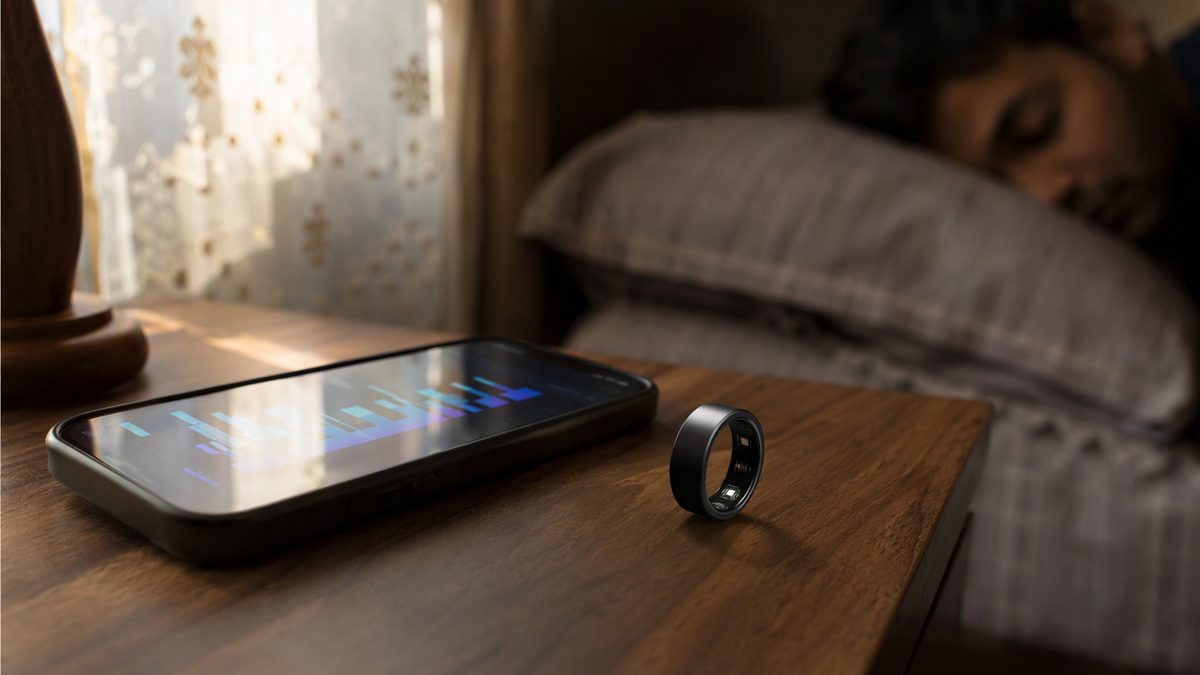
A finger-worn ring does not see your brain. It reads heart rate, beat-to-beat variability, movement, breathing rate, and skin temperature, then an algorithm estimates your night's stages and a readiness score. On a full night that estimate works reasonably. On a night carved into three or four pieces by feeds, the staging algorithm gets exactly the input it handles worst, and the deep-sleep number it returns is close to meaningless.
So expect ugly outputs, and do not internalize them. Deep and REM minutes are the least reliable thing the ring reports even on a good night — inferred from peripheral signals without measuring brain waves, off by tens of minutes, and not interchangeable between brands (PMID 30002629). On fragmented sleep they are noisier still. A low deep-sleep figure after a hard newborn stretch is information about the night, not a problem you caused.
The goal here is not a good score; it is autoregulation. Let the trustworthy parts of the data help you decide whether today is a gentle-movement day or a rest day, when your own judgement is fogged by tiredness. And let a rough reading point you toward more rest, never toward guilt or harder effort.
2. What the Ring Can Still Tell You on Broken Nights
Not all the outputs are useless on fragmented sleep — some are genuinely helpful. Total sleep time, summed across fragments and naps, is the metric the ring tracks well, and it often explains why you feel wrecked better than any fancy number. Sleep is where the bulk of real recovery happens, and short, broken nights shift the body toward breakdown (PMID 21550729), so an honest total is worth knowing. Resting heart rate and your HRV trend, read against a fresh baseline, round out the useful picture.
| Metric | How to read it postpartum | Reliability | What to do with it |
|---|---|---|---|
| Total sleep time | Sum of all fragments and naps | Good | Under ~5-6h on a hard stretch means treat it as a rest day |
| Resting heart rate | Compare to your new postpartum baseline | Good | ~5+ bpm up for 2-3 mornings, scale back and watch |
| Overnight HRV trend | Watch direction, not one value | Good as a trend | Drifting down over days, favor gentle movement or rest |
| Temperature deviation | Relative to your baseline | Good as a trend | Sustained rise can flag an oncoming bug |
| Deep / REM minutes | Algorithmic guess, worse on broken sleep | Weak | Do not fixate; it is the least reliable output |
| Readiness score | A rough nudge, not a verdict | Rough | Look at the underlying metrics and how you feel |
Two postpartum cautions. Once cycles return, menstrual phase moves resting heart rate, temperature, and HRV, so do not read every luteal-phase rise as fatigue. And if you are breastfeeding, those demands stack on top of healing — hydrate well and let your energy, not the screen, have the final say.
3. Building a Fresh Baseline When Your Body Has Reset
Your old numbers do not apply anymore, so retire them. Resting heart rate and overnight breathing rate normally sit higher for a stretch after birth, so the ring cannot fairly compare you to your pre-pregnancy self, and any readiness score built on that comparison reads off until you rebuild. Give it a couple of weeks of consistent measuring to learn your new normal, then judge against that.
Standardize the measurement so the baseline is clean. Let the ring average the whole night rather than relying on a quick morning spot-check, which carries more variability — and its snug overnight fit and clean finger pulse signal genuinely help here versus a watch that slips (PMID 30002629). With a fresh baseline in place, a genuinely off morning starts to stand out from ordinary newborn noise.
Then read trends, never single nights. Heart-rate variability reflects how balanced your nervous system is between stress and recovery (PMID 23852425), and on a heavy newborn stretch it will look suppressed and bouncy — that is the load you carry, including the broken sleep, not a personal failing. Watch the direction over a week, and let that, plus how you actually feel, guide the week rather than any one morning's number.
4. Turning the Trend Into a Nap-Window Decision Without the Guilt
The practical use is small and kind: let the multi-day pattern steer how you spend a nap window, within what your clinician has cleared. When your HRV trend holds steady and resting heart rate sits near baseline after a reasonable night, that is a green light for the harder end of what you have been cleared to do. When the trend dips for a day, swap intensity for something gentle — a stroller walk, easy mobility, cleared pelvic-floor work — kept short.
When the pattern persists across several days, or you are running on a four-hour night, that is your signal to rest, not to grind. This is the same autoregulation logic endurance coaches use to ease training on suppressed-HRV days (PMID 17345075), scaled to a season where rest usually wins the close calls. You cannot under-recover from a day off, and on a brutal night both the screen and your body point the same way.
Crucially, none of this is about weight loss or bouncing back on a schedule, and a bad score is never a reason for guilt. Crash dieting while breastfeeding is a genuine risk to avoid; adequate nutrition and whatever sleep you can claim come first. Progress here is non-linear — a sleep regression can erase a good week, and that is normal. If the ring ever adds stress rather than easing it, glance at it less and trust how you feel.
5. When the Ring Says Rest — and When to Call Your Clinician
Choose full rest over any session when the signals cluster: resting heart rate elevated for several mornings, an HRV trend trending down, unusually poor sleep even by newborn standards, low mood, or simply feeling wiped. Any fever or illness is an automatic rest day. This is not a test of toughness — on those days, rest is the right call.
Some patterns are medical rather than training decisions, and the ring is a screen-and-flag tool, never a diagnosis. A multi-day combination of a sharply elevated resting heart rate, a suppressed HRV trend, and a rising breathing rate is a classic pre-illness signature; alongside fever, persistent fatigue, chest pain, palpitations, breathlessness, or an irregular-rhythm flag, it is a reason to contact your clinician, not to train through. Thyroid changes, beta-blockers, or postpartum complications can also distort these readings, so your provider's judgement always outranks the app.
Hold the whole device loosely. Consumer rings show useful relative direction more than precise values, and the stage numbers especially are noisy estimates (PMID 30002629). Use the ring to recover safely and feel a little more yourself this season — never as a source of pressure. If you are still choosing a device, our roundup of the best fitness apps and trackers can help you pick one that surfaces simple trends rather than guilt-inducing scores.
Postpartum Questions on Ring Sleep Tracking
My ring keeps giving me terrible scores and almost no deep sleep. Did I do something wrong?
No. On fragmented newborn sleep the ring is working with the input it handles worst, so ugly scores and tiny deep-sleep numbers reflect your broken nights, not a failure of yours. Deep-sleep minutes are the least reliable output even on a full night, and you cannot force more of it anyway. Read your total sleep time instead, treat a rough reading as a cue to rest more, and let go of any guilt the score tries to hand you.
Is it normal for my resting heart rate and readiness to look bad after having a baby?
Yes. Resting heart rate and breathing rate rise as normal postpartum physiology and take time to settle, so your old numbers and any readiness score read off until you build a fresh baseline. Spend a couple of weeks measuring consistently to learn your new normal, then judge against that, not your pre-pregnancy figures. Trends over several days matter far more than any single low score, and a bad night is not a verdict on your recovery.
Can the ring tell me it's safe to train while breastfeeding?
No app can clear you, only your provider can, and you should have that clearance before resuming structured training. Within what your clinician approves, the ring can help you gauge daily readiness, showing when a gentle session fits versus when to rest. Breastfeeding adds real demands on top of healing, so hydrate well, keep intensity sensible, and let your energy and your clinician's guidance lead. Never use the score to push toward losing baby weight faster.
How do I get a useful reading when I'm up several times a night?
Watch the weekly trend, not any single morning, and look at total sleep time summed across all your fragments and naps rather than the stage breakdown. Let the ring average the whole night instead of taking a quick spot-check. Expect your HRV to look suppressed and bouncy during heavy newborn stretches; that reflects the load you are carrying, including broken sleep, and is a signal to rest more, not a number to fix or feel bad about.
Disclaimer: This article is for educational purposes only and is not medical advice. Consult a qualified healthcare professional before starting any supplement, nutrition, or training protocol — especially if you are pregnant or breastfeeding, under 18, taking medication, or managing a health condition.
Scientific References & Clinical Sources
- Peake JM, et al. A Critical Review of Consumer Wearables, Mobile Applications, and Equipment for Providing Biofeedback, Monitoring Stress, and Sleep in Physically Active Populations. Front Physiol, 2018. PMID: 30002629
- Dattilo M, et al. Sleep and muscle recovery: endocrinological and molecular basis for a new and promising hypothesis. Med Hypotheses, 2011. PMID: 21550729
- Plews DJ, et al. Training adaptation and heart rate variability in elite endurance athletes: opening the door to effective monitoring. Sports Med, 2013. PMID: 23852425
- Kiviniemi AM, et al. Daily exercise prescription on the basis of HR variability among men and women. Int J Sports Med, 2007. PMID: 17345075
- Mercer K, et al. Acceptability and Utility of Wearable Activity Trackers for Health Monitoring Among Older Adults With Chronic Illness: Qualitative Study. JMIR Mhealth Uhealth, 2016. PMID: 27113645

