💡 Key Takeaways
- The ring is reliable for total sleep time and timing but only estimates deep and REM minutes, so judge your week by total sleep and consistency, not the stage pie chart.
- For a recreational lifter, sleep and consistency drive gains more than any program tweak, and the ring's most useful job is simply confirming you bank 7-9 hours regularly.
- Glance at weekly trends, not a morning score, and use a resting heart rate creeping up across days as a soft cue to take an easier session.
- Skip the deep-sleep obsession; it is the least accurate number, you cannot force it, and fixating on it can worsen your sleep.
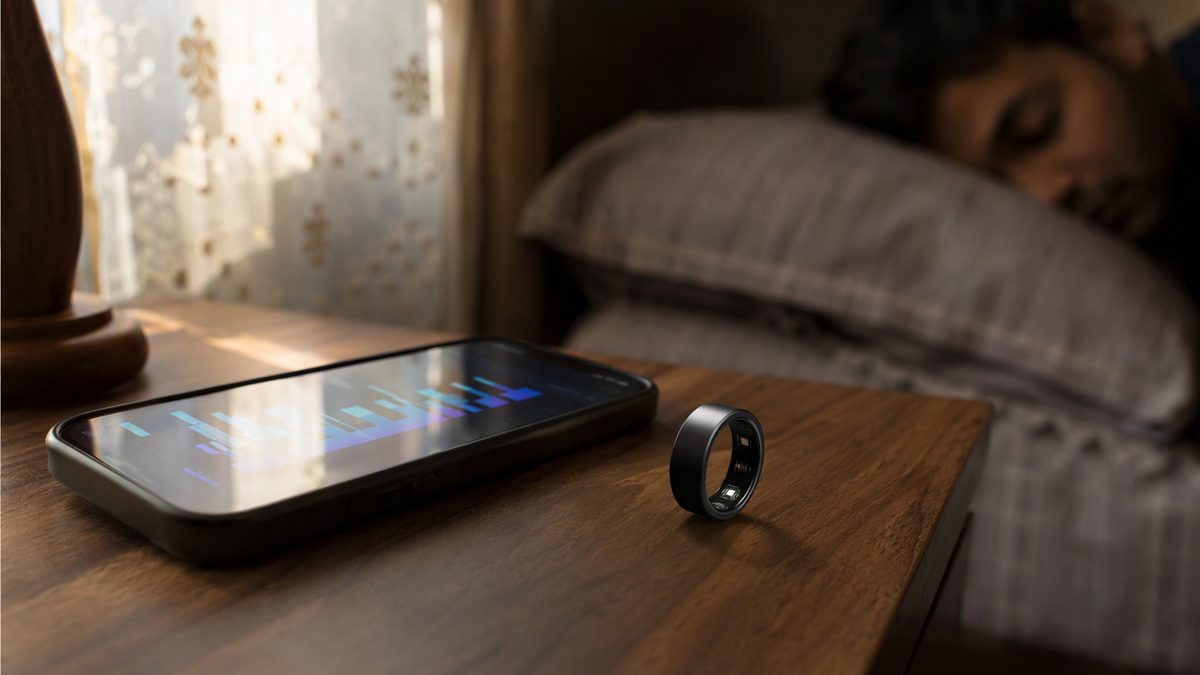
Picture a normal training week: lifting three to five evenings, a couple of rest days, work and life filling the rest. A smart ring fits into that week in exactly two small places — it sits on your finger overnight, and you glance at it for about ten seconds in the morning. That is the whole footprint. The trick is knowing which ten-second glance is worth acting on and which is just noise you should scroll past.
The ring does not read your brain. It tracks heart rate, the variation between heartbeats, movement, breathing, and skin temperature, then estimates how your night broke into stages plus a readiness score. That estimate is solid for the big numbers and shaky for the fine ones.
Here is where the ring slots into your actual week: what it measures, which trends are worth your morning glance, why sleep matters more than your program for gains, and how to keep the device from becoming one more thing to stress about.
1. Slotting the Ring Into a Normal Lifting Week
The ring's job is passive, which suits a recreational schedule. You wear it overnight — its snug fit and clean finger pulse signal read sleep better than a watch that slips, and it is comfortable enough to forget (PMID 30002629) — and in the morning you check one thing: did your total sleep and timing hold up. That is the glance that matters on a lifting day. Everything else is secondary.
On a typical upper/lower or push-pull-legs week, use the ring to answer a simple question before your evening session: am I going in recovered or short? If you slept your usual 7-9 hours across the week, train as planned. If you strung together a few short nights, that is a real cue to keep tonight's session moderate rather than chasing a PR on a tired tank — short sleep measurably degrades force production and recovery the next day (PMID 25315456).
What does not belong in the glance is the deep-sleep number. It is the least reliable output, you cannot consciously force it, and parsing it every morning is wasted attention for a lifter whose progress hinges on consistency, not on optimizing a stage chart. Check the total, note the trend, get on with your day.
2. Which Morning Trends Are Worth Acting On
One night tells you little; the weekly pattern tells you what to do. The outputs worth your attention are total sleep duration, how consistent your bed and wake times are, and your resting heart rate and HRV trends — read as rolling weekly averages, not morning by morning. Here is how reliable each is and what to do with it on a normal training week.
| Ring output | Reliability | What to do on a lifting week |
|---|---|---|
| Total sleep time | High (~10-20 min of a lab) | Confirm 7-9h across the week; if short, ease intensity |
| Sleep consistency | High | Hold steady bed/wake times to protect gains |
| Resting heart rate | Good (own baseline) | Up several days, take an easier session |
| Overnight HRV trend | Good (own baseline) | Drifting down, check sleep, stress, alcohol |
| Deep / REM minutes | Weak estimate | Ignore the nightly figure; loose trend at most |
| Readiness score | Rough nudge | A prompt to look at the metrics, not a grade |
Read resting heart rate and HRV as your own personal baselines, compared only against yourself — never a gym buddy's ring, since different brands' algorithms produce numbers that are not interchangeable. A resting heart rate sitting above baseline or an HRV trend dipping across several days is a soft cue to take an easier session or look at your sleep and stress, the same trend logic athletes use to autoregulate (PMID 23852425, PMID 17345075). One off morning is noise.
3. Why Sleep Beats Program Tweaks for the Everyday Lifter
For a recreational lifter, the ring's real lesson is humbling and freeing: your gains are limited more by sleep, consistency, and protein than by any clever programming tweak. You are the standard healthy adult most training research is actually built on, and for that population, adequate, regular sleep is one of the strongest recovery and performance levers there is (PMID 25553531, PMID 24791913). The ring is most valuable as a quiet accountability check on that one habit.
The mechanism is worth knowing. Deep slow-wave sleep drives the bulk of nocturnal growth-hormone release and the tissue repair that turns training stimulus into actual muscle, and sleep loss shifts your hormonal environment toward breakdown (PMID 21550729). So the recreational lifter who sleeps seven hours consistently will usually out-progress the one chasing a fifth supplement on six broken hours — and the ring can show you which one you are being.
That reframes how to use the device. Instead of program-hopping every six weeks, use the ring to fix the boring fundamentals: hit your total sleep, keep your timing regular, and notice when a late night or a few drinks bumps your resting heart rate and trashes your restlessness. Closing that loop on habits is where the ring pays off, not in admiring the stage breakdown.
4. Running Simple Habit Experiments on a Rest Day
Rest days are a good time to put the ring to work as an experiment tool rather than a scoreboard. Pick one variable and test it. Have a coffee at 5pm and watch your resting heart rate and sleep onset that night. Have two beers after a Friday session and see how your overnight resting heart rate climbs and your HRV trend dips. Eat a big late dinner and check your restlessness. Then change the behavior and confirm the trend improves.
This is exactly the kind of small, controlled loop the ring is built for, and it is far more useful than the stage pie chart. The temperature reading can play here too — a sustained bump above your baseline can flag an oncoming bug a day before you feel it, which is a fair reason to keep a session light or rest. Read it as a trend, not a single-night spike.
The point is to let the data inform real choices, not dictate your mood. A single low readiness score on a rest day means nothing; a clear pattern across a week of testing means something. Use the ring to learn how your body responds to your actual habits, then keep the ones that move the trend the right way and drop the ones that do not.
5. Keeping the Ring in Proportion — Orthosomnia and Privacy
There is a documented trap worth dodging: orthosomnia, where chasing a perfect tracker score breeds anxiety that itself worsens your sleep (PMID 27113645). The deep-sleep number is the usual trigger and the worst one to obsess over — least accurate, and impossible to force. If you find the morning score setting the emotional tone of your day, stop checking it first thing, look only at weekly trends, and if the ring is adding stress rather than easing it, take a break from tracking.
Keep the device's accuracy in proportion too. Consumer rings give useful relative trends, not lab-grade absolute numbers, and the stage estimates differ across brands and degrade with cold fingers or a loose fit (PMID 30002629, PMID 29018355). It is a long-term trend tracker, not a sleep lab — treat it that way and it serves you well.
Two practical notes. The ring is a screen-and-flag tool, never a diagnosis: loud snoring with breathing-disruption flags, persistent insomnia despite good habits, or a sustained unexplained rise in resting heart rate or drop in HRV all warrant a clinician and possibly a sleep study. And remember these rings collect continuous, sensitive health data in a vendor cloud that is mostly not protected like medical records, so check the sharing and deletion options. For picking a device that surfaces simple trends, our roundup of the best fitness apps and trackers is a useful starting point.
Recreational Lifters' Questions on Ring Sleep Tracking
Should I take a rest day if my ring gives me a low readiness score?
Not on one low score alone. A single readiness score is noisy and can be thrown off by a cold finger, a loose ring, or one bad night. If your resting heart rate and HRV trends look normal across the week and you feel good, train as planned. Only a multi-day pattern of elevated resting heart rate and suppressed HRV, plus short sleep, is a real cue to take an easier session. Base the call on the weekly trend and how you feel.
How accurate is the deep-sleep number my ring shows?
Not very. The ring estimates deep sleep from your pulse and movement without measuring brain waves, so the figure can be off by tens of minutes, swings night to night, and differs by brand. You also cannot consciously force more deep sleep. Where the ring is accurate is total sleep time and timing, within roughly 10-20 minutes of a sleep lab on a good night. Judge your week by total sleep and consistency, not the deep-sleep figure.
Does sleep really matter more than my program for building muscle?
For a recreational lifter, usually yes. Your progress is limited more by sleep, consistency, and protein than by programming nuance, because you respond like the standard healthy adult most research is built on. Deep sleep drives much of the overnight repair that turns training into muscle, and sleep loss shifts you toward breakdown. Use the ring to confirm you bank 7-9 hours regularly, and fix that before adding supplements or hopping to a new program.
What's the best way to actually use my ring as a casual gym-goer?
Glance at total sleep and consistency each morning, watch resting heart rate and HRV as weekly trends, and skip the deep-sleep number entirely. Run occasional habit experiments, like testing how late coffee or a few beers move your resting heart rate, then change what hurts your sleep. Use it as a quiet accountability check on the boring fundamentals, not a daily grade. Closing the loop on habits is where it pays off, not staring at the stage chart.
Disclaimer: This article is for educational purposes only and is not medical advice. Consult a qualified healthcare professional before starting any supplement, nutrition, or training protocol — especially if you are pregnant or breastfeeding, under 18, taking medication, or managing a health condition.
Scientific References & Clinical Sources
- Peake JM, et al. A Critical Review of Consumer Wearables, Mobile Applications, and Equipment for Providing Biofeedback, Monitoring Stress, and Sleep in Physically Active Populations. Front Physiol, 2018. PMID: 30002629
- Thun E, et al. Sleep, circadian rhythms, and athletic performance. Sleep Med Rev, 2015. PMID: 25553531
- Dattilo M, et al. Sleep and muscle recovery: endocrinological and molecular basis for a new and promising hypothesis. Med Hypotheses, 2011. PMID: 21550729
- Plews DJ, et al. Training adaptation and heart rate variability in elite endurance athletes: opening the door to effective monitoring. Sports Med, 2013. PMID: 23852425
- Mercer K, et al. Acceptability and Utility of Wearable Activity Trackers for Health Monitoring Among Older Adults With Chronic Illness: Qualitative Study. JMIR Mhealth Uhealth, 2016. PMID: 27113645

