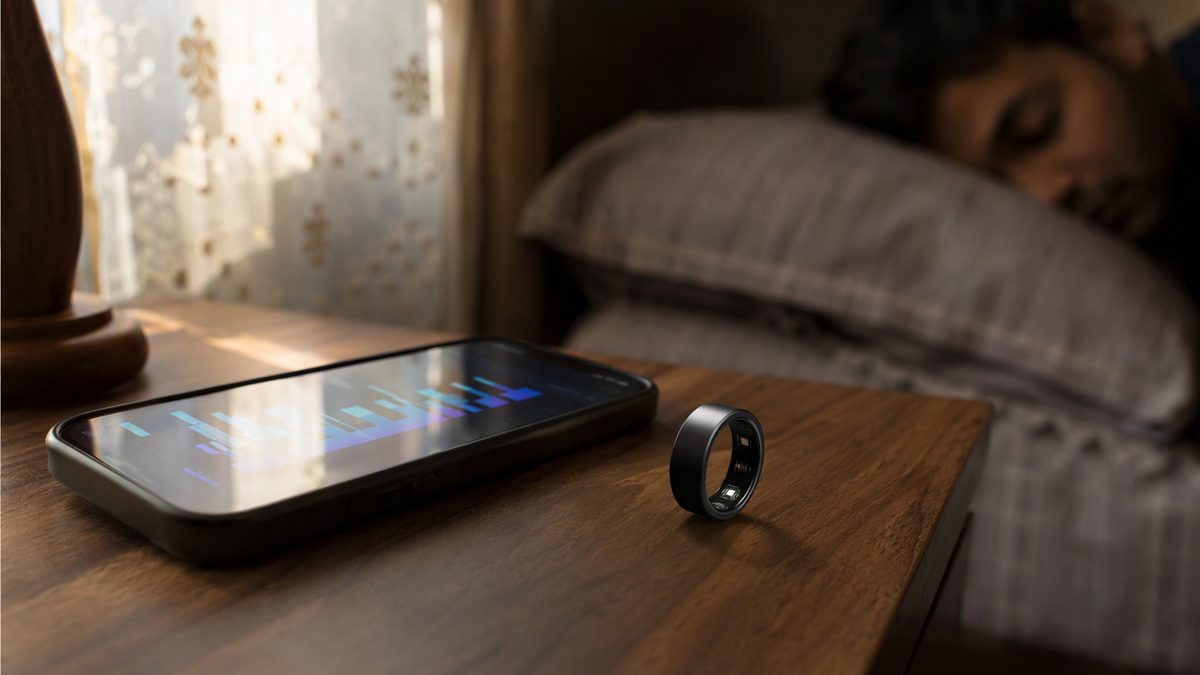
💡 Key Takeaways
- A 5am alarm cuts your night short, and the ring will show it - total sleep and timing are what it tracks well, so they are the numbers to defend, not the deep-sleep bar.
- The ring estimates light-deep-REM from finger heart rate, HRV, movement and temperature, never from brain waves; per-night stage minutes are the least reliable output.
- On doubles weeks, watch a rising resting heart rate and a falling HRV as soft cues to ease a session - sleep loss measurably degrades training and recovery.
- You take the ring off to swim, so it tracks recovery, not your strokes; use it to protect sleep around early practice, not to score your day.
The squeeze every swimmer knows: practice starts at 5 or 6am, so the alarm goes off at 4:30, which means a genuine eight hours needs a 8:30pm lights-out you rarely hit. Add evening doubles or dryland, and your sleep gets clipped at both ends. The result is chronic short sleep during heavy training blocks - and that is a real performance problem, because sleep loss measurably blunts recovery, mood and output. This is exactly the gap a smart ring can help you see and manage.
But only if you read it correctly. The ring will not improve your 50 free directly, and you take it off to swim, so it never sees your strokes. What it does is track how well you are recovering between sessions while your sleep window keeps getting compressed. The trap is fixating on the deep-sleep number after a 4:30 wake-up - the least trustworthy thing the device reports. This guide shows you how to use the ring to protect the sleep that actually drives your training, around the brutal hours swimming demands.
1. The Problem: Early Practice Eats Your Sleep
Start with the math that makes this hard. Most adults need 7-9 hours, and athletes in heavy training often do better at the upper end - regular, adequate sleep is strongly tied to recovery and performance, while sleep loss measurably degrades both. A 4:30am alarm to make a 5am pool slot means you need to be asleep by 8:30pm for eight hours, which collides with school, work, dryland and a nervous system still buzzing from evening training. Most swimmers quietly run a deficit through their hardest blocks.
That deficit is invisible until it bites - a flat set, a stalled time, a cold that lingers. A smart ring makes it visible early. It records your total sleep and your timing reasonably accurately whenever you sleep, so over a week it can show you plainly that your real average is 6 hours 20, not the 8 you imagine. That single, reliable number - total sleep across a rolling week - is more useful to you than any stage breakdown. Seeing the deficit in black and white is what lets you actually fix it: an earlier wind-down, a strategic nap, or a small shift in your evening schedule.
2. What the Ring Measures and What It Cannot
Be clear on the device's ceiling so you trust the right outputs. A smart ring reads peripheral signals from your finger: an optical sensor for heart rate and HRV, an accelerometer for movement, and a temperature sensor reading deviation from your own baseline. From those it derives resting heart rate, overnight HRV, breathing rate, restlessness, and - via algorithm - estimated sleep stages and a recovery score. It never records brain activity, which is what a sleep lab uses to score true stages, so the light-deep-REM split is an inference.
That makes some outputs solid and others shaky. Solid: whether you slept, how long, and when - typically close to lab values on a clean night. Shaky: the exact minutes of deep and REM, which can be off by tens of minutes and disagree night to night and brand to brand. For a swimmer, the practical takeaway is simple. Defend the trustworthy numbers - total sleep, consistency, resting HR and HRV trends. Glance past the deep-sleep bar after a 4:30 wake-up; a short night will always show a small deep-sleep figure, and you cannot consciously manufacture more of it anyway. If you want the broader picture on living with these devices, the fitness apps guide is a sensible primer.
3. Reading Recovery Through Doubles and Taper
Use the ring to make one or two real calls a week about how hard to push, anchored to your own baseline. Build that baseline over two to three weeks of normal training, then read deviations. The table gives concrete cues - swap in your measured resting HR and HRV once the ring has your data.
| Training context | Ring signal vs baseline | What to do |
|---|---|---|
| Heavy doubles week | Resting HR up 5-8 bpm, HRV down 2-3 days | Ease one session; protect tonight's sleep |
| After a 5am AM swim | Low total sleep, small deep-sleep number | Nap 20-30 min if possible; do not panic |
| Mid-block fatigue | 7-day total sleep under 7 hours | Move wind-down earlier; cut evening screens |
| Taper week before a meet | RHR settling, HRV rising toward baseline | Good sign you are absorbing the work - sleep more |
| Temperature up ~0.3-0.5 C, sustained | Possible incoming illness | Back off; prioritise rest before a meet |
Read each row as a trend, not a single-night verdict. One short night after early practice is expected and means little. Two or three days of elevated resting HR with depressed HRV is the pattern that justifies easing a set - especially in a taper, where extra sleep and a falling resting HR are exactly what you want to see before you race.
4. Why Chasing the Score Can Slow You Down
Swimmers are detail-driven and competitive, which makes you a prime candidate for orthosomnia - the documented loop where chasing 'perfect' tracked sleep breeds anxiety that itself wrecks sleep. Picture it: you wake at 4:30 for practice, check the ring, see a low score and a tiny deep-sleep bar, and now you are anxious about being under-recovered before you have even hit the water. That anxiety is counterproductive, and on a clipped sleep schedule you cannot afford it.
The fix is to change how you use the device, not to abandon it. Stop reading the score the instant you wake; the number will sour your morning for no good reason. Look only at the weekly rolling trend, where a few short nights average into something honest and actionable. If the ring is making you more anxious about sleep rather than helping you protect it, take it off for a week. Your job is to get the sleep, not to optimise a chart. The device earns its keep by nudging the behaviours you control - an earlier lights-out, a cool dark room, caffeine kept clear of bedtime - and loses it the moment a deep-sleep number starts dictating your mood at 4:30am.
5. When the Data Points Past the Pool
The ring flags problems; it does not diagnose them. A few patterns are worth taking to a clinician. If it repeatedly shows loud snoring with measured oxygen dips or breathing-disruption flags, paired with daytime sleepiness that survives a full night, that can point to sleep-disordered breathing - and a doctor, possibly a sleep study, is the right next step. Chronic insufficient sleep despite genuinely good habits, or persistent excessive daytime sleepiness, also deserves a real conversation rather than another tweak to your routine.
Flag a sustained, unexplained rise in resting heart rate or a lasting drop in HRV too, especially with how you feel - the ring can hint at an arrhythmia but cannot confirm one. A fever-pattern temperature rise with other illness signs is a reason to rest, not to push through a meet build. The point is not to medicalise normal training fatigue; tired mornings after early practice are part of the sport. It is to notice the rarer pattern that the ring is genuinely good at surfacing - the one where the data and how you feel both say something is off, and the next step is a professional, not a harder set.
Pool-Deck Questions About Smart Ring Sleep Data
How do I fit sleep tracking around 5am practice?
Use the ring to expose your real total, not to grade each night. With a 4:30 wake-up, the device will show short nights - that is honest, not a failure. Read the weekly rolling average of total sleep, which the ring tracks well, and let it push you toward an earlier lights-out or a strategic nap. Ignore the small deep-sleep number a short night produces; total sleep and consistency are the levers that actually move your recovery around early practice.
Will the ring help my 50 free or just tell me I'm tired?
It will not improve your swim directly, and since you take it off to swim, it never sees your strokes. What it does is track recovery between sessions, and adequate, consistent sleep is genuinely tied to performance. So the ring helps indirectly: by showing you when you are under-slept and under-recovered, it lets you protect the sleep that lets you train hard enough to drop your time. Treat it as a recovery gauge, not a performance meter.
Does extra body weight from the ring change my feel in the water?
You should not be swimming in it - take the ring off for practice and meets. It is a recovery tracker, not training gear, and getting it wet during hard sets adds nothing while risking damage and skewing the readings. Wear it overnight and through your day to capture sleep, resting HR and HRV, then leave it in your bag on the pool deck. Your feel for the water depends on your stroke and fueling, not a finger-worn device you remove before you dive in.
Why is my deep sleep always low during heavy training?
Two reasons stack up. Early practice clips your total sleep, and a shorter night naturally contains less deep sleep - plus the deep-sleep number is the least reliable thing the ring reports, since it estimates stages from your pulse rather than your brain. You also cannot consciously force more deep sleep. So the figure is both genuinely reduced by short nights and noisy on top. Defend total sleep and consistency instead; those are the numbers that actually drive recovery.
Disclaimer: This article is for educational purposes only and is not medical advice. Consult a qualified healthcare professional before starting any supplement, nutrition, or training protocol — especially if you are pregnant or breastfeeding, under 18, taking medication, or managing a health condition.
Scientific References & Clinical Sources
- Peake JM, et al. A Critical Review of Consumer Wearables, Mobile Applications, and Equipment for Providing Biofeedback, Monitoring Stress, and Sleep in Physically Active Populations. Front Physiol, 2018. PMID: 30002629
- Thun E, et al. Sleep, circadian rhythms, and athletic performance. Sleep Med Rev, 2015. PMID: 25553531
- Halson SL. Sleep in elite athletes and nutritional interventions to enhance sleep. Sports Med, 2014. PMID: 24791913
- Fullagar HH, et al. Sleep and athletic performance: the effects of sleep loss on exercise performance. Sports Med, 2015. PMID: 25315456
- Plews DJ, et al. Training adaptation and heart rate variability in elite endurance athletes: opening the door to effective monitoring. Sports Med, 2013. PMID: 23852425

