💡 Key Takeaways
- Your ring estimates sleep stages from your finger's pulse and movement, not your brain - so the deep-sleep number is a rough guess, not a fact, and not worth stressing over.
- Teens need 8-10 hours, and you probably are not getting it; the ring's most useful number is total sleep over a week, not the single-night stage chart.
- Your sleep, heart rate and temperature are sensitive personal data living in a company's cloud - loop in a parent on the account, privacy settings, and who can see it.
- Food and sleep come first; the ring is a feedback tool, never a replacement for meals, rest, or what your coach and parents see. Talk to a clinician about anything that worries you.
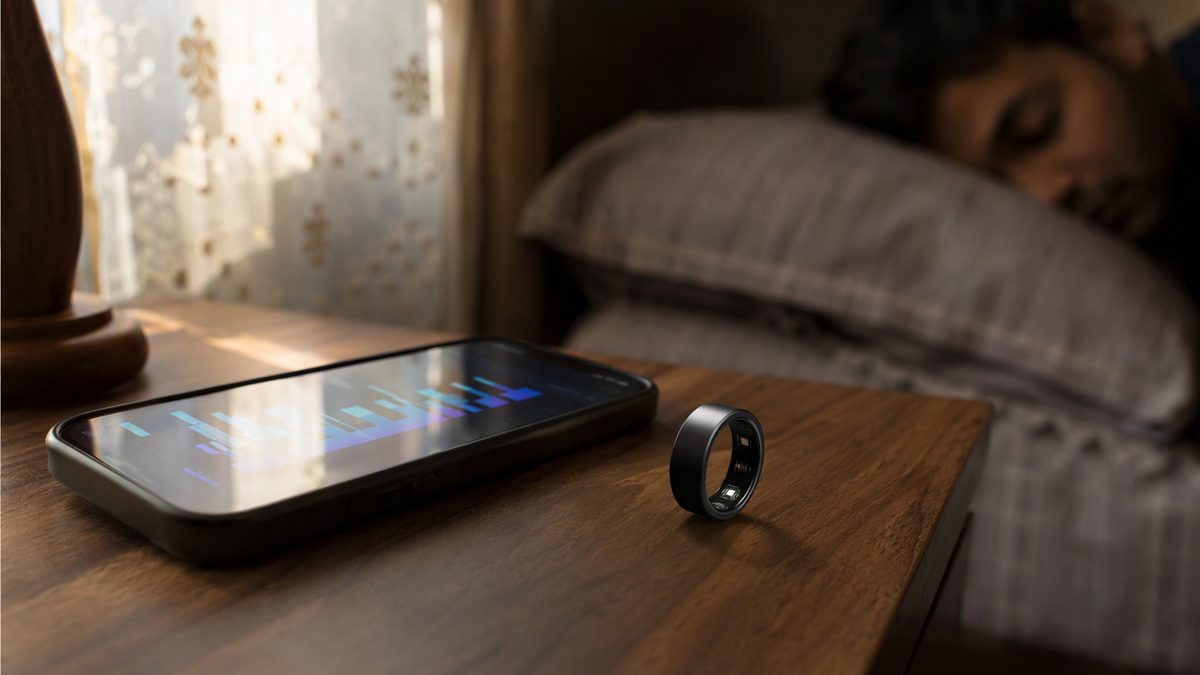
A question a lot of teenage athletes type in: 'My sleep ring gave me a low score and barely any deep sleep - does that mean I'll play badly today?' Quick answer in three sentences: no, one night's score does not predict your game, and the deep-sleep number is the least reliable thing the ring reports. It estimates your sleep stages from the pulse in your finger, not from your brain, so that breakdown is a guess. The one number actually worth your attention is how many total hours you are getting across a week - and as a teen, you need 8 to 10 of them.
That honest version matters because the marketing around these rings makes the score feel like a verdict on you, and it is not. You are still growing, you adapt fast, and your sleep and food needs are higher than an adult's. There is also a privacy side most ads skip: a ring collects continuous, sensitive data about your body. This guide explains what the ring really measures, why obsessing over the score backfires, who should see your data, and why meals and sleep beat any gadget for a young athlete.
1. Direct Answer: What the Ring Actually Knows
A smart ring does not read your brain. It reads peripheral signals from your finger - an optical sensor tracks heart rate and the small beat-to-beat changes called HRV, an accelerometer logs how much you move, and a temperature sensor notes how far your skin runs from your own normal. An algorithm then guesses which parts of the night were light, deep or REM sleep. A real sleep lab wires up brain waves to score those stages directly; your ring is estimating from the outside what the lab measures from the inside.
That sets the limit on trust. Rings are pretty good at the big, simple stuff: whether you slept, how long, and roughly when - often within 10 to 20 minutes of a lab on a normal night. They are much weaker at splitting the night into exact deep and REM minutes, which can be off by a lot and change from night to night or between brands. So when your ring says you got 38 minutes of deep sleep, read it as a rough estimate, not a measurement. You also cannot decide to get more deep sleep - it is not a setting you control. The number you can act on is total hours, tracked over a week, not a single morning's stage pie chart.
2. Food and Sleep First, Ring a Distant Third
Here is the part the gadget ads leave out: a ring measures sleep, it does not create it, and it does nothing if the basics are missing. As a growing athlete your fuel and rest needs are higher per kilo than an adult's, because you are powering both training and growth. You need 8 to 10 hours of sleep - which most teens miss because of school, screens and practice - and real food across the day. No score, app or wearable replaces three proper meals, snacks around training, and an actual early bedtime.
Why this matters for the numbers themselves: short sleep and under-fueling both raise your resting heart rate and make your recovery signals look worse, so a tired, under-fed body produces a gloomy-looking ring report. The fix is never to chase the score - it is to eat more and sleep earlier, and watch the trend improve over a couple of weeks. The honest order is food and sleep first, consistent training second, and the ring a distant third as a feedback tool. If you are curious how trackers fit into a sensible overall routine, the fitness apps guide lays out the bigger picture without the hype.
3. Your Data, Your Privacy, and Your Parents
This is the part most teen athletes never think about, and it matters because the data is genuinely sensitive. A ring collects continuous information about your body - sleep patterns, heart rate, HRV, temperature and activity - and that data usually lives in the company's cloud, often tied to a paid subscription. Most consumer wearable health data is not protected the way your medical records are. So before you wear one, sit down with a parent and go through it together, using the checklist below.
| Privacy item to check | Why it matters for a teen | Who handles it |
|---|---|---|
| Account ownership and age terms | Many apps require an adult to hold a minor's account | Parent or guardian |
| What the company shares or sells | Your health data may go to third parties | Read together |
| Data-sharing toggles in the app | Turn off anything you do not need on | You, with a parent |
| Data export and account deletion | You should be able to get your data out or wipe it | Parent helps set up |
| Who can see your reports | Decide if a coach or app gets access | Family decision |
Treat this as a real conversation, not a formality. A parent on the account is not the company babysitting you - it is the safety net the device cannot be. And if a coach or training app wants access to your sleep data, that is a family decision, not something to agree to alone.
4. Why Obsessing Over the Score Backfires
There is a documented problem called orthosomnia: chasing a 'perfect' sleep score breeds anxiety that itself wrecks your sleep. Teenagers are especially prone to it, because the score feels like a grade and you are used to being graded. Picture waking up, checking the ring, seeing a low number, and now you are worried about your game before you have eaten breakfast. That worry is the opposite of helpful, and it can make tonight's sleep worse too.
The fix is to change how you use it. Do not check the score the second you wake up - it just sets a bad mood for no reason. Look only at the weekly trend, where a few short nights average into something honest. If the ring is making you more anxious about sleep instead of helping you protect it, take it off for a while; the trend will still be there later. Remember the big picture: you are a growing athlete, and your sleep architecture, energy and mood are driven by food, rest and training over months - not by one morning's deep-sleep bar. The device is a tool, not a judge.
5. When to Tell a Parent or See a Clinician
The ring flags things; it does not diagnose them, and at your age the adults around you are part of how it is used safely. Take a few patterns to a parent and a clinician. If the ring repeatedly shows loud snoring with dips in measured oxygen or breathing-disruption flags, plus feeling exhausted in the day even after a full night, that is worth a doctor's eyes - it can hint at a sleep problem the ring cannot confirm. Chronic trouble sleeping despite good habits, or feeling wiped out all the time, also deserves a real conversation, not just a tweak to your routine.
Flag a resting heart rate that stays high for no clear reason, a lasting drop in HRV, or any irregular-rhythm alert - the ring can raise suspicion but cannot confirm a heart-rhythm issue, so that is clinician territory. Any chest symptoms during exercise are always a reason to stop and see a doctor. None of this is the ring diagnosing you; it is the ring noticing something worth a professional look. The honest message for a teen: use the data to start conversations with the adults who can keep you safe, eat and sleep enough to back up your training, and never let a score outrank how you actually feel.
Teen Athlete Questions About Smart Ring Sleep Data
Is a low sleep score a sign I'll play badly today?
No. One night's score does not predict your performance, and the deep-sleep number behind it is the least reliable thing the ring reports, since it estimates stages from your pulse, not your brain. A single low score is just noise. What matters is the trend - are you getting close to 8 to 10 hours most nights over a week? Eat well, sleep early, and judge your recovery by how you feel and how the weekly total looks, not by one morning's number.
Who can see my sleep and heart rate data from the ring?
By default the company storing it, and anyone you grant access to in the app - and most wearable health data is not protected like medical records. That is why a parent should be on the account and help you set the privacy toggles. Decide together what the company is allowed to share, turn off what you do not need, and treat letting a coach or app see your data as a family decision. Your body data is sensitive; guard it like it matters, because it does.
Do I even need a sleep ring if I eat and sleep well?
Not really. Food, sleep and consistent training drive almost all of your progress and recovery as a growing athlete, and you can judge how rested you are by how you feel. A ring is a helpful feedback tool - it can show you over a week that you are short on sleep - but it ranks well below the basics. If you have one, use it to nudge an earlier bedtime, not to chase a score. The eight-to-ten hours matter far more than any gadget.
Should my parents and coach know I'm using a sleep ring?
Yes. Parents should help manage the account, privacy settings and whether your fueling and sleep back up your training - that is non-negotiable at your age. Your coach can read fatigue and form in ways a ring never will, so share trends to start a conversation, not to replace their judgement. And see a clinician for anything that worries you, like a persistently high resting heart rate or any chest symptoms during exercise. The adults are a safety net the device cannot be.
Disclaimer: This article is for educational purposes only and is not medical advice. Consult a qualified healthcare professional before starting any supplement, nutrition, or training protocol — especially if you are pregnant or breastfeeding, under 18, taking medication, or managing a health condition.
Scientific References & Clinical Sources
- Peake JM, et al. A Critical Review of Consumer Wearables, Mobile Applications, and Equipment for Providing Biofeedback, Monitoring Stress, and Sleep in Physically Active Populations. Front Physiol, 2018. PMID: 30002629
- Düking P, et al. Criterion-Validity of Commercially Available Physical Activity Tracker to Estimate Step Count, Covered Distance and Energy Expenditure during Sports Conditions. Front Physiol, 2017. PMID: 29018355
- Halson SL. Sleep in elite athletes and nutritional interventions to enhance sleep. Sports Med, 2014. PMID: 24791913
- Thun E, et al. Sleep, circadian rhythms, and athletic performance. Sleep Med Rev, 2015. PMID: 25553531
- Mercer K, et al. Acceptability and Utility of Wearable Activity Trackers for Health Monitoring Among Older Adults With Chronic Illness: Qualitative Study. JMIR Mhealth Uhealth, 2016. PMID: 27113645

