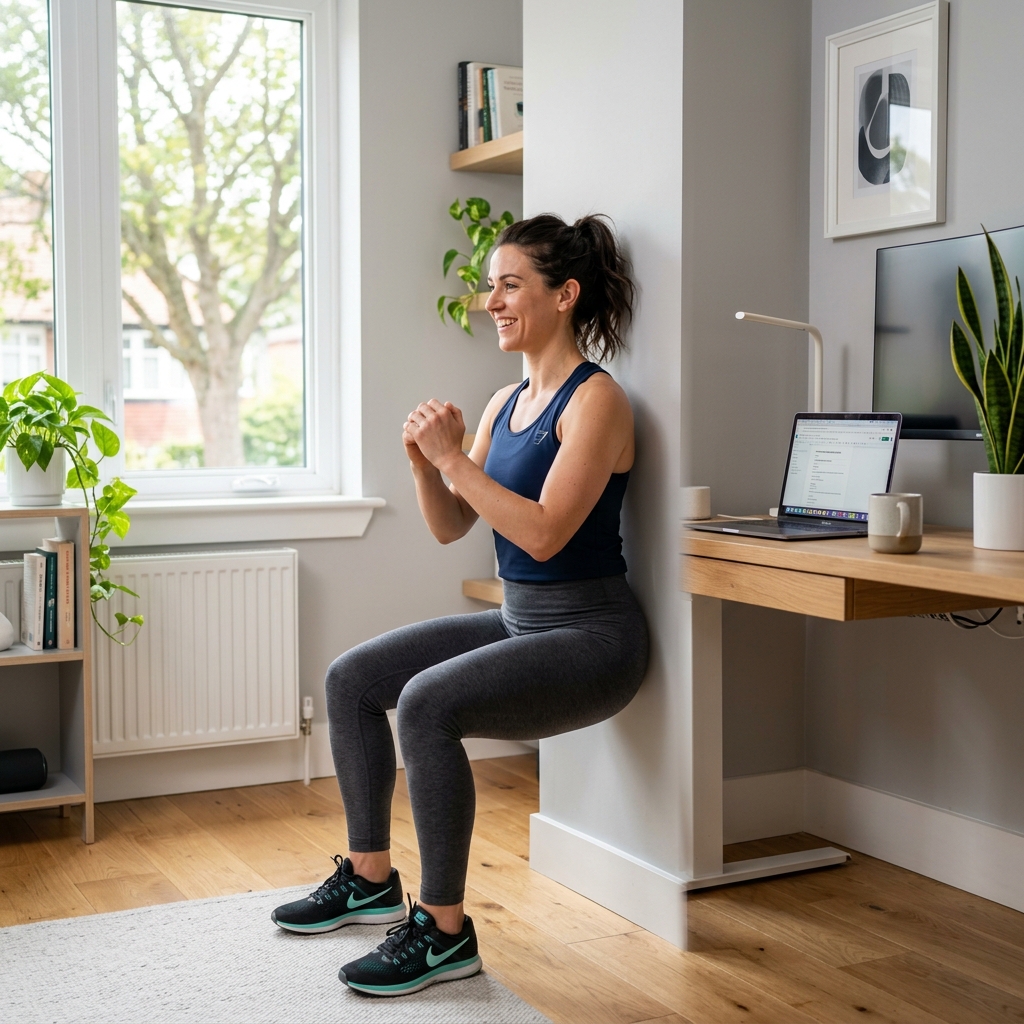
What if the most effective workout you did today lasted only three minutes? Not because you were short on time, but because science is increasingly showing that short, frequent movement bouts scattered throughout the day can rival — and in some cases outperform — a single longer gym session. This is the idea behind exercise snacking, and in 2026 it has moved from niche biohacker territory into mainstream fitness guidance. If you sit at a desk, drive for work, or simply struggle to carve out 45-minute exercise blocks, exercise snacking may be the most practical upgrade you can make to your health this year.
What Is Exercise Snacking?
Exercise snacking refers to very short bouts of physical activity — typically one to ten minutes — performed multiple times per day rather than accumulated in a single session. The term borrows deliberately from nutrition: just as you might eat several small meals rather than two large ones, you distribute movement throughout your waking hours instead of concentrating it all at once. A snack might be a two-minute stair climb before a meeting, ten bodyweight squats at your standing desk, a brisk walk around the block after lunch, or a set of push-ups before your first coffee. The defining feature is brevity and frequency, not intensity or equipment.
The concept is not entirely new — researchers have studied interrupted sitting for over a decade — but the evidence base has matured significantly, and wearable data from millions of users has made the real-world case hard to ignore. In 2026, major health organizations have begun updating sedentary behavior guidelines to acknowledge that how you break up your sitting matters, not just whether you hit a weekly minute target.
The Science Behind the Snack
Three separate physiological mechanisms explain why exercise snacking works, and understanding them helps you choose the right snacks at the right times.
- Glucose regulation: Every time you contract large muscle groups, those muscles pull glucose out of the bloodstream through a pathway that does not require insulin. Even a two-minute walk after a meal can meaningfully blunt the post-meal glucose spike that occurs when you stay seated. Research on interrupted sitting consistently shows lower blood glucose and insulin responses when people take brief movement breaks every 30 minutes compared to sitting uninterrupted for hours, even when total caloric intake and overall activity levels are matched.
- Cardiovascular and VO2 max adaptation: Cardiorespiratory fitness — measured as VO2 max — responds to cumulative stimulus. Studies comparing short-bout protocols to continuous moderate exercise have found comparable improvements in VO2 max over several weeks when total work is equated. For sedentary individuals, even low-intensity snacks can move the needle because the baseline is low and the frequency of stimulus is high.
- Musculoskeletal and postural effects: Prolonged sitting compresses spinal discs, shortens hip flexors, and reduces glute activation. Brief movement breaks restore circulation to compressed tissues, reset motor patterns, and counteract the postural drift that accumulates during long desk sessions. Over time, this translates to reduced lower back discomfort and better movement quality during formal workouts.
Together these mechanisms mean that exercise snacking addresses risks that a single 45-minute morning workout cannot fully offset — particularly the metabolic and postural damage done during the other 15-plus hours of relative inactivity that follow it.
Sample Exercise Snacks for Different Goals
One of the strengths of exercise snacking is how modular it is. You can design snacks around whatever you need most: strength, cardiovascular stimulus, mobility, or simply breaking up sitting time. Here are practical options across categories:
- Glucose management (post-meal): A 3–5 minute walk at any pace, or 10–15 air squats followed by 10 calf raises. The goal is large-muscle activation, not intensity.
- Cardiovascular stimulus: Stair climbing for 2 minutes at a brisk pace, jumping jacks for 90 seconds, or a one-minute jog in place followed by one minute of recovery marching. Repeat 2–3 times for a meaningful aerobic snack.
- Strength accumulation: Push-up ladder (5, 4, 3, 2, 1 with 15-second rests), wall sit for 45 seconds, or a single-leg Romanian deadlift using a water bottle for balance. Three strength snacks per day across the week accumulates substantial volume.
- Mobility and posture reset: Hip flexor stretch for 30 seconds per side, thoracic rotation with arms crossed, or a 90/90 hip stretch held for 60 seconds. These are particularly valuable after driving or extended sitting.
- Energy and focus: 10 jumping jacks followed by 5 slow deep breaths. The cardiovascular spike followed by parasympathetic activation can sharpen focus better than a second coffee.
The best snack is the one you will actually do. Start with one or two formats you enjoy and let the variety grow naturally over several weeks.
Habit Anchoring: Making Snacks Stick
The biggest obstacle to exercise snacking is not motivation — it is forgetting. Unlike a scheduled gym session, snacks have no natural reminder built into your calendar. Habit anchoring solves this by attaching a movement snack to an existing daily behavior so it requires no independent decision.
Common anchors that work well:
- Before your first morning coffee: Do 10 push-ups and 15 squats while the kettle boils. This is one of the most reported successful snacks because the cue (wanting coffee) is strong and consistent.
- After every video call ends: Stand up and do two minutes of movement before opening the next tab. The transition moment is a reliable trigger.
- Before lunch and dinner: A five-minute walk before eating combines the glucose-management benefit with an appetite regulation signal.
- Every time you use the bathroom: Add 10 squats or a 30-second calf raise hold. This requires no extra time allocation and occurs several times daily.
- At the top of each hour: Set a repeating alarm labeled "move" for the first five minutes of each work hour. This is the most systematic approach for desk workers.
The goal is to make the anchor so obvious that skipping the snack feels like the active choice. Within two to three weeks, the pairings become automatic and the alarm becomes redundant.
The Adherence Advantage
Long-term exercise adherence data consistently shows that the biggest predictor of sustained activity is not program intensity or even enjoyment — it is perceived manageability. When people feel that missing one day destroys the whole system, they are more likely to quit entirely after an unavoidable disruption. Exercise snacking has a structural advantage here: the unit of commitment is so small that there is almost no scenario in which you cannot complete at least one snack in a day. Sick with a mild cold? Three minutes of gentle walking still counts. Traveling and no gym access? Bodyweight snacks require zero equipment. Missed your morning snack? There are still eight hours of day left to accumulate three or four more.
This psychological resilience compounds over months. People who adopt exercise snacking alongside (not instead of) their regular training often report that their overall weekly volume increases because the low-barrier snacks keep them in an active mindset even on off days, making them more likely to show up for formal sessions when the time arrives.
How Exercise Snacking Fits With Structured Training
Exercise snacking is not a replacement for progressive resistance training, sport-specific conditioning, or longer aerobic work if those are your goals. It is a complement. Think of your week as having two layers: structured sessions that drive specific adaptations (strength, hypertrophy, aerobic base), and exercise snacks that manage the metabolic and postural costs of modern sedentary life between those sessions. The snacks do not need to align with your training split, be periodized, or follow any particular progression. Their job is simply to keep your physiology active, your glucose managed, and your body moving throughout the day.
Where snacking can substitute for structured training is in populations who are currently doing nothing at all. For a truly sedentary person, three to five daily movement snacks will produce measurable improvements in cardiovascular fitness, insulin sensitivity, and muscular endurance within four to six weeks — enough to build confidence and momentum toward eventually adding longer sessions.
Getting Started This Week
The practical entry point is simpler than most fitness interventions: choose two anchors, assign one snack to each, and do them consistently for seven days before adding more. Write the anchors somewhere visible — a sticky note on your monitor, a phone lock screen, a whiteboard in the kitchen. Keep the snacks short enough that you never feel resistance to starting them. Two minutes is better than ten minutes you skip.
After one week, add a third anchor. After two weeks, swap one snack for a slightly more challenging variation. By week four, you will have a personalized movement snacking practice that fits your actual daily life rather than the idealized schedule you wish you had.
Track your movement snacks in UltraFit360 — log each bout as a short session and let the app surface patterns in your daily activity, flag gaps in your sitting breaks, and give you credit for every snack that adds to your weekly movement total. Consistency shows up in the data before it shows up anywhere else.
Transform Your Fitness Journey
Log your workouts, track your diet, and get AI coaching insights — all with UltraFit360.