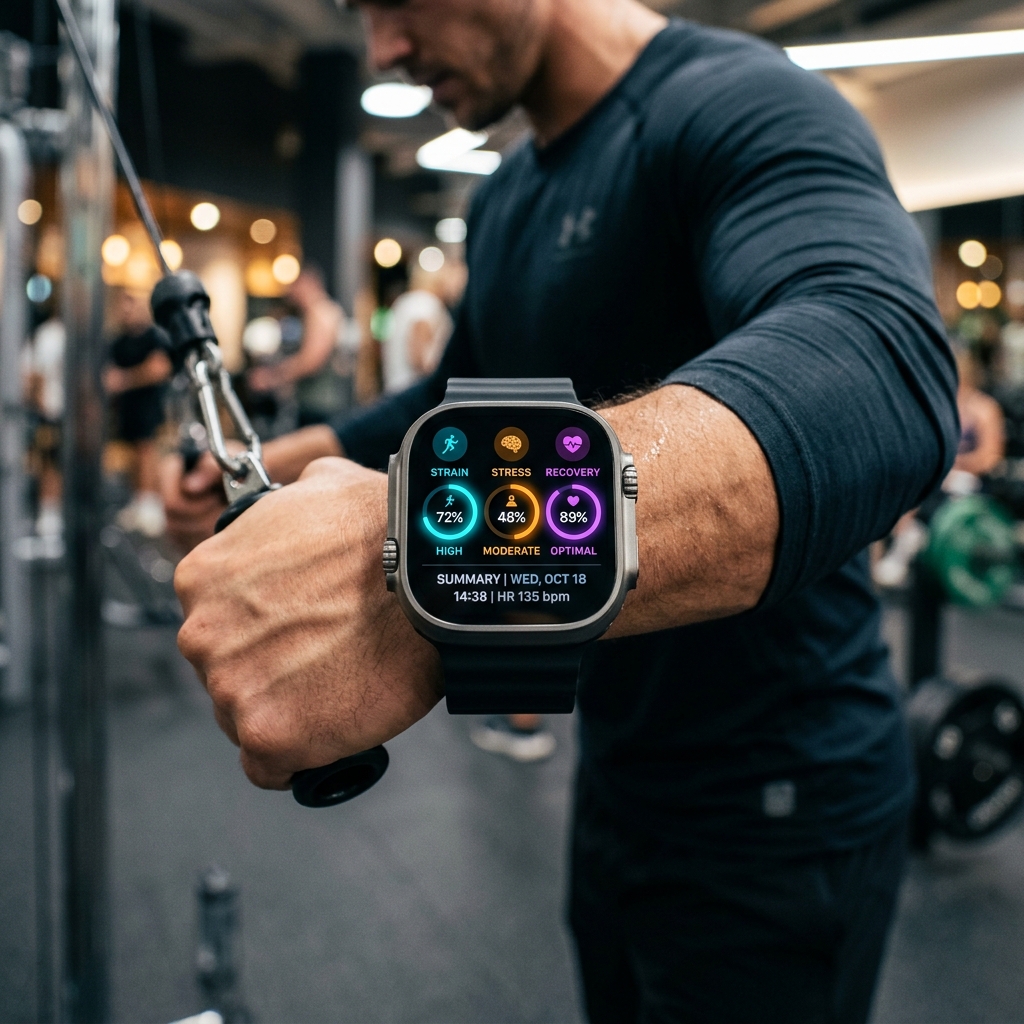
In the early 2020s, athletes and fitness enthusiasts obsessed over single numbers: "How many calories did I burn?" or "What's my resting heart rate?". But by 2026, we've realized that the secret to long-term health and peak performance isn't found in a single data point, but in the relationship between three distinct pillars. At UltraFit360, we call this the SSR Score — the ultimate framework for balancing Strain, Stress, and Recovery.
Pillar 1: Strain (The Output)
Strain represents the total physical load you put on your body during a 24-hour period. It's not just your workout; it's the 10,000 steps, the active commute, and even the metabolic cost of high-intensity tasks. We measure Strain through high-frequency cardiovascular data and mechanical load (if you're using our **Velo-Tracking** sensors).
The 2026 View: We now know that Strain isn't "good" or "bad" in a vacuum. It is a stimulus. Too little Strain leads to atrophy; too much leads to injury. The goal is to match your Strain specifically to your current capacity.
Pillar 2: Stress (The Baseline)
Stress is the most misunderstood metric. In our SSR model, Stress refers to Systemic Autonomic Load. This includes psychological stress (work, relationships), environmental stress (temperature, pollution), and physiological stress (digestion, illness). We track this primarily through Inter-Beat Interval (IBI) stability and baseline cortisol rhythms via connected wearables.
High Stress effectively "lowers the ceiling" for how much Strain your body can handle. If your Stress score is high, a moderate workout can feel like an all-out effort, potentially pushing you into an overreach state.
Pillar 3: Recovery (The Foundation)
Recovery is your body's ability to repair after Strain and manage Stress. This isn't just "sleep duration." It's Restorative Efficiency — the percentage of your sleep spent in REM and Deep Sleep cycles, paired with your morning **Heart Rate Variability (HRV)** baseline.
Interpreting Your SSR Score
1. The "Optimal Peak" (SSR: 85-100)
Your Recovery is high, and your Stress is low. Your body is biologically primed to handle maximum anaerobic and aerobic Strain. This is the day to attempt a PR or take on a high-intensity **Hyrox** session.
2. The "Maintenance Zone" (SSR: 60-84)
You are balanced. You can handle your regular training volume, but your body isn't ready for a breakthrough performance. Focus on consistency and technique rather than max intensity.
3. The "Recovery Deficit" (SSR: <50)
Your Stress is outpacing your Recovery. Pushing a high Strain score today will likely result in a suppressed immune system or a multi-day performance slump. Switch to **Zone 0 Recovery** or light mobility work immediately.
Common SSR Pitfalls in 2026
- Chasing Strain on Low Recovery: This is the number one cause of "Burnout Syndrome." Just because you *can* do the workout doesn't mean you *should*.
- Ignoring Cognitive Stress: Your muscles might be fresh, but if your brain is fried from a 12-hour workday, your nervous system's capacity for intensity is significantly reduced.
- Overestimating "Sedentary" Recovery: Sitting on a couch isn't always recovery. If your mind is racing or you're dehydrated, your biological recovery may actually be stalled.
Mastering the Balance: A 24-Hour Protocol
| Time | Action Item | SSR Pillar Impact |
|---|---|---|
| Morning | Check HRV & Resting HR | Establishes Recovery Baseline |
| Work Day | Box Breathing during meetings | Reduces Stress Accumulation |
| Workout | Intensity matched to SSR Score | Optimizes Strain Stimulus |
| Evening | Magnesium & Blue Light Block | Maximizes Recovery Potential |
Conclusion: The Smart New Era of Fitness
The era of "grind until you break" is over. In 2026, the elite are those who understand the SSR Score. By balancing Strain, Stress, and Recovery, you create a sustainable, lifelong path to peak performance without the cycles of burnout and injury that plagued the previous generation of fitness enthusiasts.