💡 Key Takeaways
- The stepmill widens an energy deficit and builds your engine - it does not 'burn fat' specially. Fat loss comes from a moderate, well-fueled deficit, not from the machine or its calorie readout.
- Energy availability comes first. If your fueling is already tight or your cycle, sleep or stress fractures are warning you, cardio is not the answer - eat more, not less.
- Keep most climbs easy zone 2 (RPE 3-5, 20-40 min), add intervals sparingly, and protect lean mass with protein around 1.6-2.2 g/kg/day so you stay strong on stage.
- Stand tall with a fingertip touch only - never hang on the rails - and stop on any sharp ankle, hip or shin pain, which can be an early stress-fracture signal.
The pull is familiar: a long mirror, a costume fitting, and the quiet pressure to look a certain way under stage lights. So a dancer adds cardio, eats a little less, and assumes the stepmill will strip fat while keeping the line you want. That instinct is exactly where this can go wrong - because in a population already prone to under-fueling, more output stacked onto a tight intake is how recovery, bone health and performance fall apart.
Here is the honest version. The stair climber is excellent, efficient, low-impact cardio that can build the endurance you need across rehearsal days and back-to-back shows. What it cannot do is out-train an empty plate. Fat loss is driven by a sustained calorie deficit, not by any machine, and the stepmill's job is to widen that deficit a little while building fitness - not to justify eating less. For a dancer, the goal that actually serves your career is a durable, well-fueled engine. Get the fueling right first, then let the stepmill add conditioning on top. That order is the whole point of this guide.
1. The Real Problem: Aesthetics Pressure Meets an Under-Fueled Body
The pain point most dancers feel isn't a lack of cardio - it's the collision between an aesthetic mandate and a body that's often running on too little fuel. Dance carries injury rates that rival contact sport and a long history of under-eating, which raises the risk of low energy availability and the cluster of problems that come with it: stalled recovery, mood and sleep disruption, menstrual changes, and stress fractures in the feet, shins and hips you load all day. Cutting food and adding stepmill sessions can deepen that hole, not solve it.
So flip the framing. Fueling is performance infrastructure, not the enemy of leanness. A body with enough energy adapts to training, holds muscle, keeps bone strong, and - crucially - recovers between rehearsals and shows. If your fueling is already restricted, if your periods are irregular, or if you've had recurring stress reactions, the honest answer is that you don't need more cardio; you need more food and a clinician's eyes. The stepmill becomes useful only once energy availability is solid. Used then, it adds a modest deficit and builds your engine without robbing the recovery you depend on.
2. How the Stepmill Helps a Dancer Without Starving the Work
Climbing is vertical work: every step lifts your full bodyweight against gravity, so per minute it burns far more than flat walking and lands near jogging territory while sparing you the hard heel-strike of running. For a dancer that matters - you already load ankles, feet and hips for hours, and the stepmill gives a strong cardiovascular stimulus without piling on impact. It also trains the glutes, quads and calves through repeated hip and knee extension, the same chain that drives jumps and holds.
But be clear-eyed about the calorie number. The on-machine counter is a generic estimate that doesn't know your bodyweight or efficiency, and it over-counts badly the moment you lean on the rails. The body also compensates for exercise through appetite and reduced everyday movement, which is why cardio-only weight loss is smaller and more variable than people expect. None of that makes the stepmill useless - it makes it a tool to widen a deficit you mostly create through adequate, intelligent eating, not a fat-burner that licenses restriction. Pair it with the strength work many dancers avoid for fear of 'bulking': sensible resistance training during a deficit protects the lean mass that keeps your line strong and your jumps high. Building a routine you'll actually repeat matters more than any single hard session - building fitness habits that survive a touring schedule beats heroics.
3. A Season-Friendly Stepmill Protocol for Dancers
Anchor effort by feel and the talk test, not the machine's level number. Estimate your max heart rate roughly as 220 minus your age, then keep most climbing in zone 2 - around 60-70% of max, a conversational pace you could hold while chatting. Build duration before you ever add intensity, and treat hard intervals as a small seasoning, not the main dish. During performance season, pull volume back hard; the shows are the load, and fresh, well-fueled legs are the priority.
| Phase | Stepmill session | Intensity (HR / RPE) | Frequency |
|---|---|---|---|
| Off-season base | 30-40 min steady climb | Zone 2, ~60-70% max HR, RPE 3-5 | 3-4x / week |
| Add intensity | 1 min hard / 2 min easy x 6-8 (~20 min) | Hard bouts ~80-90% max HR, RPE 8 | 1x / week, easy days only |
| Performance season | 20-25 min easy climb | Zone 2, RPE 3-4 | 1-2x / week, never on show days |
| Protein target (all phases) | ~1.6-2.2 g/kg bodyweight daily | Spread across meals | Daily, protects lean mass |
| Deficit rate (if any) | ~0.5-1% bodyweight / week | Moderate only | Slow protects muscle and bone |
Keep hard sessions on non-consecutive days, separate them from priority strength work, and use easy zone-2 climbs as low-impact active recovery around heavy rehearsal blocks. If a slow, moderate deficit is genuinely appropriate and clinically supported, cap the rate of loss - aggressive cutting sacrifices the muscle and bone you can't afford to lose.
4. Mistakes That Hurt Dancers, and the Warning Signs to Watch
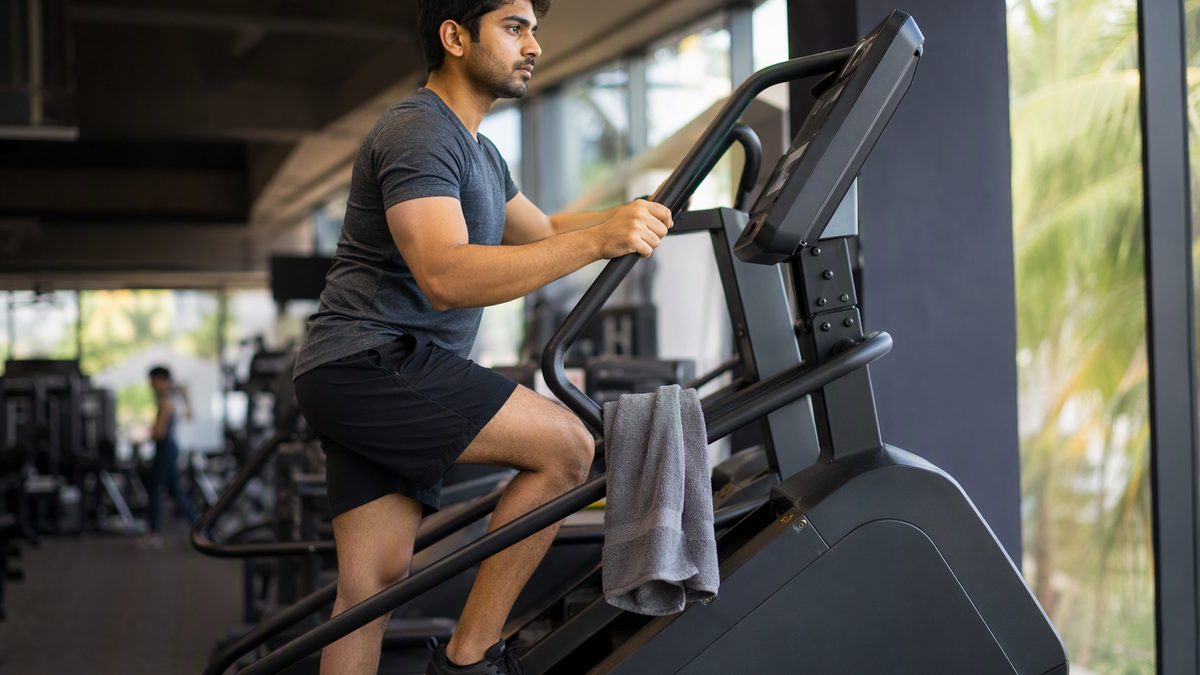
The biggest form error costs you the workout: hanging or leaning on the handrails lets the machine carry part of your weight, so your legs lift less and the real work drops even though the displayed calories don't. Stand tall, neutral spine, chest up, weight through the legs, with only a light fingertip touch for balance. If you can't stay upright without gripping, the speed is too high - slow it down. Take full, deliberate steps rather than tiny tip-toe shuffles, which feed the foot and calf tightness dancers already fight.
The bigger mistakes are about fuel and signals. Don't use the stepmill to earn meals or punish eating - that's the road to low energy availability, not a leaner career. Watch for the early flags: nagging shin, foot or hip pain that doesn't settle, disrupted sleep, missing or irregular periods, dropping strength, or constant fatigue. Any of these means back off cardio, restore fuel, and involve a clinician or sports dietitian - stress reactions in a loaded dancer are a medical matter, not something to push through. Track trends that actually reflect health and fitness: how strong your jumps feel, your climbing pace at a given heart rate, recovery between shows - not the machine's calorie tally.
What Dancers Ask About the Stair Climber and Leaning Out
Will the stair climber change how my body looks on stage?
Possibly, but indirectly. The stepmill burns calories and builds conditioning, which can support a slow change in body composition - but only inside a moderate, well-fueled deficit you mostly create through eating, not through extra cardio. It will also strengthen your glutes, quads and calves, which tends to help your line and power rather than hurt it. What it won't do is reshape you on its own, and chasing leanness by under-fueling will cost you the strength and bounce the stage actually rewards.
Can I do this during performance season?
Yes, but sparingly. In season the shows are your main load, so pull stepmill volume right back - one or two short, easy zone-2 climbs a week at most, and never on show days, when fresh legs matter. Keep it as gentle, low-impact conditioning, not another hard session stacked onto daily performances. If you're tired, sore or under-recovered, skip it entirely. Fueling and sleep protect your performances far more than any extra cardio does.
Does it help with stress fractures and ankle injuries?
It's gentler than running because there's no flight phase or hard heel-strike, so it can keep your cardio up with less repetitive pounding. But it still loads the knees and lower legs under bodyweight, and it is not a treatment for bone stress. The real protection against stress fractures is adequate energy availability, enough calcium and vitamin D, and managed load. If you have current or recurring stress reactions, that's a clinician's call - don't self-prescribe the stepmill around them.
I've heard the stepmill causes water weight - is that true?
Any new or harder training can cause small, temporary shifts in fluid as muscles adapt and store a little more water, especially early on. It's minor and it isn't fat, so it shouldn't drive your decisions or your eating. Don't react to a scale blip by cutting food - that's exactly the restriction spiral dancers need to avoid. Judge progress over weeks by how you feel, how you recover, and your climbing pace at a steady heart rate, not by daily weight noise.
Disclaimer: This article is for educational purposes only and is not medical advice. Consult a qualified healthcare professional before starting any supplement, nutrition, or training protocol — especially if you are pregnant or breastfeeding, under 18, taking medication, or managing a health condition.
Scientific References & Clinical Sources
- Ludlow LW, Weyand PG. Walking economy is predictably determined by speed, grade, and gravitational load. J Appl Physiol (1985), 2017. PMID: 28729390
- Melanson EL, et al. Exercise, appetite and weight management: understanding the compensatory responses in eating behaviour and how they contribute to variability in exercise-induced weight loss. Br J Sports Med, 2012. PMID: 21596715
- Joyner MJ, Coyle EF. Endurance exercise performance: the physiology of champions. J Physiol, 2008. PMID: 17901124
- Garthe I, et al. Effect of two different rates of weight loss on body composition and strength and power-related performance in elite athletes. Int J Sport Nutr Exerc Metab, 2011. PMID: 21558571
- Morton RW, et al. A systematic review, meta-analysis and meta-regression of the effect of protein supplementation on resistance training-induced gains in muscle mass and strength in healthy adults. Br J Sports Med, 2018. PMID: 28698222

