💡 Key Takeaways
- Real Tabata raises VO2max and anaerobic capacity (about +14% and +28% in the original study) — a higher ceiling and better lactate clearance for the sled-to-run transitions.
- It is a top-end sharpener, not a race trainer. HYROX is a 60-90 min threshold effort; Tabata is supramaximal — most of your work must still be threshold and compromised-running specific.
- Run it on the ski-erg, row, or air bike — never on station movements under fatigue, where loaded form degrades and injures you.
- Cap it at 1-2x/week with 48 hours clear, and never in race week. Its recovery cost is high; one well-recovered block beats daily depleted ones.
Let's talk in measurables, because that's how you train. From a consistent block of real Tabata, the two numbers that should move are VO2max and anaerobic capacity — in the original study, by roughly 14% and 28% over six weeks. For a HYROX racer that translates to a higher ceiling to run beneath and a better ability to clear the lactate a sled push dumps into your legs before you have to run again. That sled-to-run transition is where races unravel, and it is exactly what top-end capacity supports.
But here is the honest framing you need before you slot it in. The protocol is four minutes of supramaximal work — far above your race intensity. HYROX is a 60-to-90-minute effort sitting near threshold for over an hour. Tabata sharpens the very top of your engine; it does not train the threshold and compromised-running specificity that actually wins your race.
Below: what each adaptation buys you, the science of why, the modality rule, and where it fits a block without stealing recovery from your specific work.
1. What You Can Measure, and By When
Set expectations against real data. The original six-week study had the all-out intermittent group raise VO2max by about 7 mL/kg/min — roughly 14% — and a marker of anaerobic capacity by about 28%, while a matched moderate continuous group improved only the aerobic side. So across a focused block you should see your VO2max trend up and your tolerance for repeated hard efforts improve.
In-session, the immediate measurable is output decay: in a true Tabata block your power should visibly drop across rounds five to eight, and your RPE should hit 9 or 10. Flat output across all eight means you went submaximal — a circuit, not Tabata. For HYROX specifically, the downstream readouts you actually care about are roxzone transitions that feel less catastrophic and a final 2 km where your legs clear faster between efforts. Just remember the original subjects were already-fit young men cycling five days a week under controlled conditions — that is a research dose, not your weekly plan. Your version is a sharp accessory, not the main work.
2. Why It Helps Compromised Running and Lactate Clearance
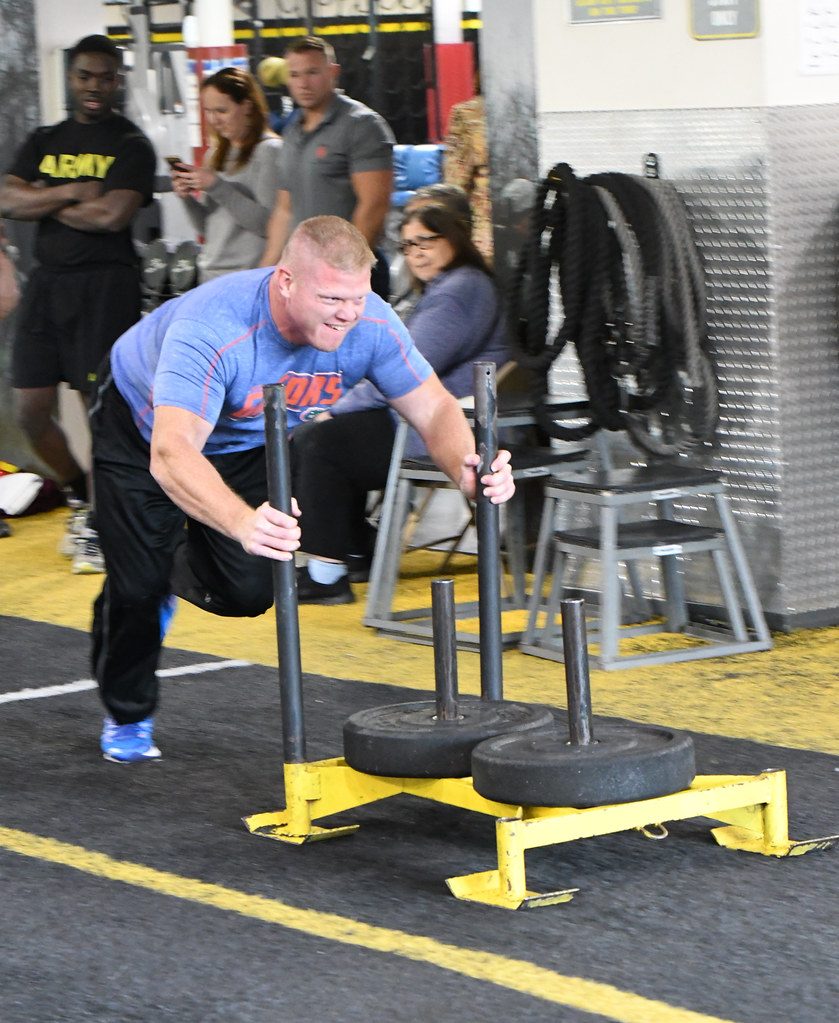
The mechanism is what makes this relevant to your race. A sled push or pull spikes blood lactate hard, and then you have to run while clearing it — that is the compromised-running problem in one sentence. A higher VO2max means a faster, more efficient lactate-clearance and recovery machinery, so you re-establish running rhythm sooner after a heavy station. The anaerobic capacity gain means you can keep producing forceful efforts on the sled and the wall balls without your output cratering.
That is why the protocol's short, incomplete-recovery structure suits you in principle: it biases both the cardiopulmonary and the anaerobic systems at once, which is precisely the combined demand of the sled-to-run transition. But notice the boundary. Tabata trains the ceiling and the clearance, not the hour-long durability of running on tired legs. Your race-specific adaptations — pacing a long threshold effort, compromised running off the station, grip and posterior-chain endurance — come from threshold intervals and pre-fatigued station work, not from four minutes of all-out cycling. Use Tabata to raise the roof, then use specific work to fill the room.
3. Modality: Ski-Erg and Row, Not Loaded Stations
Picture the temptation: run real Tabata on wall balls or lunges to make it 'specific.' Resist it. Modality matters because the effort is maximal and rest is minimal, and the best choices are simple, cyclical, low-injury movements where you can safely go all-out as fatigue mounts — the air bike, the rower, the ski-erg, a cycle ergometer. You produce maximal output each round without coordination cost.
The worst choices are loaded or technical movements where form degrades dangerously under fatigue — and that describes most HYROX stations done to true failure. Under near-maximal fatigue in rounds six to eight, a fatigued wall-ball or a lunge under load is exactly when knees and backs get hurt. So keep Tabata on the ergs, where collapsing form cannot injure you, and keep your station specificity in properly paced, pre-fatigued race simulations where the loads are controlled. The two jobs are different: Tabata builds the engine cleanly on a machine you cannot get hurt on; station work builds the skill and durability at race-realistic intensity. Match the principle — maximal effort only belongs on movements that stay safe when your form is collapsing. A wall ball you can barely catch is not a conditioning win; it is an injury waiting for the round where your arms stop cooperating.
4. Slotting It Into a Race Block
Because most of your week is rightly threshold and specific work, Tabata gets a small, protected slot. It is supramaximal and needs 48 hours or more before the next hard effort, so it cannot sit next to interval days or long station sessions.
| Element | Real Tabata dose | HYROX placement |
|---|---|---|
| Protocol | 20 s all-out : 10 s rest, x8 = 4 min | Ski-erg, row, or air bike |
| Frequency | 1-2x / week maximum | 1x / week in a build block |
| Recovery gap | 48+ hours before next hard effort | Not adjacent to threshold or station days |
| Race week | Drop it | Taper; nothing supramaximal |
| Rest of week | Kept genuinely easy | Easy running fills recovery days |
Avoid the classic HYROX errors: do not race every weekend without recovery blocks, and do not let the engine work crowd out specific compromised-running practice. Track recovery — a multi-day high resting heart rate, suppressed HRV, or heavy legs means skip the block. And test your race fueling in training, never on race day, because Tabata won't save a stomach that meets gels for the first time mid-race. One well-recovered block a week earns its place; daily all-out work just digs a hole.
HYROX Questions About Tabata
Will this help my compromised running off the sled?
Indirectly, yes. A sled spikes lactate, and your ability to run while clearing it depends on aerobic recovery machinery — a higher VO2max, which Tabata raises. So a better top-end means you re-find running rhythm sooner after a heavy station. But Tabata trains the ceiling, not the hour-long durability of running on tired legs; that specific quality comes from pre-fatigued station-to-run work and threshold intervals. Use Tabata to raise the roof, and your race-specific sessions to actually train the compromised-running skill itself.
How do I use it in race week?
You don't — drop it. Real Tabata is supramaximal with a high recovery cost, which is the opposite of what a taper needs. Race week is about arriving fresh, so keep everything easy, sharpen with a little short, controlled intensity if anything, and let the engine you already built carry the race. Adding all-out intervals that week just steals recovery and risks turning up flat. Bank your Tabata work in the build phase, where the recovery cost actually buys adaptation, and taper clean.
Does it improve my roxzone transitions?
It helps the physiology behind them, not the skill of them. Faster lactate clearance and a higher anaerobic ceiling mean you arrive at the next movement less wrecked, so transitions feel less catastrophic. But the transitions themselves — moving efficiently, not over-pacing into a station, managing grip — are skills you drill in race-specific sessions. Tabata raises the engine that makes a smooth transition possible; practising actual roxzone sequences under realistic fatigue is what makes it happen. Train both, and keep them in separate sessions.
What about the last 2km when everything is heavy?
That final stretch is decided by how durable your threshold engine is and how well you've cleared the accumulated lactate — both of which a higher VO2max supports, and Tabata raises VO2max. So a better top-end means less catastrophic fade when your legs are full. But the dominant trainer for that closing kilometre is long threshold and compromised-running volume, not four minutes of all-out cycling. Tabata is a ceiling-raiser you do once a week; the durability that carries the last 2km comes from your specific, race-paced work.
Disclaimer: This article is for educational purposes only and is not medical advice. Consult a qualified healthcare professional before starting any supplement, nutrition, or training protocol — especially if you are pregnant or breastfeeding, under 18, taking medication, or managing a health condition.
Scientific References & Clinical Sources
- Tabata I, et al. Effects of moderate-intensity endurance and high-intensity intermittent training on anaerobic capacity and VO2max. Med Sci Sports Exerc, 1996. PMID: 8897392
- Tabata I. Tabata training: one of the most energetically effective high-intensity intermittent training methods. J Physiol Sci, 2019. PMID: 31004287
- Buchheit M, Laursen PB. High-intensity interval training, solutions to the programming puzzle: Part I: cardiopulmonary emphasis. Sports Med, 2013. PMID: 23539308
- Mandsager K, et al. Association of Cardiorespiratory Fitness With Long-term Mortality Among Adults Undergoing Exercise Treadmill Testing. JAMA Netw Open, 2018. PMID: 30646252
- Gellish RL, et al. Longitudinal modeling of the relationship between age and maximal heart rate. Med Sci Sports Exerc, 2007. PMID: 17468581
Want a plan built around your training history? UltraFit360's free AI workout planner creates and adjusts programs for you.

