💡 Key Takeaways
- Real Tabata is 20 s all-out / 10 s rest x 8 = 4 min at ~170% VO2max, set so you fail by round 8 - it was studied in fit young adults, and young teens shouldn't do true all-out Tabata.
- In a packed soccer week, conditioning has almost no room - matches and practice already build the engine, so any interval work is a small, supervised add-on on a recovery day, never near a game.
- Food first: a 4-minute block is not a fat-loss hack, and a growing player needs meals to fuel growth and a congested fixture schedule.
- Run it past your coach (for load) and a parent, watch growth-plate pain at knee/heel, manage heat at summer tournaments, and check any health concern with a clinician.
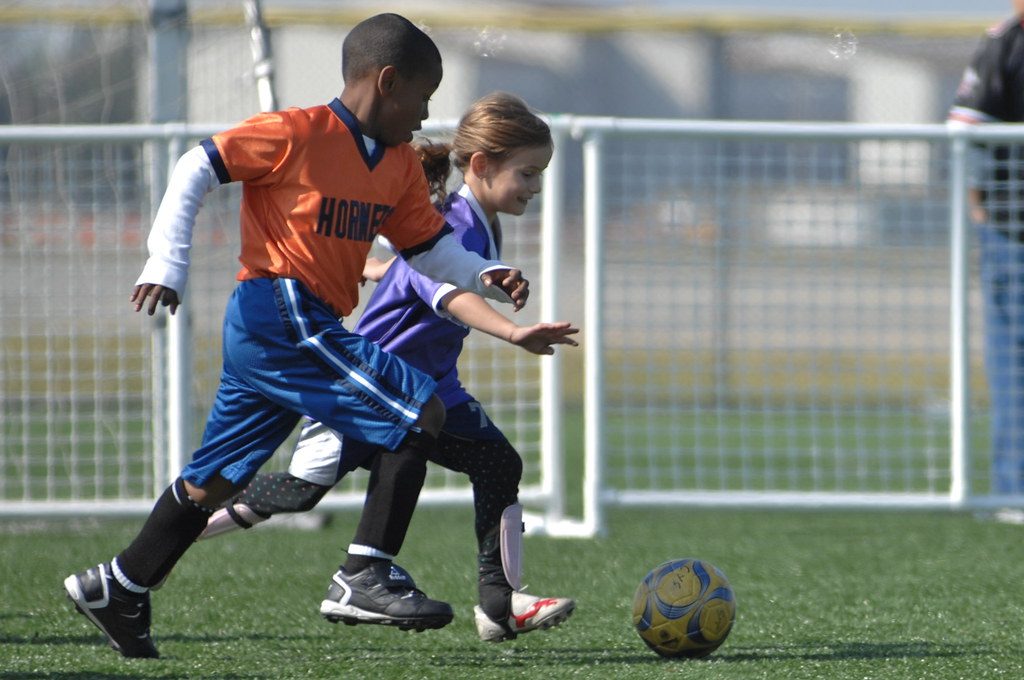
Look at a real soccer week first, because that is where the answer lives. Three to five team practices, one or two matches, school PE on top, and on tournament weekends three or four games in two days. That schedule is already a huge conditioning load - repeated sprints, recovery jogs, accelerations and decelerations across 70 to 90 minutes. The honest question is not 'how do I add Tabata' but 'is there even room for it, and at what intensity is it appropriate for a growing player?'
Real Tabata is one very specific, brutally hard protocol - 20 seconds all-out, 10 seconds rest, eight rounds, calibrated to leave you failing by the last round - and it was studied in fit young adults, not young teenagers. For most youth players, true all-out Tabata is not the right tool: the week is full, you are still growing, and the priority is staying fresh and healthy for matches. This guide slots a small, supervised, age-appropriate version into the few gaps your schedule actually has, and is clear about when even that should wait.
1. Where Conditioning Fits a Congested Fixture Week
Start by mapping your week honestly. Match days and the day before are off-limits for hard extra conditioning - you want fresh legs for the game, and a savage block beforehand steals exactly that. The day after a match is recovery: easy movement, not intervals. School PE and team practice already deliver sprint and aerobic work. What is left is maybe one genuine gap on a lighter, non-match day - and that single slot is the only place any interval work belongs. Everything in the week argues for less added intensity, not more.
This is why stacking private 'speed training' on top of a full club schedule is one of the most common youth-soccer mistakes: it loads a still-growing body that is already training hard, raising injury and burnout risk without improving match fitness. So the schedule-first verdict is blunt. If your week is genuinely packed with practices and games, you likely need zero separate Tabata - the sport is the conditioning. If there is a real recovery-day gap, a short, supervised, sub-maximal interval block can sharpen your repeated-sprint engine. Let your coach, who sees your whole load, confirm there is room before you add anything.
2. Why Young Players Shouldn't Do True All-Out Tabata
The intensity that defines real Tabata - roughly 170% of VO2max, all-out, driven to failure by round eight - was validated in fit young adult men, not adolescents. As a youth player you adapt fast and have a strong natural engine, but you are also growing, your limb mechanics shift year to year during spurts, and growth-plate conditions like Osgood-Schlatter at the knee or Sever's at the heel are common. Pushing all-out, ragged-form intervals onto that picture, on top of a heavy fixture load, is asking for overuse injury and burnout.
The age-appropriate version keeps the useful part and drops the brutal part. Supervised, sub-maximal intervals - where you work hard for 20-second efforts but are not driven to failure, and rest as needed - build repeated-sprint ability and aerobic fitness without the form breakdown and overstress of true Tabata. That maps far better onto soccer than a maximal cycling block anyway, because your sport is repeated near-max sprints with partial recovery, not single all-out exhaustion. So you are not missing out by skipping true Tabata; you are training the right thing for your age and your game. Save the genuine all-out protocol for when you are older, fully conditioned, and guided by a coach.
3. A Supervised, Age-Appropriate Interval Block
Run this on a non-match, non-pre-match day, supervised, after a full warm-up, and only if your coach agrees there is room in your load. Keep efforts hard but controlled - stop while your running form is still clean.
| Element | Age-appropriate youth dose | Schedule placement |
|---|---|---|
| Work | 20 s hard, controlled (not all-out) | Lighter, non-match day only |
| Rest | 20-40 s as needed | Never the day before a game |
| Rounds | 4-6, stop with form intact | Skip in a congested fixture week |
| Modality | Shuttle runs, bike, or field sprints | Supervised by coach/parent |
| Frequency | 0-1x per week (sport comes first) | Often zero - matches are the load |
| Tournament weekends | None - recover and refuel between games | Fuel, hydrate, sleep instead |
On a 3-to-4-game tournament weekend, the work is recovery, not intervals: refuel with proper meals between games, hydrate, manage heat, and sleep. The whole supervised block, when you do it, is about ten minutes with warm-up. Quality over quantity - and for a youth player buried in fixtures, the highest-quality choice is often to skip the extra block entirely and arrive fresh.
4. Food First, Heat, and Looping In Your Coach and Parents
Food does the heavy lifting for a growing player. Tournament weekends fuelled by snack-bar grazing are a classic mistake - you need real meals to support growth and to recover between matches, and no 4-minute block substitutes for that. Tabata is not a fat-loss hack regardless: a short block burns few total calories, the interval-training research shows fat loss broadly comparable to steady cardio, and energy balance decides body composition. So eat enough around your fixtures, prioritise sleep, and skip energy drinks as pre-game fuel - the caffeine loads are excessive and not built for teens. If a supplement ever comes up, it is a food-first conversation with a parent and ideally a clinician, and anything for sport should be third-party tested (look for NSF Certified for Sport).
Bring the adults in, always. Your coach manages your total load and can tell you whether there is room for any extra conditioning - usually there is not in a busy block. A parent should be part of training and nutrition decisions. Watch for growth-plate pain at the knee or heel: that is a stop-and-get-checked signal, not something to play through. Summer tournaments add heat stress, so follow heat policies, hydrate, and use shade between games. And because all-out work sharply raises cardiac demand, any heart, breathing or health concern gets checked by a clinician before pushing intensity. For more on building habits that last a long season, see our guide to building fitness habits.
Youth Soccer Questions About Tabata
Is Tabata appropriate at my age?
True all-out Tabata is not the right tool for most youth players - it was studied in fit young adults, it is brutally hard, and you are still growing with a packed fixture load. A supervised, sub-maximal interval block where you work hard but stop short of failure is age-appropriate and maps better onto soccer's repeated sprints anyway. Often the best choice is none at all, because matches and practice already condition you. Always run it past your coach and a parent, and check any health concern with a clinician.
How do I handle 4-game tournament weekends?
Treat the weekend as recovery and fueling, not conditioning - you do not add intervals on top of four games. Between matches, eat real meals (not just snack bars), hydrate, get into shade in the heat, and sleep as much as you can. Your job is to arrive at each game with something left, and proper food and fluid do that far better than any extra workout. Save any interval block for a normal lighter week, with your coach's sign-off.
Should this come from food instead of a workout or supplement?
Food first, always. As a growing player your energy needs are high, and meals fuel both growth and a congested schedule - no 4-minute block or supplement replaces that, and Tabata is not a fat-loss hack anyway. Eat enough around your fixtures, prioritise sleep, and skip energy drinks as pre-game fuel. If a supplement ever comes up, make it a food-first conversation with a parent and ideally a clinician, and choose third-party-tested products if you go that route.
What do I tell my coach and parents?
Tell your coach exactly what extra conditioning you are considering so they can fit it to your total load - in a busy block they will often say there is no room, and that is the right call. Keep a parent in on training and nutrition decisions too. Being open means an adult catches warning signs early: growth-plate pain at the knee or heel, exhaustion, or any health symptom during effort all deserve a clinician's eyes before you push intensity.
Disclaimer: This article is for educational purposes only and is not medical advice. Consult a qualified healthcare professional before starting any supplement, nutrition, or training protocol — especially if you are pregnant or breastfeeding, under 18, taking medication, or managing a health condition.
Scientific References & Clinical Sources
- Tabata I, et al. Effects of moderate-intensity endurance and high-intensity intermittent training on anaerobic capacity and VO2max. Med Sci Sports Exerc, 1996. PMID: 8897392
- Tabata I. Tabata training: one of the most energetically effective high-intensity intermittent training methods. J Physiol Sci, 2019. PMID: 31004287
- Keating SE, et al. A systematic review and meta-analysis of HIIT versus continuous training for fat loss. Obes Rev, 2017. PMID: 28401638
- Melanson EL, et al. Exercise, appetite and weight management: understanding the compensatory responses in eating behaviour and how they contribute to variability in exercise-induced weight loss. Br J Sports Med, 2012. PMID: 21596715
- Buchheit M, Laursen PB. High-intensity interval training, solutions to the programming puzzle: Part I: cardiopulmonary emphasis. Sports Med, 2013. PMID: 23539308

