💡 Key Takeaways
- More flexibility is not the goal - controllable, stable range is. Riders are crouched and braced for hours, so you need active hip extension, t-spine rotation and wrist range you can own, not a deeper passive stretch.
- Warm up before a ride with 5-8 minutes of dynamic drills; long static holds right before a technical descent can briefly dull the force and control you need on the bike.
- Daily 10-15 minute targeted work on hips, mid-back and forearms beats a weekly stretch marathon for undoing the crouched riding posture.
- Mobility won't cure arm pump or speed recovery between epics; its honest value is better positions, an upright reset off the bike, and durability over a season.
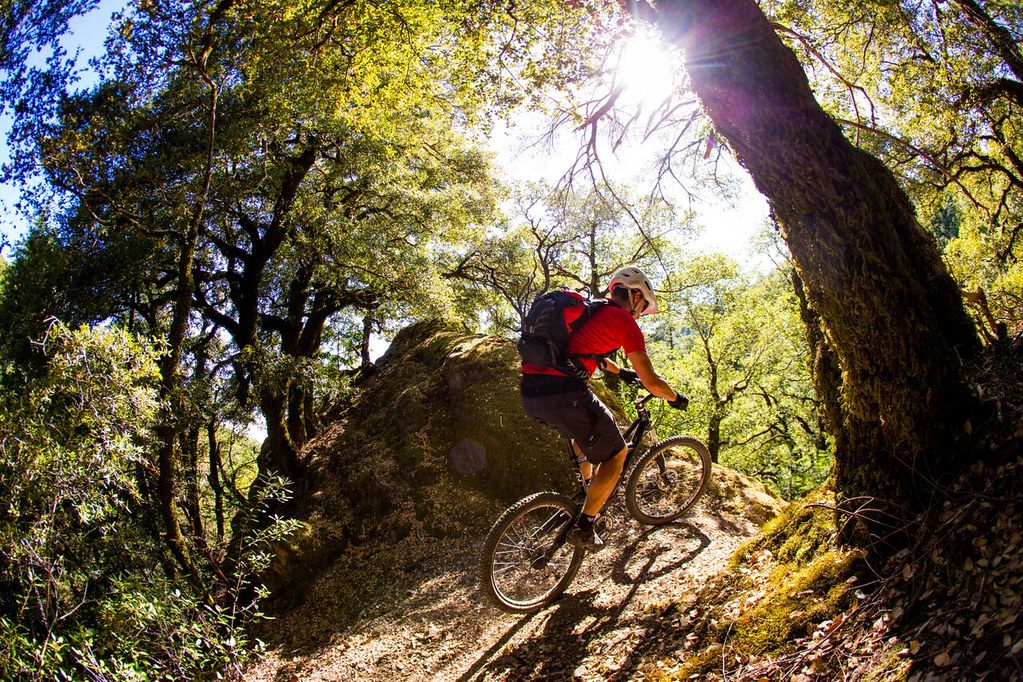
The belief worth challenging up front: that getting more flexible will make you a better, more comfortable rider. It won't, and chasing flexibility can quietly work against you. Mountain biking is hours of holding a braced, crouched, slightly hinged position while absorbing vibration and load - a sport of stability under tension, not of deep passive ranges. A rider who can fold into a pretzel but can't control a braced hip or a rotating mid-back gains nothing on the trail.
What actually helps is a different thing: usable, controllable range in the few joints your riding posture stiffens, plus the strength to own that range when the bike is trying to twist you off it.
Here's the case against the flexibility myth, then the mobility and stability work that genuinely makes you more durable - hips and t-spine to undo the crouch, forearms and grip for descents - and where to slot it around big weekend rides.
1. The Flexibility Myth vs. What Riders Need: Controllable Range
Three words get muddled, so pin them down. Flexibility is passive range - how far something can be pushed when you relax. Mobility is active range you produce and control yourself. Stability is the ability to resist motion you don't want. Descending is almost pure stability: you brace the trunk, control the hips, and resist being thrown around. Climbing and pedalling efficiency lean on active hip and ankle range. Almost nothing you do on a bike rewards the deep passive flexibility yoga is often sold for.
This matters because passively stretching a joint to a bigger range you can't control doesn't help - and the body tends to guard ranges it can't stabilise. Stretch your hips looser without building strength and control there, and you haven't made yourself a better descender; you've just got more range you can't own. The mental model for a rider is: get enough range to reach the positions you ride in, then strengthen so you control them under vibration and load.
So this isn't an anti-yoga argument. Yoga's strength holds, balance and breathing genuinely suit riders, and the single-leg balance work in particular maps neatly onto staying composed over rough terrain - it's the 'flexibility = better' assumption that's wrong. Train for controllable range and stability, and skip the goal of becoming bendy. The most useful question isn't 'how far can I stretch?' but 'which positions do I hold on the bike, and can I control them under load and vibration?' Answer that, and your mobility work writes itself.
2. Undoing the Crouch: Hips, T-Spine and the Riding Posture
Hours hinged forward with bent hips and a rounded upper back leave predictable restrictions: short, stiff hip flexors limiting extension, a thoracic spine stuck in flexion and short on rotation, and tight forearms from constant grip. The fix is targeted active mobility plus an upright reset, done little-and-often rather than in one long session - frequent exposure is what builds and keeps usable range.
| Drill | When | Dose | Targets / why |
|---|---|---|---|
| Leg swings + hip circles | Pre-ride warm-up | 10 each direction | Dynamic hip prep |
| World's-greatest-stretch (lunge + reach) | Pre-ride | 5 per side | Hip extension + t-spine rotation |
| Open-book rotations | Daily / post-ride | 8-10 per side | Reverse the rounded riding back |
| Loaded hip-flexor lunge hold | Post-ride, daily | 2 x 30-45 sec/side | Hip extension under length |
| Wrist/forearm CARs + flexor stretch | Pre-descent / daily | 30-45 sec each | Grip endurance, descent comfort |
| Deep goblet-squat hold | 2-3x/week | 2 x 30 sec | Active hip flexion + ankle range |
The loaded lunge and goblet hold aren't passive stretches - you're producing tension at long lengths, which converts a borrowed range into one you control on the bike. Pair the open-book work with a few minutes off the bike standing tall and breathing to reset posture after a long ride.
3. Pre-Ride Warm-Up vs. Pre-Descent: Get the Timing Right
Use dynamic before, static after - and on a bike the timing has teeth. A long static stretch held right before a technical descent or a hard climb effort can transiently reduce force, power and the fine control you rely on, for a short window after. The effect is small and brief and grows with longer holds (about a minute or more per muscle), but the start of a rowdy descent is precisely when you don't want even a slight dip in output or stability.
So warm up the right way: a few minutes of easy spinning to raise tissue temperature, then dynamic mobility - leg swings, hip circles, the world's-greatest-stretch, some wrist circles - that primes range and the nervous system without the cost. That readies the exact positions you're about to ride.
Keep the longer holds for after the ride or a separate evening session, when a temporary drop in range and force doesn't matter and you're already warm. At the trailhead, dynamic and movement-specific; in the evening, the longer stuff. It's about placing static stretching well, not avoiding it. A practical rhythm for a weekend warrior: a brisk dynamic warm-up before the first descent of the day, then a calm 10-minute mobility-and-stretch block that evening or the next morning to undo the crouch and develop range while the temporary force dip is irrelevant.
4. Arm Pump, Crashes and Recovery Between Epics: Honest Limits
Let's be straight about what mobility doesn't fix. Arm pump on long descents is mainly a forearm strength-endurance and grip-tension problem - excessive death-gripping and under-conditioned forearms - not a flexibility deficit. Wrist and forearm mobility plus loosening your grip can help comfort, but the real answer is forearm strength-endurance and relaxing your hold, not stretching pump away. Don't expect mobility to cure it.
Recovery between weekend epics is the same story. Light mobility and easy yoga feel good and reduce stiffness in the moment, but the honest evidence has stretching-type recovery interventions producing small, inconsistent effects on soreness, fatigue and inflammation. It won't meaningfully speed your recovery between back-to-back big days - that comes from fuel, sleep and sensible load. And nothing here 'detoxes' a hard ride out of your legs.
Where mobility earns its place is stability and durability: a body that controls its braced positions and resists getting thrown around is more crash-robust and holds form deep into a long ride. Genuine crash injuries - sharp, joint-line or radiating pain, instability, anything that won't settle - are medical territory; assess and seek guidance rather than stretching through them.
Mountain Bikers' Mobility Questions
Does mobility work help arm pump on long descents?
Only at the edges. Arm pump is mainly a forearm strength-endurance and grip-tension problem - gripping too hard with under-conditioned forearms - not a lack of flexibility. Wrist and forearm mobility plus consciously loosening your grip can make descents more comfortable, but the durable fix is building forearm strength-endurance and relaxing your hold on the bars. Don't expect stretching to clear pump; train the forearms and manage grip tension, and use mobility as a comfort layer.
Will getting more flexible make me a better, safer descender?
No - and chasing flexibility can backfire. Descending is a stability skill: you brace the trunk and control the hips against being thrown around. Passive range you can't control doesn't help and may make a joint feel less secure, because the body guards ranges it can't stabilise. What helps is controllable range plus strength and trunk stability. Build enough mobility to reach your riding positions, then strengthen to own them. Skip the goal of becoming bendy.
Will it help me recover between weekend epics?
A little, and mostly in how you feel. Easy yoga and light mobility reduce stiffness in the moment and help you relax, which is real. But the honest evidence shows stretching-type recovery methods have small, inconsistent effects on soreness and fatigue, so don't count on it to meaningfully speed recovery between big days. That comes from sleep, fuel and managing your weekly load. Use mobility to feel looser and to reset your crouched posture, not as your main recovery tool.
Anything different about mobility at altitude?
Mobility itself doesn't change with altitude - the same hip, t-spine and forearm drills apply. What changes is everything around the ride: altitude raises fluid demand and degrades sleep, so recovery is harder and you'll feel stiffer. Keep your short daily mobility consistent, warm up dynamically before big climbs, and prioritise hydration and easy days. Don't add aggressive new stretching at altitude expecting it to offset the fatigue; manage load and recovery, and let mobility stay the small durable habit it is.
Disclaimer: This article is for educational purposes only and is not medical advice. Consult a qualified healthcare professional before starting any supplement, nutrition, or training protocol — especially if you are pregnant or breastfeeding, under 18, taking medication, or managing a health condition.
Scientific References & Clinical Sources
- Dupuy O, et al. An Evidence-Based Approach for Choosing Post-exercise Recovery Techniques to Reduce Markers of Muscle Damage, Soreness, Fatigue, and Inflammation: A Systematic Review With Meta-Analysis. Front Physiol, 2018. PMID: 29755363

