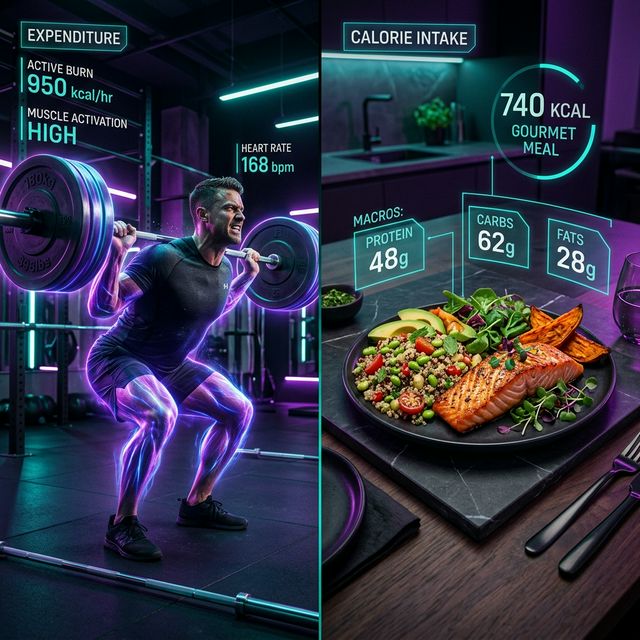
The pursuit of a leaner, stronger physique is often portrayed as a balancing act between two opposing forces: the drive to lift heavy weights and the necessity of eating fewer calories. For many, this feels like an impossible equation. How can you have the energy to squat your personal best when you're operating on a calorie deficit? How do you prevent your body from breaking down under the strain of high-volume training when your fuel tank is half empty?
The truth is that finding the "sweet spot" between strength training and calorie deficits is the secret to Body Recomposition—the holy grail of fitness where you lose fat and maintain (or even build) muscle simultaneously. In 2026, we have the tools and the data to move beyond guesswork. By understanding the science of recovery and intensity, you can navigate your fat-loss journey without sacrificing your hard-earned strength.
The Liar on the Scale: Understanding Body Recomposition
The first step in finding your sweet spot is to change your relationship with the scale. When you balance heavy lifting with a moderate deficit, your body weight might not move for weeks. This can be incredibly frustrating if you're only tracking "weight." However, inside your body, a profound shift is occurring.
You are losing fat, which is voluminous but light, and maintaining muscle, which is dense and heavy. You might be the same "weight," but your waist is smaller, your shoulders are broader, and your clothes fit differently. This is body recomposition in action. At UltraFit360, we encourage users to track Body Fat Percentage and Strength Metrics alongside scale weight to get the full picture of their progress.
Matching Intensity to Intake: The Recovery Equation
The most common mistake people make in a deficit is trying to maintain their "bulking" workout volume. When calories are restricted, your body's ability to recover from systemic stress is diminished. You have less glycogen (stored sugar) in your muscles and less overall energy for repair.
To find the sweet spot, you must learn to adjust your volume while maintaining your intensity.
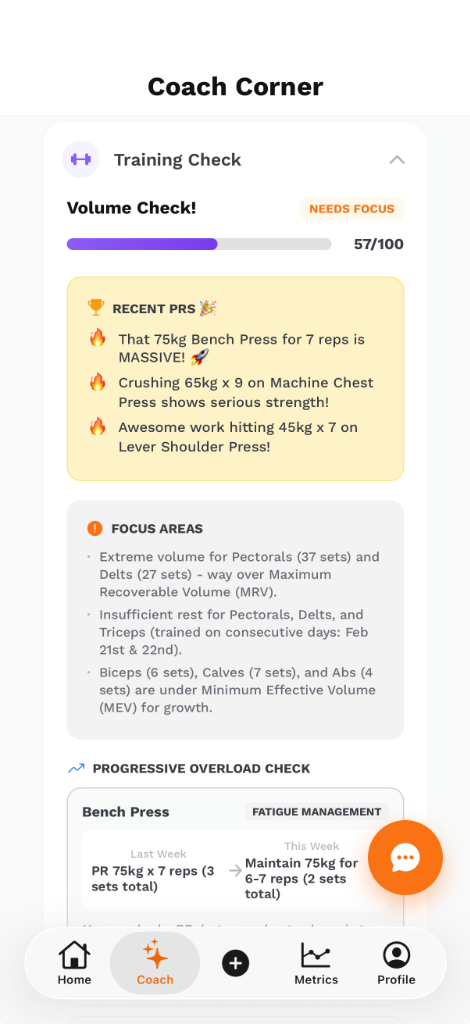
The Volume Check feature helps you stay within your Recoverable Volume.
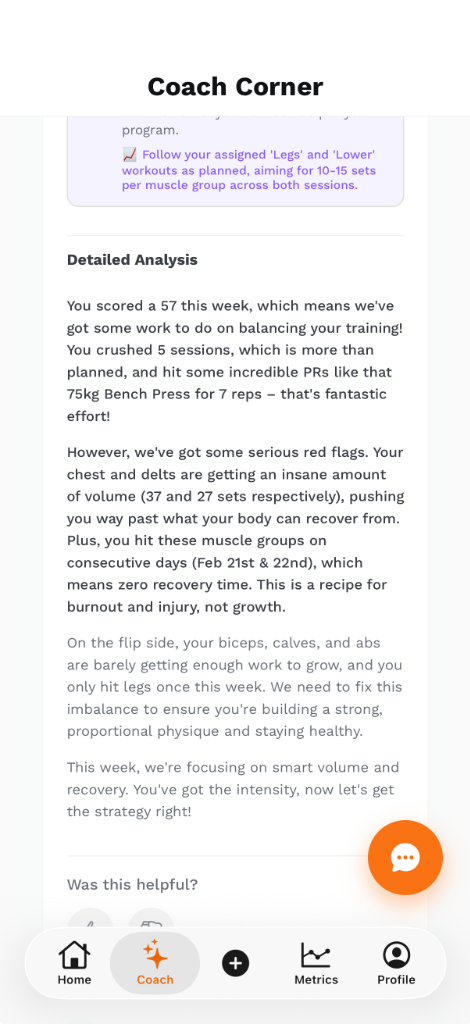
Get real-time feedback on your training imbalances.
Intensity vs. Volume
- Intensity refers to the weight on the bar. This should remain as high as possible. Lifting heavy tells your body that the muscle is necessary and should not be burned for fuel.
- Volume refers to the total number of sets and reps. This is what you should scale back. If you usually do 5 sets of 10, consider moving to 3 sets of 5-8 with the same or slightly heavier weight.
By keeping intensity high but volume moderate, you provide the necessary stimulus for muscle preservation without overwhelming your body's recovery capacity. Use your UltraFit360 SSR (Strain, Stress, Recovery) score to guide these adjustments. If your recovery score is consistently in the red, it’s a sign that your training volume is too high for your current calorie intake.
Nutritional Stratagem: Firing the Engine
While the overall daily calorie count matters for weight loss, when you eat those calories can make a massive difference in how you feel during your workouts. This is known as Nutrient Timing.
In a deficit, you want to "buffer" your workout with the majority of your daily carbohydrates. Eating a carb-rich meal 1-2 hours before training ensures your muscles have the glycogen needed for high-intensity efforts. A protein-rich meal following your workout supports the immediate repair process. The rest of your day can be lower in carbs and higher in fats and fiber to keep you full and maintain stable energy levels.
Tracking the Metrics That Matter
In the "sweet spot," your primary metric of success isn't just the scale; it's your performance logs. If you are consistently hitting your target reps on your main compound lifts (Squat, Deadlift, Press), your plan is working. If you find your strength plummeting—meaning you can no longer lift weights you handled easily two weeks ago—you have moved out of the sweet spot.
This "Strength Floor" is your early warning system. A slight dip in energy is normal, but a significant loss of strength indicates that your deficit is too aggressive, your protein is too low, or your stress levels are too high. UltraFit360's AI Coach monitors these trends in real-time, alerting you when it's time to take a "maintenance week" to let your central nervous system recover.
| Metric | The "Danger Zone" (Too Much Deficit) | The "Sweet Spot" (Recomposition) |
|---|---|---|
| Strength | Dropping rapidly (>10% loss) | Maintained or slightly increasing |
| Sleep Quality | Restless, "tired but wired" | Deep, restorative sleep |
| Hunger | Constant, intrusive thoughts of food | Manageable, peaks before meals |
| Mood | Irritable, "hangry," depressed | Stable, focused during workouts |
| Recovery | Soreness lasts 4+ days | Normal DOMS (1-2 days) |
Practical Adjustments for Real Life
Finding the sweet spot isn't a one-time calculation; it's a dynamic process. Here’s how to adjust on the fly:
- The 80% Rule: If you're feeling exceptionally tired, do 80% of your planned reps or sets. This keeps the habit and the stimulus alive without burying yourself in a recovery hole.
- Embrace Auto-regulation: Use a RPE (Rate of Perceived Exertion) scale. An "8" yesterday might feel like a "10" today because of poor sleep. Adjust the weight accordingly to hit the right intensity without overreaching.
- The Maintenance Break: Every 4-6 weeks of dieting, consider spending 7 days at your "Maintenance Calories." This helps reset your hormones (leptin and ghrelin), restores glycogen, and gives you a much-needed psychological break.
Conclusion: Harmony in the Deficit
Strength training and calorie deficits don't have to be at war. When managed intelligently with data and self-awareness, they work together to create the most dramatic transformations. By focusing on intensity over volume, timing your nutrients for performance, and listening to your body's recovery signals, you can find that elusive sweet spot where fat vanishes and strength remains.
Remember, the goal of UltraFit360 isn't just to help you lose weight—it's to help you build a more capable, resilient version of yourself. Keep the intensity high, keep the focus sharp, and let the data guide you to your best physique yet.
Master Your Body Recomposition
Sync your training logs and nutrition with UltraFit360. Our AI coach helps you find the sweet spot between lifting heavy and leaning out.