
If you search the internet for "the best diet," you’ll find millions of conflicting answers. One person swears by Keto, another by Veganism, and another by intermittent fasting. Each of these people likely has a "Perfect Meal Plan" to sell you—a beautiful, color-coded PDF that tells you exactly what to eat at 8:00 AM, 12:00 PM, and 6:00 PM. But there's a reason why most people who start these plans fail within three weeks. It's not a lack of willpower; it's a fundamental misunderstanding of biological individuality.
In 2026, we’ve finally realized that the "Perfect Meal Plan" doesn't exist. There is only the Perfect Meal Plan for YOU. It's a plan that accounts for your age, your gender, your activity level, your cultural preferences, and your specific metabolic rate. Today, we’re debunking the myth of the one-size-fits-all template and showing you how to build a personalized strategy that works for your life, not just for a month.
The Variable Factor: Why Templates Fail
Imagine two people. One is a 22-year-old male athlete who weight-lifts five days a week and works as a construction laborer. The other is a 45-year-old female executive who gets 4,000 steps a day and has a history of thyroid issues. Most "standard" meal plans might put both of these people on a 2,000-calorie diet. For the athlete, this is a starvation protocol that will lead to muscle loss and injury. For the executive, this might be a surplus that leads to weight gain.
Biological individuality is the reason why generic templates are a trap. Your body is a dynamic system, not a static machine. Your nutritional needs shift based on your sleep quality, your stress levels, and even the weather. A rigid meal plan can't account for these variables, which is why they often feel like a prison sentence rather than a health tool.
Decoding TDEE: The Foundation of Personalization
Total Daily Energy Expenditure (TDEE) is the total number of calories your body burns in a 24-hour period. It is the most important number in nutrition, yet most people have no idea what theirs is. TDEE is composed of four main parts:
- BMR (Basal Metabolic Rate): The calories burned just to keep your organs functioning. This makes up about 60-70% of your TDEE.
- TEF (Thermic Effect of Food): The calories burned digesting and processing the food you eat. Protein has a much higher TEF than fat or carbs.
- EAT (Exercise Activity Thermogenesis): The calories burned during intentional exercise like lifting or running.
- NEAT (Non-Exercise Activity Thermogenesis): The calories burned during daily movement—pacing, fidgeting, walking to the car. This is often the biggest variable between individuals.
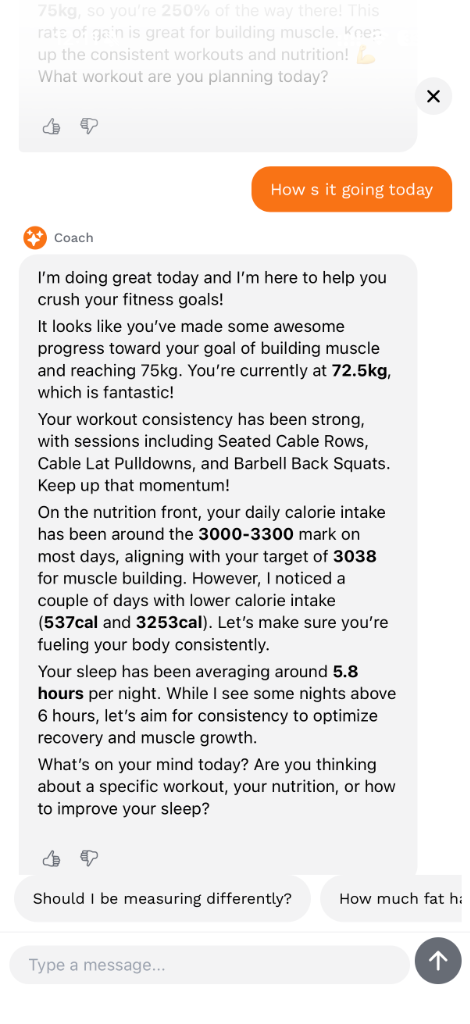
Your AI Coach provides personalized daily target adjustments based on real data.
Macro Targets: Ratios Matter
Once you have your TDEE, you have to decide where those calories come from. This is where macros come in. A "Perfect Meal Plan" might say everyone needs 40% protein, 30% carbs, and 30% fat. In reality, your optimal ratio depends on your goals.
- The Muscle Builder: Needs higher protein (2.2g/kg+) and enough carbohydrates to fuel intensive workouts.
- The Endurance Athlete: May require 60% or more of their calories from carbohydrates to maintain glycogen stores.
- The Metabolically Flexible: Might prefer a higher fat, lower carb approach for stable energy throughout a sedentary workday.
The Psychological Edge: Flexibility is the Key
The biggest reason meal plans fail is psychological. If a plan tells you to eat "Steamed Cod and Asparagus" on a Tuesday night, but you're craving a home-cooked dal or a social pizza with friends, you feel like you’ve "failed" if you deviate. This leads to the "all-or-nothing" mentality that sabotages long-term progress.
Personalization means having a flexible framework rather than a rigid list. It means knowing that you need 150g of protein today, and it doesn't matter if that comes from chicken, paneer, or a protein shake. This flexibility allows you to navigate real-life situations without "falling off the wagon."
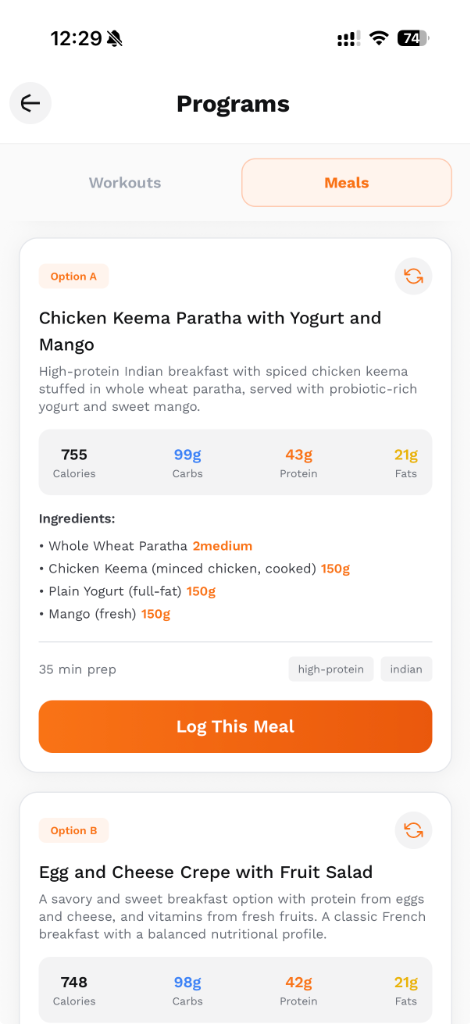
A personalized framework provides options that hit your targets, not a rigid restrictive menu.
| Feature | Generic Meal Template | Personalized Framework |
|---|---|---|
| Adaptability | Low (Breaks during social events) | High (Works with any cuisine) |
| Data Integration | None (Guesses based on averages) | Live (Syncs with wearable data) |
| Adherence | Short-term (weeks) | Long-term (years) |
| Outcome | Yo-yo weight changes | Permanent body recomposition |
Step-by-Step: Building Your Own Personal Plan
Setting up your own personalized nutrition strategy is easier than you think. Follow these five steps:
- Find Your BMR: Use a tool like UltraFit360 to get an accurate starting point based on your age, height, and weight.
- Factor in Activity: Be honest about your movement. Are you truly "Active," or do you just lift for 45 minutes and sit for the other 23 hours?
- Set Your Goal: Do you want to lose fat (minus 300-500 from TDEE), maintain, or build muscle (plus 200-300 from TDEE)?
- Prioritize Protein: Aim for at least 1.6g per kilogram of body weight. This is non-negotiable for muscle preservation.
- Fill the Rest: Distribute the remaining calories between fats and carbs based on what makes you feel best.
Conclusion: Empowerment Through Data
The "Perfect Meal Plan" is a ghost. It’s a marketing myth designed to sell PDFs. The truth is that you have all the power you need to create your own successful strategy. By understanding your TDEE, setting personalized macro targets, and embracing a flexible framework, you can stop the cycle of dieting and start living a lifestyle that supports your goals.
Stop looking for the "magic" list of foods and start looking at your own data. Your body knows what it needs—you just need the tools to listen to it. Let UltraFit360 be those tools, and let your personalization be your superpower.
Calculate Your Personal TDEE Now
Don't settle for a generic plan. Get your personalized TDEE and macro targets calculated by our AI engine today.