💡 Quick Answer
High protein meal prep, Indian style, means batch-cooking dal, legume and paneer dishes on Sunday and pairing them with fresh roti or rice through the week. The five dishes here give 15–22 g protein per serving. Dals and legume curries keep 3–4 days in the fridge and freeze for months; soya chunks and palak paneer keep about 3 days.
- One 2-hour Sunday session covers 15–20 meals.
- Soya chunks are the cheapest protein: 50 g dry gives about 20–26 g.
- Make roti fresh each morning; reheat rice with a splash of water.
- Add breakfast and snack protein to reach 100–140 g a day.
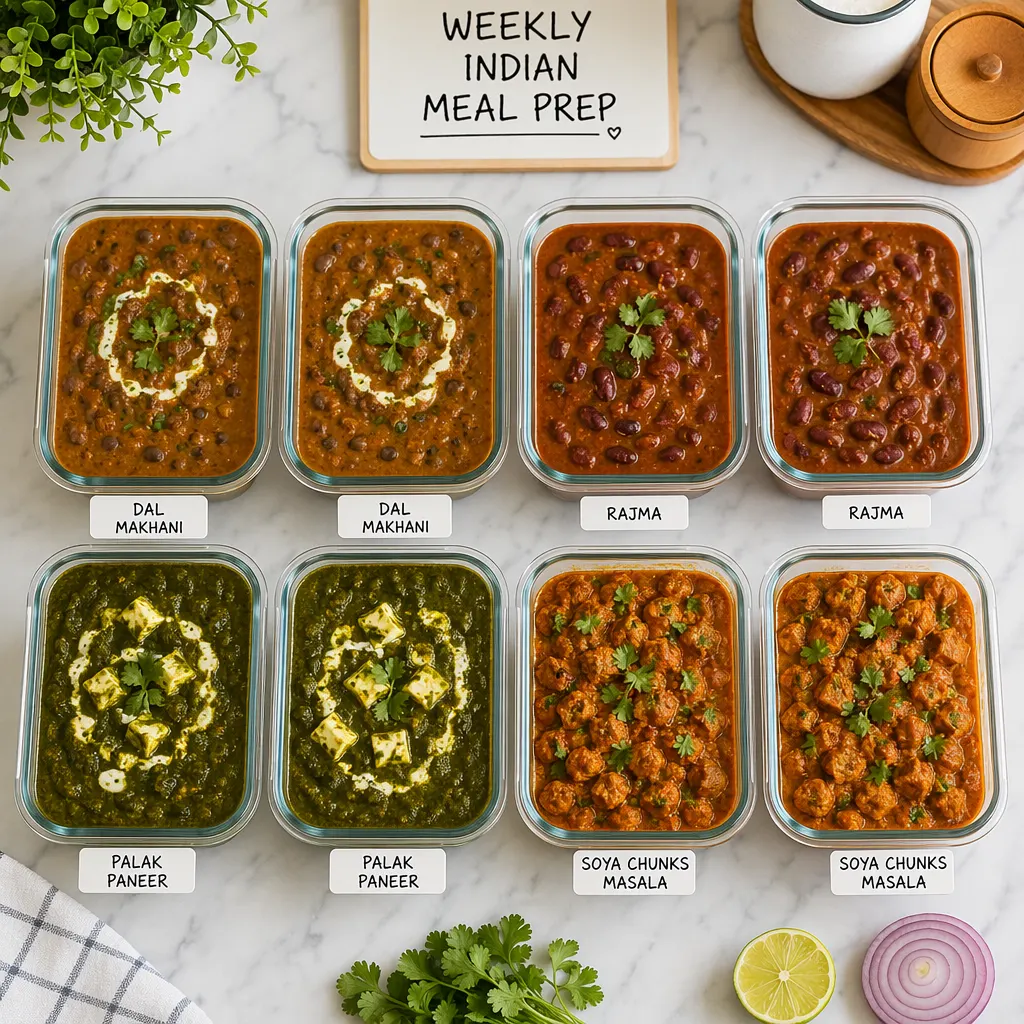
Indian food is, structurally, one of the best cuisines for high-protein meal prep — dal makhani improves in flavour after 24 hours in the fridge, rajma freezes without texture loss, and soya chunks masala reheats perfectly in 90 seconds. A two-hour Sunday cook session across five dishes can cover 15–20 protein-balanced meals for the week, with no mid-week cooking required beyond making fresh roti or rice.
This guide gives you five high-protein Indian meal-prep recipes, verified macros per serving, storage durations, and a simple weekly structure for hitting 100–140g protein per day on a desi diet.
Why Indian Food is Ideal for High-Protein Meal Prep
The same slow-cooking techniques that developed Indian cuisine for large families translate perfectly to batch cooking for fitness. Dal and legume curries improve as the spices continue to bloom in the fridge overnight. The masala base — cooked separately — can be frozen in portions and used as a foundation for multiple dishes. Paneer, unlike most soft cheeses, holds its structure through reheating.
The only genuine limitation is roti. Fresh roti is categorically better than day-old roti, which dries out. The practical solution: cook all the sabzi and curries in one session, then make 2–3 rotis fresh each morning. Brown rice reheats well with a splash of water.
Five dishes, two hours, 15+ meals. Here is what to cook.
1. Dal Makhani Meal Prep
Macros per serving (200g): 280 kcal | 18g protein | 35g carbs | 7g fat (lean version)
Storage: 3–4 days refrigerated, 3 months frozen
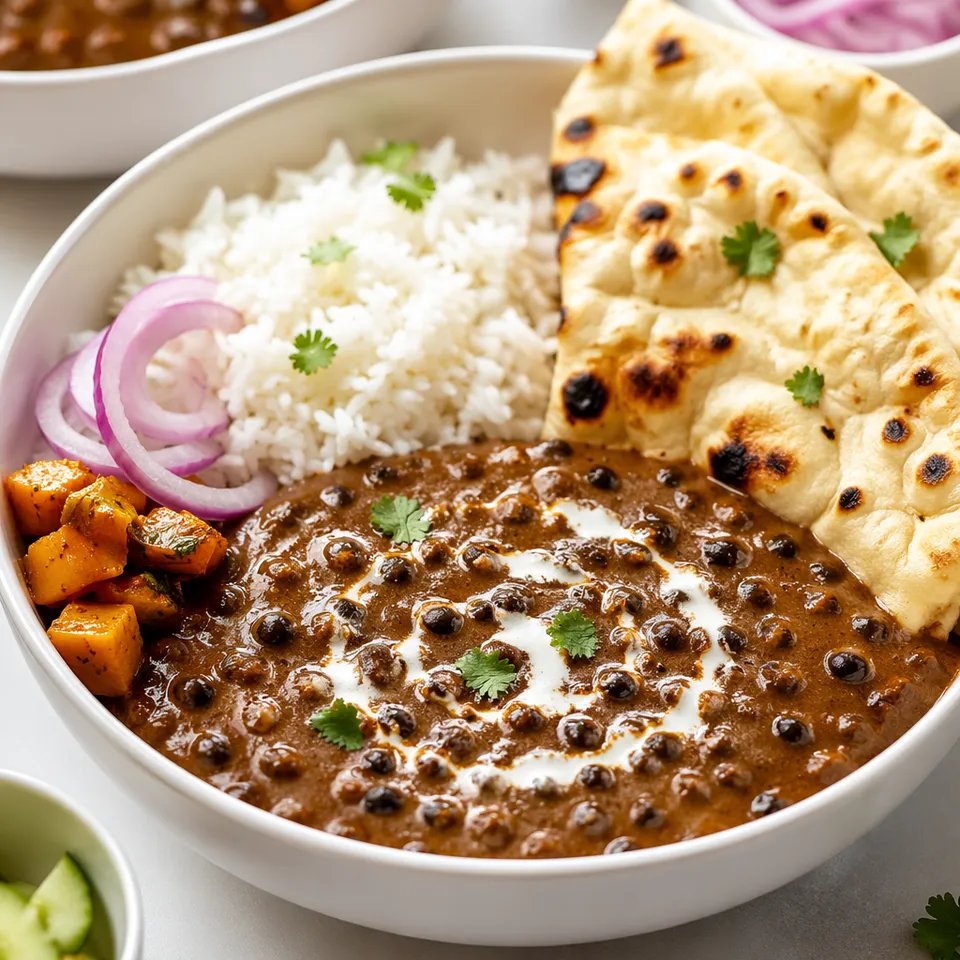
Dal makhani is the most reliable high-protein Indian meal-prep recipe. Made with whole urad dal and kidney beans, it is slow-cooked for 4–6 hours traditionally — but a pressure cooker and long simmer achieves the same result in 90 minutes. The lean meal-prep version uses 1 tsp each of butter and cream instead of the restaurant's 50g+ per serving.
Meal-prep method
- Soak urad dal and rajma together overnight in cold water. Drain.
- Pressure-cook with 800ml water and salt for 6–8 whistles, until dal is very soft and mashable at the edges.
- In a separate pan, cook the tomato-onion masala until oil separates. Add to the cooked dal.
- Simmer together for 30–40 minutes, stirring occasionally, until the dal thickens and turns dark. Add butter and cream at the end — stir and remove from heat.
- Divide into 6 containers. Refrigerate or freeze immediately after cooling.
Full recipe: Dal Makhani Meal Prep →
2. High-Protein Rajma Bowl
Macros per serving (with 150g cooked brown rice): 440 kcal | 22g protein | 72g carbs | 4g fat
Storage: 3–4 days refrigerated, 3 months frozen (dal only; rice separately)
Rajma is also a complete protein when paired with rice: the two complement each other's amino acid profiles, which is why rajma-chawal has been a dietary staple for centuries, not just a comfort food. The combination delivers all essential amino acids more efficiently than either food alone.
Meal-prep method
- Pressure-cook soaked rajma with plenty of water and a pinch of salt for 10–12 whistles. The beans should be very soft — no resistance when pressed between fingers.
- Cook a thick onion-tomato masala until oil separates. Add the cooked rajma beans (with their cooking water) to the masala. Simmer 20 minutes until gravy thickens.
- Divide into 5 containers. Cook a batch of brown rice separately; store in a separate container.
Full recipe: High-Protein Rajma Bowl →
3. Chana Masala Power Bowl
Macros per serving: 320 kcal | 15g protein | 45g carbs | 8g fat
Storage: 3–4 days refrigerated, 3 months frozen
Chickpeas (chana) are consistently cited in Indian vegetarian bodybuilding meal plans for their protein density, fibre content, and flavour versatility. Chana masala is the most forgiving batch-cook recipe here — it actually tastes better on day three than day one as the masala absorbs into the chickpeas.
Meal-prep method
- If using dried chickpeas: pressure-cook soaked chickpeas for 8–10 whistles. If using canned: drain and rinse — saves 45 minutes.
- Cook a thick onion-tomato masala on medium heat for 12 minutes until oil separates. Add chana masala powder, stir 1 minute.
- Add chickpeas and 200ml water. Simmer 20 minutes. Finish with a squeeze of lemon and a pinch of amchur.
- For higher protein: add 100g cubed paneer in the last 5 minutes (adds 7g protein per serving).
Full recipe: Chana Masala Power Bowl →
4. Soya Chunks Masala (Budget Protein King)
Macros per serving (from 50g dry soya): 244 kcal | 20–26g protein | 20g carbs | 8g fat
Storage: 3 days refrigerated (soya degrades faster than legumes)
At ₹30–50 per serving, soya chunks are the #1 budget protein in Indian gym content. The important caveat: the "52g protein per 100g" figure is dry weight. Once hydrated and cooked, a 50g dry portion becomes 140–150g cooked and delivers 20–26g protein — still excellent, but not the 26g at 50g that dry-weight math implies.
Meal-prep method
- Boil soya chunks in salted water for 5 minutes. Drain and squeeze firmly — this is essential for removing the raw soya flavour and excess water.
- Cook the onion-tomato-spice masala until oil separates. Add squeezed soya chunks; stir-fry on high heat 2–3 minutes to absorb the masala.
- Add 200ml water; simmer 10 minutes. Crush kasuri methi in and remove from heat.
- Divide into 4 containers. Consume within 3 days — soya chunks don't freeze as well as lentils.
Full recipe: Soya Chunks Masala Curry →
5. Palak Paneer (Lean Meal-Prep Version)
Macros per serving (lean version): 320 kcal | 22g protein | 12g carbs | 22g fat
Storage: 3 days refrigerated (do not freeze — spinach puree separates)
Restaurant palak paneer can clock 40g fat per serving due to cream and butter. The meal-prep version uses low-fat paneer, blanched spinach pureed without cream, and a single teaspoon of oil for tempering. The protein count stays at 22g while fat drops from 40g to 22g — still not a low-fat dish, but significantly leaner for a weekly meal plan.
Meal-prep method
- Blanch spinach in boiling water for 90 seconds. Drain and blend with a little cold water to a smooth puree.
- In a pan, heat oil and cook cumin, onion, and tomato until the masala thickens. Add ginger-garlic paste and spices.
- Add spinach puree; cook 5 minutes. Stir in Greek yogurt (room temperature to avoid curdling). Add paneer cubes and cook gently for 3–4 minutes. Do not boil after adding yogurt.
- Divide into 4 containers. Consume within 3 days.
Full recipe: Palak Paneer Bowl →
Weekly Macro Plan + Storage Guide
Here is how to structure five meal-prep dishes into a week of high-protein Indian eating:
| Day | Lunch | Dinner | Approx daily protein from these meals |
|---|---|---|---|
| Monday | Rajma + brown rice (post-workout) | Palak paneer + 2 roti | 44g protein from these two meals |
| Tuesday | Soya chunks masala + rice | Dal makhani + 2 roti | 38–44g protein |
| Wednesday | Chana masala + 2 roti | Palak paneer + rice | 37g protein |
| Thursday | Dal makhani + rice | Soya chunks + 1 roti | 38–44g protein |
| Friday | Rajma + rice | Chana masala + 2 roti | 37g protein |
These two-meal figures (37–44g protein) cover roughly a third of a 130g daily target. Add protein at breakfast (eggs, paneer bhurji, besan chilla) and as snacks (Greek yogurt, sattu shake, protein ladoo) to close the gap.
Use the UltraFit360 Meal Plan Generator → to build a personalised weekly plan from the recipe database, or see the full High-Protein Vegetarian Indian Diet guide → for a broader framework of Indian protein sources. Short on time on weekdays? Our 5-day meal prep plan for working professionals → shows how to turn these dishes into office tiffins.
Frequently Asked Questions
How many days can you store cooked Indian dal in the fridge?
Cooked dal, rajma and chana masala keep for 3 to 4 days in an airtight container in the fridge. Freeze portions beyond that. Reheat until steaming hot, adding a splash of water if the gravy has thickened.
Is Indian food good for high protein meal prep?
Yes. Dals, legume curries and paneer dishes reheat well, many freeze without losing texture, and they deliver 15 to 22 g protein per serving. Make roti and rice fresh for the best texture.
Is rajma better for muscle building or fat loss?
Rajma is higher in carbs than protein, so it suits a post-workout lunch more than a fat-loss dinner. For fat-loss phases, a lower-carb protein such as dal or paneer at dinner is a better fit.
How much protein does palak paneer have per serving?
The lean meal-prep version here, with low-fat paneer and minimal oil, gives about 22 g protein at around 320 kcal per serving. Restaurant versions have similar protein but far more fat from cream and butter.
Which Indian meal prep dish has the most protein?
Soya chunks masala, at about 20 to 26 g per serving from 50 g dry soya, followed by palak paneer at about 22 g. Dal makhani, rajma and chana masala give 15 to 18 g per serving.
Set your targets with the free calorie and macro calculator, then build a day of meals with the meal plan generator.
Track Your Indian Meal Prep Macros
Photograph your meal-prep containers — UltraFit360's AI identifies Indian dishes and logs the macros in seconds. No manual entry required.