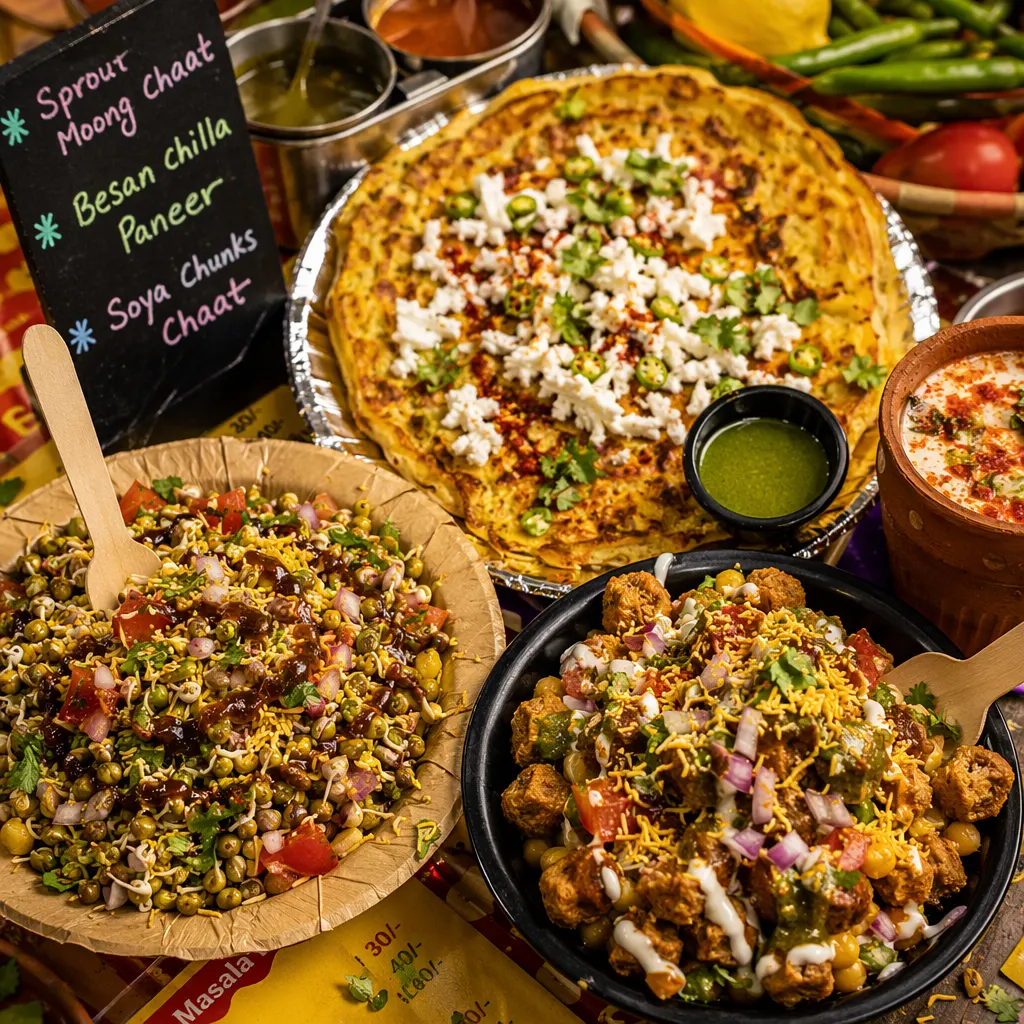
Indian street food is already protein-rich — the problem is that most people don't treat it that way. A besan chilla delivers 19g protein; a sprouted moong chaat bowl with peanuts hits 13g; soya chunk chaat from 50g dry TVP gives 20–26g. The "protein layering" trend in Indian fitness content is simply the realisation that these foods were doing serious nutritional work all along — they just needed the right combinations and honest macros to go with them.
This guide covers five high-protein street food remixes, explains why soya chunk marketing overstates protein by 2–3x (and what the real cooked-weight number is), and gives you verified macros for each recipe so you can use them in meal planning.
What is the Protein Layering Trend?
Protein layering is a content format that appeared on Indian fitness Instagram and YouTube in 2024–2025: take a traditional dish, then show — ingredient by ingredient — how each addition builds the protein total. Chef Sanjeev Kapoor's sprouts bhel format became a reference point. Kunal Kapur's dal moth chaat videos demonstrated that chaat can be a legitimate high-protein lunch, not just an evening snack.
The "remix" approach preserves the flavour architecture of street food — the tang of tamarind chutney, the heat of green chilli, the freshness of mint — while replacing puffed rice with sprouted grains, adding soya chunks, or using a besan base instead of fried papdi. The result is food that tastes like street food but functions like a gym meal.
MyFitness (a peanut butter brand on a ₹300 Cr revenue run-rate, backed by Mensa/BRND.ME) has been pivoting to full sports nutrition, recognising that the Indian fitness market wants familiar flavours in protein-optimised formats. This trend is commercial now, not niche.
Recipe 1: Besan Chilla with Paneer Stuffing (24g Protein)
Macros per serving (2 chillas): 320 kcal | 24g protein | 32g carbs | 8g fat
The eggless protein pancake of Indian fitness. Chef Ajay Chopra popularised the Greek-yogurt-in-batter version that pushes protein without eggs. Adding paneer stuffing takes it from 19g to 24g.
Method
- Whisk besan with hung curd and enough water to make a pourable batter (like thin pancake batter). Add onion, tomato, ajwain, turmeric, and salt. Rest 10 minutes.
- Mix paneer stuffing ingredients and set aside.
- Heat a non-stick tawa on medium. Pour half the batter and spread to a thin circle. Cook until edges lift (2–3 minutes). Add paneer stuffing on one half, fold over, and press lightly.
- Cook 1 more minute per side. Serve with green chutney or Greek yogurt dip.
Full recipe: Besan Chilla (Protein Version) →
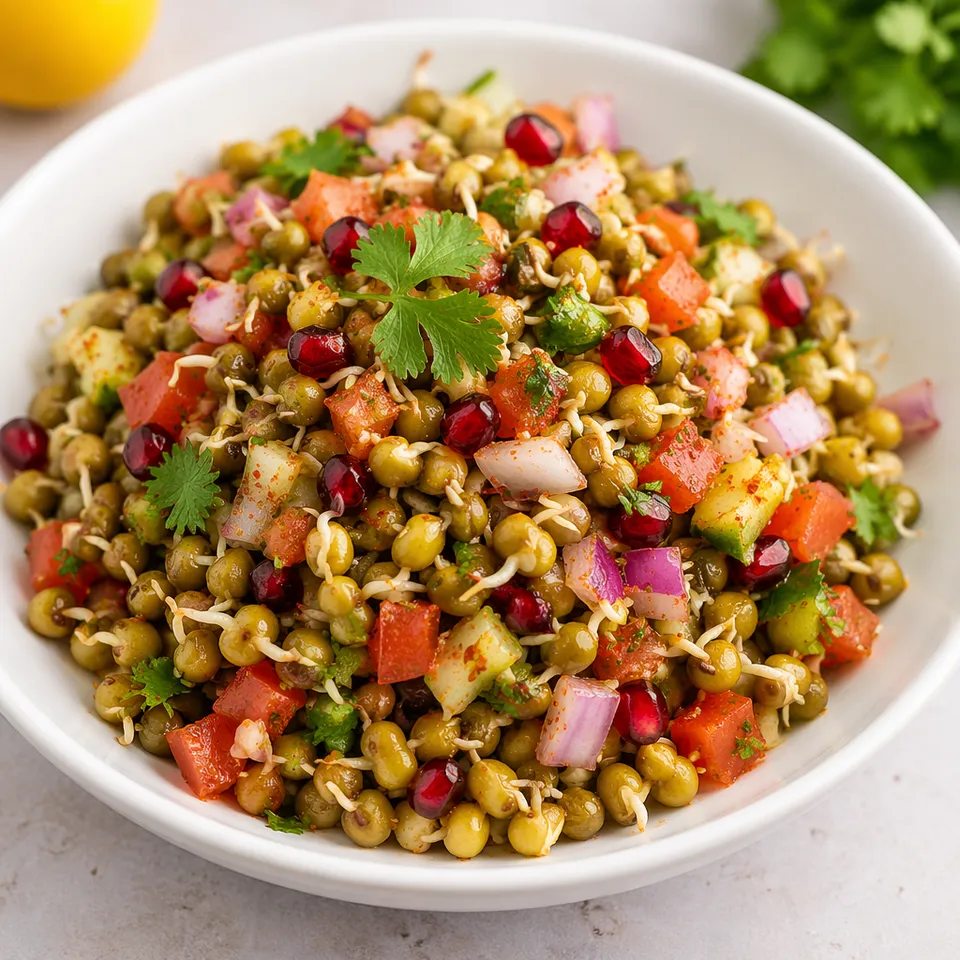
Recipe 2: Sprouted Moong Chaat Bowl (13g Protein)
Macros per bowl: 200 kcal | 13g protein | 28g carbs | 6g fat
The zero-cook lunch. This bowl is one of the fastest-growing formats in Indian fitness content because it requires no heat, no equipment, and assembles in three minutes. Sprouting boosts the bioavailability of the protein and reduces the phytic acid that can block mineral absorption from raw legumes.
Method
- Combine sprouted moong, onion, tomato, and cucumber in a bowl.
- Add peanuts, lemon juice, chaat masala, and black salt. Toss thoroughly.
- Taste and adjust lemon and salt. Garnish with fresh coriander and a drizzle of green chutney if desired. Serve immediately.
For a higher-protein version, add 50g crumbled paneer (adds 9g protein) or 30g roasted soya chunks (adds 6g cooked protein).
Full recipe: Sprouted Moong Chaat Bowl →
Recipe 3: Soya Chunk Chaat Bowl (26g Protein)
Macros per bowl (from 50g dry soya): 280 kcal | 26g protein | 24g carbs | 8g fat
Soya chunks are the #1 budget protein in Indian gym content. But see the caveat section below about dry vs cooked weight before building your macros around the 52g/100g marketing figure.
Method
- Boil soya chunks in salted water for 5 minutes. Drain and squeeze out the water firmly — this removes the raw soya taste. Chunks will expand to about 140–150g cooked weight.
- Heat oil in a pan. Add cumin, then onion — cook until translucent. Add chilli powder, salt, and the squeezed soya chunks. Stir-fry on high heat for 3–4 minutes until lightly charred at the edges.
- Remove from heat. Cool 5 minutes. Toss with tomato, chaat masala, lemon juice, and both chutneys.
- Serve in a bowl with fresh coriander and optional roasted peanuts.
Full recipe: Soya Chunks Masala Curry →
Recipe 4: Protein Sprouts Bhel (13g Protein)
Macros per portion: 200 kcal | 13g protein | 26g carbs | 6g fat
Sanjeev Kapoor's sprouts bhel format is the most-shared Indian protein chaat on YouTube. The puffed-quinoa variant (replacing some puffed rice) has circulated in fitness communities as a way to add protein without changing the texture much. This version uses sprouted moong and moth beans, with peanuts as the protein anchor.
Method
- Combine sprouted legumes, onion, and tomato in a large bowl.
- Add peanuts, puffed rice, and puffed quinoa. Drizzle both chutneys and lemon juice. Sprinkle chaat masala.
- Toss quickly and serve immediately — bhel loses its crunch within minutes. Add sev right before serving.
This is a light snack format (200 kcal). For a meal, double the sprouts and peanuts to push protein to 22–25g and calories to 350–400 kcal.
The Soya Dry-Weight Myth (Read Before Building Macros)
The most repeated mistake in Indian fitness macro tracking is using the dry-weight protein figure for soya chunks. Here is the correct math:
| Weight state | Amount | Protein delivered | What most people assume |
|---|---|---|---|
| Dry (as sold) | 50g | — | 52g/100g → "26g protein" |
| Cooked (hydrated) | ~145g | 20–26g protein | Often forgotten |
| Marketing claim | "52g/100g" | Technically correct… | …for dry weight only |
A 50g dry portion of soya chunks delivers 20–26g of protein once cooked — which is good, but not the 26g per 50g that dry-weight math suggests. This distinction matters when you're trying to hit 130g protein per day and trusting your food logs. Weigh soya chunks after hydrating and use the cooked-weight figure in your tracker.
The same caveat applies to all legumes: dal, rajma, and chana all double or triple in weight when cooked. If your fitness app only has dry-weight entries, halve the protein figure and double the carbs to approximate cooked macros.
Use the UltraFit360 Meal Plan Generator → to build a protein-targeted day of Indian meals with accurate cooked-weight macros, or browse the High-Protein Vegetarian Indian Diet guide → for a full framework.
Set your targets with the free calorie and macro calculator, then build a day of meals with the meal plan generator.
Log Street Food Macros with AI
Photograph your chaat bowl or chilla — UltraFit360's AI reads the macros from the photo and logs them in seconds. No database search required.