Sattu — roasted chana flour — contains 20–25g of protein per 100g and costs ₹150–250/kg at your local kirana, versus ₹2,000–4,000/kg for whey protein. It is not a replacement for whey, but for the majority of Indian fitness enthusiasts eating on a budget, sattu is the most cost-efficient protein source available — and it has been a dietary staple in Bihar and UP for centuries before the fitness industry noticed.
This guide covers sattu's actual protein content and bioavailability, an honest comparison to whey, and three recipes — the classic sharbat, stuffed parathas, and a plant-protein burfi — with verified macros for each.
What is Sattu and Where Does It Come From?
Sattu is made by dry-roasting whole Bengal gram (chana) and then milling it into a coarse flour. The roasting is the key step — it gelatinises the starch, making sattu faster to digest raw (without cooking) than regular besan, and giving it the earthy, slightly nutty flavour that distinguishes it from regular chickpea flour.
It is the traditional protein source of Bihar, Jharkhand, and eastern UP, where agricultural labourers consumed it mixed with water and spices before long working days. Shilpa Shetty has endorsed sattu sharbat publicly; a 2025 ResearchGate study highlighted its nutritional and economic case as a desi protein powder for lower-income populations.
The "budget protein" narrative around sattu is now well-established in Indian fitness content — and the numbers back it up.
Sattu Protein Content Per 100g (Verified)
Sattu's protein content varies slightly between brands and whether the chana is hulled or whole. Cross-referenced data from multiple nutrition databases gives the following verified ranges:
| Nutrient | Per 100g (dry) | Per 30g serving (1 shake) |
|---|---|---|
| Protein | 20–25g | 6–8g |
| Carbohydrates | 55–60g | 17–18g |
| Fat | 5–7g | 1.5–2g |
| Fibre | 10–12g | 3–4g |
| Calories | 350–380 kcal | 105–115 kcal |
Sattu is also a meaningful source of iron (5–7mg/100g), magnesium, and B vitamins — micronutrients that matter for training performance but rarely feature in whey marketing.
Sattu vs Whey Protein: Honest Comparison
The "sattu vs whey" debate oversimplifies the choice. They serve different roles. Here is a side-by-side that reflects the reality for an Indian fitness budget:
| Factor | Sattu (roasted chana) | Whey Concentrate (80%) |
|---|---|---|
| Protein/100g (dry) | 20–25g | 75–82g |
| Price/kg (India, 2026) | ₹150–250 | ₹2,000–4,000 |
| Cost per 10g protein | ₹6–12 | ₹25–50 |
| Bioavailability (PDCAAS) | ~0.66 (plant, incomplete AA) | ~1.0 (complete, all EAAs) |
| Digestion speed | Slow (fibre + complex carbs) | Fast (ideal post-workout) |
| Leucine content | Low–moderate | High (MPS trigger) |
| Fibre | High (10–12g/100g) | None |
| Best use case | Morning drink, meal component, pre-workout snack | Post-workout, protein gap filler |
| Lactose | None | Present (low in isolates) |
| Shelf life | 6–12 months dry | 1–2 years sealed |
The honest conclusion: sattu is not a drop-in whey replacement for post-workout protein synthesis, because its amino acid profile is incomplete and leucine content (the primary trigger for muscle protein synthesis) is lower. But as a cost-efficient whole-food protein source for spreading across two or three meals per day, it is hard to beat in the Indian context.
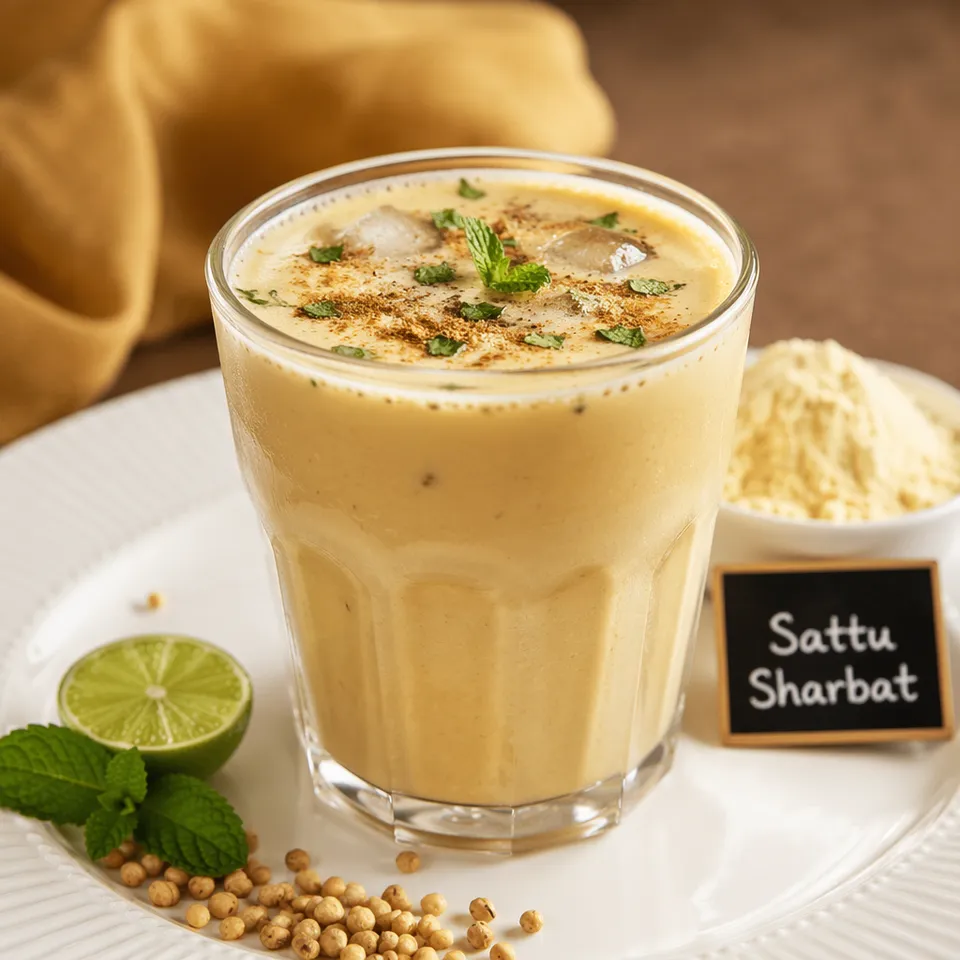
Sattu Protein Shake (Sharbat) Recipe
Macros per glass: 130 kcal | 8g protein | 20g carbs | 2g fat
This is the sattu sharbat — the format Shilpa Shetty uses on social media and the one most commonly referenced as the ₹150-vs-₹2,000 whey argument. It works best as a morning drink or pre-workout snack, not post-workout.
Method
- Add sattu to a tall glass. Add a small amount of water and stir vigorously until lump-free — sattu clumps if you add too much water at once.
- Add the remaining water, lemon juice, black salt, and cumin. Stir or use a small whisk.
- Taste and adjust salt. Add mint leaves and ice. Serve immediately — sattu settles quickly.
For a higher-protein version, add 100ml Greek yogurt (adds 6g protein, brings total to ~14g) and blend instead of stirring.
Full recipe page: Sattu Sharbat Recipe →
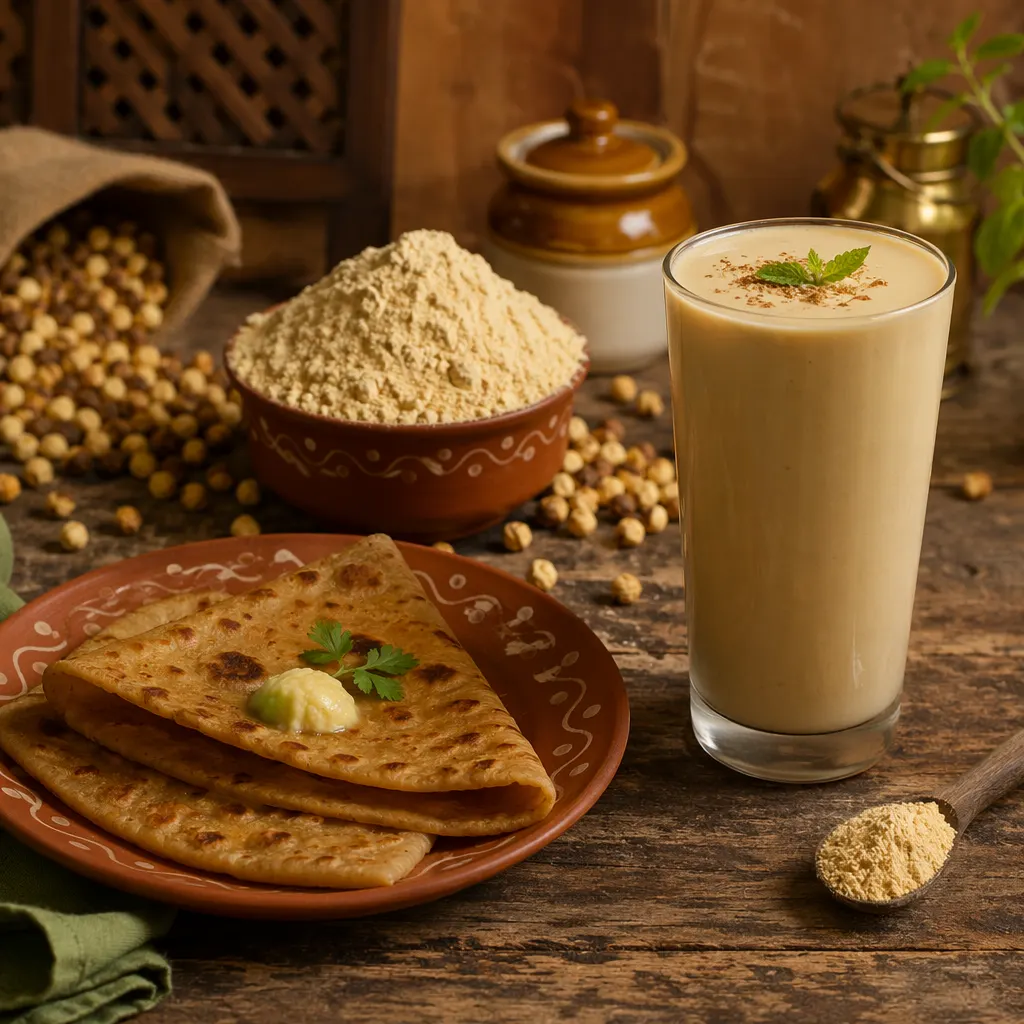
Sattu Paratha Recipe with Macros
Macros per 2 parathas + 150g curd: 380 kcal | 17g protein | 52g carbs | 9g fat
This is Bihar's original high-protein breakfast. The sattu stuffing (20g protein/100g) inside a whole wheat shell, served with thick curd on the side, builds a complete meal that covers nearly a third of a 55kg woman's daily protein target in one sitting.
Method
- Mix sattu with onion, chilli, ajwain, mustard oil, and salt. Add a teaspoon of water to bring it together into a crumbly stuffing — it should hold shape when pressed but not be sticky.
- Knead the wheat flour with water to a smooth, pliable dough. Rest for 10 minutes.
- Divide dough into 2 balls. Flatten each into a small disc, place the sattu stuffing in the centre, fold the edges over, and re-roll carefully into a paratha about 6–7 inches across.
- Cook on a hot tawa with a few drops of ghee on each side until golden brown spots appear. Serve immediately with curd.
Full recipe: Sattu Paratha with Curd →
Sattu Burfi: The Plant-Protein Mithai
Macros per 2 pieces: 300 kcal | 12g protein | 40g carbs | 10g fat
Sattu burfi is the festival-sweet angle of the sattu wave — it needs no whey, no supplements, and hits 6g protein per piece from the sattu-jaggery base alone. It is a useful option for family gatherings where you want a protein-conscious mithai that doesn't advertise itself as "fitness food."
Method
- Dry-roast sattu in a pan on low heat for 3–4 minutes, stirring constantly, until fragrant. Remove and set aside.
- Melt ghee in the same pan. Add jaggery and 2 tbsp water; stir until jaggery dissolves and forms a thick syrup. Test by dropping a little into cold water — it should form a soft ball.
- Add sattu, cardamom, and nuts to the syrup. Mix quickly — it thickens fast. Transfer to a greased tray.
- Flatten to 1.5cm thick with the back of a spoon. Cool for 20 minutes, then cut into diamond pieces.
Full recipe: Sattu Burfi →
When to Use Sattu vs When to Use Whey
The answer is almost always: use both, strategically.
- Morning drink or pre-workout: Sattu sharbat. Slow protein + fibre + electrolytes. Costs ₹3–4 per glass.
- Breakfast paratha: Sattu stuffing. 17g protein in the whole meal. Familiar and filling.
- Post-workout (within 30–45 min): Whey shake, or paneer/eggs if you avoid supplements. Sattu digests too slowly to maximise the post-workout anabolic window effectively.
- Protein gap filler between meals: Sattu burfi or sattu mixed into yogurt. Cost-efficient and filling.
- Festival / social eating: Sattu burfi. Nobody needs to know it is fitness food.
The economic case is clear. If your protein target is 120g/day and you're spending ₹4,000/month on whey, shifting two of your four daily protein servings to sattu-based meals saves roughly ₹1,500–2,000/month with minimal impact on total protein, if you keep the whey for post-workout where speed matters most.
For building a full-day meal plan around Indian protein sources including sattu, use the UltraFit360 Meal Plan Generator → — enter your calorie and protein targets and it builds a day of meals from the recipe database.
Set your targets with the free calorie and macro calculator, then build a day of meals with the meal plan generator.
Track Every Sattu Meal in Seconds
UltraFit360 has Indian foods — including sattu — in its database. Log a sattu paratha by photo or voice, or build your full day from the meal plan generator.