💡 Key Takeaways
- Total sleep time is the metric that matters most: aim for the teen 8-10 hours, especially across a 3-4 game tournament weekend, and let the wearable hold you to it.
- Read the 7-day trend, not single mornings; expect a dip after match day and across a tournament, and judge recovery by how the trend behaves over the week.
- A wearable can't replace food and sleep, so treat a low number as a prompt to fuel and rest better first, not to add more private speed training.
- Set it up with a parent and share fatigue trends with your coach; growth-plate pain is a clinician question the device can't answer.
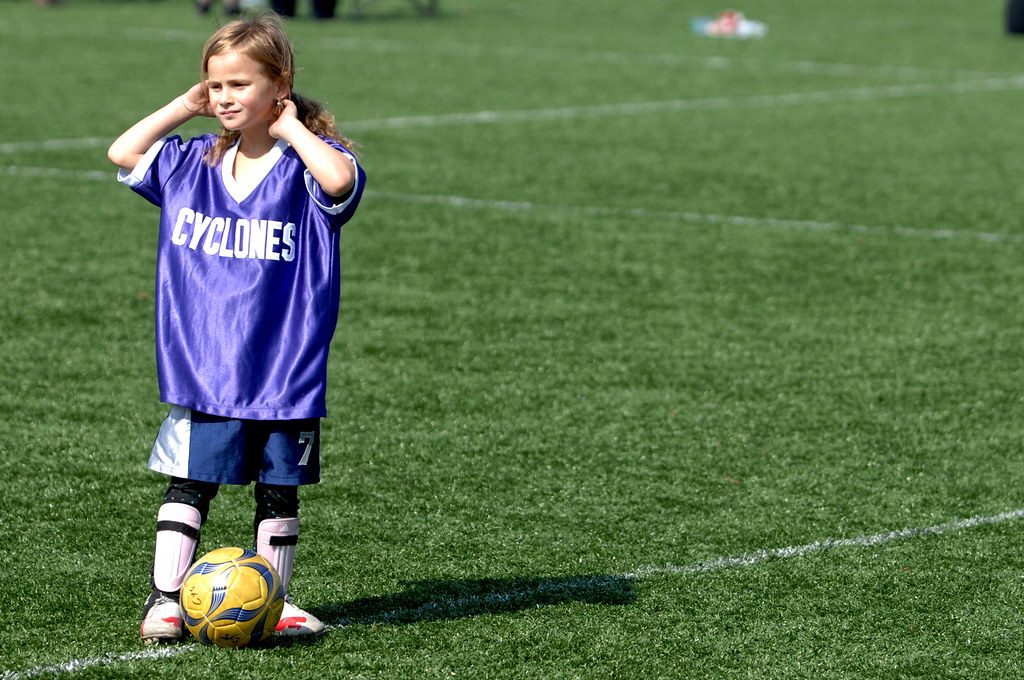
Picture a real club week. Practice Monday, Wednesday, Thursday, a match Saturday, then a Sunday tournament with three or four games stacked back to back, school and PE on top. For a growing player, how well you recover between games is the difference between sharp legs at the next showcase and a tired body limping through a growth spurt. Biometric tracking earns its keep by showing, inside that exact schedule, whether you're recovering or quietly digging a hole.
The honest framing first: at your age, this is a support tool sitting behind two non-negotiables, eating enough and sleeping enough. A wearable can't fix a fixture-packed week; it can make visible whether you're sleeping the 8 to 10 hours a teenager needs and whether recovery is keeping pace with the load. Used with a parent and your coach, that visibility helps the adults steering your training make better calls.
This page slots tracking into your actual week, from a normal training block to a four-game tournament weekend, then covers the science, the food-first order of operations, and the safety lines the data can't cross.
1. Where Tracking Fits in a Club-and-School Week
Your schedule is coach-directed, so you rarely move sessions around. What tracking adds is a read on how the fixed week is landing on you, mainly to flag fatigue to the adults who can adjust load, and to protect the recovery you do control: sleep and food. The simplest, highest-value habit is letting a wearable track your sleep each night and reading the recovery trend in the morning.
The point is to let the trend, not just the calendar, inform effort and rest. After a hard match your numbers will dip, that's expected; what matters is whether they bounce back over the following days or keep sliding. The table maps a typical club-and-school week.
| Day | Load | Sleep aim (teen) | What to watch / do |
|---|---|---|---|
| Mon practice | Moderate | 8-10 hours | Baseline trend; train normally |
| Wed/Thu practice | Moderate-hard | 9-10 hours | Expect small dips; eat and sleep well |
| Fri pre-match | Light | 9-10 hours | Prioritize sleep before Saturday |
| Sat match day | High | 9-10 hours after | Normal post-match dip; fuel and rest |
| Sun (normal) | Recovery/off | 9-10 hours | Check trend recovered before next week |
One rule that protects you: if your trend is clearly suppressed across several days, that's the signal to skip extra optional sessions, like private speed training stacked on top of a full club schedule, not to add them. Tired-trend weeks are for resting the controllable load, not piling on more.
2. Surviving a 3-4 Game Tournament Weekend
Tournament weekends are where recovery tracking proves itself, because the load is brutal and compressed. Three or four games across a Saturday and Sunday, often in summer heat with short turnarounds, builds fatigue you can't fully erase in 48 hours. The wearable won't change the schedule, but it helps you and your parents win the parts you control between games: sleep, fuel, and fluids.
Read the trend expecting it to drop, that's normal, not a reason to panic mid-tournament. The job is to blunt the slide. That means real food between games rather than snack-bar weekends, because hitting your energy needs is what keeps your legs under you for game four. It means 9 to 10 hours of sleep on the Saturday night between days. And in summer heat it means deliberate hydration, since the games pull fluids you won't replace on thirst alone.
After the weekend, the trend is useful: if HRV is still suppressed and resting heart rate elevated days later, you went deep, and the next week should start easier. Share that read with your coach, since recovery from a four-game weekend is a real training-load question, and the data turns 'I'm tired' into something the adults can plan around.
3. Why Sleep and Food Come First, Always
Strip it to the science and the order is obvious. Deep sleep is when the bulk of your overnight growth-hormone release and tissue repair happens, and for a still-growing athlete that does double duty, recovering from soccer and supporting growth. Skimping on sleep shifts your body toward breaking down rather than building up, and degrades reaction time, accuracy, and endurance, exactly what a congested fixture week demands. Teens need 8 to 10 hours, and your wearable measures total sleep time and consistency well, far better than it estimates sleep stages, so judge yourself on hours and bedtime regularity, not a perfect sleep-stage chart.
Food comes first even ahead of sleep, because relative energy needs are huge during growth spurts and no recovery tool offsets under-fueling. The order that protects a young player is easy to get backwards: eat enough first, sleep enough second, treat the tracker as a helpful third that's almost always telling you to fix one of the first two, not to train harder.
So the tracker should never become a reason to chase numbers over basics. HRV reflects nervous-system balance and readiness, not whether you've eaten or grown enough, so read it as a nudge to look at your plate and bedtime first. The basics win; the data just points you at them sooner.
4. Parents, Coaches, Privacy, and Growth-Plate Pain
Two things make youth recovery tracking different from an adult's, and both are non-negotiable. First, the adults belong in the loop. Set the device and app up with a parent and check the privacy settings, because recovery data on a minor is personal and a teen's sleep and heart-rate data shouldn't be public. Then share the fatigue trends with your coach, who can lighten a session when you've been suppressed all week. Hiding tiredness from the people steering your training wastes the whole tool.
Second, the wearable can't see the injury risks specific to your age, so don't let it. Growth-plate conditions like Osgood-Schlatter at the knee or Sever's at the heel, and the hamstring and ACL risks that rise through adolescence, are structural problems a recovery score is blind to. Pain near a joint or growth plate is a clinician's question, not a push-through-because-my-score-is-green situation. Use the data for fatigue and illness screening; use a doctor for pain.
The numbers do screen illness well, which matters in a packed season. A multi-day pattern of elevated resting heart rate, suppressed HRV, and rising breathing rate, especially with fever or feeling unwell, means rest and tell a parent, with a clinician if it continues, never play through it. And avoid the classic trap of copying a pro player's supplement-and-training routine off social media; those athletes are grown, not on a school schedule, and not posting their real fatigue. Anchored to food, sleep, and the adults in your corner, tracking keeps you progressing safely. For the bigger picture on this tech, our overview of modern fitness trends is a useful read.
5. Your Match-Week Recovery-Tracking Plan
Keep it simple and in order:
- Eat enough first, sleep 8-10 hours second, and treat the wearable as a helpful third that points you at those basics, never replaces them.
- Let the device track sleep automatically and read the 7-day trend; expect dips after matches and across tournaments, and judge recovery by how the trend behaves over the week.
- On a four-game weekend, win the controllables, real food between games, 9-10 hours on the Saturday night, and deliberate hydration in summer heat.
- Drop optional extra sessions like private speed training when the trend is suppressed; share fatigue trends with your coach so load can be adjusted.
- Set the app up with a parent and mind privacy; treat growth-plate or joint pain as a clinician question, and the elevated-RHR, low-HRV, rising-breathing illness pattern as a stop-and-rest flag.
Used like this, biometrics fit your real week instead of fighting it, mostly telling a growing player to sleep more and eat more, which through a congested fixture schedule is almost always the right answer.
🔗 Keep Reading on UltraFit360:
Match-Week Recovery-Tracking Questions
How do I handle a 4-game tournament weekend with a tracker?
Expect your recovery trend to drop across the weekend, that's normal, so don't panic mid-tournament. The tracker's value is reminding you to win the controllables between games: real food, not snack bars, 9-10 hours of sleep on the Saturday night, and deliberate hydration in summer heat. Afterward, if your trend is still suppressed days later, start the next week easier and tell your coach you went deep.
Should this come from food instead of a tracker or supplements?
Food and sleep come first, always. A wearable measures recovery; it doesn't create it, and it can't replace the large energy needs of a growing player or the 8-10 hours of sleep a teen needs. So treat a low number as a prompt to eat more and sleep more, not to add training or buy a supplement. The order that protects you: fuel first, sleep second, tracker third.
Is it appropriate at my age, and who should see the data?
It can be helpful at your age as long as it's set up with a parent and used to support food and sleep, not replace them. Recovery data on a minor is personal, so check the app's privacy settings and don't post it. And share fatigue trends with your coach, who can lighten your load when you've been run-down all week. Hiding tiredness from the adults steering your training defeats the purpose.
What does the evidence in teens actually show, and what about growth pain?
The strongest evidence is for sleep's central role in recovery and performance, and teens reliably need 8-10 hours, which trackers measure well. Beyond that, treat readiness scores as rough trend nudges, not precise figures. Crucially, a wearable can't see growth-plate problems like Osgood-Schlatter or rising hamstring and ACL risk; pain near a joint or growth plate is a clinician's question, never something to play through.
Disclaimer: This article is for educational purposes only and is not medical advice. Consult a qualified healthcare professional before starting any supplement, nutrition, or training protocol — especially if you are pregnant or breastfeeding, under 18, taking medication, or managing a health condition.
Scientific References & Clinical Sources
- Dattilo M, et al. Sleep and muscle recovery: endocrinological and molecular basis for a new and promising hypothesis. Med Hypotheses, 2011. PMID: 21550729
- Fullagar HH, et al. Sleep and athletic performance: the effects of sleep loss on exercise performance. Sports Med, 2015. PMID: 25315456
- Halson SL. Sleep in elite athletes and nutritional interventions to enhance sleep. Sports Med, 2014. PMID: 24791913
- Thun E, et al. Sleep, circadian rhythms, and athletic performance. Sleep Med Rev, 2015. PMID: 25553531
- Peake JM, et al. A Critical Review of Consumer Wearables, Mobile Applications, and Equipment for Providing Biofeedback, Monitoring Stress, and Sleep in Physically Active Populations. Front Physiol, 2018. PMID: 30002629