💡 Key Takeaways
- HYROX rewards a power-to-weight balance — enough lean mass for sleds and carries, not so much extra weight that your run splits suffer.
- Expect real composition change in weeks to months; a several-point weekly swing is glycogen and sweat, not fat gained or lost.
- Measure on a recovery day, fasted, before training — never after a long run or a sweaty station session that has drained your water.
- Cut slowly into a race block (around 0.5-1% bodyweight/week) so you shed fat while keeping the strength-endurance the stations demand.
Here is what you can expect to measure and when. The first reading gives you a precise-looking body-fat number you should treat as a rough baseline, not a fact. Across the first month of standardized measuring, a trend emerges: are you holding lean mass while body fat slowly drifts down? Over a full race block, that trend, read against your run splits and station times, tells you whether your power-to-weight is moving the right way for the format.
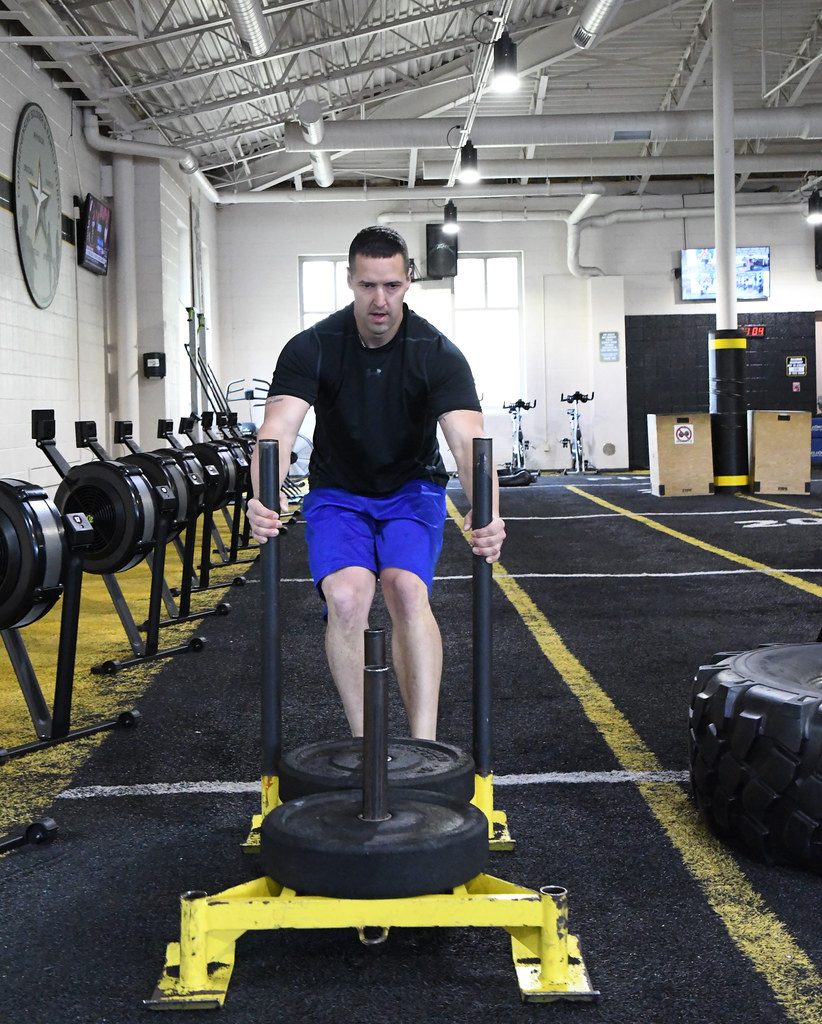
That balance is the whole game in HYROX. Too little lean mass and the sleds, carries, and wall balls grind you down. Too much non-functional weight and your 8 kilometers of running cost more oxygen and time. Composition sensors are how you watch both sides of that trade without guessing.
Below: the timeline of what the data shows, the protocol, the science of why the number swings, and the race-block scenarios where it earns its place.
1. What the Data Shows Across a Race Block
A single reading sets your starting point. Do not trust its exact value — a home BIA scale can sit several percentage points off a clinical scan, and your build is leaner and better-hydrated than the populations its equations assume. The signal is the slope across weeks, not the first number.
Over two to four weeks of consistent measuring, direction appears. Body fat trending down while your weight holds or eases slowly means you are likely losing fat and keeping lean mass — exactly what you want going into a race block, because it improves your run economy without costing you sled power. Read on a slow cadence: every two to four weeks at home, since real fat and muscle change is gradual and noise is large over short windows.
Visible composition change takes weeks to months. Meaningful fat loss runs roughly 0.25 to 1 kg per week; building lean mass is far slower. So the data you trust is a multi-week line cross-checked against performance — if your run splits hold or improve as body fat trends down and your sled times stay strong, the sensor and the clock agree.
2. Why Glycogen and Sweat Swing the Reading
BIA scales send a tiny current through you and read the resistance. Lean tissue holds water and conducts; fat resists. From that, the scale estimates your body water and back-calculates body fat. The whole number rides on hydration — and your training swings hydration hard.
Glycogen is the big mover. Every gram of muscle glycogen stores several grams of water alongside it. A long run or a heavy station session drains glycogen and water, and the scale then reads your body fat as higher. A carb-loaded day pulls water back into muscle and reads it lower. Layer on the heavy sweat losses from a compromised-running session in a warm gym, and a single week can show several points of body-fat swing with no actual change in fat.
That is why weighing the morning after a brutal session misleads you — you are dehydrated and glycogen-low, so the number spikes. Standardize to a stable recovery-day morning and read only the multi-week trend. The swings are real water; they are not real progress.
3. Your Power-to-Weight Tracking Protocol
Standardize every reading or the trend is meaningless: same device, morning, fasted, after the bathroom, before training, similar hydration. Then match the method to the question. Here is the comparison for a hybrid racer.
| Method | Typical accuracy | Best use for a HYROX athlete |
|---|---|---|
| Home BIA smart scale | Off by several body-fat points; swings with glycogen and sweat | Recovery-day weekly trend between accurate scans |
| DEXA scan | Practical reference standard; high precision, low radiation dose | Accurate lean-mass check at the start and end of a race block |
| BodPod (air displacement) | Good, no radiation; sensitive to clothing and breathing | Accurate fat-vs-lean snapshot if DEXA is unavailable |
| Skinfold calipers (trained tester) | Reliable with one consistent skilled tester | Cheap repeat surface-fat tracking across a block |
| 3D body scanner | Strong for girths; fat % approximate | Tracking leg and back muscle changes for station work |
A practical setup: DEXA to bracket a race block so you know whether you held lean mass, and a home BIA scale for the recovery-day trend in between. The DEXA gives accuracy; the scale gives direction. The two will not match — compare each against itself.
4. Race-Block Scenarios Where the Data Pays Off
- Leaning out before race day. Cut slowly — around 0.5 to 1% bodyweight per week with adequate protein and continued strength work — so you drop fat for the run without losing the lean mass your sleds and carries need. Crash dieting strips muscle and your station times collapse.
- Deciding whether to add muscle. If sleds and wall balls are your limiter, a sensor shows whether added weight is lean (helpful for power) or fat (a tax on every run kilometer). Track which one is climbing.
- Reading a post-session number. A long run or sweaty station block leaves you dehydrated, so the scale reads body fat as higher. That is fluid, not fat — wait for a standardized recovery-day morning.
- Race week. Carb loading and tapering shift water dramatically. Expect the number to move and do not act on it; it reflects glycogen and hydration, not composition.
One honest boundary: this is a tool for balancing performance, not for chasing the lowest body-fat figure. The slow, lean-mass-preserving approach is the same one shown to protect performance during deliberate weight loss. If tracking ever drives guilt or restriction, cut the frequency and judge progress by your splits and how you recover.
🔗 Keep Reading on UltraFit360:
What HYROX Athletes Ask About Body Composition Sensors
Will tracking composition help my compromised running off the sled?
Indirectly. The data does not train your legs, but it helps you arrive at races with a better power-to-weight balance — enough lean mass for the sleds, not so much extra weight that your runs cost more oxygen. By losing fat slowly while preserving lean mass through a block, you improve run economy without weakening your station work. Watch the multi-week body-fat trend against your run splits; if splits hold as fat drifts down, the balance is improving.
How do I use a composition sensor in race week?
Mostly, don't act on it. Race week means carb loading and tapering, which pull large amounts of water into muscle and swing a BIA reading by several points — all of it hydration, not fat. Keep your reading only if it is a calm habit, but ignore the race-week number; it reflects glycogen and fluid. Focus on fueling, tested race nutrition, and recovery. Return to meaningful composition trends in your build weeks after the race, not during the peak.
Does composition tracking improve my roxzone transitions?
Not directly — transitions are skill and pacing. What composition tracking does is keep your overall power-to-weight in a good place, so you carry the lean mass that makes sleds and carries feel lighter and less non-functional weight slowing your runs. A fitter power-to-weight balance means you reach each transition less gassed. The data guides your fueling and body-comp trend across a block; the roxzone work itself is practiced on the floor.
Why does my body-fat reading jump after a long-run or sled day?
Because both deplete glycogen and drive heavy sweat losses, lowering your body water — the exact thing BIA uses to estimate fat. Less water reads as more fat, even with no real change. A carb day swings it back the other way. This is normal hydration noise, not regress. Standardize to a stable recovery-day morning, fasted and before training, and read the multi-week trend, which filters the glycogen and sweat swings out of the picture.
Disclaimer: This article is for educational purposes only and is not medical advice. Consult a qualified healthcare professional before starting any supplement, nutrition, or training protocol — especially if you are pregnant or breastfeeding, under 18, taking medication, or managing a health condition.
Scientific References & Clinical Sources
- Garthe I, et al. Effect of two different rates of weight loss on body composition and strength and power-related performance in elite athletes. Int J Sport Nutr Exerc Metab, 2011. PMID: 21558571
- Burke LE, et al. Self-monitoring in weight loss: a systematic review of the literature. J Am Diet Assoc, 2011. PMID: 21185970
- Teixeira PJ, et al. Successful behavior change in obesity interventions in adults: a systematic review of self-regulation mediators. Obes Rev, 2015. PMID: 25907778