💡 Key Takeaways
- Expect to measure readiness and recovery trends — HRV, resting HR, sleep — not a simulated meet total or guaranteed PR.
- Watch the 7-day rolling HRV average to time heavy singles; suppressed for several days is a real signal to pull intensity back.
- Cardio metrics like calorie burn are weak for low-cardio strength work; trust HR and sleep-trend signals instead.
- Heavier classes carry blood-pressure considerations and water cuts distort HR/HRV — never let a wearable override a clinician on either.
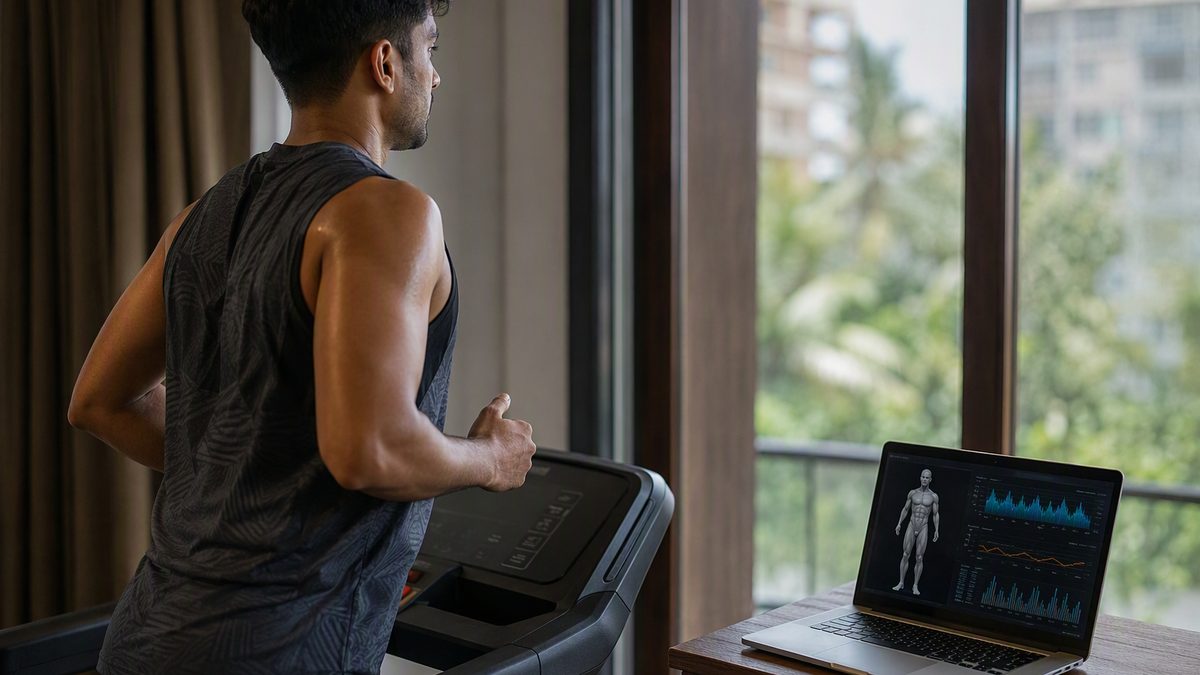
Here's what you can realistically measure and when you'll see it. In the first two to three weeks of consistent logging, a wearable builds your personal baselines for HRV, resting heart rate, and sleep. From there, the multi-week trends start telling you something useful: whether your nervous system is keeping up with heavy work, or whether the grind is catching you. That's the genuine deliverable.
What you will not measure is a simulated meet total, a forecasted PR, or your biological age. No consumer 'digital twin' validly simulates a lifter's physiology — that label usually wraps the same wearable, readiness score, and app stack in premium branding.
For an athlete whose sport is maximal force off a recovered central nervous system, knowing your readiness trend beats any pretend forecast. Let's get specific about the numbers.
1. What the Numbers Show in the First Month
Timeline matters, so here's what to expect. Days 1-14: the device collects enough data to establish your baselines — there's nothing to act on yet, and reacting to single readings this early just chases noise. Day-to-day HRV is volatile; the meaningful signal is the rolling average, which is what tracks training adaptation.
Weeks 3-6: trends become readable. A resting heart rate drifting down over weeks generally reflects improving aerobic fitness — relevant even for you, since better conditioning means fewer gassed warm-ups before a heavy single. A 7-day HRV average that stays suppressed across a heavy block flags accumulated CNS and systemic fatigue. Beyond that, the honest ceiling is autoregulation support — easing or pushing based on the trend has matched or beaten fixed programs in studies. It is not a strength simulator, and any biological-age or longevity number it shows is speculative and unvalidated.
2. Timing Heavy Singles With Your Readiness Trend
This is the practical payoff for a strength athlete. Use the rolling trend, not a single morning reading, to decide whether today's top set goes up or holds. The protocol below adapts HRV-guided autoregulation to a squat-bench-deadlift week.
| HRV/RHR trend | What it means | Heavy-day decision |
|---|---|---|
| Normal or elevated HRV | Recovered, autonomic balance good | Proceed with planned heavy single or top set |
| Suppressed 1 day only | Likely noise (alcohol, late meal, one bad night) | Train as planned; don't overreact |
| Suppressed 3+ days | Accumulated CNS/systemic fatigue | Drop to back-off intensity or convert to volume; deload if it persists |
| RHR up + HRV down | Incomplete recovery or oncoming illness | Pull the heavy work; light technique or rest |
Reading the trend protects your peak. Maxing weekly instead of peaking is a classic mistake — the trend gives you objective permission to back off before a hard session turns into a missed lift or a tweak. It also works the other way: on a genuinely green trend you can attack a top single with confidence instead of second-guessing whether you're recovered, which is its own kind of edge when the weight is near your limit and hesitation costs reps.
3. Why Your Watch's Cardio Math Misreads Strength Work
A data-first lifter should know which numbers to distrust. Consumer trackers handle steps and distance reasonably well, but energy-expenditure estimates carry large errors across devices and activities — and a powerlifting session, with long rests and low continuous movement, is a worst case. Your watch will badly underestimate the systemic cost of heavy triples.
- Ignore: the calorie readout for strength sessions; it doesn't capture CNS or metabolic load from maximal work.
- Read carefully: sleep-stage percentages aren't validated to lab standards — focus on total sleep time, where 7-9 hours supports heavy training and recovery.
- Trust most: resting-HR and HRV trends and total sleep time, the signals with the firmest footing.
Proprietary readiness and recovery scores are black boxes with limited published accuracy that varies by brand, so treat the score as one input, not a verdict. For a wider look at where data-guided training is heading, see our AI fitness coaching guide.
4. Volume Blocks vs Peaking: What the Trend Tells You
The data reads differently across a powerlifting periodization, so expect that. During an off-season hypertrophy or volume block, total weekly tonnage is high and a slightly suppressed recovery trend is normal and even expected — you're deliberately accumulating fatigue to drive adaptation. Reacting to every dip here would have you deloading constantly and never building the work capacity that supports a bigger total. Let the trend run a little low; what you watch for is a sustained, deepening suppression that signals you've crossed from productive overreaching into a hole.
Peaking is the opposite. As intensity climbs toward openers and attempts and volume drops, your HRV trend should recover and your resting heart rate settle — that's the sign your taper is working and your nervous system is freshening for max efforts. If it doesn't recover as you back off, that's meaningful: either the peak is too aggressive or fatigue ran deeper than planned. Read the phase before you read the number.
- Volume/hypertrophy block: a mildly suppressed HRV trend is normal; only a sustained, deepening suppression means you've dug too deep.
- Strength/intensity block: expect a stable to slightly-down trend; a resting heart rate creeping up signals recovery isn't keeping pace with the load.
- Peak and taper: HRV should rise and resting heart rate settle — if there's no rebound as you back off, the peak is too aggressive.
This is the same HRV-guided autoregulation logic, applied at the block level rather than the single session.
5. Water Cuts, Blood Pressure, and Hard Limits
Two safety realities change how a lifter should read this data. First, weight-class water cuts distort everything: dehydration alters heart rate and HRV, so during a cut your readiness scores become unreliable and shouldn't drive training decisions — plan rehydration around your weigh-in, and don't trust the numbers mid-cut. Second, heavier classes carry real blood-pressure considerations, and heavy valsalva loading interacts with that. A wearable's heart-rate or 'cardiovascular' readout is not a medical assessment.
The hard line: these tools are explicitly not medical devices, are not diagnostic, and are not FDA-cleared for the metrics they show. They can't dose medication, clear a cut, or evaluate blood pressure. If you're in a heavier class or have any cardiovascular concern, that's clinician territory. And privacy is worth a check — most consumer fitness apps aren't covered by HIPAA, so confirm who owns your data, whether it's sold or used to train the vendor's models, and your deletion rights before pouring everything into one profile.
Powerlifters Ask the Data Questions
How much does this actually add to my total?
Directly, nothing — a tracker doesn't make you stronger. Its value is indirect: by reading your readiness trend, you time heavy singles for recovered days and back off before fatigue causes missed lifts or tweaks. Autoregulating intensity off a rolling HRV trend has matched or beaten fixed programs in studies. So it can help you train your hard days well and peak on time, but it won't simulate or guarantee a total.
Do I time heavy days off the recovery score?
Use the trend, not a single score. A 7-day rolling HRV average that's normal or elevated supports a planned heavy single; one suppressed day is usually noise and not worth changing for. Three-plus suppressed days, especially with an elevated resting heart rate, is a real signal to drop to back-off work or deload. Treat any proprietary recovery score as one input, since they're black boxes with brand-dependent accuracy.
Are the readiness numbers any good during a water cut?
No — distrust them during a cut. Dehydration distorts heart rate and HRV, so your readiness and recovery scores become unreliable exactly when you're manipulating water for weigh-ins. Don't let those numbers drive training or cutting decisions in that window. Plan your rehydration strategy around the weigh-in based on experience and, ideally, qualified guidance. A wearable can't manage a weight cut, and shouldn't be trusted to try.
Can it tell me anything about my blood pressure?
Not in a medical sense. These tools are explicitly not medical devices and aren't diagnostic, and a wrist heart-rate readout is not a blood-pressure assessment. Heavier lifters carry real blood-pressure considerations, especially with heavy valsalva loading, but that's clinician territory — get it properly measured and monitored. Never let a consumer metric reassure you out of, or override, medical advice on cardiovascular health.
Disclaimer: This article is for educational purposes only and is not medical advice. Consult a qualified healthcare professional before starting any supplement, nutrition, or training protocol — especially if you are pregnant or breastfeeding, under 18, taking medication, or managing a health condition.
Scientific References & Clinical Sources
- Kiviniemi AM, et al. Daily exercise prescription on the basis of HR variability among men and women. Int J Sports Med, 2007. PMID: 17345075
- Plews DJ, et al. Training adaptation and heart rate variability in elite endurance athletes: opening the door to effective monitoring. Sports Med, 2013. PMID: 23852425
- Düking P, et al. Criterion-Validity of Commercially Available Physical Activity Tracker to Estimate Step Count, Covered Distance and Energy Expenditure during Sports Conditions. Front Physiol, 2017. PMID: 29018355
- Peake JM, et al. A Critical Review of Consumer Wearables, Mobile Applications, and Equipment for Providing Biofeedback, Monitoring Stress, and Sleep in Physically Active Populations. Front Physiol, 2018. PMID: 30002629
- Burke LE, et al. Self-monitoring in weight loss: a systematic review of the literature. J Am Diet Assoc, 2011. PMID: 21185970

