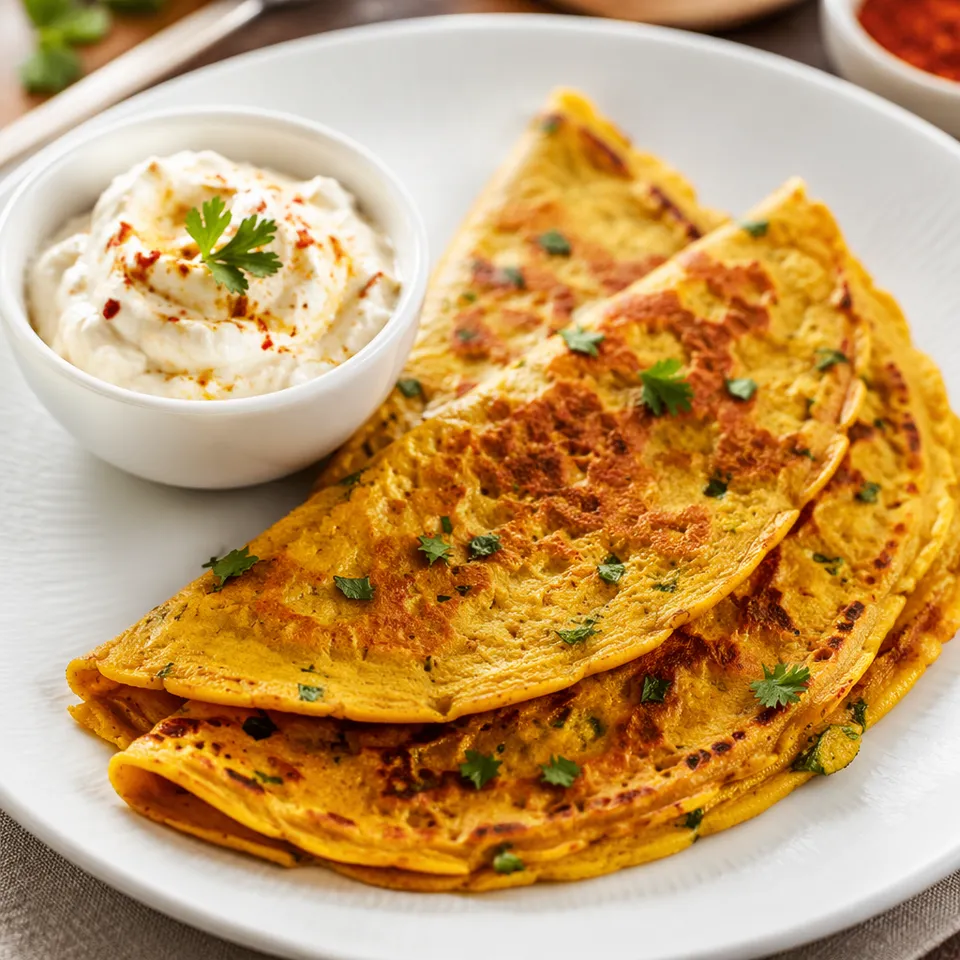
💡 Quick Answer
The best low glycemic Indian breakfasts are built on dal, eggs, paneer or curd rather than rice, rava or white bread. Moong or besan chilla, pesarattu, sprouts, egg bhurji and vegetable daliya cause a slower, smaller rise in blood sugar. Aim for 15–25 g protein, some fibre, and keep sugar out of tea.
- Legumes such as moong, chana and rajma have some of the lowest GI values of any carb food.
- Pairing a carb with protein, fat and fibre lowers the overall blood sugar response.
- You can keep poha, idli and upma by shrinking the portion and adding dal, curd or eggs.
- If you take diabetes medicines, check with your doctor before big changes.
If you have diabetes or prediabetes, or you are simply trying to lose weight, breakfast is where many Indian diets go wrong. A plate of white rice idli, plain poha or bread with jam is mostly fast-digesting starch. Your blood sugar rises quickly, falls again, and you are hungry by mid-morning. A low glycemic Indian breakfast keeps the same flavours but changes the base of the meal.
What Does Low Glycemic Mean?
The glycemic index (GI) ranks carb foods by how fast they raise blood glucose compared with pure glucose. Low GI is 55 or below, medium is 56–69, and high is 70 or above. In the international GI tables, pulses sit very low (chickpeas, kidney beans and lentils are typically in the 20s and 30s), while white rice, white bread and most cornflakes are high.
GI is only half the story. Glycemic load (GL) also counts how much carb you eat, so a small portion of a medium-GI food can be fine. And the GI of a whole meal drops when you add protein, fat and fibre. That is why what you eat with your poha matters as much as the poha itself.
Indian foods are also hard to pin to one GI number. The same dish changes with the rice variety, how long it is cooked, how finely the batter is ground and whether it is eaten hot or cooled. Use GI as a direction, not a precise score.
Best Low Glycemic Indian Breakfasts
Protein and calories are estimates from IFCT 2017 and USDA values for the quantities shown. "Glycemic impact" is a practical rating based on the main ingredients and the protein and fibre in the meal, not a lab-measured GI.
| Breakfast | Serving | Protein | Calories | Glycemic impact |
|---|---|---|---|---|
| Moong dal chilla + curd | 2 chillas (50 g dry dal) + 100 g curd | ~15 g | ~280 kcal | Low |
| Besan chilla with veg | 2 chillas (40 g besan), 1 tsp oil | ~9 g | ~200 kcal | Low |
| Pesarattu | 2 dosas from 60 g whole moong | ~14 g | ~260 kcal | Low |
| Sprouts chaat | From 60 g dry whole moong | ~14 g | ~210 kcal | Low |
| Vegetable daliya (broken wheat) | 40 g daliya cooked with veg + 100 g curd | ~8 g | ~220 kcal | Low to medium |
| Steel-cut oats in milk with nuts | 40 g oats, 200 ml toned milk, 10 g almonds | ~13 g | ~330 kcal | Low to medium |
| Egg bhurji + 1 multigrain roti | 3 eggs, 1 tsp oil | ~23 g | ~390 kcal | Low |
| Paneer bhurji + salad | 100 g paneer, veg | ~20 g | ~380 kcal | Low |
| Ragi dosa + sambar | 2 dosas + 1 bowl sambar | ~10 g | ~300 kcal | Medium |
| Idli + sambar | 2 idlis + 1 big bowl sambar | ~11 g | ~250 kcal | Medium |
Dal-based breakfasts: chilla, pesarattu, adai
Moong, besan and mixed-dal batters are the backbone of a diabetic-friendly Indian breakfast. They are high in protein (dry moong dal is about 24 g per 100 g) and fibre, and pulses have low GI values. Pesarattu from Andhra and adai from Tamil Nadu are traditional examples. Add grated vegetables to the batter and cook with minimal oil.
Eggs and paneer
Eggs and paneer contain almost no carbohydrate, so on their own they barely move blood sugar. Pair them with one multigrain or jowar roti, or with vegetables, rather than with several slices of white bread or pav.
Whole grains: daliya, oats, millets
Broken wheat (daliya), steel-cut or rolled oats and millets like ragi, jowar and bajra have more fibre than refined rava or maida. They are not magic, though. Ragi flour, for example, is finely milled and can raise blood sugar quickly. Keep grain portions moderate and always add a protein: curd, milk, eggs, paneer or dal.
Easy Swaps for Common Indian Breakfasts
| Usual breakfast | Lower-glycemic swap | Why it helps |
|---|---|---|
| Plain poha | Poha with peas, peanuts and a side of curd or 2 eggs | Protein, fat and fibre slow how fast the rice flakes are absorbed |
| Rava upma | Vegetable oats upma or rava upma with soya granules | More fibre and protein per plate |
| 3–4 rice idlis | 2 idlis + extra sambar, or moong dal / ragi idli | Dal raises protein and lowers the share of rice |
| Aloo paratha with butter | Paneer, methi or sattu paratha with curd | Less potato, more protein |
| White bread toast + jam | Besan or moong chilla with mint chutney | Legume base instead of refined flour and sugar |
| Cornflakes with sugar | Rolled or steel-cut oats cooked in milk, with nuts | Less processed oats are digested more slowly |
| Sweet chai + biscuits | Unsweetened chai + roasted chana or a boiled egg | Removes added sugar, adds protein |
How to Build a Low GI Breakfast Plate
- Protein first: 15–25 g from dal batter, eggs, paneer, curd, soya or sprouts.
- Fibre next: vegetables in the batter or on the side; a whole fruit instead of juice.
- A modest carb: one roti, one small bowl of poha or daliya, or two idlis rather than four.
- Some fat: a teaspoon of oil or ghee, a few nuts or seeds. Fat slows digestion but adds calories fast.
- No added sugar: unsweetened tea or coffee. Sugar in two cups of chai can add 20–30 g of sugar a day.
Regional Ideas
- South India: pesarattu, adai, moong dal idli, vegetable uthappam with a thick sambar, ragi dosa with extra sambar.
- North India: besan or moong chilla, paneer-stuffed paratha with curd, sprouts chaat, vegetable daliya.
- West India: methi thepla with curd (watch the oil), handvo, khaman made with less sugar, moong usal.
- East India: sattu drink without sugar, chana with a boiled egg, vegetable chilla.
A Simple Morning Routine for Steadier Sugar
Eating breakfast at a regular time, avoiding sweet drinks first thing, and walking for 10–15 minutes after the meal all help. A short walk after eating is one of the easiest ways to blunt a post-meal glucose rise, and it fits an Indian morning well. If you want to see your own response, a glucometer reading two hours after breakfast, or a CGM, shows which dishes suit you. Our guide to blood glucose monitoring explains how.
For more breakfast ideas with higher protein, see our list of high protein Indian breakfasts. If you have prediabetes, our guides on an Indian diet for insulin resistance and intermittent fasting for prediabetes cover the rest of the day.
Frequently Asked Questions
Which Indian breakfast is best for diabetics?
Dal-based breakfasts such as moong or besan chilla, pesarattu and adai, plus eggs, paneer and sprouts, are among the best. They are high in protein and fibre and have a low glycemic impact. Pair them with vegetables and curd.
Is poha good for diabetes?
Plain poha is mostly rice and raises blood sugar fairly quickly. A small bowl with peas, peanuts and vegetables, eaten with curd or eggs, is a reasonable option. Avoid large portions and sugar.
Is idli low glycemic?
Rice idli is usually medium to high GI. Eating two idlis with a big bowl of dal-rich sambar, or choosing moong dal or mixed-dal idli, lowers the overall glycemic impact.
Are oats good for a diabetic Indian breakfast?
Steel-cut or rolled oats cooked in milk or as vegetable upma are a fair choice. Instant flavoured oats are more processed and often sweetened. Keep the portion to about 40 g dry and add protein.
What should diabetics avoid at breakfast?
Limit white bread, jam, sweetened cereals, fruit juice, sugary chai, biscuits, and large portions of rice-based dishes or aloo paratha. These raise blood sugar quickly and do not keep you full for long.
This article is general information, not medical advice. If you have diabetes or take glucose-lowering medicines, talk to your doctor or a registered dietitian before changing your diet.
Set your targets with the free calorie and macro calculator, then build a day of meals with the meal plan generator.
Track Indian Meals in Seconds
Snap a photo of your thali, tiffin or chilla and UltraFit360 estimates calories and protein for Indian dishes, so you can see exactly where your day stands.