💡 Quick Answer
A good high protein Indian breakfast gives 20–30 g of protein for roughly 300–450 kcal. The easiest ways to get there are moong or besan chilla with paneer, egg or paneer bhurji, soya upma, sprouts, and a hung curd bowl. Plain poha, upma or two idlis usually give only 5–8 g.
- Aim for 20–30 g protein at breakfast; 35 g if you lift and weigh over 75 kg.
- Vegetarian anchors: paneer, moong dal, besan, soya, hung curd, sattu.
- Upgrade poha and upma with peanuts, soya or curd instead of dropping them.
- For weight loss, keep breakfast around 300–400 kcal and watch oil and ghee.
Most Indian breakfasts are built on carbs: poha, upma, idli, bread, paratha. They taste great, but a plate of plain poha has only about 5 g of protein (50 g dry poha is ~3.3 g, per IFCT values). That is why you feel hungry again by 11 am. A high protein breakfast fixes this by putting a protein food at the centre of the plate and adding the carb around it.
This guide gives you 12 Indian breakfasts with the protein and calories for each serving, then shows how to pick one depending on whether you are vegetarian, trying to lose weight, or cooking for a busy weekday morning.
How Much Protein Should Breakfast Have?
For most adults who train, 20–30 g of protein at breakfast is a sensible target. That is roughly a quarter of a daily goal of 1.2–1.6 g per kg body weight, which is the range most sports nutrition guidance uses for people who lift. A 65 kg person aiming for 1.4 g/kg needs about 90 g a day, so 20–25 g at breakfast takes a real chunk out of it. If your daily target is unclear, work it out with the protein calculator.
Protein at breakfast also helps with appetite. It is the most filling macronutrient per calorie, so a 25 g protein breakfast makes it easier to skip the biscuit-and-chai snack mid-morning.
12 High Protein Indian Breakfasts (Protein and Calories)
Values below are estimates built from IFCT 2017 and USDA data for the stated raw or dry quantities: paneer ~18.9 g protein per 100 g, besan ~22 g, dry moong dal ~24 g, dry soya chunks ~52 g, a large egg ~6.3 g, and a medium phulka (about 30 g atta) ~3.5 g and ~100 kcal. Brands, oil and portion size will move these numbers, so treat them as a guide. For more foods, see the Indian food calories and protein chart.
| Breakfast (1 serving) | What goes in | Protein | Calories |
|---|---|---|---|
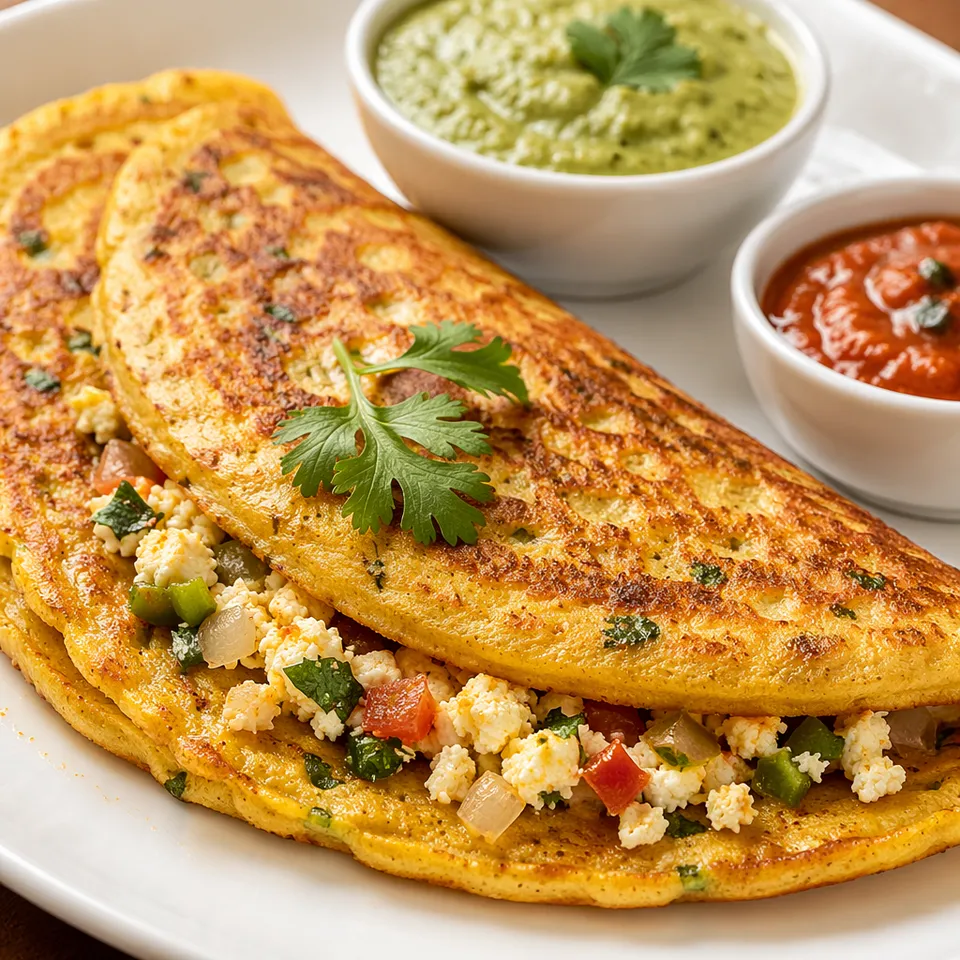
| Besan chilla, paneer-stuffed | 2 chillas from 40 g besan, 50 g paneer, veg, 1 tsp oil | ~18 g | ~350 kcal |
| Moong dal chilla with paneer | 50 g dry moong dal batter, 50 g paneer, 1 tsp oil | ~21 g | ~370 kcal |
| Paneer bhurji + 1 roti | 100 g paneer, onion-tomato, 1 tsp oil, 1 phulka | ~23 g | ~480 kcal |
| Egg bhurji + 1 roti | 3 whole eggs, 1 tsp oil, 1 phulka | ~23 g | ~390 kcal |
| Masala omelette + toast | 2 whole eggs + 3 whites, 2 slices brown bread | ~29 g | ~360 kcal |
| Sprouts chaat | 60 g dry whole moong, sprouted, onion, tomato, lemon | ~14 g | ~210 kcal |
| High-protein poha | 50 g poha, 15 g peanuts, 1 tsp oil + 2 boiled eggs (or 150 g hung curd) | ~20 g | ~450 kcal |
| Soya upma | 40 g rava + 30 g soya granules, veg, 1 tsp oil | ~20 g | ~320 kcal |
| Greek yogurt / hung curd bowl | 200 g plain Greek yogurt or hung curd, 1 fruit, 10 g seeds | ~20 g | ~300 kcal |
| Sattu drink + boiled eggs | 40 g sattu in water with lemon, jeera + 2 eggs | ~20 g | ~300 kcal |
| Pesarattu | 2 dosas from 60 g whole moong, 1 tsp oil, ginger chutney | ~15 g | ~260 kcal |
| Overnight oats with whey | 40 g oats, 200 ml toned milk, 1 scoop whey | ~35 g | ~390 kcal |
Chillas: the easiest vegetarian win
Besan and moong dal are both around 22–24 g protein per 100 g dry, so a batter made from 40–50 g of either already gives 9–12 g before you add anything. Stuff it with 50 g grated paneer and you are at 18–21 g. Add grated carrot, spinach, onion and coriander to the batter for volume. Cook on a non-stick tawa with one teaspoon of oil, not a ladle.
Paneer bhurji and egg bhurji
Both cook in 10 minutes. Full-fat paneer is about 305 kcal per 100 g, so paneer bhurji is filling but calorie-dense; if you are cutting, use 75 g paneer plus 50 g crumbled tofu, or buy low-fat paneer. Egg bhurji with three eggs gives about 19 g protein from the eggs alone. If you want more protein for fewer calories, swap one whole egg for two whites.
Making poha and upma high protein
You do not have to give up poha or upma. Cook 50 g poha with a small handful of peanuts and serve two boiled eggs or a bowl of hung curd on the side. For upma, replace a third of the rava with soya granules; 30 g dry soya adds about 15 g protein and blends right into the texture. Adding sprouted moong or green peas also helps a little.
Sprouts, sattu and pesarattu
Sprouted whole moong is cheap and quick if you soak it the night before. Sattu (roasted chana flour) mixed with water, lemon, roasted jeera and black salt is a traditional Bihar and UP breakfast drink that is easy to carry to work. Pesarattu, the Andhra green moong dosa, is a good South Indian option that gives much more protein than a rice-based dosa.
Greek yogurt and hung curd bowls
Regular curd has about 3–3.5 g protein per 100 g. Straining it overnight into hung curd roughly doubles to triples the protein density, which is why plain Greek yogurt sits near 9–10 g per 100 g. A 200 g bowl with fruit and a spoon of seeds is a no-cook breakfast for summer. Skip the flavoured, sweetened tubs.
High Protein Veg Breakfast
Vegetarians usually struggle most with protein at breakfast because eggs are off the table. Build it on one of these: paneer, moong dal or besan batter, soya granules, hung curd or sattu. Pair two of them when you can, for example a moong chilla with a glass of milk, or soya upma with a bowl of curd. If you still fall short across the day, a scoop of whey in milk or overnight oats adds about 24 g; see our guide to whey protein for vegetarians.
High Protein Breakfast for Weight Loss
For fat loss, the goal is high protein and moderate calories, roughly 300–400 kcal. The best picks from the table are soya upma, sprouts chaat, the Greek yogurt bowl, the omelette with toast, and moong chilla. Hidden calories come from oil, ghee on rotis, butter on toast, sugar in chai and peanut toppings. One tablespoon of ghee is about 120 kcal, so watch the tadka. Pair breakfast with a sensible calorie target from the calorie calculator, and check how much your rotis add with our guide to calories in chapati.
High Protein Breakfast for Women
Many Indian women eat well under their protein needs, especially when breakfast is tea and biscuits or plain poha. A 55 kg woman who strength trains needs about 65–90 g a day. A 20 g breakfast covers a quarter of that. Easy options that need little cooking: a hung curd bowl prepared the night before, a sattu drink, or two besan chillas with curd. Women with PCOS or thyroid issues can use the same breakfasts; see our PCOS diet plan and thyroid diet guides for the rest of the day.
Sample Breakfasts by Goal
| Goal | Breakfast | Approx protein |
|---|---|---|
| Vegetarian, gym day | 3 moong dal chillas with 50 g paneer + 200 ml toned milk | ~30 g |
| Weight loss, 1,500 kcal day | Soya upma + 1 cup plain curd | ~24 g |
| Women, busy morning | Greek yogurt bowl with fruit and seeds (made the night before) | ~20 g |
| Eggetarian | Egg bhurji (3 eggs) + 1 phulka + cucumber | ~23 g |
| Office commute | Sattu drink in a bottle + 2 boiled eggs or 30 g roasted chana | ~14–20 g |
Prep Tips for Busy Mornings
- Soak once, use twice: soak moong dal at night, grind half for chilla batter and sprout the other half.
- Batter keeps: chilla batter stays good in the fridge for 2 days.
- Boil eggs in bulk: six eggs on Sunday cover three breakfasts.
- Hang curd overnight: tie curd in a muslin cloth over a bowl in the fridge before bed.
- Keep a backup: roasted chana, sattu and a jar of peanuts for days you cannot cook.
For more recipes with full macros, browse the UltraFit360 recipe library, including moong dal chilla, besan chilla with hung curd and protein poha.
Frequently Asked Questions
Which Indian breakfast has the most protein?
Among everyday options, overnight oats with a scoop of whey (about 35 g), a masala omelette with egg whites (about 29 g), and paneer or egg bhurji with a roti (about 23 g) are the highest. Moong dal chilla with paneer gives about 21 g.
What is a high protein veg breakfast in India?
Moong dal or besan chilla stuffed with paneer, soya upma, sprouts chaat, a hung curd bowl and a sattu drink are good vegetarian choices. Each gives roughly 14 to 21 g protein per serving, more if you add milk or curd on the side.
Is poha a high protein breakfast?
No. A normal plate of poha made from 50 g poha has only about 3 to 5 g protein. Add peanuts and serve it with two boiled eggs or a bowl of hung curd to bring it to around 20 g.
How much protein should I eat at breakfast?
Around 20 to 30 g works for most adults who exercise. That is about a quarter of a daily target of 1.2 to 1.6 g protein per kg of body weight.
What is the best breakfast for weight loss in India?
Pick a breakfast with 20 g or more protein and about 300 to 400 kcal, such as soya upma, moong chilla, sprouts chaat or a Greek yogurt bowl. Keep oil to a teaspoon and skip sugar in tea.
Set your targets with the free calorie and macro calculator, then build a day of meals with the meal plan generator.
Track Indian Meals in Seconds
Snap a photo of your thali, tiffin or chilla and UltraFit360 estimates calories and protein for Indian dishes, so you can see exactly where your day stands.