Quick Answer
A skinny fat woman does not need less food and more cardio; she needs muscle. Lift 3 days a week, eat about 0.7 to 1 g of protein per pound of goal weight (roughly 100 to 140 g a day for a 140 lb goal), stay at maintenance or a 10 percent deficit, and track your waist and photos instead of the scale. Updated November 2026.
Key Takeaways
- Years of cardio and low calories can cost muscle as well as fat, which leaves you lighter but still soft.
- Lift 3 times a week and add weight or reps steadily; that is what builds the shape you are missing.
- Protein target: 0.7 to 1 g per lb of goal weight. Calories: maintenance or about 10 percent below.
- The scale barely moves on a recomposition. Use waist, photos and strength numbers.
1. What does "skinny fat" actually mean?
"Skinny fat" is slang, not a diagnosis. It describes someone at a normal or low scale weight who carries a fairly high share of body fat and very little muscle, so they look soft rather than lean. Researchers call a version of it normal-weight obesity. The scale and the BMI chart both say you are fine, but the mirror and a tape measure disagree.
The usual signs: clothes fit loosely on the shoulders but snug at the waist and hips, arms and legs look thin with no shape, and you have never done much strength training. It is common among women who have spent years doing cardio and eating very little.
2. Why did lots of cardio and low calories make it worse?
Eating very little and doing mostly cardio gives your body no reason to keep muscle. When you lose weight without lifting and without enough protein, a meaningful share of what you lose is muscle, not just fat. You get lighter, but your muscle-to-fat ratio does not improve, and it can get worse. That is how someone ends up smaller on the scale and still "soft."
It also feeds itself. Less muscle means a lower daily calorie burn and lower strength, so you feel tired, train less intensely, and the plan to cut calories further seems logical. Each round leaves you with less muscle to build shape from.
There is good evidence that the opposite works. In a 2016 trial by Longland and colleagues, young men on a hard calorie deficit with intense training who ate higher protein (about 2.4 g/kg a day, roughly 1.1 g per lb) gained lean mass while losing fat, compared with a lower protein group who held lean mass. That trial was in men, so treat it as supporting evidence rather than a promise, but the mechanism is not sex-specific: resistance training plus protein tells the body to keep and build muscle.
3. What is the fix for a skinny fat woman?
Four things, in this order of importance:
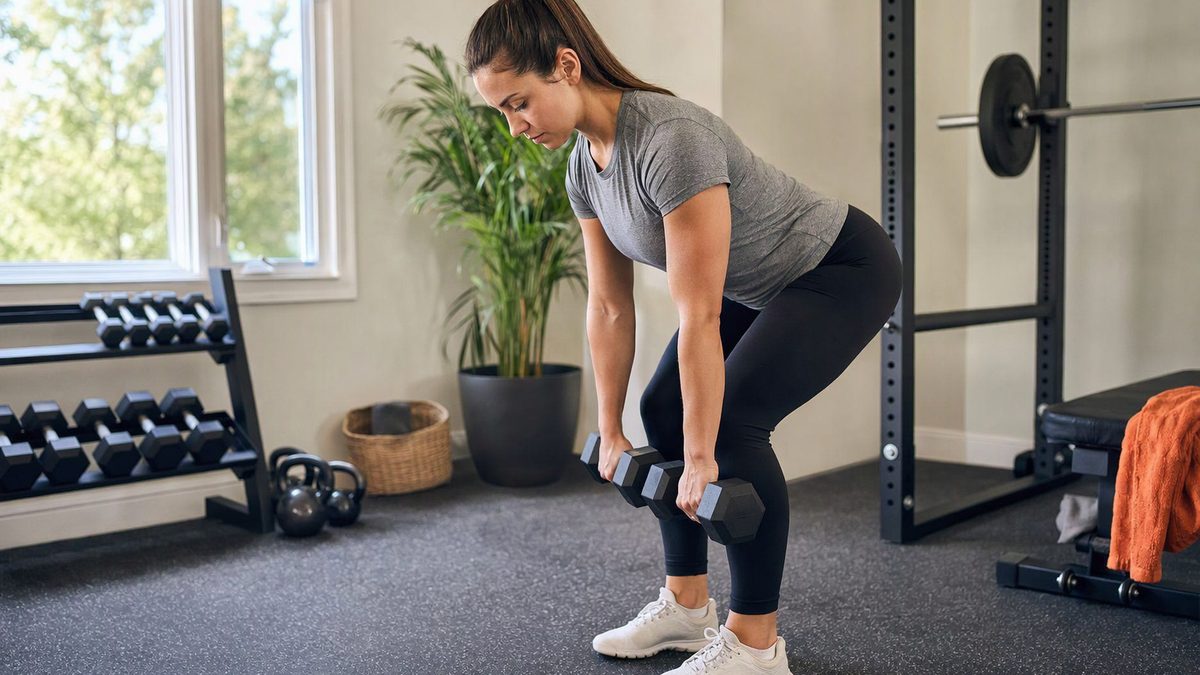
- Lift 3 days a week. Full-body or lower/upper/full sessions of about 45 to 60 minutes. Muscle is the thing you are missing, and lifting is the signal that builds it. See our progressive overload guide for how to add weight over time.
- Eat enough protein. A 2018 meta-analysis by Morton and colleagues found that muscle gains from training levelled off at about 1.6 g/kg a day (0.7 g per lb of body weight). Aim for 0.7 to 1 g per lb of your goal weight. For a goal of 140 lb (64 kg), that is roughly 98 to 140 g a day.
- Eat at maintenance or a small deficit. About 10 percent below maintenance, or exactly at it. Beginners can build muscle at maintenance, which is the point of body recomposition. Crash dieting is what got you here.
- Keep cardio modest. Walking 7,000 to 10,000 steps a day is plenty. One or two easy cardio sessions are fine if you enjoy them, but they are no longer the main plan.
This is the same approach as body recomposition: slow, visible change in shape rather than a fast change in weight. Men in the same position can use our skinny fat workout plan.
4. What should a 3-day lifting week look like?
Here is a simple beginner template. RIR means reps in reserve: how many more good reps you could do before failure. "RIR 2" means stop with 2 reps left in the tank. Rest 90 to 120 seconds between sets on the big lifts. Choose a weight where the last rep or two is hard but your form holds.
| Day | Exercise | Sets x reps | RIR |
|---|---|---|---|
| Day 1: Lower | Goblet squat | 3 x 8-10 | 2 |
| Day 1: Lower | Romanian deadlift (dumbbells) | 3 x 8-10 | 2 |
| Day 1: Lower | Walking lunge | 2 x 10 per leg | 2 |
| Day 1: Lower | Hip thrust | 3 x 10-12 | 1-2 |
| Day 1: Lower | Standing calf raise | 2 x 12-15 | 1 |
| Day 2: Upper | Dumbbell bench press (or push-up) | 3 x 8-10 | 2 |
| Day 2: Upper | Lat pulldown | 3 x 8-12 | 2 |
| Day 2: Upper | Dumbbell shoulder press | 3 x 8-10 | 2 |
| Day 2: Upper | Seated cable row | 3 x 10-12 | 2 |
| Day 2: Upper | Lateral raise | 2 x 12-15 | 1 |
| Day 3: Full body | Leg press (or barbell squat) | 3 x 8-10 | 2 |
| Day 3: Full body | Incline dumbbell press | 2 x 10 | 2 |
| Day 3: Full body | Single-arm dumbbell row | 2 x 10 per side | 2 |
| Day 3: Full body | Bulgarian split squat | 2 x 10 per leg | 2 |
| Day 3: Full body | Plank | 2 x 30-45 seconds | n/a |
Add a rep or a little weight whenever you hit the top of the range on every set. Run it for 8 to 12 weeks before judging it. Beginners can progress quickly in the first few months, so it is normal for the weights to climb every week or two at the start.
5. How do I track progress if the scale barely moves?
On a recomposition, the scale is the least useful number. You can lose fat and gain muscle and weigh the same. Track these instead:
- Waist measurement at the navel, every 2 weeks, same time of day.
- Photos every 2 to 4 weeks in the same light, pose and clothing. Our progress photography guide covers how.
- Strength: the weights and reps in your log. If they are rising, you are building muscle.
- Weekly average weight, not daily readings, which swing with water and food.
If you want those in one place, the UltraFit360 app logs workouts and weight, shows weekly averages, and keeps progress photos side by side.
6. What should I eat on a typical day?
Aim for 3 to 4 meals with 25 to 40 g of protein each: Greek yogurt or eggs at breakfast, chicken, fish, tofu or lean beef at lunch and dinner, and a protein snack such as cottage cheese or a shake. Fill the rest with vegetables, fruit, potatoes or rice, and olive oil. You do not need to eat perfectly; you need to hit your protein target most days and not under-eat. Our real-life macro tracking post shows how to do this without obsessing.
7. How long until I look different?
Strength usually improves within 2 to 4 weeks. Most people notice shape changes, such as firmer shoulders, glutes and a tighter waist, after about 8 to 12 weeks of steady training and eating. It is slower than crash dieting looks on the scale, but the result keeps. Expect your clothing size to change before your weight does.
Bottom line
If you are a skinny fat woman, the answer is not less food and more cardio. Lift three times a week, eat about 0.7 to 1 g of protein per pound of goal weight, stay at maintenance or a small deficit, and judge progress by your waist, photos and strength instead of the scale. This is not medical advice; if you have a history of disordered eating, work with a professional before changing how you eat.
Related reading
8. Frequently Asked Questions
Q1: What is a skinny fat woman?
A1: A woman whose weight looks normal or low but who has little muscle and a relatively high body fat percentage, so she looks soft rather than lean. It is slang, and the clinical term is closer to normal-weight obesity.
Q2: How do you fix being skinny fat as a woman?
A2: Lift weights 3 days a week, eat roughly 0.7 to 1 g of protein per pound of goal weight, stay at maintenance or a small deficit of about 10 percent, and keep cardio to walking and a couple of easy sessions. Track waist, photos and strength.
Q3: Should a skinny fat woman cut or bulk?
A3: Neither at first. Eat at maintenance or a small deficit and focus on lifting. Beginners can build muscle and lose fat at the same time, which is called recomposition.
Q4: How much protein does a skinny fat woman need?
A4: Roughly 0.7 to 1 g per pound of goal body weight a day, which is about 98 to 140 g for a 140 lb (64 kg) goal. Research suggests muscle gains plateau near 0.7 g per lb for most people.
Q5: Will lifting weights make me bulky?
A5: No. Women build muscle slowly, and a recomposition plan at maintenance calories adds firmness and shape rather than size. Most people who worry about bulk never gain it by accident.
Q6: Does cardio make you skinny fat?
A6: Cardio alone does not, but lots of cardio combined with low calories, low protein and no lifting can cost you muscle along with fat, which leaves your body fat percentage high.
Scientific References & Clinical Sources
- Morton RW, et al. A systematic review, meta-analysis and meta-regression of the effect of protein supplementation on resistance training-induced gains in muscle mass and strength in healthy adults. Br J Sports Med, 2018. Search on PubMed
- Longland TM, et al. Higher compared with lower dietary protein during an energy deficit combined with intense exercise promotes greater lean mass gain and fat mass loss: a randomized trial. Am J Clin Nutr, 2016. Search on PubMed
- Romero-Corral A, et al. Normal weight obesity: a risk factor for cardiometabolic dysregulation and cardiovascular mortality. Eur Heart J, 2010. Search on PubMed
Work out your protein target with the free protein calculator and your maintenance calories with the calorie calculator.