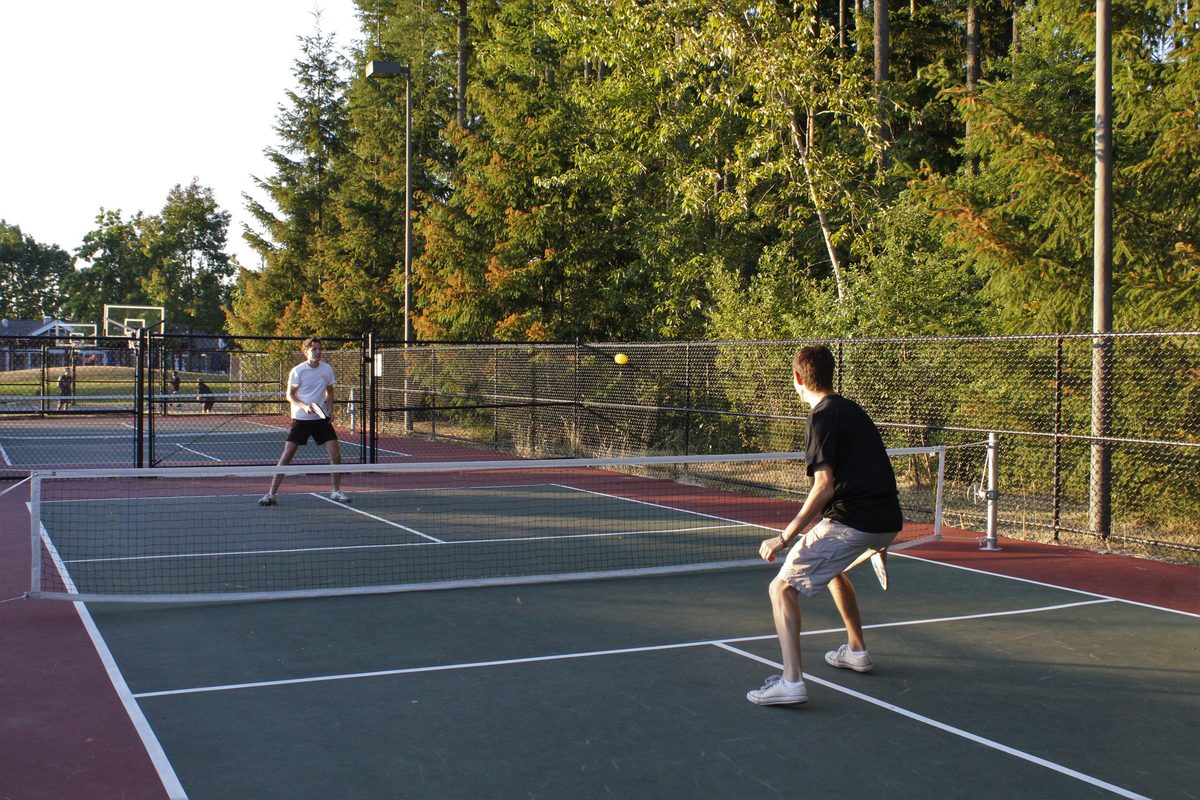
💡 Key Takeaways
- Pickleball is a high-intensity interval sport — rallies create repeated sprint-and-recover demands on the cardiovascular system.
- Lateral quickness, rotational power, and shoulder stability are the three most important physical attributes for pickleball performance.
- Elbow tendinopathy, Achilles strain, and rotator cuff irritation are the most common pickleball injuries — all largely preventable.
- A structured cross-training program improves on-court performance more than additional court time alone.
- Older players benefit especially from hip and ankle mobility work to compensate for age-related reductions in joint range of motion.
Pickleball has grown from a backyard novelty into a 36-million-player sport in under a decade, becoming the fastest-growing recreational sport in the United States by participation count. Its appeal is obvious: lower barrier to entry than tennis, played on a smaller court, easier on the joints, and intensely social. But the assumption that pickleball is a low-intensity activity is wrong. Match play produces heart rates comparable to moderate-to-vigorous aerobic exercise, involves hundreds of explosive lateral and rotational movements, and generates injury rates that have surprised sports medicine clinics nationwide. Training for pickleball — not just playing it — is how serious players get better faster and stay healthy longer.
1. The Athleticism Pickleball Actually Demands
A standard pickleball match involves rapid changes of direction, explosive short sprints to the kitchen line (the non-volley zone 7 feet from the net), deceleration and low-position dinking, overhead smashes, and the whip-and-control mechanics of soft-touch shots. Heart rate data from recreational and competitive players consistently shows values in the 65 to 85 percent of maximum range during active play, with spikes above 90 percent during intense rallies. This places pickleball firmly in the moderate-to-vigorous exercise category — more demanding than golf, broadly comparable to singles tennis, and significantly more taxing than it looks from the sideline.
The physical demands cluster around five key capacities: lateral quickness and agility (moving explosively side-to-side without crossing feet), rotational power (generating pace and spin from hip-driven rotation, not just arm), shoulder stability and endurance (sustaining overhead, volley, and dink mechanics across a 2 to 3 hour session), lower body strength and joint stability (repeated knee-bend, push-off, and deceleration), and aerobic base (supporting the sustained moderate-intensity demand of extended match play). A training program that addresses all five of these will produce meaningful on-court gains within 6 to 8 weeks.
2. The Cross-Training Program: What to Do Off Court
Lateral Speed and Agility
The most common athletic limitation in recreational pickleball players is lateral quickness — the ability to change direction explosively while maintaining balance and court position. This is trained off court through lateral band walks (glute activation and hip abductor strength), lateral shuffle drills with resistance bands or on agility ladders, side-to-side box step-overs, and reactive change-of-direction drills. Two to three sessions of 15 to 20 minutes of agility-focused work per week produces meaningful improvement in court coverage within 4 weeks. The key is training deceleration as much as acceleration — stopping under control is where most pickleball ankle and knee injuries occur.
Rotational Power
Ground strokes, overhead smashes, and even the compact dink shot are driven by rotational force generated from the hips and core, transmitted through the arm to the paddle. Players who generate pace and spin primarily with their arm develop elbow tendinopathy (pickleball elbow — essentially lateral epicondylitis) and lack power. Training rotational power through medicine ball rotational throws, cable woodchops, landmine rotations, and pallof press variations builds the hip-to-shoulder kinetic chain that generates shots efficiently. Two sessions per week of 3 to 4 rotational exercises, 3 sets of 8 to 12 reps, is a meaningful dose.
Shoulder Stability and Endurance
The shoulder complex endures thousands of repetitions across a pickleball session — volleys, dinks, resets, and overheads all load the rotator cuff and surrounding musculature. Players who lack shoulder stability and endurance develop rotator cuff impingement or irritation, particularly in the supraspinatus and infraspinatus. Off-court shoulder work should include banded external rotation, face pulls, rear delt raises, scapular retractions, and overhead pressing in a controlled range. This is not glamorous training — but 10 to 15 minutes of structured shoulder prehabilitation 3 times per week is the single best predictor of long-term shoulder health in any racket sport.
| Physical Quality | Best Exercises | Frequency | On-Court Benefit |
|---|---|---|---|
| Lateral Quickness | Lateral shuffles, band walks, agility ladder | 2–3x/week | Court coverage, kitchen line speed |
| Rotational Power | Med ball throws, cable woodchop, landmine | 2x/week | Shot power, reduces elbow stress |
| Shoulder Stability | External rotation, face pulls, Y-T-W raises | 3x/week | Overhead endurance, injury prevention |
| Lower Body Strength | Squats, split squats, lateral step-ups | 2–3x/week | Deceleration, low-position dinking |
| Aerobic Base | Zone 2 cycling, walking, light jogging | 3–4x/week | Match endurance, recovery between points |
| Ankle Mobility | Wall ankle stretches, banded dorsiflexion | Daily | Achilles protection, change-of-direction |
3. The Most Common Pickleball Injuries — and How to Prevent Them
Pickleball Elbow (Lateral Epicondylitis)
The most common pickleball injury presenting in sports medicine clinics is lateral epicondylitis — inflammation and micro-tearing at the origin of the wrist extensor muscles on the outer elbow. It is driven by the same mechanism as tennis elbow: excessive arm-dominant swing mechanics, inadequate forearm and wrist strength, and high repetition volume. Prevention involves eccentric wrist extensor exercises (Tyler twist with a flex bar, or wrist curls with slow eccentric), strengthening the rotational kinetic chain so the arm is not the primary power generator, and managing weekly play volume — particularly when first starting the sport or returning after a break.
Achilles Tendinopathy and Calf Strains
The explosive push-off mechanics of the kitchen line transition — sprinting forward from the baseline — loads the Achilles tendon and calf complex heavily and repeatedly. Older players and those with tight ankle dorsiflexion are particularly susceptible. Prevention: daily calf raises (including slow eccentric lowering over 3 to 4 seconds), ankle mobility work, and never going straight into intense court play without a proper dynamic warm-up. If Achilles pain develops, eccentric calf raises on a decline board have the strongest evidence for rehabilitation.
Knee Pain and Meniscal Strain
The low, bent-knee position required for dinking and net play, combined with repeated lateral deceleration, places significant load on the knee — particularly the medial compartment and menisci. Players with pre-existing knee osteoarthritis frequently report increased symptoms. Strengthening the glutes, quadriceps, and hamstrings off court reduces the knee's share of the workload during play. Single-leg exercises — split squats, step-downs, reverse lunges — are especially valuable because they replicate the single-leg loading patterns of court movement.
4. Getting Better Faster: Skill Meets Fitness
The players who improve most rapidly at pickleball are those who pair deliberate skill practice with structured physical training. On the skills side: drilling the third-shot drop (the softening shot that transitions from baseline to kitchen) for 15 to 20 minutes before open play produces more technical improvement than the same time spent in casual games. Dink consistency drills, return-of-serve positioning, and overhead mechanics are all more productively developed in deliberate practice than picked up incidentally during competitive play.
On the fitness side, the cardiovascular base matters more for recreational players than they typically realize. Players who fatigue in the third game of a recreational session make more errors — not because their skills degraded, but because their attention and reaction time degrade with fatigue. Building a Zone 2 aerobic base through 30 to 45 minutes of cycling or brisk walking 3 to 4 days per week provides the aerobic foundation to stay sharp and competitive deep into match play. This investment, often neglected by recreational athletes, is one of the highest-yield improvements available.
Related Reading
Sample Weekly Pickleball Cross-Training Schedule
Monday: strength training — lower body and rotational power (45 min) + 30 min Zone 2 cardio. Tuesday: pickleball court time — deliberate skill drilling (45 min) + casual play (60 min). Wednesday: shoulder prehab + lateral agility drills (30 min) + Zone 2 walk or cycle (30 min). Thursday: full-body strength training with rotational emphasis (45 min). Friday: pickleball match play (90–120 min). Saturday: Zone 2 cardio (45 min) + ankle and hip mobility work (15 min). Sunday: full rest or gentle walking. This structure ensures physical development is happening alongside court time, not competing with it for recovery resources.
Scientific References
- Forrester MB. Pickleball injuries treated in emergency departments. Journal of Emergency Medicine, 2020. PMID: 32586726
- Casanova M, et al. Physical demands of recreational pickleball: heart rate and perceived exertion analysis. Journal of Aging and Physical Activity, 2023.
- Croisier JL, et al. Factors associated with recurrent hamstring injuries in professional soccer: a prospective study. American Journal of Sports Medicine, 2008. PMID: 18579823
- Alfredson H, Lorentzon R. Chronic Achilles tendinosis: recommendations for treatment and prevention. Sports Medicine, 2000. PMID: 10772154