💡 Quick Answer
100 g of ragi (finger millet) has 321 kcal, 7.2 g of protein, 11.2 g of fibre, 1.9 g of fat and about 364 mg of calcium (IFCT 2017). That calcium is about 36 percent of a day's need in 100 g and more than any other common Indian grain. A 30 g portion of flour, one small roti, gives 96 kcal and 2.1 g of protein.
- Per 50 g flour (about 2 rotis): 160 kcal, 3.6 g protein.
- Iron: 4.6 mg per 100 g.
- Fibre: 11.2 g per 100 g, four times rice.
Portion calculator
30 g of ragi (finger millet) grain or flour ≈ 2.2 g protein · 96 kcal
Scaled from the figures on this page. Brands and recipes vary.
Counting calories and protein? Snap a photo of your meal and the UltraFit360 app logs both against your daily target. Get UltraFit360 on the App Store or Google Play.
Ragi, or finger millet (nachni in Marathi, kezhvaragu in Tamil), is back in kitchens across India as a calcium-rich, gluten-free grain. People search "ragi nutritional value per 100g" to settle practical questions: how many calories in a ragi roti, how much protein, and whether it really beats wheat and rice. The full answer is in one table below, with the numbers taken from India's own food composition tables.
Ragi Nutritional Value per 100 g and per Portion
| Quantity | Weight | Calories | Protein | Carbs | Fat | Fibre | Calcium | % of 1000 mg daily value |
|---|---|---|---|---|---|---|---|---|
| Ragi (finger millet) grain or flour | 100 g | 321 kcal | 7.2 g | 78.0 g | 1.9 g | 11.2 g | 364 mg | 36% |
| Ragi flour, 50 g | 50 g (about 2 rotis) | 160 kcal | 3.6 g | 39.0 g | 1.0 g | 5.6 g | 182 mg | 18% |
| Ragi flour, 30 g | 30 g (1 small roti or 1 glass of ragi malt) | 96 kcal | 2.1 g | 23.4 g | 0.6 g | 3.4 g | 109 mg | 11% |
| Ragi flour, 20 g | 20 g (1 tbsp heaped) | 64 kcal | 1.4 g | 15.6 g | 0.4 g | 2.2 g | 73 mg | 7% |
Source: IFCT 2017 (ICMR-NIN), Ragi (A010). Carbohydrate shown is available carbohydrate plus dietary fibre; energy converted from kJ. The percentage is of 1,000 mg, the NIH Office of Dietary Supplements adult RDA for calcium. Rotis and malt vary in flour weight; the weights are our assumptions.
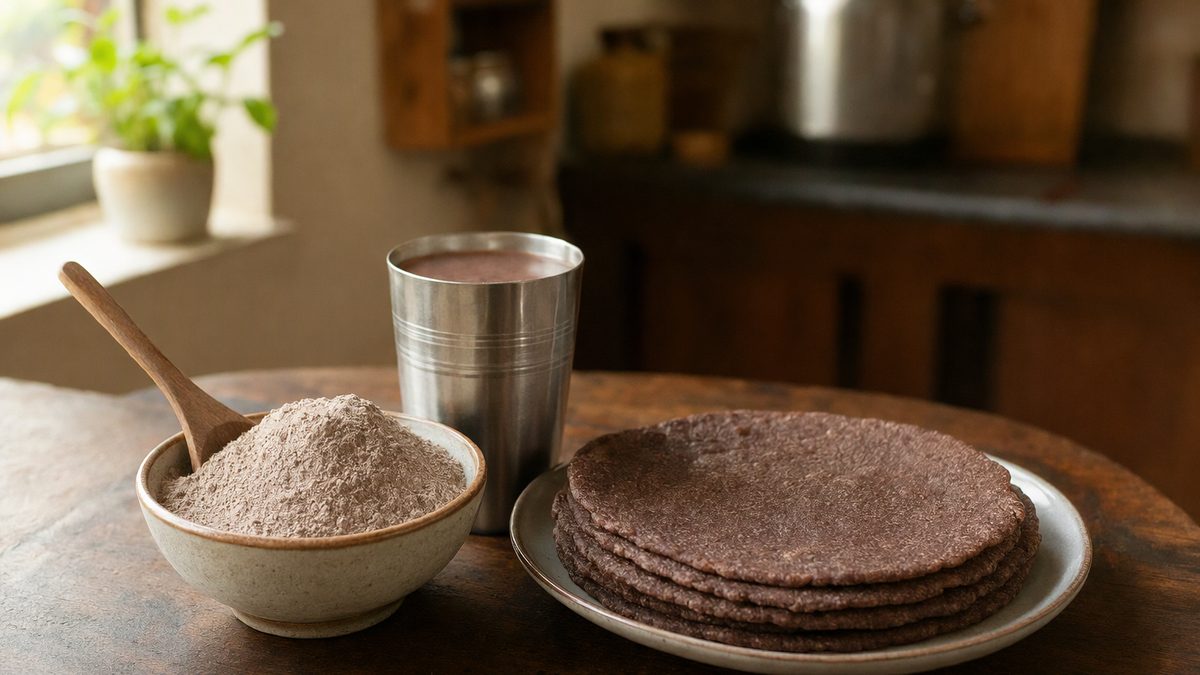
Ragi flour, like the whole grain, is not a high-protein food: at 7.2 g per 100 g it has less than wheat atta (10.6 g). Its strengths are fibre (11.2 g per 100 g) and minerals, calcium above all. Calories are moderate at 321 kcal per 100 g, lower than rice because of the extra fibre. In the kitchen the flour weight matters more than the cooked weight: a single ragi roti uses about 30 g of flour, a ragi dosa or a glass of ragi malt about 20 to 30 g, and a bowl of ragi mudde (ball) 50 to 100 g. Cooked weight changes a lot with water, so log the dry flour.
Ragi vs Bajra, Jowar, Wheat, Rice and Quinoa
| Grain (100 g, raw) | Weight | Calories | Protein | Carbs | Fat | Fibre | Calcium | % of 1000 mg daily value |
|---|---|---|---|---|---|---|---|---|
| Ragi | 100 g | 321 kcal | 7.2 g | 78.0 g | 1.9 g | 11.2 g | 364 mg | 36% |
| Bajra (pearl millet) | 100 g | 348 kcal | 11.0 g | 73.3 g | 5.4 g | 11.5 g | 27 mg | 3% |
| Jowar (sorghum) | 100 g | 334 kcal | 10.0 g | 77.9 g | 1.7 g | 10.2 g | 28 mg | 3% |
| Wheat flour (atta) | 100 g | 320 kcal | 10.6 g | 75.5 g | 1.5 g | 11.4 g | 31 mg | 3% |
| Rice, raw, milled | 100 g | 356 kcal | 7.9 g | 81.0 g | 0.5 g | 2.8 g | 7 mg | 1% |
| Quinoa | 100 g | 328 kcal | 13.1 g | 68.3 g | 5.5 g | 14.7 g | 198 mg | 20% |
Source: IFCT 2017 (ICMR-NIN): A010, A003, A005, A019, A015 and A009. Raw weights.
The calcium gap is the headline: ragi has about 364 mg per 100 g, against 31 mg for wheat atta and 7 mg for raw rice. On protein, ragi (7.2 g) is the lowest of the millets and wheat here: quinoa has 13.1 g, bajra 11 g and wheat atta 10.6 g. On fibre ragi (11.2 g) is level with bajra, wheat atta and jowar, and well above rice. Rice has the least fibre and the most calories per 100 g. If you are comparing roti against roti, remember that a ragi roti and a wheat roti of the same weight are close in calories, so the swap is about nutrients, not calories.
Calcium, Iron and Other Minerals in Ragi
IFCT 2017 lists 4.6 mg of iron per 100 g of ragi, 146 mg of magnesium and 443 mg of potassium. The iron is not very well absorbed from plant foods, but pairing ragi with a source of vitamin C (lemon, tomato, amla) helps. The calcium is a real advantage for vegetarians and people who avoid dairy, and many Indian doctors suggest ragi for growing children, women and older adults for that reason. It does not replace medical treatment for low bone density or anaemia. Our guide to iron and B12 for women covers when diet alone is not enough.
Is Ragi Good for Weight Loss and Diabetes?
The fibre in ragi slows digestion, which makes it more filling than refined flour. That can help with portion control, and ragi is often included in diabetic diets. It is still a starchy grain, with about 66.8 g of available carbohydrate per 100 g in IFCT 2017, so portions count. A sensible plan is one or two ragi rotis or one bowl of porridge in place of an equal portion of rice or refined flour, not on top of it. For protein, add curd, dal, eggs, paneer or soya, since ragi alone gives little.
How to Eat Ragi
- Ragi roti or dosa with a protein-rich side such as dal or sambar. See adai dosa with multiple dals for a protein boost.
- Ragi porridge (ambali or kanji) cooked with water or milk; milk adds protein.
- Ragi malt without too much sugar or jaggery. A 30 g flour glass with 200 ml of milk gives around 8 to 9 g protein from the milk and flour together.
- Ragi in baking and pancakes: replace up to a third of the flour to keep texture.
Sprouted or fermented ragi flour is gentler on the stomach, and cooking removes much of the raw bitterness. Ragi can be a little heavy on the stomach for some people at first, so introduce it slowly. People with kidney disease on a potassium or phosphorus restriction should ask their doctor before eating it daily.
For the other staples on this site, see calories in chapati and calories in rice, and work out how much protein your day needs with the protein calculator. The nutrition hub lists every food page.
Frequently Asked Questions
What is the nutritional value of ragi per 100 g?
100 g of ragi has 321 kcal, 7.2 g protein, 78 g carbohydrate (including fibre), 1.9 g fat and 11.2 g fibre, with about 364 mg of calcium (IFCT 2017).
How much calcium is in ragi?
About 364 mg per 100 g, roughly 36 percent of an adult's 1,000 mg daily need. That is far more than wheat or rice.
How much protein is in ragi?
7.2 g per 100 g, which is less than wheat atta (10.6 g). A 30 g portion of flour has 2.1 g. Add dal, curd or eggs for more protein.
How many calories are in a ragi roti?
A small ragi roti made from 30 g of flour has about 96 kcal before any ghee. Two rotis (50 g of flour in total) have about 160 kcal.
Is ragi better than rice or wheat?
For fibre and calcium, yes. Ragi has 11.2 g of fibre per 100 g against 2.8 g for rice. For protein it is lower than wheat, and calories per roti are similar.
Is ragi good for diabetes and weight loss?
Its fibre makes it more filling and slows digestion, so it can help with both when it replaces refined grains. It is still starchy, so portions matter. Talk to your doctor or dietitian for personal advice.
Sources: IFCT 2017 (ICMR-National Institute of Nutrition, Hyderabad): ragi (A010), bajra (A003), jowar (A005), wheat flour atta (A019), rice raw milled (A015) and quinoa (A009). Energy converted from kJ to kcal; minerals converted from g to mg. The 1,000 mg calcium reference is the NIH Office of Dietary Supplements adult RDA. This page is general information, not medical advice.
Hitting your protein target on an Indian diet is easier when you can see it: UltraFit360 logs meals from a photo and tracks protein against your goal. Work out your number with the protein calculator.
Track Millets and Protein Automatically
Log your ragi roti or porridge in UltraFit360 and see calories and protein against your daily target.