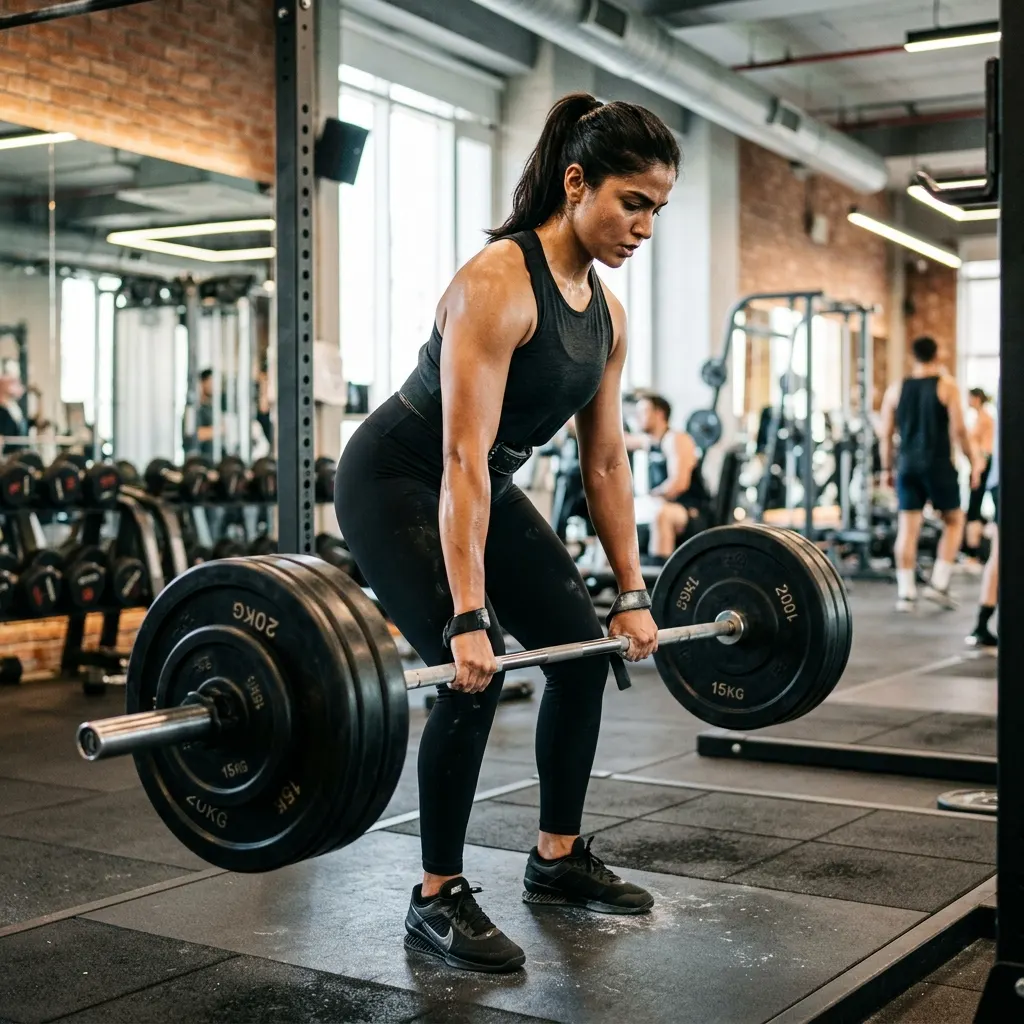
💡 Quick Answer
Women over 40 should strength train two to three times a week to slow the muscle and bone loss that speeds up around menopause. Start with squats to a chair, hip hinges, rows and presses for 2–3 sets of 8–12 reps, add weight every one to two weeks, and aim for about 1.2 g protein per kg body weight.
- Get a doctor's clearance first if you have BP, diabetes, heart, bone or joint conditions.
- Leave 1–2 reps in reserve; sharp pain means stop and modify.
- A home kit of mat, chair, band and dumbbells is enough to start.
- Calcium and vitamin D matter for bone; ask your doctor about testing vitamin D.
For many Indian women, 40 arrives with a full plate: a demanding job or household, children who still need you, ageing parents, and very little time left for yourself. At the same time the body starts sending signals: slower recovery, weight settling around the waist, stiff knees, poorer sleep. Strength training is one of the most effective things you can do about all of it, and it takes less time than most people think.
Why Strength Training Matters After 40
From midlife onward, muscle and bone are lost gradually unless you give them a reason to stay. For women the decline in bone density speeds up around menopause, as oestrogen falls. Walking and yoga help general health, but they do not load muscle and bone enough to slow these losses much. Progressive resistance training does.
- Muscle: keeps you strong for everyday tasks and supports a healthy metabolism.
- Bone: weight-bearing and resistance exercise help maintain bone density and lower fracture risk later.
- Blood sugar: more muscle improves insulin sensitivity, useful if you have prediabetes, diabetes or central weight gain.
- Joints and balance: stronger hips and thighs take load off the knees and lower the risk of falls.
- Daily life: carrying shopping from the market, lifting a water can, climbing apartment stairs and getting up after sitting on the floor all get easier.
What Women Over 40 Often Hear
| What you hear | What is actually true |
|---|---|
| “After 40, just walk.” | Walking is great, but it does not build strength. Combine both. |
| “Weights will make you bulky.” | Muscle grows slowly in women, and even more slowly after 40. You get firmer and stronger. |
| “I have knee pain, so I should avoid exercise.” | Well-chosen strength exercises often reduce knee pain by strengthening the thighs and hips. Get it assessed first. |
| “Housework is enough exercise.” | It keeps you moving but rarely gets progressively harder, which is what builds strength. |
| “It is too late to start.” | People gain strength at every age, including in their 60s and 70s. |
Before You Start: Safety Checks
Speak to your doctor before starting if you have high blood pressure, diabetes, a thyroid disorder, heart disease, osteoporosis, arthritis, a history of slipped disc, recent surgery or frequent dizziness. Most women with these conditions can still strength train; they just need the right exercises and limits. If you already have osteoporosis, work with a physiotherapist or qualified trainer, and avoid heavy loaded spinal bending and twisting until they say otherwise.
Then keep three rules: warm up for 5–10 minutes, stop any exercise that causes sharp pain (muscle effort and mild next-day soreness are normal), and leave 1–2 reps in reserve at the end of each set rather than training to failure.
3-Day Strength Plan for Women Over 40
Train on three non-consecutive days, for example Monday, Wednesday and Friday. Each session takes about 35–45 minutes. Start with 2 sets of each exercise for the first two weeks, then move to 3. Rest 60–90 seconds between sets.
| Day | Exercise | Sets × reps | Easier option |
|---|---|---|---|
| Day 1: Lower body + core | Goblet squat to a chair | 3 × 10–12 | Sit-to-stand from a chair |
| Glute bridge | 3 × 12 | Smaller range | |
| Dumbbell Romanian deadlift | 3 × 10 | Hip hinge with a broomstick | |
| Step-up onto a low step | 2 × 8 each leg | Hold a wall or railing | |
| Bird dog | 2 × 8 each side | Arms only or legs only | |
| Day 2: Upper body + posture | Incline push-up | 3 × 8–10 | Wall push-up |
| Band or seated cable row | 3 × 12 | Lighter band | |
| Seated dumbbell shoulder press | 3 × 10 | One arm at a time | |
| Lat pulldown or band pulldown | 3 × 10 | Lighter band | |
| Dead bug | 2 × 8 each side | Feet stay on the floor | |
| Day 3: Full body | Leg press or split squat | 3 × 10 | Chair squat |
| Dumbbell chest press | 3 × 10 | Floor press | |
| One-arm dumbbell row | 3 × 10 each side | Band row | |
| Farmers carry | 3 × 20–30 m | Lighter weights | |
| Standing calf raise | 2 × 15 | Hold a wall |
On the other days, walk 30–45 minutes, do yoga or stretch. If three sessions feel like too much at the start, two full-body days a week still give real results. For a structured week-by-week version, see our 12-week strength plan for beginners over 40.
How to progress
When you can complete all sets at the top of the rep range with good form, increase the weight by the smallest step available, usually 1–2 kg for dumbbells. Expect to progress every one to two weeks for the first few months. Keep a notebook or app log so you know what you lifted last time.
Home Version: 30 Minutes, Minimal Equipment
If commuting to a gym is unrealistic, a mat, a sturdy chair, a resistance band and one or two pairs of dumbbells are enough. Filled water bottles work for the first few weeks. Do this circuit three times a week, 2–3 rounds with a minute of rest between rounds:
- Chair squats × 12
- Wall or counter push-ups × 10
- Glute bridges × 12
- Band rows × 12
- Step-ups × 8 each leg
- Bird dog × 8 each side
Make it harder over time by adding weight, slowing the lowering phase to three seconds, or adding a round.
Perimenopause and Menopause
Hot flushes, poor sleep and low energy can make training feel harder on some days. Keep the routine but adjust the load: on a bad night's sleep, do two sets instead of three. Strength training will not stop menopause symptoms, but it protects muscle and bone during the years when they are most at risk, and many women find it helps mood and sleep. Discuss symptoms and any hormone therapy with your gynaecologist. Our perimenopause strength training guide goes deeper.
Protein, Calcium and Vitamin D
Muscle needs protein to respond to training. A reasonable target is about 1.2 g of protein per kg of body weight a day, or more if you are actively building muscle, spread across three meals. For a 65 kg woman that is around 80 g: for example, besan chilla with curd at breakfast, dal with paneer sabzi at lunch, and a second dal or eggs with dinner. Timing tips are in protein timing for women over 40.
Calcium (milk, curd, paneer, ragi, til) and vitamin D also matter for bone. Vitamin D deficiency is common in India despite the sunshine, so ask your doctor whether to test your levels and whether you need a supplement.
Frequently Asked Questions
Is it safe to start weight training after 40?
Yes, for most women. Start with light weights or bodyweight, learn good technique, and get a doctor's clearance first if you have blood pressure, heart, bone or joint conditions.
How many days a week should women over 40 strength train?
Two to three days a week on non-consecutive days. Add walking, yoga or stretching on the other days.
Can strength training reduce menopause belly fat?
It helps. Strength training preserves muscle and improves insulin sensitivity, which supports fat loss when combined with a moderate calorie deficit and enough protein. It cannot target belly fat specifically.
Is walking enough exercise for women over 40?
Walking is excellent for heart health but does not build much strength or bone. Combine daily walking with two to three strength sessions a week.
What if I have knee pain?
Use pain-free versions such as chair squats, glute bridges and low step-ups, and get the knee assessed by a doctor or physiotherapist. Stronger thighs and hips often reduce knee pain over time.
How much protein do women over 40 need?
About 1.2 g per kg of body weight a day is a reasonable target when strength training, spread across meals. A 65 kg woman would aim for roughly 80 g.
Want a plan built around your training history? UltraFit360's free AI workout planner creates and adjusts programs for you.
Transform Your Fitness Journey
Log your workouts, track your diet, and get AI coaching insights — all with UltraFit360.