💡 Quick Answer
Choose a walking pad if you live in a small flat, only walk, and want something that slides under a bed. Choose a treadmill if you want to run, use incline or weigh over about 100 kg. A treadmill needs about 2 m of clear space behind it; walking pads typically top out around 6 km/h.
- Walking pads: compact, quieter, walking only, entry models from roughly ₹7,000.
- Treadmills: running, incline and rails, but need a permanent corner.
- For weight loss, daily use matters more than the machine.
- Check inverter capacity, service network and user-weight limit before buying.
Choosing between a walking pad vs a treadmill in India comes down to three questions: how much floor space you have, whether you will ever run, and who is going to use it. A walking pad is a slim, handrail-free belt for walking that slides under a bed. A treadmill is a larger machine with rails, a console, incline and running speeds. Both help you keep walking through 45°C summers, monsoon downpours and winter smog. Here is how to decide.
Walking Pad vs Treadmill: Side-by-Side
| Feature | Walking pad | Home treadmill |
|---|---|---|
| Typical size | Low, flat deck about 1.2–1.5 m long, 50–60 cm wide, 12–15 cm tall | About 1.6–1.9 m long, 70–80 cm wide, 1.3–1.5 m tall with console |
| Storage | Slides under a bed or sofa, or stands against a wall | Some fold upright, but still need a permanent corner |
| Top speed | Usually around 6 km/h; some 2-in-1 models reach 8–12 km/h | Commonly 12–16 km/h or more |
| Incline | Usually none | Manual or motorised incline on many models |
| Running | Walking only (2-in-1 models allow light jogging) | Yes: jogging, running, intervals |
| Handrails | None, or a fold-up bar on 2-in-1 models | Full side rails and console |
| Max user weight | Often around 100–110 kg | Often 110–150 kg depending on model |
| Noise and vibration | Lower at walking speeds | Higher, especially when running |
| Price (India) | Entry models from roughly ₹7,000; better-built and 2-in-1 models often ₹15,000–20,000 or more | Basic motorised from roughly ₹14,000; solid running treadmills ₹35,000–60,000+ |
| Best for | Steps, under-desk walking, small flats, older adults walking daily | Running, incline walking, interval training, heavier users |
Prices and specifications vary widely by brand and model, so treat the ranges above as typical tiers seen on Indian listings at the time of writing (October 2026) rather than fixed prices. Always check the actual product's speed, motor rating, user-weight limit and belt size.
Space: Measure Before You Buy
| Machine | Footprint in use | Recommended clear zone | Total floor to plan for |
|---|---|---|---|
| Walking pad | ~1.4 m × 0.6 m | ~1 m behind, a little at the sides (no standard as strict as treadmills; be generous) | ~2.4 m × 1 m |
| Home treadmill | ~1.8 m × 0.8 m | 2 m behind and 0.5 m each side (ASTM F2115 guidance) | ~3.8 m × 1.8 m |
The treadmill clearance zone is a safety recommendation, not a suggestion: if you slip, the belt throws you backwards, and a wall, cupboard or glass door 50 cm behind you is dangerous. In a typical Indian 10 × 10 ft (about 3 × 3 m) bedroom, a full treadmill plus clearance takes over most of the room. A walking pad uses the space only while you are on it.
Noise, Vibration and Living in a Flat
Walking at 4–5 km/h on either machine makes a steady hum plus footfalls. Running on a treadmill makes a rhythmic thud that carries through RCC floors to the flat below. To reduce both:
- Put a dense rubber equipment mat (10–15 mm) under the machine. It cuts vibration and protects tiles.
- Avoid running before 7 am or after 10 pm in apartments; walking is usually fine.
- Keep the belt lubricated as the manual says; a dry belt is louder and wears the motor.
Power Cuts, Voltage and Service
- Voltage fluctuation: plug into a dedicated wall socket, and consider a surge protector or stabiliser if your area has frequent fluctuations. Many manufacturers advise against extension boards.
- Inverters: a treadmill motor draws far more power than a fan or TV, especially at start-up. Check the machine's rated power against your inverter's capacity before running it on backup; walking pads draw less but still need checking.
- After-sales service: in tier-2 and tier-3 cities, a brand with local service centres often matters more than a slightly better spec sheet. Ask who services the motor and belt in your pin code before ordering.
- Warranty: motor warranties are often longer than frame or belt warranties. Read what is actually covered.
Which One Is Right for You?
| Your situation | Better choice | Why |
|---|---|---|
| 1BHK or shared flat, no spare corner | Walking pad | Stores under the bed; needs no permanent space |
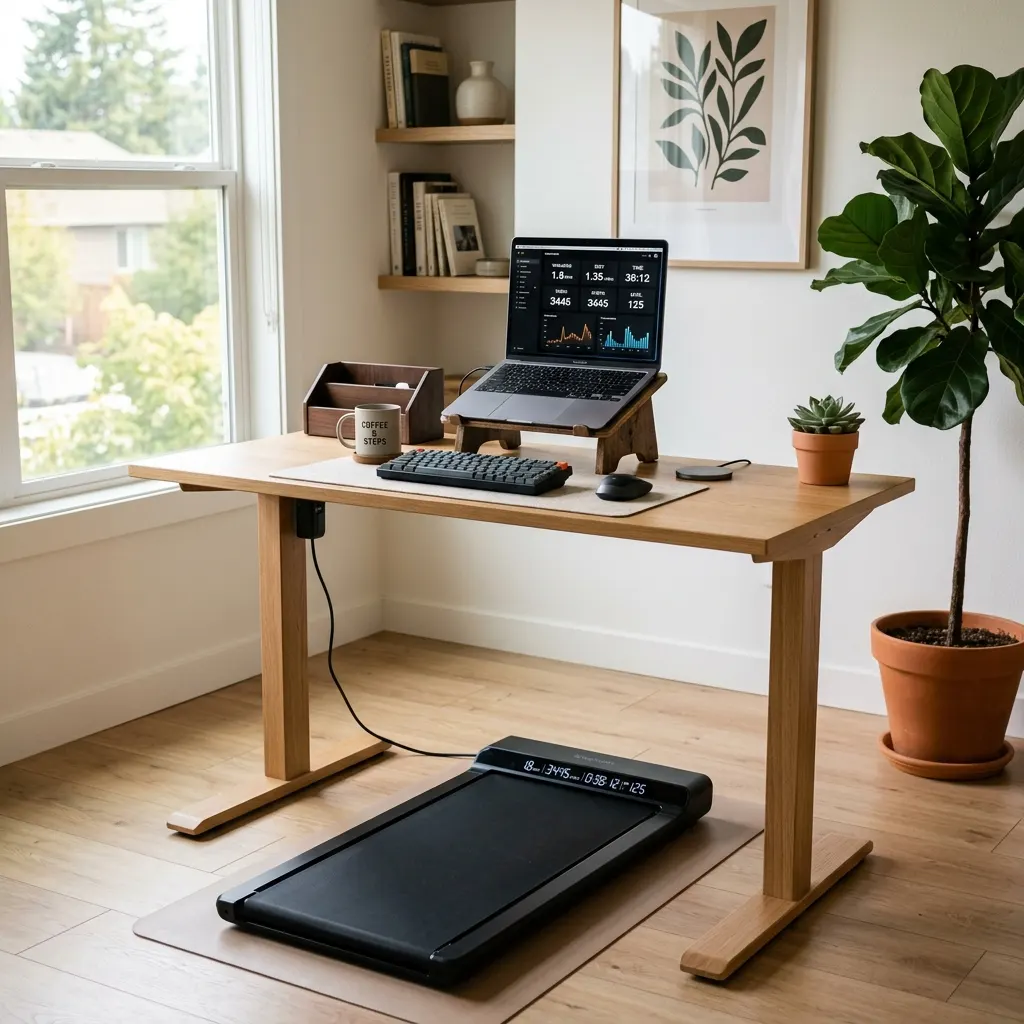
| You want 8,000–10,000 steps while working from home | Walking pad | Fits under a standing desk at 2–4 km/h |
| You run, or plan to train for a 10K or half marathon | Treadmill | Walking pads cannot handle running speeds or impact well |
| You want incline walking for fat loss | Treadmill | Most walking pads have no incline |
| You weigh over about 100 kg | Treadmill (check rating) | Higher user-weight limits and stronger motors |
| Older parent, needs support while walking | Treadmill with full handrails | Side rails add balance and safety |
| Upper-floor flat with sensitive neighbours | Walking pad (on a thick mat) | Less impact noise at walking pace |
Which Is Better for Weight Loss?
For calorie burn, the machine matters less than how often you use it. A 70 kg person walking 45 minutes at 5 km/h burns roughly the same on either. Treadmills add two tools that raise intensity: incline and running. Walking at 5–8% incline burns noticeably more per minute than flat walking without the joint impact of running; see incline walking for fat loss.
The walking pad's advantage is volume: because it slides out in seconds and runs under a desk, many people end up walking more total minutes on it than they would on a treadmill they need to "go and use". For most people losing weight, 8,000–10,000 daily steps beats two intense sessions a week. Our guide to walking for weight loss has step targets and calories by body weight.
Walking Pad Under a Desk: Does It Work?
At 2–3 km/h, most people can type, read and take calls comfortably. Faster than that, typing accuracy drops. Start with 20–30 minute blocks a few times a day rather than walking all day; your feet and calves need time to adapt. See the walking pad desk setup guide for desk heights and routines.
Buying Checklist
- Belt size: at least about 40 cm wide for walking; wider and longer (about 45 × 125 cm or more) if you will jog.
- Motor: look at the continuous-duty rating (often written as "CHP"), not only the peak horsepower in the ad.
- User weight limit: buy a machine rated comfortably above your weight.
- Safety key or auto-stop if children are at home. Unplug and store the key after use.
- Remote or app control on walking pads, since there is no console within reach.
- Return policy and installation: treadmills often need assembly; confirm it is included.
Safety Tips
- Straddle the belt and start it at the lowest speed before stepping on.
- On a walking pad without rails, stay at walking speeds and don't look down at your phone while increasing speed.
- Keep children and pets away from moving belts; fingers and hair can get caught at the rear roller.
- If you have heart disease, balance problems or are recovering from surgery, ask your doctor what speeds and inclines are safe for you.
Want to see the full picture of a small home gym, including where a walking pad fits? Read our home gym setup guide.
Frequently Asked Questions
Is a walking pad worth it in India?
Yes, if you mainly want to walk more and have little space. It keeps you walking through heat, rain and smog, and slides under a bed. If you want to run or use incline, a treadmill is better value.
Can you run on a walking pad?
Most walking pads top out around 6 km/h, which is walking pace. Some 2-in-1 models reach 8–12 km/h for light jogging, but their shorter decks and smaller motors are not built for regular running.
Walking pad or treadmill: which is better for weight loss?
Both burn similar calories at the same speed. A treadmill adds incline and running for more intense sessions; a walking pad often gets used more because it is quick to set up. The one you use daily is better.
How much space does a treadmill need?
Safety guidance (ASTM F2115) recommends about 2 m of clear space behind a treadmill and 0.5 m on each side. With the machine itself, plan for roughly 3.8 m × 1.8 m of floor.
Will a walking pad disturb downstairs neighbours?
At walking speeds it is usually quiet. Put it on a dense rubber mat to absorb vibration and avoid very early or late sessions. Running on any treadmill is much louder.
Can I run a treadmill on an inverter?
Only if your inverter's capacity comfortably exceeds the treadmill's rated power, including start-up load. Check both specifications or ask the manufacturer; many home inverters are too small for a treadmill.
Want a plan built around your training history? UltraFit360's free AI workout planner creates and adjusts programs for you.
Make Every Walk Count
UltraFit360 logs your steps and workouts and shows your weight trend, so you know your walking pad or treadmill is paying off.