💡 Quick Answer
A katori (about 100 g) of home-sprouted moong has roughly 7–9 g protein and 110–130 kcal; kala chana sprouts have about 7.5–8.5 g protein and 160–180 kcal. Sprouting raises protein only slightly. Its real benefits are less phytic acid, more vitamin C, easier digestion and a filling, low-calorie snack. Steam sprouts for children, pregnant women and older adults.
- Sprouting does not double protein; it changes it only slightly.
- It does cut anti-nutrients and boost vitamin C.
- Raw sprouts can carry bacteria; steaming makes them safer.
- Pair sprouts with paneer, curd or eggs for a full protein meal.
Sprouts are the classic "healthy" Indian snack: a katori of moong at breakfast, sprouts chaat at the office, a bowl before the gym. Many claims around them are exaggerated, especially about protein. Here is what sprouts actually give you, and how to eat them safely.
Sprouts Nutrition per Katori: Raw vs Steamed
Numbers for sprouts vary a lot because sprouts are partly water, and how much depends on how long they sprouted. The long, white "bean sprouts" in Chinese dishes are about 90% water; USDA lists them at about 30 kcal and 3 g protein per 100 g. Indian home sprouts with a short tail are much denser. The most reliable way to estimate is from the dry weight you soaked, using NIN (ICMR) Indian food composition values (whole moong about 24 g protein per 100 g dry; kala chana about 17 g protein and 360 kcal per 100 g dry).
| 1 katori (~100 g) | Made from (dry) | Protein | Calories | Steamed (same katori) |
|---|---|---|---|---|
| Moong sprouts, short tail (home) | ~35–40 g moong | ~7–9 g | ~110–130 kcal | About the same; a little less vitamin C |
| Moong bean sprouts, long tail (USDA) | ~10–15 g moong | ~3 g | ~30 kcal | About the same |
| Kala chana sprouts | ~45–50 g chana | ~7.5–8.5 g | ~160–180 kcal | About the same; softer, easier to digest |
| Mixed sprouts (moong, chana, matki) | ~40–45 g mix | ~7–9 g | ~130–160 kcal | About the same |
Basis: NIN (ICMR) Indian food composition values for dry legumes, scaled by the typical dry weight that fills a katori after soaking and sprouting; long-tail sprouts from USDA FoodData Central. Treat these as estimates. Steaming for a few minutes does not meaningfully change protein or calories; it reduces heat-sensitive vitamin C somewhat.
Simple rule: a katori of home sprouts gives roughly the protein of one egg plus a bit more, for 110–180 kcal depending on the legume.
The Real Benefits of Sprouts
- Protein goes up only a little. Studies on moong report only a modest rise in protein per 100 g of dry matter during germination, partly because some starch is used up as the seed sprouts. That is a small change; per katori, you are getting roughly what the dry dal would have given you.
- Fewer anti-nutrients. Germination reduces phytic acid and trypsin inhibitors in pulses, in some studies by well over half for phytic acid. Less phytic acid means your body can absorb more of the iron and zinc.
- More vitamin C. Dry moong has almost none; sprouting produces a useful amount, which also helps iron absorption.
- Easier to digest for many people. Sprouting breaks down some of the sugars that cause gas, and protein digestibility improves slightly.
- Filling for few calories. High fibre, some protein and lots of chewing make sprouts a good snack when you are in a calorie deficit.
- Cheap and no cooking gas needed if you eat them steamed lightly or in a quick tadka.
What sprouts are not: a complete protein replacement. At 7–9 g per katori, you would need three katoris to reach a 25 g protein serving. Use them as one part of a protein-rich meal.
Are Raw Sprouts Safe? A Food-Safety Note
Sprouts grow in warm, wet conditions, which are also ideal for bacteria such as Salmonella and E. coli. Contamination often starts inside the seed, so washing does not remove it. Food-safety agencies, including the US FDA, advise that children, older adults, pregnant women and people with weak immunity should not eat raw sprouts, and recommend cooking sprouts thoroughly.
- Steam or boil sprouts for 5–10 minutes, or add them to a hot tadka, for anyone in those groups. For everyone else, lightly steaming is still the safer habit.
- Use clean water and a clean cloth or sprouter, and rinse 2–3 times a day while sprouting.
- Refrigerate sprouts once they are ready and eat them within 2–3 days.
- Throw away sprouts that smell sour, feel slimy or look mouldy.
- Be careful with ready-made sprouts from street carts in hot weather.
3 Easy Sprouts Recipes
1. Sprouts Chaat (10 minutes)
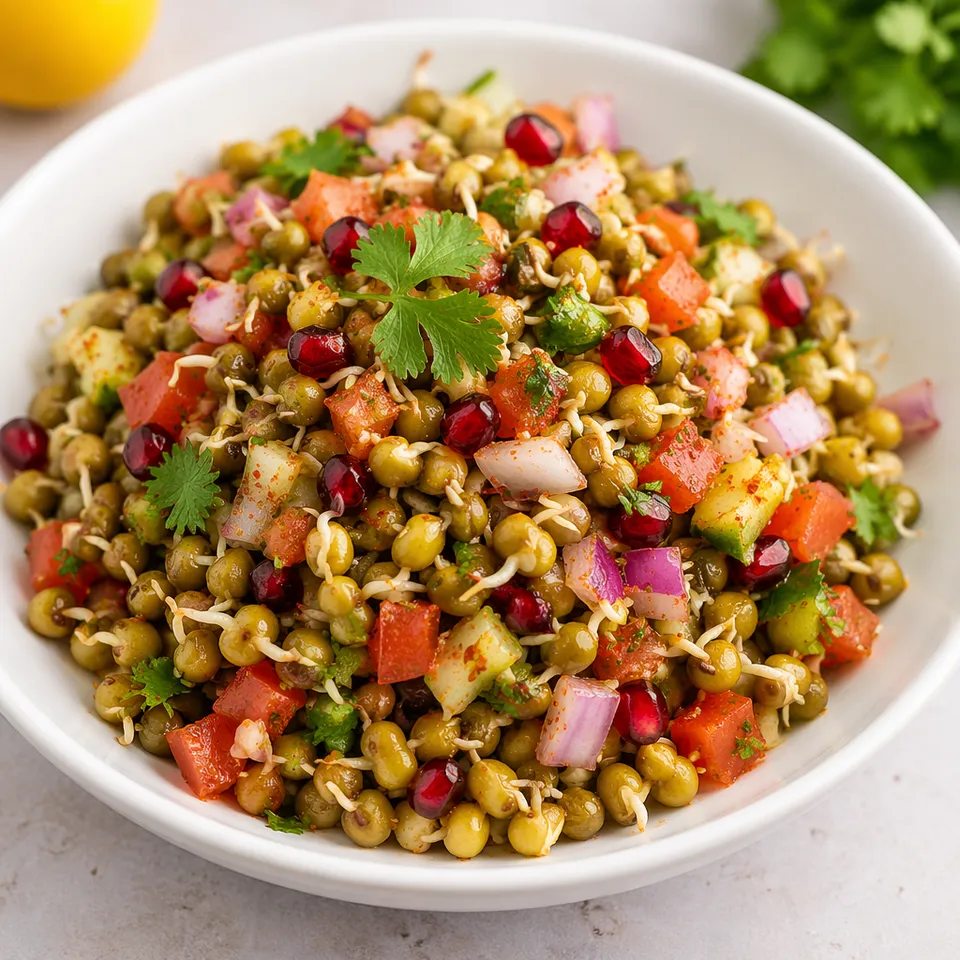
Steam 1 katori moong sprouts for 5 minutes. Toss with chopped onion, tomato, cucumber, green chilli, coriander, lemon juice, chaat masala and a pinch of black salt. Add 50 g crumbled paneer for extra protein.
Approx.: ~140 kcal and 8 g protein plain; ~270 kcal and 17 g protein with paneer.
2. Kala Chana Sprouts Salad with Hung Curd
Steam 1 katori kala chana sprouts until just soft. Mix with grated carrot, cucumber, pomegranate and mint. Dress with 50 g hung curd, roasted jeera powder, salt and lemon.
Approx.: ~255 kcal and 13 g protein.
3. Moong Sprouts Chilla
Grind 1 katori moong sprouts with ginger, green chilli and a little water. Stir in 2 tbsp besan (20 g), salt, haldi and chopped onion. Make 2 thin chillas on a non-stick tawa with 1 tsp oil.
Approx.: ~235 kcal and 13 g protein for 2 chillas. Serve with a katori of curd for about 16 g protein in total. More ideas in high-protein Indian breakfasts.
How It Fits Your Goal
Fat loss: sprouts are one of the best Indian snacks for a deficit: a katori of moong sprouts is around 120 kcal and keeps you full. Make it a meal by adding paneer, curd or eggs. Keep the chaat toppings light; sev and fried namkeen can double the calories.
Muscle gain: sprouts add fibre and micronutrients, but they are not dense enough to carry your protein target. Add them alongside dal, soya chunks, paneer or whey, and see the Indian gym diet plan for a full day.
To compare sprouts with every other staple, check the Indian food calories and protein chart, and set your own target with the protein calculator.
Frequently Asked Questions
How much protein is in 1 katori of sprouts?
About 7 to 9 g for a katori (around 100 g) of home-sprouted moong or kala chana. Long, white bean sprouts are mostly water and have only about 3 g per 100 g.
Does sprouting increase protein?
Only slightly. Studies on moong report a modest rise in protein per 100 g of dry matter during germination. The bigger changes are less phytic acid, more vitamin C and easier digestion.
Are raw sprouts safe to eat?
Raw sprouts carry a risk of bacteria like Salmonella and E. coli, and washing does not remove it. Steam or boil them, especially for children, pregnant women, older adults and anyone with weak immunity.
Are sprouts good for weight loss?
Yes. A katori of moong sprouts is about 110 to 130 kcal with useful fibre and protein, so it fills you up for few calories. Avoid heavy toppings like sev and fried namkeen.
Which sprouts have the most protein?
Moong and kala chana sprouts are similar per katori, about 7 to 9 g. Kala chana sprouts have more calories, about 160 to 180 kcal per katori versus 110 to 130 for moong.
Can I eat sprouts every day?
Yes, most people can eat a katori of sprouts daily. Eat them steamed or lightly cooked for safety, and pair them with other protein foods to reach your daily target.
Log sprouts chaat, chilla and every snack in seconds: snap a photo and UltraFit360 estimates calories and protein. Set your daily target with the free protein calculator.
Make Every Katori Count
Snap your meal and UltraFit360 estimates calories and protein, then keeps you on target for fat loss or muscle gain.