💡 Quick Answer
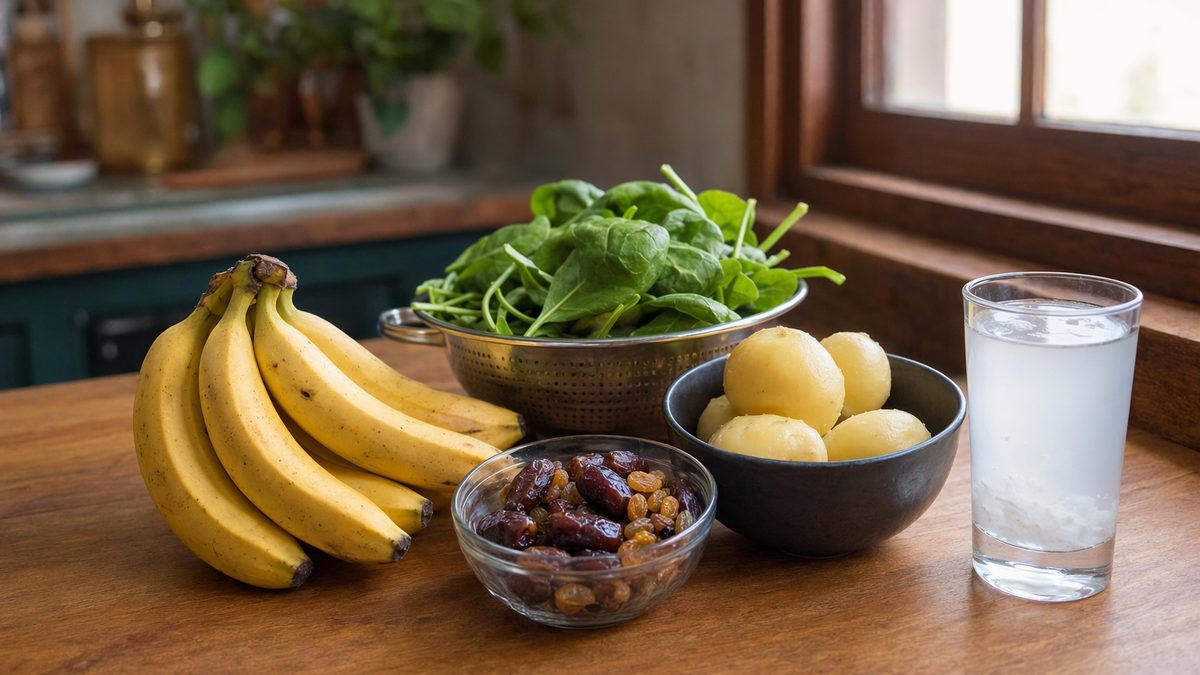
Per serving, the biggest Indian potassium sources are a medium potato (812 mg), 100 g of spinach (625 mg) and a glass of coconut water (625 mg), followed by sweet potato, 30 g of dry soya bean (484 mg), a banana (434 mg), guava and the dals. Adults need about 2,600 mg (women) to 3,400 mg (men) a day (US adequate intakes). Banana is a good source, but it is not the richest; it is just the best known.
- Dal and rajma: 418 mg in 30 g dry toor dal, 410 mg in 30 g dry rajma.
- Dry fruit: 332 mg in 30 g of raisins, 241 mg in about 3 dates.
- Drinks: coconut water 625 mg per glass, milk 288 mg.
Counting calories and protein? Snap a photo of your meal and the UltraFit360 app logs both against your daily target. Get UltraFit360 on the App Store or Google Play.
Potassium helps control blood pressure, muscle contraction and fluid balance, and many Indian diets fall short of it, especially when they rely on rice, refined flour and little fruit or vegetable. The usual advice is "eat a banana", but a banana is only a middling source. This page lists Indian foods by potassium per serving, because a food that is rich per 100 g (such as dried spices) may give very little in a normal serving.
Potassium Rich Foods in India: mg per Serving
| Food and serving | Weight | Calories | Protein | Potassium per serving | % of 2600 mg daily value |
|---|---|---|---|---|---|
| Potato, raw (150 g) | 150 g (1 medium) | 105 kcal | 2.3 g | 812 mg | 31% |
| Spinach (100 g) | 100 g raw | 24 kcal | 2.1 g | 625 mg | 24% |
| Coconut water, fresh (250 ml) | 250 ml (1 glass) | 48 kcal | 1.8 g | 625 mg | 24% |
| Sweet potato (150 g) | 150 g | 164 kcal | 2.0 g | 518 mg | 20% |
| Soya bean, dry (30 g) | 30 g dry | 114 kcal | 10.7 g | 484 mg | 19% |
| Banana, ripe (120 g) | 120 g peeled (1 medium) | 133 kcal | 1.5 g | 434 mg | 17% |
| Guava, white (150 g) | 150 g (1 medium) | 48 kcal | 2.2 g | 424 mg | 16% |
| Toor (red gram) dal, dry (30 g) | 30 g dry | 99 kcal | 6.5 g | 418 mg | 16% |
| Rajma (red kidney bean), dry (30 g) | 30 g dry | 89 kcal | 5.8 g | 410 mg | 16% |
| Moong dal, dry (30 g) | 30 g dry | 98 kcal | 7.2 g | 380 mg | 15% |
| Cucumber (200 g) | 200 g (1 medium) | 39 kcal | 1.4 g | 366 mg | 14% |
| Raisins, black (30 g) | 30 g (a handful) | 92 kcal | 0.8 g | 332 mg | 13% |
| Button mushroom (100 g) | 100 g | 28 kcal | 3.7 g | 318 mg | 12% |
| Pistachios (30 g) | 30 g | 162 kcal | 7.0 g | 316 mg | 12% |
| Beetroot (100 g) | 100 g | 36 kcal | 1.9 g | 306 mg | 12% |
| Cow milk, whole (250 g) | 250 ml (1 glass) | 182 kcal | 8.2 g | 288 mg | 11% |
| Chana dal, dry (30 g) | 30 g dry | 99 kcal | 6.5 g | 287 mg | 11% |
| Dates, dry (30 g) | 30 g (about 3 dates) | 96 kcal | 0.7 g | 241 mg | 9% |
| Curd (plain yogurt, 150 g) | 150 g (1 katori) | 92 kcal | 5.2 g | 232 mg | 9% |
| Almonds (30 g) | 30 g | 183 kcal | 5.5 g | 210 mg | 8% |
| Groundnuts (30 g) | 30 g | 156 kcal | 7.1 g | 204 mg | 8% |
| Tomato, ripe (100 g) | 100 g | 19 kcal | 0.8 g | 167 mg | 6% |
Source: IFCT 2017 (ICMR-NIN) for the IFCT rows (energy converted from kJ; potassium converted from g to mg) and USDA FoodData Central (SR Legacy) for coconut water (170174) and curd (171284). Dry weights for pulses and nuts; raw weights for vegetables. The percentage is of 2,600 mg, the US adequate intake for adult women (3,400 mg for men). Serving sizes are our assumptions.
The list is sorted by potassium per serving. A medium potato (812 mg), 100 g of spinach (625 mg) and a glass of coconut water lead, ahead of a banana (434 mg). Pulses and dry fruit are very dense per 100 g, but the servings are small: 30 g of dry soya bean gives 484 mg, and a katori of cooked dal holds roughly what 30 g of dry dal does. Coconut water (625 mg a glass) and milk (288 mg a glass) are easy drinks to add. Cucumber and tomato are low per 100 g (183 and 167 mg), so they help only in large amounts.
How Much Potassium Do You Need?
The US adequate intake is 2,600 mg a day for adult women and 3,400 mg for adult men; some countries set it higher, around 3,500 mg. Most people eating a mixed Indian diet with dal, vegetables and fruit get a large share of this, but a diet of rice, refined flour and tea gets far less. Potassium works with sodium: a diet high in salt and low in potassium is linked with higher blood pressure. Raising potassium through food, rather than supplements, is the safe way, and it helps blood pressure in many people. Salt substitutes made from potassium chloride can be dangerous for some people, so do not use them without medical advice.
Who Should Be Careful With Potassium?
People with kidney disease, those on certain blood pressure medicines (ACE inhibitors, ARBs, potassium-sparing diuretics) and anyone told to restrict potassium should not simply eat more of these foods. High blood potassium can cause serious heart rhythm problems. If you have kidney disease or take such medicines, ask your doctor or a renal dietitian before changing your diet. Healthy people do not usually get too much potassium from food.
Potassium Rich Foods in Hindi (Aam Naam)
- Dal aur rajma: soyabean, toor dal, rajma, moong dal, chana dal.
- Sookha mewa: kishmish (raisins), khajoor (dates), pista, badam.
- Sabziyan: aloo, palak, shakarkandi, chukandar (beetroot), mushroom.
- Phal: kela (banana), amrood (guava), nariyal pani (coconut water).
- Doodh aur dahi bhi thoda potassium dete hain.
Easy Ways to Add Potassium to Your Day
- Have a katori of dal or rajma every day; see protein in dal and protein in rajma.
- Eat potatoes with the skin on; see potato calories and protein.
- Add spinach or other leafy greens to dal or sabzi.
- Swap a sweet drink for coconut water or buttermilk.
- Keep a small box of mixed nuts and raisins for snacks; see almonds calories and protein.
- Cut down on added salt, which makes potassium more effective.
Spices such as turmeric and cumin are very rich in potassium per 100 g (IFCT lists about 2,374 mg and 1,886 mg per 100 g), but a teaspoon weighs only 2 to 3 g, so they add little. For fruit with potassium see sweet potato calories and guava calories and nutrition. For your protein target use the protein calculator, and browse the nutrition hub.
Frequently Asked Questions
Which Indian foods are highest in potassium?
Per serving: dry soya bean (484 mg in 30 g), toor dal (418 mg), rajma, moong dal, raisins, pistachios, dates, potato (812 mg in a medium potato) and spinach (625 mg per 100 g).
How much potassium is in a banana?
A 120 g peeled banana has about 434 mg (IFCT 2017), which is about 17 percent of 2,600 mg. It is a good source, but potato, spinach, dal and dry fruit give more per serving.
How much potassium do I need a day?
The US adequate intake is 2,600 mg for adult women and 3,400 mg for adult men. Your needs may differ with health conditions and medicines.
What are potassium rich vegetables?
Potato, spinach, sweet potato, mushroom and beetroot. 100 g of spinach has about 625 mg and a medium potato about 812 mg.
Does coconut water have a lot of potassium?
A 250 ml glass has about 625 mg (USDA), a good amount, with few calories.
Who should avoid high-potassium foods?
People with kidney disease or on medicines that raise potassium should talk to their doctor before eating more. Healthy people rarely get too much from food.
Sources: IFCT 2017 (ICMR-National Institute of Nutrition) for the potassium and energy of pulses, dry fruit, nuts, vegetables, fruit and milk (IFCT lists minerals in grams; converted to mg); USDA FoodData Central (SR Legacy) for fresh coconut water (170174) and plain yogurt (171284). Adequate intakes are the 2019 US figures. Serving sizes are our assumptions. This page is general information, not medical advice.
Hitting your protein target on an Indian diet is easier when you can see it: UltraFit360 logs meals from a photo and tracks protein against your goal. Work out your number with the protein calculator.
Track Your Meals and Nutrients Automatically
Log meals from a photo in UltraFit360 and see protein and calories against your daily target.