💡 Quick Answer
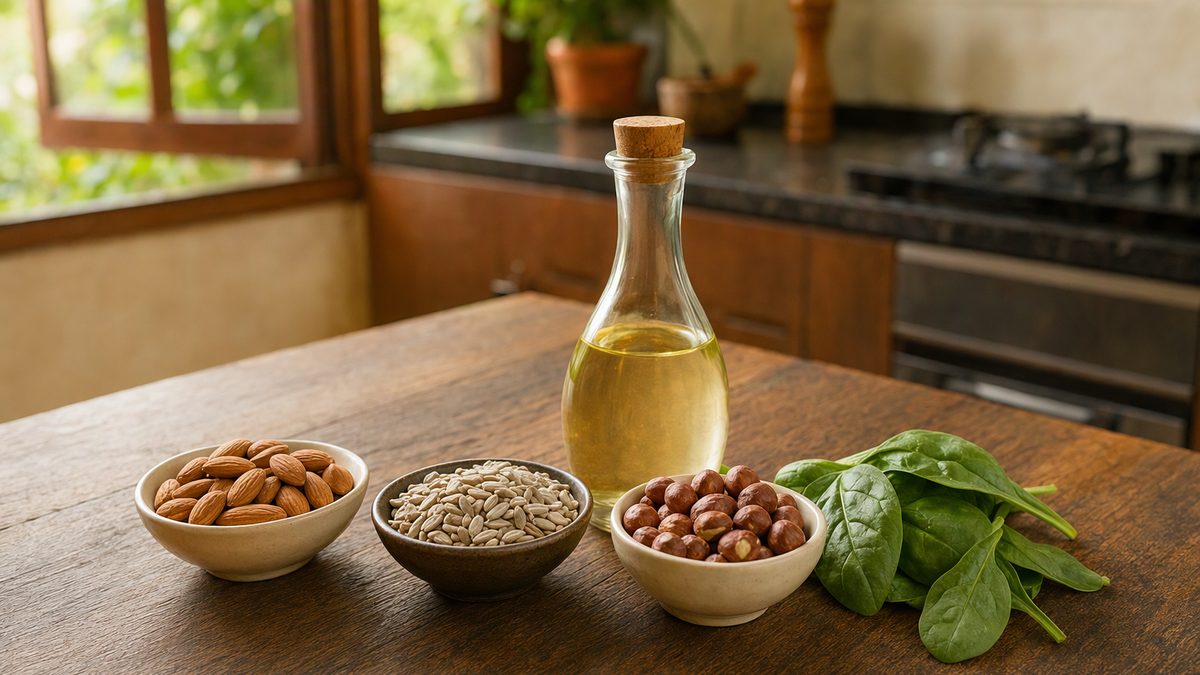
Per serving, the richest vitamin E sources are wheat germ oil (20.9 mg a tablespoon), sunflower seeds (10.6 mg in 30 g), almonds (7.7 mg in 30 g), sunflower oil (5.8 mg a tablespoon) and rice bran oil (4.5 mg), against an adult need of 15 mg a day (NIH). Spinach, avocado and mango are modest sources at about 1.4 to 2 mg per serving. Vitamin E deficiency from diet is rare in healthy adults.
- Nuts and seeds: hazelnuts 4.5 mg, groundnuts 2.5 mg and cashews 0.3 mg per 30 g.
- Oils: peanut oil 2.2 mg a tablespoon; coconut oil almost none.
- Vegetables and fruit: spinach 2.0 mg per 100 g.
Counting calories and protein? Snap a photo of your meal and the UltraFit360 app logs both against your daily target. Get UltraFit360 on the App Store or Google Play.
Vitamin E is a fat-soluble antioxidant, and most Indian adults who eat nuts, seeds and cooking oils regularly get enough. The question "vitamin E sources" comes up for people who avoid nuts, cook with ghee or coconut oil, or are choosing a cooking oil. This page ranks common foods by vitamin E per realistic serving, not per 100 g, so you can see what a handful of almonds or a tablespoon of oil actually gives against the 15 mg daily need.
Vitamin E Rich Foods: mg per Serving
| Food and serving | Weight | Calories | Protein | Fat | Vitamin E per serving | % of 15 mg daily value |
|---|---|---|---|---|---|---|
| Wheat germ oil (1 tbsp) | 14 g (1 tbsp) | 124 kcal | 0.0 g | 14.0 g | 20.9 mg | 139% |
| Sunflower seeds (30 g) | 30 g (a small handful) | 175 kcal | 6.2 g | 15.4 g | 10.6 mg | 70% |
| Almonds (30 g) | 30 g (about 25 almonds) | 174 kcal | 6.3 g | 15.0 g | 7.7 mg | 51% |
| Sunflower oil (1 tbsp) | 14 g (1 tbsp) | 124 kcal | 0.0 g | 14.0 g | 5.8 mg | 38% |
| Rice bran oil (1 tbsp) | 14 g (1 tbsp) | 124 kcal | 0.0 g | 14.0 g | 4.5 mg | 30% |
| Hazelnuts (30 g) | 30 g | 188 kcal | 4.5 g | 18.2 g | 4.5 mg | 30% |
| Pine nuts (30 g) | 30 g | 202 kcal | 4.1 g | 20.5 g | 2.8 mg | 19% |
| Groundnuts, raw (30 g) | 30 g | 170 kcal | 7.7 g | 14.8 g | 2.5 mg | 17% |
| Peanut (groundnut) oil (1 tbsp) | 14 g (1 tbsp) | 124 kcal | 0.0 g | 14.0 g | 2.2 mg | 15% |
| Avocado (100 g) | 100 g (half a fruit) | 160 kcal | 2.0 g | 14.7 g | 2.1 mg | 14% |
| Spinach, raw (100 g) | 100 g | 23 kcal | 2.9 g | 0.4 g | 2.0 mg | 14% |
| Olive oil (1 tbsp) | 14 g (1 tbsp) | 124 kcal | 0.0 g | 14.0 g | 2.0 mg | 13% |
| Corn oil (1 tbsp) | 14 g (1 tbsp) | 126 kcal | 0.0 g | 14.0 g | 2.0 mg | 13% |
| Kiwi fruit (100 g) | 100 g (1 fruit) | 61 kcal | 1.1 g | 0.5 g | 1.5 mg | 10% |
| Mango (150 g) | 150 g (1 medium) | 90 kcal | 1.2 g | 0.6 g | 1.4 mg | 9% |
| Broccoli, raw (100 g) | 100 g | 34 kcal | 2.8 g | 0.4 g | 0.8 mg | 5% |
| Pumpkin seeds (30 g) | 30 g | 168 kcal | 9.1 g | 14.7 g | 0.7 mg | 4% |
| Tomato (100 g) | 100 g | 18 kcal | 0.9 g | 0.2 g | 0.5 mg | 4% |
| Egg, whole (1 large, 50 g) | 1 large | 72 kcal | 6.3 g | 4.8 g | 0.5 mg | 4% |
| Cashew nuts (30 g) | 30 g | 166 kcal | 5.5 g | 13.2 g | 0.3 mg | 2% |
| Sesame seeds (10 g) | 10 g (1 tbsp) | 57 kcal | 1.8 g | 5.0 g | 0.0 mg | 0% |
Source: USDA FoodData Central (SR Legacy), vitamin E as alpha-tocopherol. IDs: wheat germ oil 171014, sunflower seeds 170562, almonds 170567, sunflower oil 171017, rice bran oil 171013, hazelnuts 170581, corn oil 171029, peanut oil 171410, olive oil 171413, pine nuts 170591, peanuts 172430, avocado 171705, spinach 168462, mango 169910, kiwi 168153, pumpkin seeds 170556, broccoli 170379, tomato 170457, egg 171287, cashews 170162, sesame 170150. The percentage is of 15 mg, the NIH adult RDA. Servings are our assumptions; a tablespoon of oil is about 14 g.
Nuts and seeds are the best everyday sources: a 30 g handful of sunflower seeds gives 10.6 mg and almonds 7.7 mg, which is about half of a day's need. Some cooking oils are surprisingly strong: a tablespoon of sunflower oil gives 5.8 mg and rice bran oil 4.5 mg, while groundnut, corn and olive oil give about 2 mg. Coconut oil and ghee contribute little, and mustard oil is not in the USDA table. Greens and fruit are minor: spinach has 2.0 mg per 100 g and a mango 1.4 mg. Eggs give about 0.5 mg each.
A Note on the Data: Why We Use USDA Here
India's food composition tables (IFCT 2017) also report vitamin E, as alpha-tocopherol equivalents, but the results for some nuts differ sharply from other databases: IFCT lists pistachios at 33.9 mg per 100 g, USDA at 2.9 mg, while for almonds both give about 25 mg. Because the two sources measure different things for some foods, we use USDA's alpha-tocopherol values throughout this page so that the rows are comparable. Oils are also not reported for vitamin E in IFCT.
How Much Vitamin E Do You Need?
The NIH recommended intake for adults is 15 mg a day of alpha-tocopherol, 19 mg while breastfeeding. A day with 30 g of almonds (7.7 mg) and cooking with 2 tablespoons of sunflower or rice bran oil already reaches it. Deficiency is rare and usually linked to conditions that stop fat absorption. High-dose vitamin E supplements are not recommended without medical advice, because they can increase bleeding risk and do not prevent disease in healthy people. Get it from food.
Best Vitamin E Foods for Vegetarians and Vegans
- Handful of almonds or sunflower seeds as a snack; see almonds calories and protein.
- Sunflower or rice bran oil for everyday cooking, using a measured tablespoon per person.
- Spinach, avocado and mango as extras, with some fat to help absorption.
- Peanuts and peanut butter, a cheaper nut; see protein in peanuts.
Calories matter: 30 g of almonds is about 174 kcal and 30 g of sunflower seeds about 175 kcal, and a tablespoon of any oil about 120 kcal. Seeds and nuts should replace snacks, not add to them. For more on cashews, see cashew calories and protein, which are low in vitamin E.
Vitamin E for Skin, Hair and Immunity: What Is Proven?
Vitamin E is needed for normal immune function and protects cell membranes from oxidative damage, but there is limited evidence that extra vitamin E from supplements improves skin or hair in people who are not deficient. Eating a varied diet with nuts, seeds and plant oils covers the need. If you have a fat-malabsorption condition, are very underweight or have unexplained nerve symptoms, see a doctor.
Set your protein target with the protein calculator, and see the nutrition hub for more food pages; iron rich foods and potassium rich foods use the same per-serving layout. This page is general information, not medical advice.
Frequently Asked Questions
Which foods are richest in vitamin E?
Wheat germ oil, sunflower seeds (10.6 mg per 30 g), almonds (7.7 mg per 30 g), sunflower oil (5.8 mg per tablespoon), rice bran oil and hazelnuts (USDA).
How much vitamin E is in 30 g of almonds?
About 7.7 mg, around half of the 15 mg adult daily need.
Which cooking oil has the most vitamin E?
Among common oils, sunflower oil (5.8 mg per tablespoon) and rice bran oil (4.5 mg) are the highest. Coconut oil has almost none.
How much vitamin E do adults need?
The NIH RDA is 15 mg a day for adults, 19 mg while breastfeeding.
Do vegetables have vitamin E?
A little: spinach has 2.0 mg per 100 g and broccoli 0.8 mg. Nuts, seeds and oils are far richer.
Should I take a vitamin E supplement?
Healthy people should get it from food. High-dose supplements can increase bleeding risk; ask your doctor before taking them.
Sources: USDA FoodData Central (SR Legacy) for vitamin E (alpha-tocopherol), energy and protein of every row; IFCT 2017 (ICMR-National Institute of Nutrition) was checked and is quoted only for the comparison in the data note. The 15 mg reference is the NIH Office of Dietary Supplements adult RDA. Servings are our assumptions. This page is general information, not medical advice.
Hitting your protein target on an Indian diet is easier when you can see it: UltraFit360 logs meals from a photo and tracks protein against your goal. Work out your number with the protein calculator.
Track Your Meals and Nutrients Automatically
Log meals from a photo in UltraFit360 and see protein and calories against your daily target.