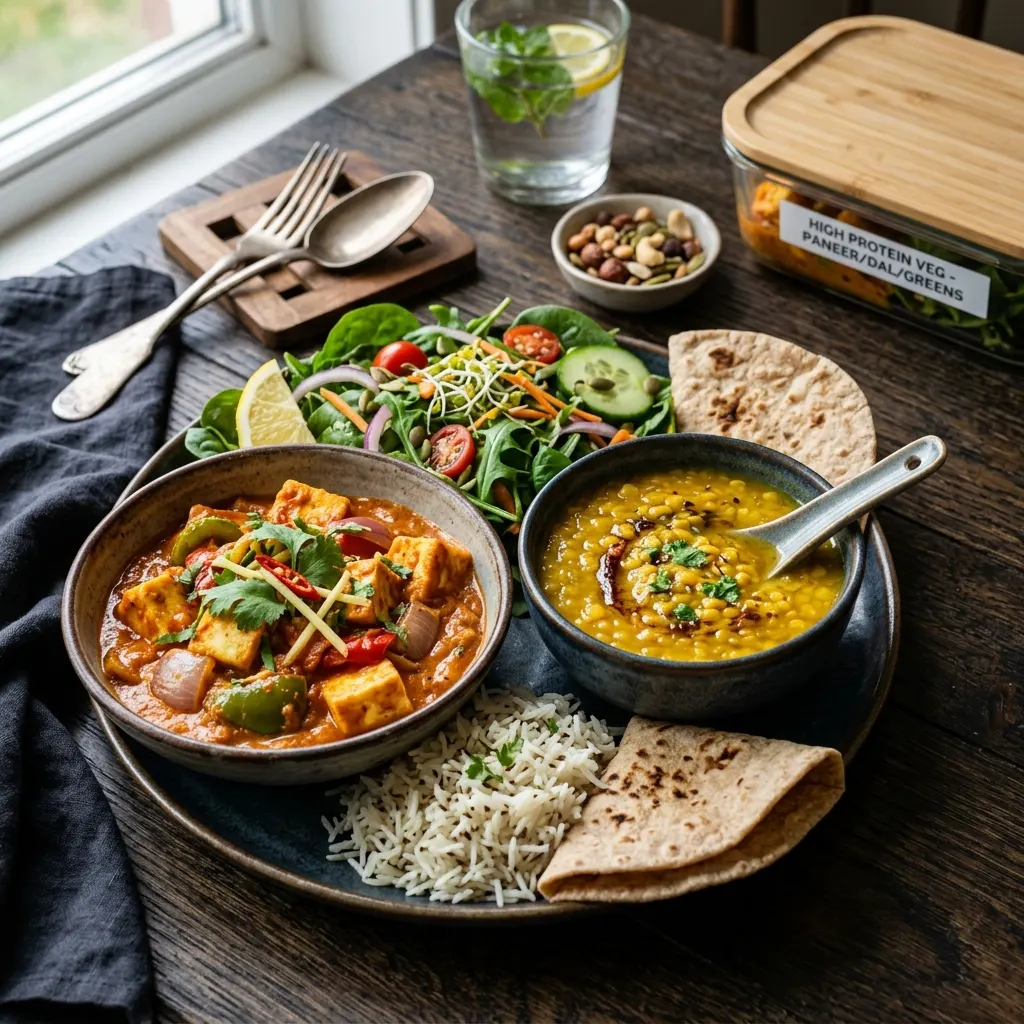
💡 Quick Answer
100 g of regular full-fat paneer has about 18–20 g of protein and roughly 300 kcal, with 24–25 g of fat (IFCT 2017 lists 18.9 g protein per 100 g). A typical 50 g serving gives 9–10 g of protein, and a full 200 g pack gives 37–40 g. Low-fat or "high-protein" paneer can reach 20–25 g per 100 g.
- Per 100 g: 18–20 g protein, ~300 kcal, ~25 g fat.
- Per 200 g pack: 37–40 g protein but ~600 kcal.
- Protein per calorie: only ~6 g per 100 kcal, versus ~19 g for chicken breast.
- Best use: 75–150 g a day as one protein source alongside dal, curd or soya.
Paneer is the default protein for most vegetarian gym-goers in India. It is a genuinely good source: the protein is mostly casein, it contains all nine essential amino acids, and it fits into almost any Indian meal. The catch is the fat. Weight for weight, regular paneer carries more fat than protein, so the calorie bill adds up quickly. Here are the actual numbers and how to use them.
How Much Protein Is in 100 g of Paneer?
The Indian Food Composition Tables (IFCT 2017, ICMR-National Institute of Nutrition) list paneer made from full-fat milk at about 18.9 g of protein per 100 g, with around 25 g of fat and roughly 300–305 kcal. Packaged brands are in the same range: Amul Malai Paneer's label, for example, shows 20 g protein, 24 g fat and about 312 kcal per 100 g.
Paneer varies more than most foods because the moisture level depends on the milk and how hard the curds are pressed. Firmer, drier paneer has more protein per 100 g; soft, freshly made paneer has less. That is why you will see anything from 14 g to 25 g quoted online.
Paneer protein by type and serving size
| Type of paneer | Per 100 g | Per 50 g serving (4–5 medium cubes) | Per 200 g block |
|---|---|---|---|
| Full-fat paneer (IFCT 2017) | 18.9 g protein · ~305 kcal · ~25 g fat | 9.4 g protein · ~150 kcal | 37.7 g protein · ~610 kcal |
| Malai paneer (Amul label) | 20 g protein · ~312 kcal · 24 g fat | 10 g protein · ~156 kcal | 40 g protein · ~624 kcal |
| Low-fat / "high-protein" paneer (brand labels) | 20–25 g protein · ~160–220 kcal · 6–12 g fat | 10–12.5 g protein · ~80–110 kcal | 40–50 g protein · ~320–440 kcal |
| Homemade paneer (estimate) | 14–18 g protein · ~220–290 kcal | 7–9 g protein · ~110–145 kcal | 28–36 g protein · ~440–580 kcal |
All values are for raw (uncooked) paneer. Frying in oil or ghee adds roughly 45 kcal per teaspoon of fat absorbed, and a rich gravy can double the calories of the dish without adding protein. Homemade figures are estimates: they depend on whether you use toned or full-cream milk and how long you press the chenna.
A note on "malai" labels: in brand names it usually means a soft, full-fat paneer, not a lower-fat one. If you want less fat, look for packs labelled low-fat, lite or high-protein, and check the fat line on the label.
Paneer vs Tofu vs Chicken vs Eggs
Paneer is often compared with tofu (for vegetarians) and chicken or eggs (for everyone else). Per 100 g it sits in the middle for protein but near the top for calories.
| Food (100 g) | Protein | Calories | Protein per 100 kcal | Relative cost per gram of protein |
|---|---|---|---|---|
| Paneer (full-fat, raw) | 18–20 g | ~300 kcal | ~6 g | Highest of the four |
| Firm tofu (USDA, varies by brand) | 12–17 g | ~80–145 kcal | ~12 g | Middle, depends on brand and city |
| Chicken breast (cooked, skinless, USDA) | 31 g | 165 kcal | ~19 g | Low |
| Whole eggs (2 large, USDA) | 12.6 g | ~143 kcal | ~9 g | Lowest of the four |
On cost, eggs are usually the cheapest way to buy protein among these four, followed by chicken, with tofu and paneer more expensive per gram of protein. Prices swing by city and season, so treat this as a ranking rather than a fixed rule. If budget matters and you are vegetarian, soya chunks beat all four: about 52 g of protein per 100 g dry.
For a deeper side-by-side, see our full paneer vs tofu protein comparison.
How Much Paneer Should You Eat Per Day?
There is no fixed limit, but for most people 75–150 g of paneer a day is a sensible range. That gives 14–30 g of protein for about 225–450 kcal.
- Building muscle, vegetarian: 100–150 g a day works well as one of three or four protein sources. Do not try to hit your whole target from paneer alone: 100 g of protein from paneer would cost about 1,600 kcal.
- Losing fat: stick to 50–100 g, choose low-fat paneer, and get the rest of your protein from leaner foods such as hung curd, dal, soya and whey.
- Heart health or high cholesterol: full-fat paneer carries around 14 g of saturated fat per 100 g, so low-fat versions are the better default. Talk to your doctor or dietitian if you have been told to limit saturated fat.
Not sure what your daily protein target is? Most active adults do well on roughly 1.6 g per kg of body weight. The protein calculator gives a personal number.
Best Ways to Eat Paneer for Protein
The cooking method changes the calories far more than it changes the protein.
- Paneer bhurji with onion, tomato and minimal oil: easy to make in 10 minutes. Add two eggs if you eat them for another 12 g of protein.
- Paneer tikka (grilled or air-fried, marinated in curd): one of the leanest restaurant-style options.
- Raw cubes in salad or with chaat masala: no added fat at all.
- Paneer stuffed roti or paratha: a good way to raise breakfast protein. See our high-protein Indian breakfast ideas.
- Palak paneer or matar paneer at home: fine, as long as you go light on cream and butter.
Paneer butter masala, shahi paneer and deep-fried paneer pakoras are the ones to save for occasions. A restaurant portion can easily cross 500–700 kcal with most of it from fat.
Paneer and Other Vegetarian Proteins
Paneer works best as part of a mix. A day that combines paneer, dal, chana, curd and soya gets you to 80–120 g of protein without excessive fat. Our Indian food calorie and protein chart lists 45+ common foods side by side so you can plan around what you already eat.
Frequently Asked Questions
How much protein is in 100g paneer?
Regular full-fat paneer has about 18 to 20 g of protein per 100 g. IFCT 2017 lists 18.9 g, with roughly 300 kcal and 25 g of fat. Low-fat or high-protein paneer can have 20 to 25 g of protein per 100 g with far less fat.
How much protein is in 200g paneer?
A 200 g pack of regular paneer has about 37 to 40 g of protein and roughly 600 to 625 kcal. A 200 g pack of low-fat paneer gives about 40 to 50 g of protein for around 320 to 440 kcal, depending on the brand.
Is paneer a good source of protein?
Yes. Paneer protein is mostly casein and contains all essential amino acids. Its weakness is calories: regular paneer gives only about 6 g of protein per 100 kcal, so it works best as one protein source among several rather than your only one.
Paneer or chicken: which has more protein?
Chicken breast has more. Cooked skinless chicken breast has about 31 g of protein and 165 kcal per 100 g, while paneer has about 18 to 20 g of protein and around 300 kcal per 100 g.
Can I eat paneer every day?
Yes, most healthy people can eat paneer daily. Around 75 to 150 g a day is a sensible range. If you are trying to lose fat or have been told to watch saturated fat, choose low-fat paneer and keep portions near 50 to 100 g.
Does cooking paneer reduce its protein?
No. Normal cooking does not meaningfully reduce paneer protein. Frying or rich gravies add calories from fat, so grilling, bhurji with little oil or eating it raw keeps the protein-to-calorie ratio best.
Sources: IFCT 2017 (ICMR-NIN) for paneer, pulses and curd; USDA FoodData Central for chicken breast, whole egg and firm tofu; brand labels (Amul) for packaged paneer. Values are typical, not lab results for your specific pack.
Hitting your protein target on an Indian diet is easier when you can see it: UltraFit360 logs meals from a photo and tracks protein against your goal. Work out your number with the protein calculator.
Track Your Paneer and Protein Automatically
Snap a photo of your paneer bhurji or tikka and UltraFit360 logs calories and protein against your daily target.