💡 Quick Answer
Dry chana has about 18–21 g of protein per 100 g (USDA lists raw kabuli chickpeas at 20.5 g). After boiling it absorbs water, so 100 g of boiled chana has about 9 g of protein and 160–165 kcal. Roasted chana and sattu keep 18–22 g per 100 g.
- Kabuli or kala chana, dry: 18–21 g protein per 100 g.
- Boiled chana: ~9 g protein per 100 g; a katori of chole gives ~10 g.
- Roasted chana and sattu: 18–22 g per 100 g, the most convenient forms.
- Sprouting does not add protein; it adds water.
Chana in all its forms (white kabuli chole, brown kala chana, roasted bhuna chana and sattu flour) is one of the cheapest and most versatile protein sources in India. The main thing to get right is the basis: dry, cooked and roasted chana have very different numbers per 100 g, even though the protein per chickpea is the same.
Protein in Chana Per 100 g: Dry, Cooked and Roasted
| Type | Basis | Protein per 100 g | Calories per 100 g | Typical serving |
|---|---|---|---|---|
| Kabuli chana (white chickpeas) | Raw / dry | ~19–20.5 g | ~360–378 kcal | 40 g dry for one katori chole → ~8 g |
| Kabuli chana | Boiled | ~8.9 g | ~164 kcal | 1 katori (150 g) chole → ~10 g with gravy |
| Kala chana (black / desi chickpeas) | Raw / dry | ~18–20 g | ~360–375 kcal | 40 g dry → ~7.5 g |
| Kala chana | Boiled | ~8–9 g | ~150–165 kcal | 1 katori (100 g) boiled → ~8.5 g |
| Roasted chana (bhuna chana) | Dry roasted | ~18–22 g | ~360–380 kcal | 1 handful (30 g) → ~6 g, ~110 kcal |
| Sattu (roasted chana flour) | Dry flour | ~20–22 g | ~360–400 kcal | 2 heaped tbsp (30 g) → ~6–6.5 g |
| Sprouted kala chana | Fresh sprouts | ~9–11 g (calculated) | ~170–190 kcal | 1 katori (100 g) → ~10 g |
Kabuli chana values are from USDA FoodData Central (raw: 20.5 g protein, 378 kcal; boiled: 8.9 g, 164 kcal). IFCT 2017 lists whole Bengal gram (kala chana) at about 18.8 g of protein per 100 g. Roasted chana and sattu vary with moisture and whether the husk is removed, which is why a range is shown.
Why boiled chana has less protein per 100 g
Dry chickpeas roughly double to two-and-a-half times their weight when soaked and boiled. The protein does not disappear; it is just spread across more grams of water. So 40 g of dry chana (about 8 g of protein) becomes about 90–100 g of boiled chana, still with about 8 g of protein. When you log chana, check whether the number you are using is for dry or cooked weight.
Kabuli Chana vs Kala Chana
Protein is close: both land around 18–21 g per 100 g dry. The bigger differences are elsewhere.
- Fibre: kala chana keeps its thick brown seed coat, so it has more fibre and digests more slowly. This is useful for appetite control.
- Taste and use: kabuli is softer and creamier (chole, hummus, salads); kala chana is firmer and nuttier (sundal, chana chaat, Bengali ghugni).
- Cost: kala chana is usually the cheaper of the two.
Roasted Chana and Sattu: The Easiest Forms
Roasted chana and sattu need no cooking and keep for weeks, which makes them ideal for office snacks and pre-workout fuel.
- Roasted chana: a 30 g handful gives about 6 g of protein and 110 kcal with a lot of fibre. It is a far better snack than namkeen or biscuits.
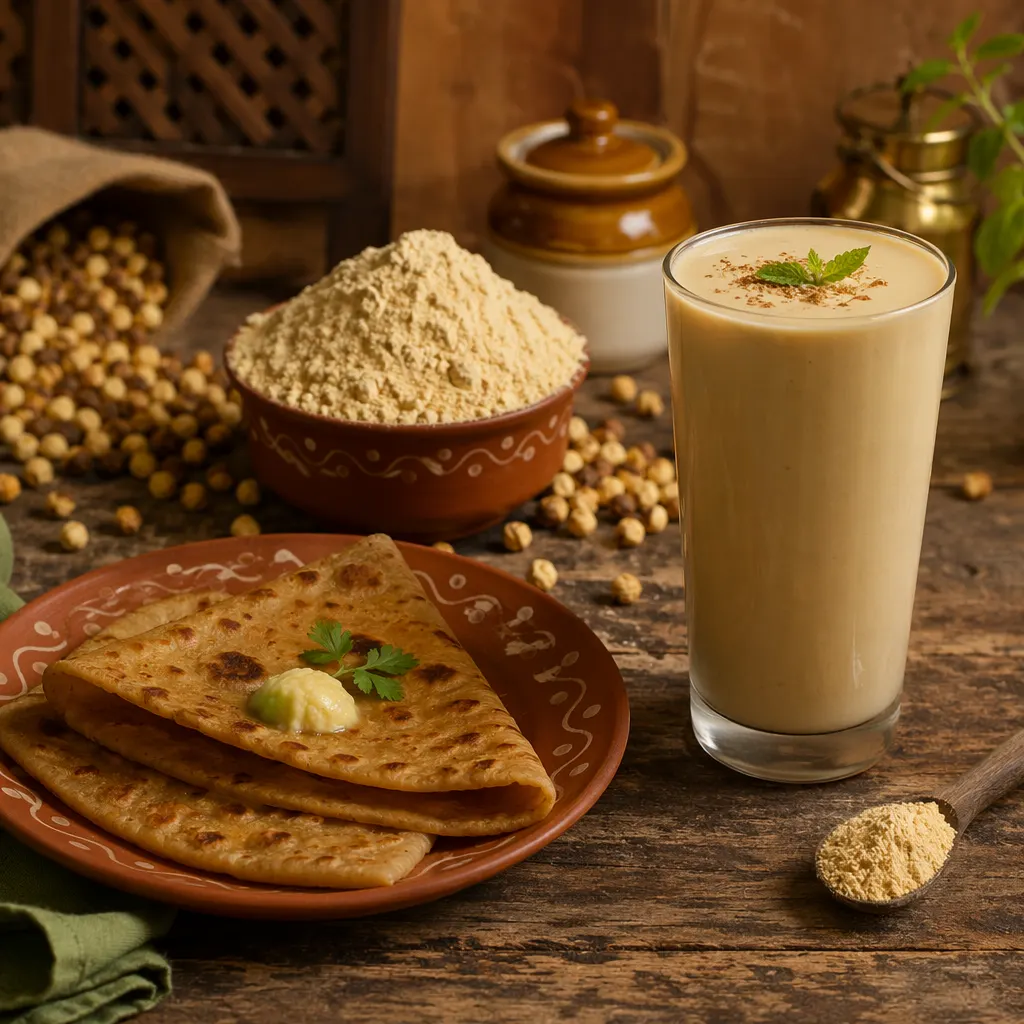
- Sattu sharbat: 30–40 g of sattu in water with lemon, salt and jeera gives 6–8 g of protein. Mix it into milk instead of water and you add another 8 g. Our sattu protein guide covers recipes and timing.
- Sattu paratha or chilla: a good way to raise breakfast protein. More ideas in our high-protein Indian breakfast guide.
Sprouted Kala Chana
Sprouting is popular for good reasons: it softens the bean, makes it quicker to cook or eat lightly steamed, and may reduce some compounds that cause bloating. It does not meaningfully increase protein. Because sprouted chana has absorbed water, it shows less protein per 100 g than dry chana (about 9–11 g by our calculation from dry weight). A katori of sprouted kala chana chaat with onion, tomato and lemon is still a solid 8–10 g of protein for under 200 kcal.
Chana Is Not a Complete Protein on Its Own
Like other pulses, chana is rich in lysine but low in methionine. Pairing it with a cereal fixes this: chole with rice or bhature, chana with roti, or sattu made into a paratha. The same logic applies to all dals, explained in protein in dal.
How Chana Fits a High-Protein Day
At 6–10 g of protein per serving, chana is a strong supporting food, not a main one. A practical vegetarian day might combine a sattu drink (8 g), a katori of chole (10 g), roasted chana as a snack (6 g), paneer (15–20 g) and curd (5–15 g). For calories and protein in 45+ other Indian foods, see the Indian food calorie and protein chart.
Frequently Asked Questions
How much protein is in 100g chana?
Dry chana has about 18 to 21 g of protein per 100 g. USDA lists raw kabuli chickpeas at 20.5 g and IFCT 2017 lists whole Bengal gram at about 18.8 g. Boiled chana has about 9 g of protein per 100 g because it absorbs water.
How much protein is in 1 katori boiled chana?
A 100 g katori of boiled kala or kabuli chana has about 8 to 9 g of protein and roughly 150 to 165 kcal. A 150 g katori of chole with gravy usually gives around 10 g of protein.
Which has more protein, roasted chana or boiled chana?
Per 100 g, roasted chana has more, about 18 to 22 g versus about 9 g for boiled, because roasting removes water while boiling adds it. Per chickpea, the protein is about the same.
Is kala chana better than kabuli chana for protein?
They are very similar, at around 18 to 21 g of protein per 100 g dry. Kala chana has more fibre from its seed coat and is usually cheaper; kabuli chana is softer and creamier.
Does sprouting increase protein in chana?
Not meaningfully. Sprouting adds water, so protein per 100 g of sprouts is lower than for dry chana. Per gram of original dry chana the protein stays roughly the same, though sprouts can be easier to digest.
Sources: USDA FoodData Central for raw and boiled chickpeas; IFCT 2017 (ICMR-NIN) for whole Bengal gram, roasted Bengal gram and pulses; brand labels and IFCT-based figures for sattu. Cooked and sprouted values are calculated from dry weight and water uptake.
Hitting your protein target on an Indian diet is easier when you can see it: UltraFit360 logs meals from a photo and tracks protein against your goal. Work out your number with the protein calculator.
Track Chana, Sattu and Every Indian Meal
Log chole, chana chaat or a sattu sharbat from a photo and see your protein for the day add up in UltraFit360.