💡 Quick Answer
100 g of dry soybeans has about 35.6 g of protein and 382 kcal (IFCT 2017), and 100 g of boiled soybeans has 18.2 g and 172 kcal. Soybean is the highest-protein whole legume, with about double the protein of moong or rajma, but it also has 19.8 g of fat per 100 g dry. A 150 g katori of boiled soybeans gives about 27.3 g of protein.
- 30 g dry soya bean: 10.7 g protein, 114 kcal.
- 50 g dry soya bean: 17.8 g protein, 191 kcal.
- 1 cup boiled (172 g): 31.3 g protein.
Portion calculator
30 g of soya bean, brown, dry (IFCT) ≈ 10.7 g protein · 115 kcal
Scaled from the figures on this page. Brands and recipes vary.
Counting calories and protein? Snap a photo of your meal and the UltraFit360 app logs both against your daily target. Get UltraFit360 on the App Store or Google Play.
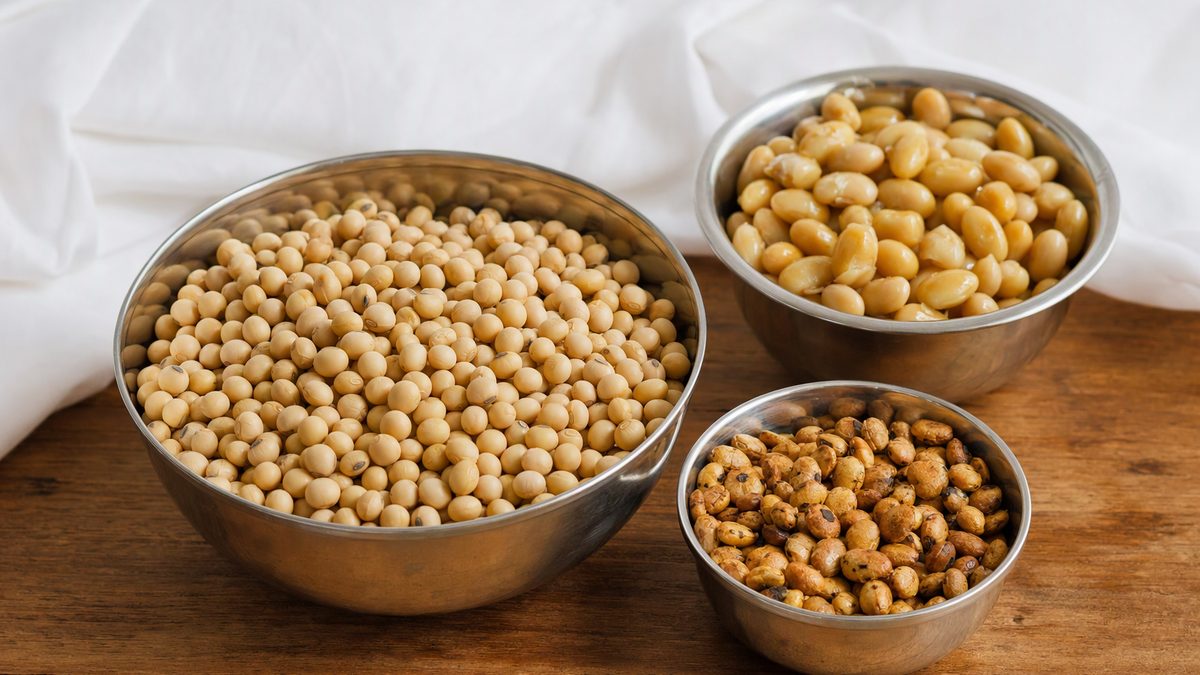
Soybean (soya bean, bhatmas in Maharashtra) is the plant protein heavyweight. It is the raw material for tofu, soya milk, soya chunks and soy flour, and it can also be eaten whole: boiled, roasted or sprouted. The numbers on food labels and in tables vary widely, so this page lays out each form, each common portion and what the fat and fibre add. If you want the processed product, see our page on soya chunks protein; this page is about the bean itself.
Soybean Protein per 100 g in Every Form
| Form | Weight | Calories | Protein | Carbs | Fat | Fibre |
|---|---|---|---|---|---|---|
| Soya bean, brown, dry (IFCT) | 100 g | 382 kcal | 35.6 g | 34.3 g | 19.8 g | 21.6 g |
| Soya bean, white, dry (IFCT) | 100 g | 377 kcal | 37.8 g | 32.8 g | 19.4 g | 22.6 g |
| Soybeans, raw (USDA) | 100 g | 446 kcal | 36.5 g | 30.2 g | 19.9 g | 9.3 g |
| Soybeans, boiled | 100 g | 172 kcal | 18.2 g | 8.4 g | 9.0 g | 6.0 g |
| Soybeans, dry roasted | 100 g | 449 kcal | 43.3 g | 29.0 g | 21.6 g | 8.1 g |
| Soybean sprouts, raw | 100 g | 122 kcal | 13.1 g | 9.6 g | 6.7 g | 1.1 g |
| Soy flour, full-fat | 100 g | 434 kcal | 37.8 g | 31.9 g | 20.6 g | 9.6 g |
| Soy flour, low-fat | 100 g | 372 kcal | 49.8 g | 30.6 g | 8.9 g | 16.0 g |
Source: IFCT 2017 (ICMR-NIN) (carbohydrate shown is available carbohydrate plus fibre; energy converted from kJ) and USDA FoodData Central (SR Legacy), IDs 174270, 174271, 172441, 169284, 174273 and 172444.
India's tables list brown soya bean at 35.6 g protein per 100 g and white soya bean at 37.8 g; USDA's raw soybeans are at 36.5 g. These agree within about 3 percent, which is normal for a natural product. Boiling drops protein per 100 g to 18.2 g because the beans take up water, while dry roasting concentrates it to 43.3 g. Sprouts have 13.1 g protein per 100 g and are mostly water. Soy flour, which many people use to boost roti dough, reaches 37.8 g (full-fat) or 49.8 g (low-fat) per 100 g.
Notice the fat: dry soybean carries 19.8 g per 100 g, mostly unsaturated. That is why dry soybeans give 382 kcal per 100 g against about 330 for moong dal. The beans are nutritious but not a lean protein by weight; soya chunks and tofu are leaner because oil is extracted or water is added.
Soybean Protein by Portion: 30 g, 50 g, a Katori, a Cup
| Portion | Weight | Calories | Protein | Carbs | Fat | Fibre |
|---|---|---|---|---|---|---|
| Dry soya bean (brown) | 30 g (small handful) | 114 kcal | 10.7 g | 10.3 g | 5.9 g | 6.5 g |
| Dry soya bean (brown) | 50 g | 191 kcal | 17.8 g | 17.2 g | 9.9 g | 10.8 g |
| Dry soya bean (brown) | 100 g | 382 kcal | 35.6 g | 34.3 g | 19.8 g | 21.6 g |
| Boiled soybeans, 1 katori | 150 g (1 katori) | 258 kcal | 27.3 g | 12.5 g | 13.5 g | 9.0 g |
| Boiled soybeans, 1 cup | 172 g (1 US cup) | 296 kcal | 31.3 g | 14.4 g | 15.4 g | 10.3 g |
| Dry roasted soybeans | 30 g handful | 135 kcal | 13.0 g | 8.7 g | 6.5 g | 2.4 g |
Source: IFCT 2017 (ICMR-NIN) for dry soya bean; USDA FoodData Central (SR Legacy) for boiled and roasted. Cup weight is USDA's; katori is our 150 g assumption.
A 30 g handful of dry soybeans gives 10.7 g of protein, a little under two boiled eggs, for 114 kcal. When soaked and boiled, that handful swells into roughly 60 g of cooked beans. A full katori of 150 g boiled beans gives 27.3 g, and a cup gives 31.3 g. Dry roasted soybeans (the crunchy snack) are very efficient for protein per gram but also high in calories: a 30 g handful gives 13 g protein and 135 kcal.
Soybean vs Other Pulses
Per 100 g dry, soybean has 35.6 g of protein. For comparison, IFCT 2017 lists moong dal at 23.9 g, chana dal at 21.6 g and masoor at 24.4 g. Soybean therefore has about 50 percent more protein than the common dals, with a more complete amino acid profile, but many times the fat and fewer carbohydrates, which suits low-carb and diabetic eating. Details on other pulses are in protein in dal, protein in rajma and protein in chana.
Is Soybean Safe and Healthy to Eat Daily?
Soybean is a complete protein, with all nine essential amino acids, and a good source of fibre, iron and magnesium. Always cook soybeans thoroughly: raw soy contains compounds that block digestion and can upset the stomach, and boiling for a long time, ideally after soaking overnight, deals with this. People with thyroid problems, soy allergy or those taking thyroid medication should check with their doctor about large amounts. For most healthy adults, a katori of beans a day or a similar amount of tofu or soya chunks is fine.
How to Cook and Use Soybeans
- Soak overnight and pressure cook for 20 to 25 minutes, then use in curry, sundal or salad.
- Dry roast soaked beans in a pan with a little chaat masala for a crunchy snack, or buy ready roasted soya.
- Add soy flour to roti dough: a tablespoon or two per cup of atta raises the protein; keep to a small share because flavour gets strong.
- Use soya chunks when you want a high-protein, lower-fat soy food: try the soya chunks masala curry.
Matching your protein to your goals is easier with the protein calculator, and more vegetarian ideas live in 30 high-protein vegetarian Indian foods. Browse the whole nutrition hub for other foods.
Frequently Asked Questions
How much protein is in 100 g of soybean?
100 g of dry brown soya bean has 35.6 g of protein and 382 kcal (IFCT 2017). White soya bean has 37.8 g. USDA lists raw soybeans at 36.5 g.
How much protein is in boiled soybeans?
100 g of boiled soybeans has 18.2 g of protein and 172 kcal. A katori of 150 g gives 27.3 g and a cup (172 g) gives 31.3 g.
How much protein is in 50 g of soybean?
50 g of dry soya bean has 17.8 g of protein and 191 kcal.
How much protein is in roasted soybeans?
Dry roasted soybeans have 43.3 g of protein per 100 g and 449 kcal. A 30 g handful gives 13 g protein.
Is soybean or soya chunks higher in protein?
Soya chunks, which are defatted soy flour, are higher: about 52 g protein per 100 g dry against about 36 g for whole soybeans. Chunks also have far less fat.
Is soybean a complete protein?
Yes. Soybean contains all nine essential amino acids, which is rare among plant foods.
Can I eat soybeans every day?
Most healthy adults can eat a katori of cooked soybeans or similar soy foods daily. Cook them thoroughly, and check with your doctor if you have thyroid disease or a soy allergy.
Sources: IFCT 2017 (ICMR-National Institute of Nutrition) for brown and white soya bean and for the dal values quoted in the text; USDA FoodData Central (SR Legacy) for raw, boiled, dry roasted and sprouted soybeans and soy flour. The soya chunks figure of about 52 g per 100 g is from our soya chunks page.
Hitting your protein target on an Indian diet is easier when you can see it: UltraFit360 logs meals from a photo and tracks protein against your goal. Work out your number with the protein calculator.
Track Soy Foods and Protein Automatically
Log your soybean dish in UltraFit360 and see protein and calories against your daily target.